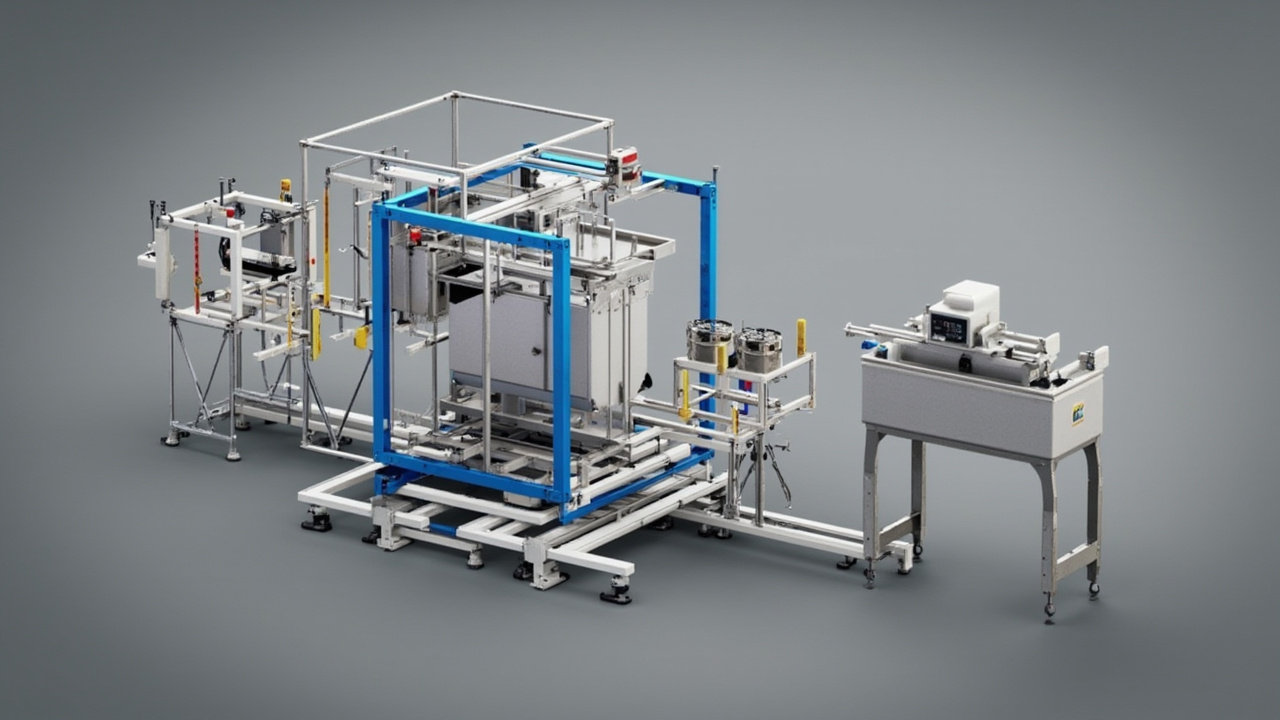
Vibratory Feeder for SMD Components: Micro-Handling & Vision Guidance Guide
Expert guide to vibratory feeders for SMD components. Covers micro-component handling (0201–2512), precision track tolerances, anti-static measures, and vision-guided flexible feeding.
Key Challenges
SMD Component Feeding: Micro-Scale Challenges
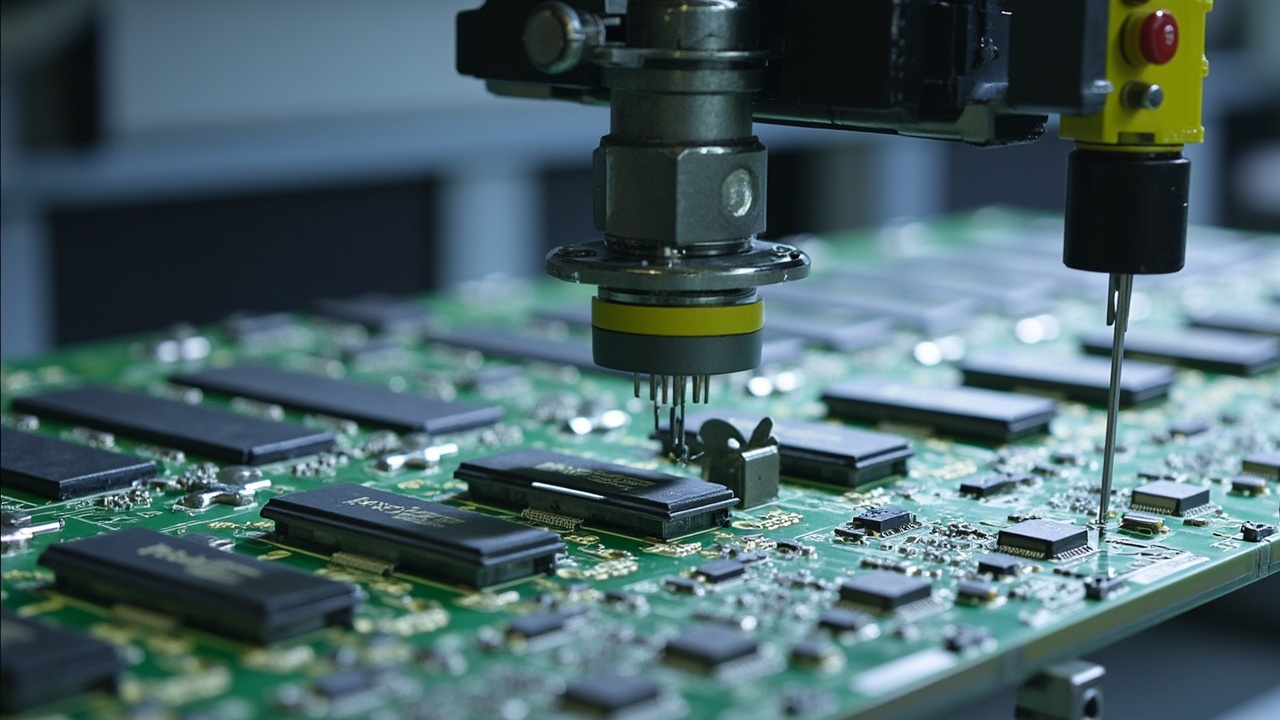
Surface Mount Device (SMD) components represent the extreme end of part size in automated feeding. From the tiny 0201 package (0.6mm × 0.3mm) to the larger 2512 package (6.4mm × 3.2mm), these components demand precision handling that pushes the boundaries of feeder technology. Their small mass makes them susceptible to static adhesion — electrostatic charges cause components to stick to track surfaces, tooling, and each other, disrupting the feeding process entirely.
Polarity orientation is another critical requirement. Many SMD components — diodes, electrolytic capacitors, LEDs, and ICs — must be placed in a specific orientation on the circuit board. Traditional tape-and-reel packaging inherently provides orientation, but when components are bulk-fed from a vibratory feeder (typically for prototyping, rework, or odd-form applications), achieving correct polarity orientation requires specialized detection and sorting mechanisms.
The high-mix, low-volume nature of many SMD feeding applications further complicates the challenge. A single feeder may need to handle dozens of different component types with frequent changeovers, making fixed mechanical tooling impractical. This is where vision-guided flexible feeders excel, providing instant adaptability to new component types through software recipe changes.
Tiny Component Handling (0201–2512)
Handling SMD components from 0201 to 2512 package sizes requires feeder systems designed for micro-scale precision:
| Package | Dimensions (mm) | Mass (mg) | Feeder Type | Feed Rate |
|---|---|---|---|---|
| 0201 | 0.6 × 0.3 | 0.1–0.3 | Flexible (vision) | 5–15 ppm |
| 0402 | 1.0 × 0.5 | 0.5–1.0 | Flexible (vision) | 10–25 ppm |
| 0603 | 1.6 × 0.8 | 1–3 | Flexible (vision) | 15–30 ppm |
| 0805 | 2.0 × 1.25 | 3–8 | Flexible or small bowl | 20–40 ppm |
| 1206 | 3.2 × 1.6 | 8–20 | Flexible or small bowl | 20–40 ppm |
| 2512 | 6.4 × 3.2 | 30–80 | Small bowl or flexible | 20–40 ppm |
For packages smaller than 0805, traditional vibratory bowl feeders face fundamental limitations. The components are so light that they bounce uncontrollably on vibrating surfaces, and the track tolerances required (±0.05mm or tighter) exceed what is practical with machined tooling. Flexible feeders with high-resolution vision systems and precision robotic pickers are the recommended solution for these micro-components.
Precision Track Tolerances for SMD Feeding
When a vibratory bowl feeder is used for larger SMD components (0805 and above), track tolerances become critical. The track width must be controlled to within ±0.1mm to prevent components from rotating or flipping during transport. Track surfaces must be smooth and free of burrs or scratches that could catch on component terminations. For ceramic chip capacitors and resistors, which are brittle and can crack under impact, vibration amplitude must be carefully controlled to prevent component damage during transport.
Track coating selection is also important. Teflon coating provides the low-friction surface needed for smooth transport of small, lightweight components. The coating also reduces static generation compared to bare metal surfaces. For ESD-sensitive components, conductive Teflon formulations are available that combine low friction with controlled static dissipation.
Anti-Static Measures for SMD Feeders
Static electricity is the enemy of SMD component feeding. Components weighing less than 5mg can be lifted and held by electrostatic forces, making them impossible to feed reliably. Comprehensive anti-static measures include:
- Ionizing air system — Ionizing blowers or nozzles positioned above the feeding platform neutralize static charges on both components and surfaces. This is essential for components below 0603 size.
- Conductive feeder surfaces — All surfaces that contact SMD components should be either conductive (grounded stainless steel, conductive nylon) or treated with anti-static coating to prevent charge accumulation.
- Humidity control — Maintaining relative humidity above 40% in the feeding area reduces static generation. In dry environments, localized humidification may be necessary.
- Grounding protocol — All feeder components, the robot, and the work surface must be bonded to a common ground. Grounding resistance should be verified below 1 megohm at each connection point.
Vision Guidance for SMD Flexible Feeding
Vision-guided flexible feeders are the preferred technology for SMD component feeding because they solve multiple challenges simultaneously: orientation detection (including polarity), part identification, and position determination for robotic picking. The vision system uses high-resolution cameras (5MP minimum, 12MP recommended for 0402 and smaller) with telecentric lenses to capture distortion-free images of components on the vibrating platform.
AI-powered image processing identifies each component type, reads polarity markings (cathode bands on diodes, polarity dots on capacitors, pin-1 indicators on ICs), and calculates precise pick coordinates. The system can distinguish between different component values and reject incorrect parts, providing an additional quality check beyond simple feeding.
Why Choose Huben for SMD Feeding Systems
Huben Automation's vision-guided flexible feeders are specifically designed for micro-component handling, with high-resolution camera systems and AI-powered recognition algorithms proven in SMD feeding applications. Our anti-static designs meet the strictest ESD requirements, and every system is tested with your actual components before shipping. With 20+ years of experience, ISO 9001 certification, and factory-direct pricing that saves 40–60%, Huben delivers reliable SMD feeding solutions for prototyping and production.
Need a micro-component feeding system? Contact our engineering team for a free consultation and vision system recommendation.
Recommended Products
Ready to Automate Your Production?
Get a free consultation and detailed quote within 12 hours from our engineering team.