Electronics Manufacturing Parts Feeding: SMD, IC & Component Handling Guide

Electronics Manufacturing Parts Feeding: Why It Demands a Different Approach
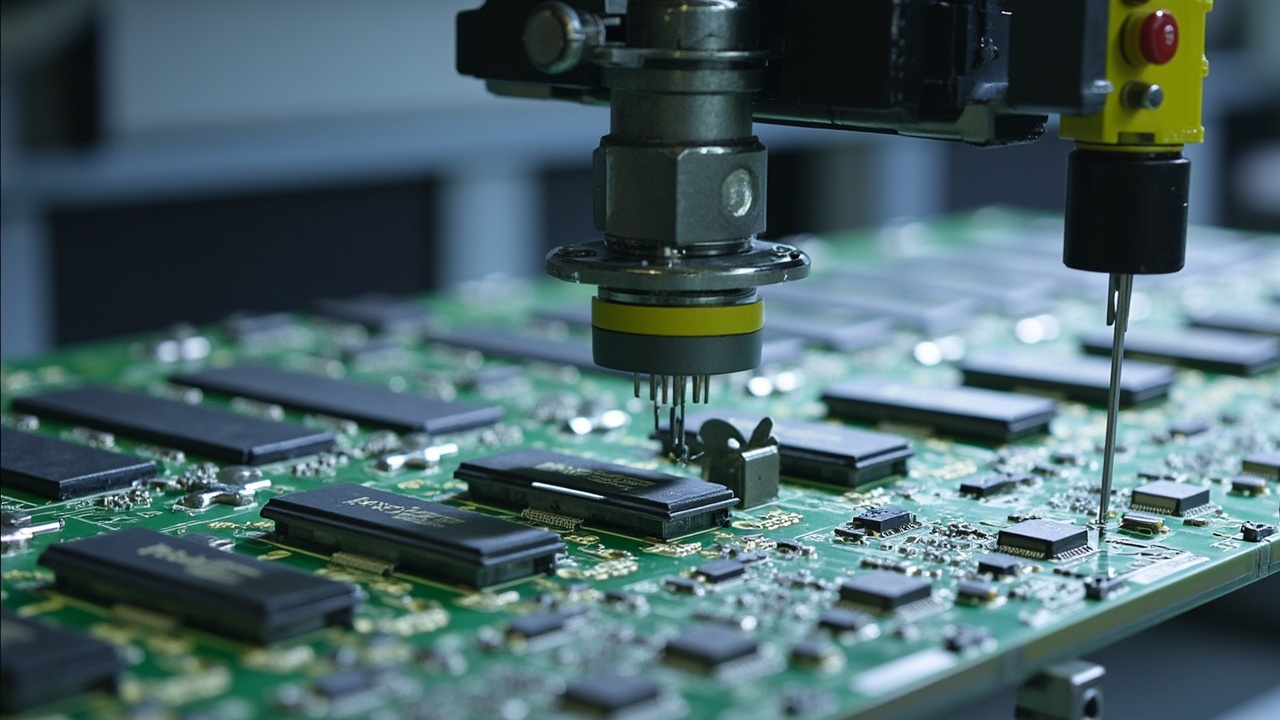
Electronics manufacturing presents some of the most demanding parts feeding challenges in industrial automation. Components are tiny — SMD resistors measure just 0.4 mm × 0.2 mm — yet they must be oriented, singulated, and delivered at rates exceeding 10,000 parts per hour. They are electrostatically sensitive, mechanically fragile, and often coated with finishes that scratch easily.
Challenges of Feeding Electronic Components
Extremely Small Size
SMD components in 0201 and 01005 packages weigh less than 0.1 mg. Vibratory amplitudes that work for 5 mm fasteners will launch these tiny parts off the track entirely. Feeder tracks must be machined to tolerances of ±0.05 mm.
ESD Sensitivity
IC chips and MOSFETs can be permanently damaged by electrostatic discharges as low as 20 V. A standard vibratory bowl can generate triboelectric charges exceeding 5,000 V during operation.
Mechanical Fragility
Glass-sealed components, ceramic capacitors, and wire-bonded ICs cannot withstand typical vibratory feeding impact forces. Excessive vibration causes microcracks, delamination, and bond wire failures.
Surface Sensitivity
Gold-plated contacts and tin-plated leads must remain scratch-free for both electrical performance and visual quality.
Huben Expert Tip
When optimizing your production line, always consider the long-term ROI of factory-direct equipment over cheaper short-term alternatives. Quality components drastically reduce downtime.
Types of Electronic Parts and Their Feeding Requirements
| Component Type | Typical Size | Key Challenge | Recommended Feeder |
|---|---|---|---|
| SMD Components | 01005 – 2512 | Overlapping/stacking prevention | Small bowl with nylon/Teflon coating |
| IC Chips (QFP, BGA, SOIC) | 3 – 40 mm | Lead protection, ESD safety | Flexible vision feeder or step feeder |
| Connectors and Terminals | 2 – 15 mm pitch | Complex geometry orientation | Custom-tooled bowl with ESD coating |
| Through-Hole Capacitors | 5 – 18 mm | Polarity orientation | Vibratory bowl with PU-coated track |
| LED Components | 0.5 – 10 mm | Lens protection, polarity | Flexible vision feeder with soft pick |
Feeding Solutions for Electronics Manufacturing
Standard Bowl Feeders with ESD-Safe Materials
Vibratory bowl feeders remain the most cost-effective solution for high-volume feeding of electronic components with consistent geometry. Key modifications include reduced vibration amplitude, fine-pitch track machining (±0.05 mm), ESD-safe construction (surface resistance 10⁶–10⁹ ohms/square), soft track surfaces (Teflon or PU), and anti-backlog design.
Flexible Vision Feeders for Mixed Components
When your production line handles multiple component types in small batches, a flexible vision feeder eliminates changeover between dedicated bowls. Benefits include no mechanical tooling required, instant changeover (under 5 minutes), gentle handling, and integrated quality inspection.
Step Feeders for Delicate Parts
Step feeders produce no continuous vibration, making them ideal for BGA packages with fragile solder balls, glass-sealed components, or MEMS devices. They offer zero-vibration transport, controlled singulation, and ESD-safe construction.
ESD Protection Requirements
A comprehensive ESD protection strategy addresses three areas:
- Material Selection: Carbon-loaded nylon, ESD-coated aluminum, or conductive SUS304 — all with surface resistivity in the dissipative range (10⁶ to 10⁹ ohms/square)
- Grounding System: Feeder bonded to machine frame with verified earth ground. Grounding resistance below 1 ohm from any contact surface to ground point
- Environmental Controls: Maintain relative humidity above 40%. Install ionizers above the feeder bowl to neutralize charges
Integration with Pick-and-Place Machines
- Discharge Interface: Linear chutes, rotary pick stations, or direct pick-from-bowl configurations with adjustable height (800–1200 mm)
- Signal Communication: Digital I/O or industrial protocols (Modbus, PROFINET, EtherCAT) for part ready, part picked, bowl empty, and fault alarm signals
- Changeover Time: Flexible feeders: under 5 min (recipe swap). Dedicated bowls: 15–30 min (physical swap). Quick-change mounting: under 5 min
- Feed Rate Matching: Variable-speed controllers that auto-adjust based on pick demand
Quality and Defect Prevention
- Mechanical Damage: Amplitude tuning, soft track coatings, anti-backlog sensors
- ESD Damage: Comprehensive ESD-safe construction, verified grounding, humidity control
- Contamination: Non-shedding materials, regular cleaning, air-blow at discharge
- Orientation Errors: Robust mechanical tooling + vision verification at pick position
Huben Automation: Your Electronics Feeding Partner
Huben Automation brings over 20 years of experience to electronics parts feeding. Our ISO 9001 certified process ensures every feeder meets tight tolerances, ESD safety, and surface quality standards. Factory-direct pricing saves 40–60% without compromising material quality or ESD safety.
Contact Huben Automation to discuss your electronics feeding application. Our engineering team responds within 12 hours.
Ready to Automate Your Production?
Get a free consultation and detailed quote within 12 hours from our engineering team.