Vision-Guided Flexible Feeding Systems: Technology, Benefits & Applications
What Is a Vision-Guided Flexible Feeding System?
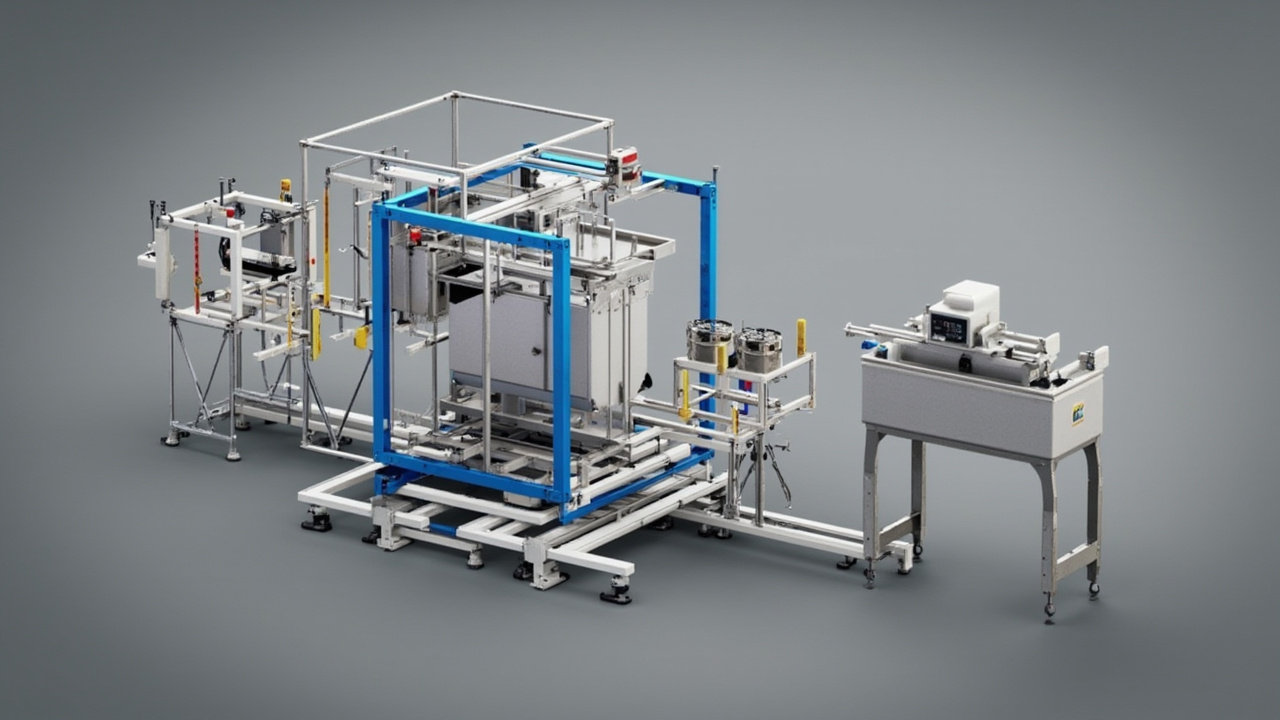
A vision-guided flexible feeding system combines a vibratory platform, an industrial camera, and intelligent image-processing software to present randomly placed components to a pick-and-place robot in the correct orientation. Unlike traditional bowl feeders that rely on custom-machined tooling, flexible feeders use machine vision to identify part position and orientation in real time.
How Vision-Guided Flexible Feeders Work
- Vibration and Part Spreading: Programmable actuators spread parts across the platform surface
- Image Capture: Industrial camera captures high-resolution image with integrated LED illumination
- Image Processing: Segmentation, feature extraction, orientation determination, pickability assessment
- Robot Coordination: Vision controller sends (X, Y, θ) coordinates to robot for pick-and-place
Huben Expert Tip
For parts with multiple orientation requirements, a vision-guided flexible feeder often provides a better ROI than a traditional bowl feeder due to its rapid changeover capabilities.
Key Components
| Component | Function | Typical Specification |
|---|---|---|
| Vibratory Platform | Spreads and separates parts | 200–600mm working area |
| Industrial Camera | Captures high-resolution images | 2–12 MP, 5–30 fps |
| LED Illumination | Consistent, shadow-free lighting | Ring, dome, or bar arrays |
| Vision Software | Part recognition and orientation | Pattern matching + deep learning |
| Vibration Controller | Programmable frequency/amplitude | 0–120 Hz, multi-zone |
| Robot Interface | Transmits pick coordinates | EtherCAT / PROFINET / TCP-IP |
Benefits Over Traditional Bowl Feeders
- Instant Changeover: 30–120 minutes → under 5 minutes (software recipe swap)
- No Custom Tooling: Eliminates $5,000–$20,000 per-bowl tooling costs and 4–8 week lead times
- Handles Complex and Delicate Parts: No mechanical sorting means no jamming or damage
- Integrated Quality Inspection: Every part is imaged — detect defects, verify features, check dimensions
- Reduced Floor Space and Maintenance: Fewer moving parts, no mechanical tooling to maintain
Flexible vs. Traditional: When to Choose Each
| Criterion | Choose Flexible | Choose Bowl Feeder |
|---|---|---|
| Part types | 3+ different parts | Single dedicated part |
| Volume | Low to medium (<60 ppm) | High volume (60–300+ ppm) |
| Changeover | Daily or per shift | Monthly or less |
| Part complexity | Complex, fragile | Simple, robust |
| Tooling budget | Limited or must eliminate | Available per part |
| Quality inspection | Inline inspection valuable | Separate station |
Performance Specifications
- Throughput: 10–60 parts per minute
- Part size range: 2 mm to 150 mm
- Position accuracy: ±0.05 mm (X, Y), ±0.5° (θ)
- Recognition rate: 99.5%+
- Changeover time: <5 minutes
Cost Comparison
| Cost Factor | Traditional Bowl | Vision Flexible Feeder |
|---|---|---|
| Initial feeder cost | $8K–$25K per bowl | $25K–$60K (one system) |
| Tooling per part | $5K–$20K | $0 (software-defined) |
| Tooling lead time | 4–8 weeks | 1–2 days (programming) |
| Changeover cost | $200–$800 | $0–$50 |
| Cost for 5 part types (Year 1) | $65K–$165K | $25K–$60K |
Why Huben Automation
With over 20 years of experience, Huben Automation designs vision-guided flexible feeding systems built for real production. ISO 9001 certified facility, factory-direct pricing. Contact Huben Automation to discuss your application.
Ready to Automate Your Production?
Get a free consultation and detailed quote within 12 hours from our engineering team.