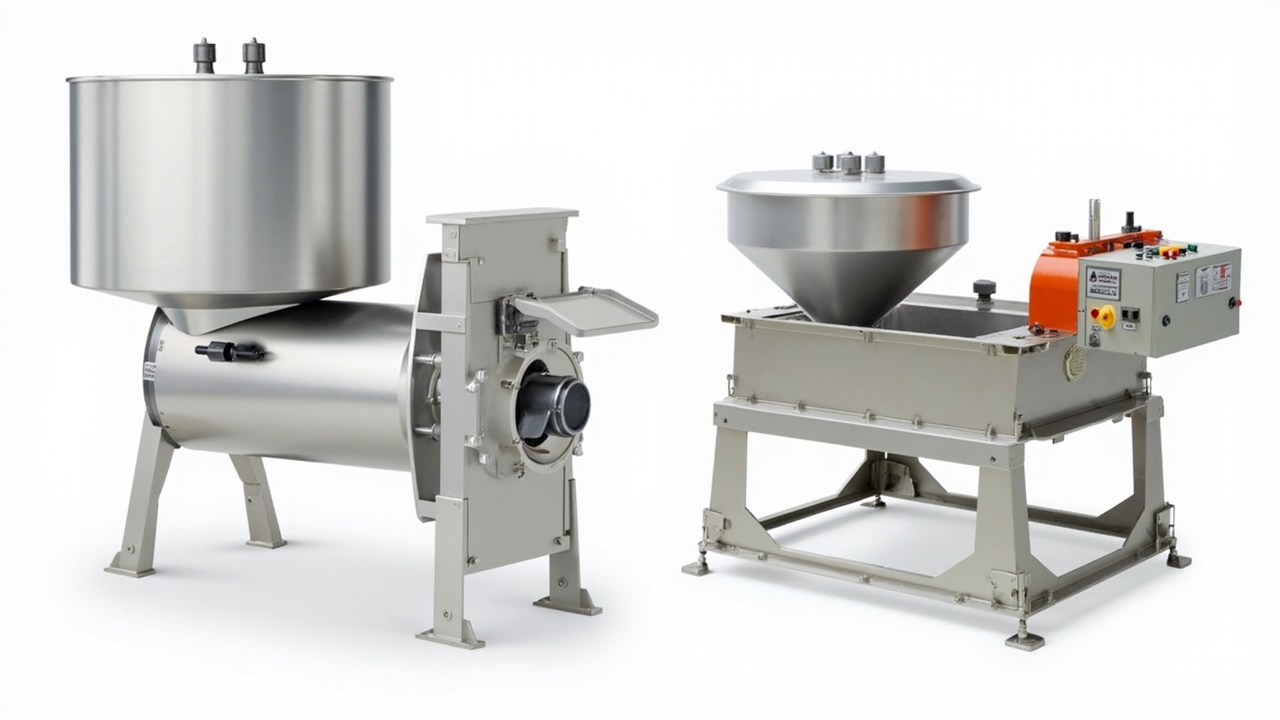
Vibratory Feeder for Medical Devices: Cleanroom, SUS316L & Validation Guide
Complete guide to vibratory feeders for medical devices. Covers cleanroom requirements, FDA/GMP compliance, SUS316L material selection, and validation documentation for medical feeding.
Key Challenges
Medical Device Feeding: Regulatory & Technical Challenges
Feeding medical device components demands a level of material integrity, documentation, and process control that goes far beyond standard industrial feeding applications. Every aspect of the feeder system — from the bowl material and surface finish to the lubricants used in the drive mechanism — must be evaluated for biocompatibility, cleanroom compatibility, and regulatory compliance. The consequences of contamination in medical device manufacturing can be severe, ranging from product recalls to patient harm, making feeder design and validation a critical quality function.
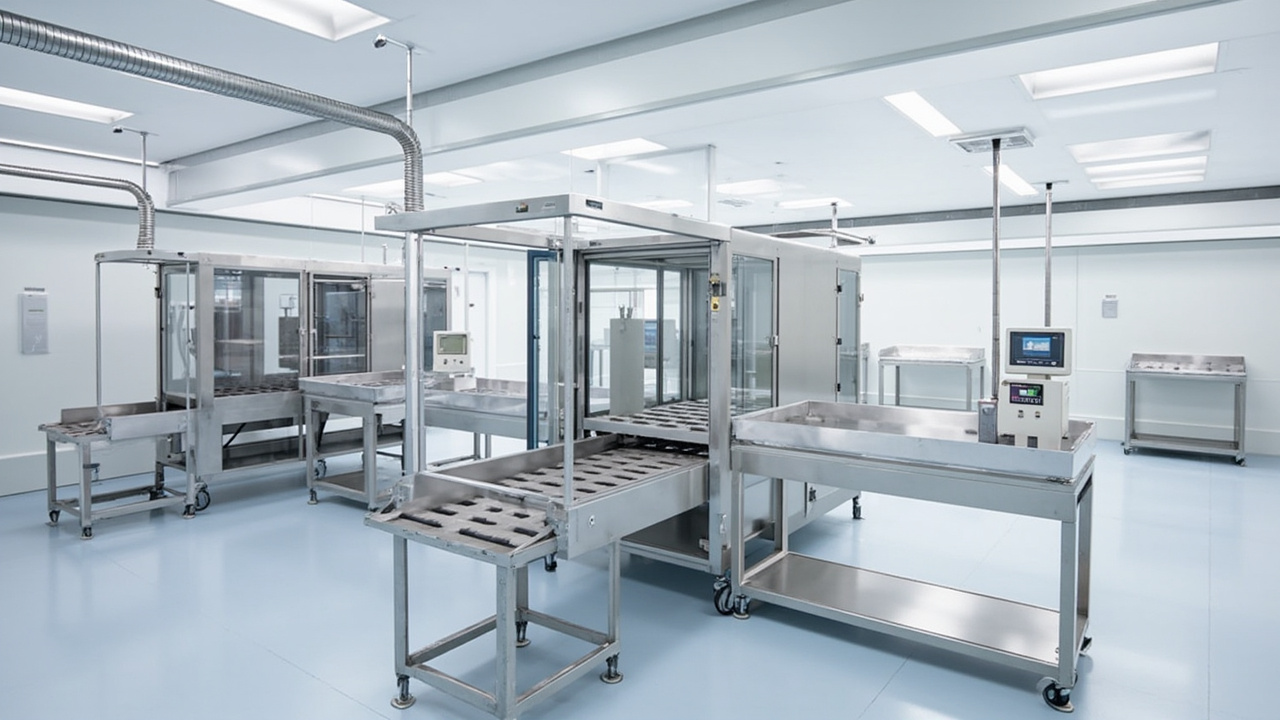
Cleanroom compatibility is often the first requirement. Medical device assembly increasingly takes place in ISO Class 7 (Class 10,000) or cleaner environments, where the feeder must operate without generating particulates above specified limits. Standard vibratory feeders with their open coil drives and mechanical spring packs are significant particulate generators, requiring specialized cleanroom designs with sealed drives, non-particulating spring materials, and smooth surface finishes that resist particle generation and retention.
Validation documentation is the third critical challenge. FDA 21 CFR Part 820 and the EU Medical Device Regulation (MDR) require that equipment used in medical device manufacturing be qualified and validated. This means the feeder must be accompanied by Installation Qualification (IQ), Operational Qualification (OQ), and Performance Qualification (PQ) documentation, along with material certificates, calibration records, and change control procedures.
Cleanroom Requirements for Medical Feeders
Operating a vibratory feeder in a cleanroom environment requires specific design modifications:
- Sealed electromagnetic drive — The coil and armature are enclosed in a sealed housing that prevents particulate generation from the electromagnetic gap. External surfaces are smooth and easily wipeable for decontamination.
- Non-particulating spring packs — Standard fiberglass/epoxy spring packs shed microscopic particles under vibration. Cleanroom feeders use spring packs made from non-shedding composite materials or enclosed spring cartridges.
- Electropolished surfaces — All stainless steel surfaces (bowl, track, tooling) are electropolished to Ra 0.4μm or better, creating an ultra-smooth surface that resists particle adhesion and is easily cleaned and decontaminated.
- Non-outgassing materials — All polymeric materials (coatings, gaskets, cable insulation) must be evaluated for volatile organic compound (VOC) outgassing. Materials that release contaminants into the cleanroom airflow are prohibited.
- HEPA-filtered air supply — Any air jets used in the tooling must draw from a HEPA-filtered supply to prevent introducing contaminants into the cleanroom environment.
SUS316L Material for Medical Feeders
SUS316L (316L stainless steel) is the standard material for medical-grade vibratory feeder bowls, and for good reason:
- Corrosion resistance — The low carbon content (≤0.03%) and molybdenum addition (2–3%) provide superior resistance to pitting and crevice corrosion, even in the presence of saline solutions and bodily fluids that may contact feeder surfaces during medical device assembly.
- Biocompatibility — SUS316L is listed in ISO 10993-1 as a material with established biocompatibility for external communication devices and tissue-contacting applications. This eliminates the need for additional biocompatibility testing of the feeder bowl material.
- Cleanability — The smooth, non-porous surface can be cleaned and sterilized using standard medical device cleaning protocols (IPA wipe-down, autoclave for removable components, CIP for integrated systems).
- Traceability — Material certificates (EN 10204 3.1) are available for all SUS316L used in Huben medical feeders, providing full traceability from steel mill to finished product.
FDA/GMP Compliance Documentation
Huben provides comprehensive documentation packages for medical feeder systems to support your regulatory compliance:
- Material certificates — EN 10204 3.1 certificates for all stainless steel components, coating material safety data sheets (SDS), and biocompatibility statements.
- Design qualification (DQ) — Documentation that the feeder design meets your User Requirements Specification (URS), including material compatibility, cleanroom class, and performance specifications.
- Installation qualification (IQ) — Verification that the feeder is installed correctly per the manufacturer's specifications, including utility connections, grounding, and mounting.
- Operational qualification (OQ) — Testing that the feeder operates within specified parameters across its full operating range, including feed rate, orientation accuracy, and noise level.
- Performance qualification (PQ) — Demonstration that the feeder consistently performs with your actual production parts under production conditions, typically over 3 consecutive runs.
Medical Feeder Specifications
| Specification | Standard Feeder | Medical-Grade Feeder |
|---|---|---|
| Bowl material | SUS304 | SUS316L (certified) |
| Surface finish | Ra 1.6μm | Ra 0.4μm (electropolished) |
| Cleanroom class | Not rated | ISO Class 7 compatible |
| Drive type | Open coil | Sealed electromagnetic |
| Spring material | Fiberglass/epoxy | Non-shedding composite |
| Coating | PU / Teflon | FDA-compliant Teflon |
| Documentation | Operation manual | IQ/OQ/PQ + material certs |
| Traceability | Serial number | Full material & process traceability |
Why Choose Huben for Medical Feeding Systems
Huben Automation understands the unique requirements of medical device manufacturing. Our SUS316L cleanroom feeders are designed from the ground up for regulated environments, with full material traceability, comprehensive validation documentation, and electropolished surfaces that meet the strictest cleanliness standards. With 20+ years of experience, ISO 9001 certification, and factory-direct pricing that saves 40–60%, Huben is the trusted partner for medical device feeding solutions.
Need a validated feeding system for medical device assembly? Contact our engineering team for a free consultation and regulatory compliance assessment.
Recommended Products
Ready to Automate Your Production?
Get a free consultation and detailed quote within 12 hours from our engineering team.