Vibratory Feeder for Connectors: Pin Protection, ESD Safety & Tangle Prevention
Detailed guide to vibratory feeders for electronic connectors. Covers pin protection, ESD-safe materials, tangle prevention, Teflon coating benefits, and bowl design for connector feeding.
Key Challenges
Connector Feeding Challenges in Electronics Manufacturing
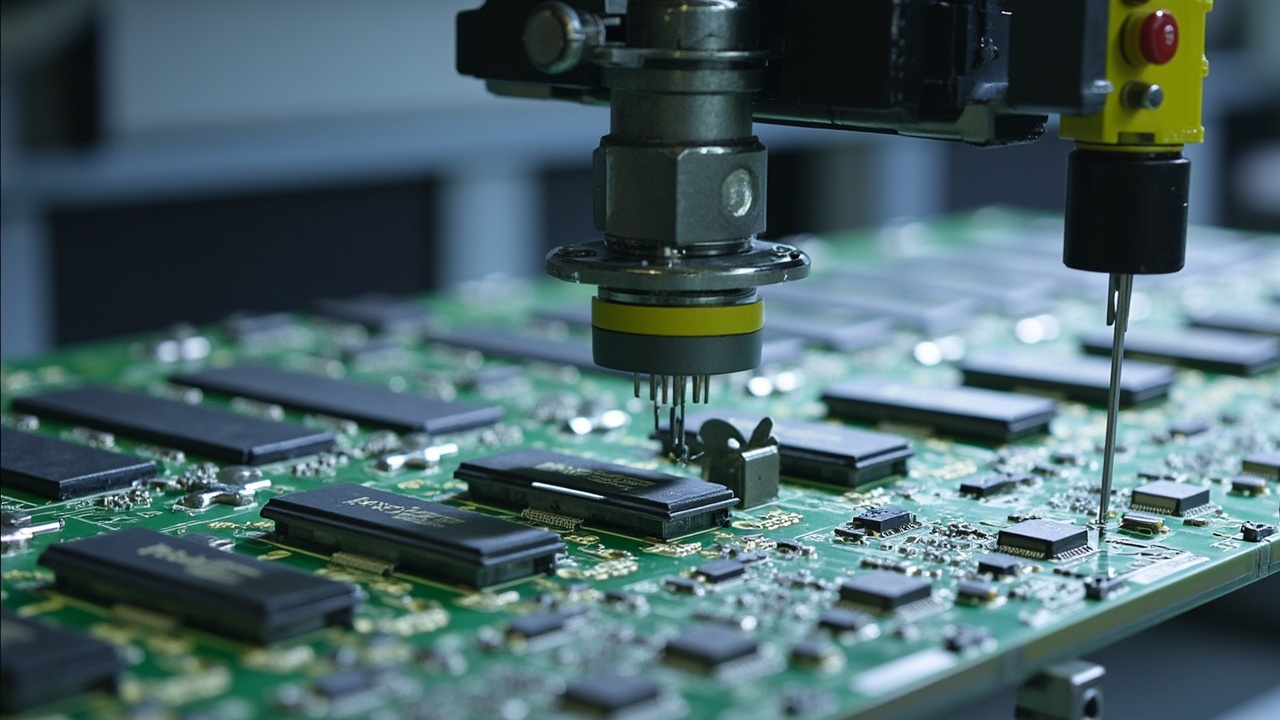
Electronic connectors are among the most damage-sensitive parts fed in automated production. Their precision-machined contact pins — often with tolerances of ±0.05mm or tighter — are easily bent or deformed by contact with hard surfaces or other connectors during the feeding process. A single bent pin can render an entire connector useless, and in high-reliability applications such as automotive or aerospace electronics, pin damage that goes undetected can cause field failures with serious safety consequences.
Electrostatic discharge (ESD) sensitivity is the second critical concern. Many connectors incorporate CMOS-sensitive circuitry or are destined for ESD-sensitive assembly environments. The vibration and friction inherent in feeder operation generate static charges that can damage sensitive components if not properly managed. This requires ESD-safe bowl materials, grounding provisions, and ionization in some cases.
Connector entanglement is a third challenge, particularly for connectors with protruding pins, latches, or locking mechanisms. These features can catch on adjacent connectors, forming tangled clusters that resist separation. Board-to-board connectors with fine-pitch pin arrays are especially prone to pin interlocking, where pins from one connector insert into the socket of another.
Pin Protection Strategies
Protecting connector pins during feeding requires a multi-layered approach that addresses both surface contact and part-to-part interaction:
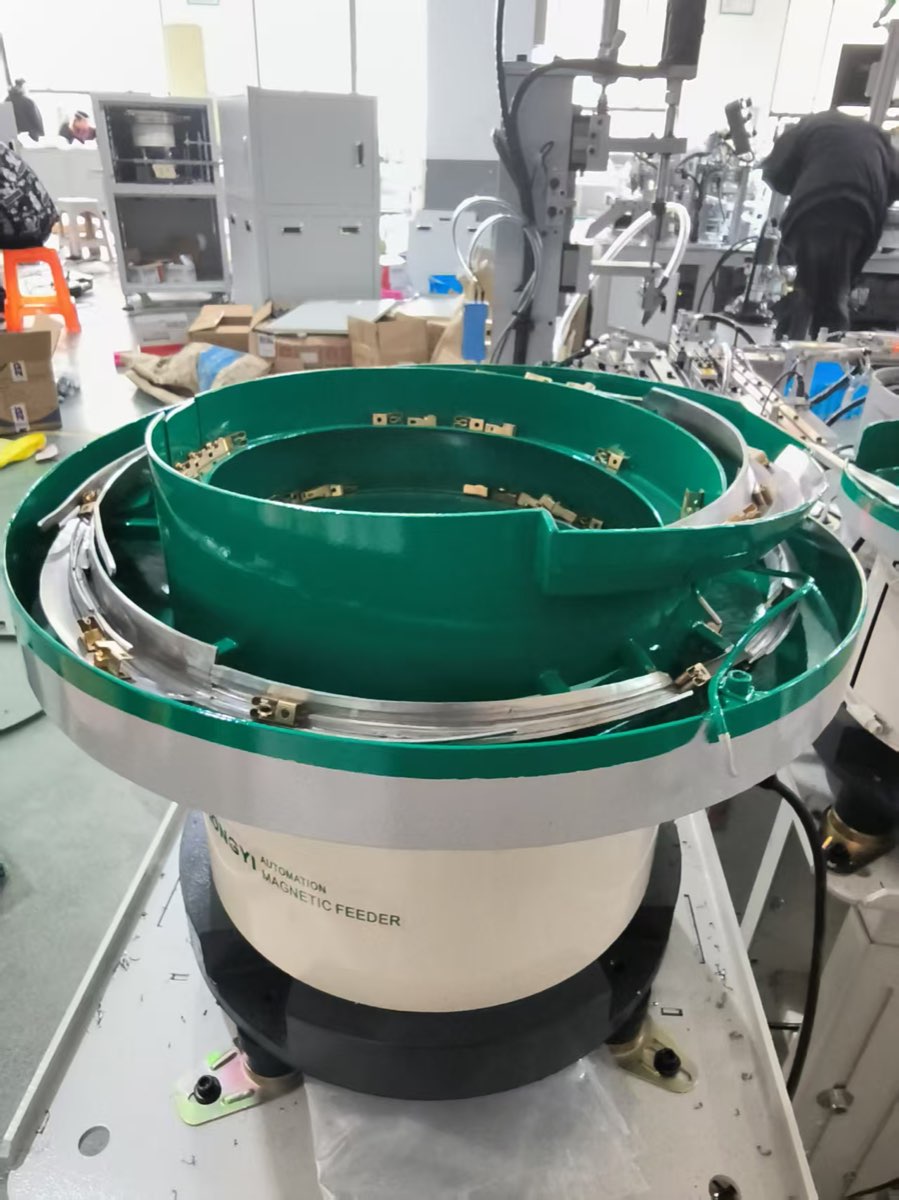
- Soft-surface bowl lining — Teflon (PTFE) coating provides the lowest friction surface available, minimizing the force pins experience during contact with the track. For ultra-delicate pins, brush (flock) lining provides a cushioned surface that virtually eliminates pin-to-hard-surface contact.
- Low vibration amplitude — Reducing vibration amplitude to the minimum required for part transport decreases impact forces on pins. This may require a larger bowl diameter to compensate for the slower transport speed, but the trade-off is worthwhile for pin protection.
- Individual track pockets — Custom-machined pockets or cradles in the track that hold each connector in a fixed position, preventing connector-to-connector contact during transport. This approach is effective but limits feed rate and increases tooling cost.
- Controlled bowl fill level — Maintaining a low fill level in the bowl reduces the number of connectors in contact at any time, lowering the probability of pin damage from part-to-part interaction.
ESD-Safe Materials & Design
For ESD-sensitive connector feeding, the feeder must be designed to prevent static charge accumulation and provide a controlled discharge path. Key ESD design elements include:
- Conductive bowl material — Aluminum bowls with conductive coating provide a grounded surface that prevents charge buildup. Stainless steel bowls are inherently conductive when properly grounded.
- Grounding provisions — All metal components of the feeder (bowl, base, track, tooling) must be electrically bonded and connected to a common ground point. Grounding resistance should be below 1 megohm.
- Ionizing air bars — For highly sensitive applications, ionizing air nozzles positioned along the track neutralize static charges on both the connectors and the track surface. These are recommended for connectors with exposed CMOS circuitry.
- ESD-safe controller enclosure — The feeder controller should be housed in an ESD-safe enclosure with grounded metal construction and ESD-safe operator interfaces.
Teflon Coating Benefits for Connector Feeders
Teflon (PTFE) coating is the recommended surface treatment for connector feeding bowls, offering a unique combination of properties:
- Ultra-low friction — Coefficient of friction of 0.05–0.10, compared to 0.3–0.5 for bare stainless steel. This reduces the vibration amplitude needed for part transport, directly reducing pin impact forces.
- Non-stick surface — Prevents adhesive residues, flux, and other contaminants from accumulating on the track surface, maintaining consistent feed performance over time.
- Chemical inertness — Resists all common solvents, oils, and cleaning agents used in electronics manufacturing, ensuring long-term coating integrity.
- Pin protection — The soft, yielding surface absorbs impact energy that would otherwise deform delicate pins on hard metal surfaces.
Connector Feeder Specifications
| Connector Type | Pin Count | Recommended Bowl | Feed Rate |
|---|---|---|---|
| Wire-to-board | 2–20 pins | 200–300mm, Teflon coated | 40–80 ppm |
| Board-to-board | 10–100 pins | 250–400mm, Teflon or flock | 20–60 ppm |
| USB / HDMI | 4–19 pins | 200–300mm, Teflon coated | 30–60 ppm |
| Automotive (Fakra, HSD) | 1–8 pins | 200–350mm, Teflon coated | 40–80 ppm |
| RF connectors | 1 pin (coaxial) | 130–250mm, Teflon coated | 60–120 ppm |
Why Choose Huben for Connector Feeding Systems
Huben Automation has extensive experience designing ESD-safe, pin-protective feeding systems for electronics manufacturers worldwide. Our Teflon-coated and flock-lined bowls are proven in high-volume connector feeding applications, and every system undergoes runoff testing with your actual connectors to verify zero pin damage. With 20+ years of expertise, ISO 9001 certification, and factory-direct pricing that saves 40–60%, Huben is the smart choice for connector feeding.
Need a pin-safe connector feeding system? Contact our engineering team for a free consultation and ESD-safe design recommendation.
Recommended Products
Ready to Automate Your Production?
Get a free consultation and detailed quote within 12 hours from our engineering team.