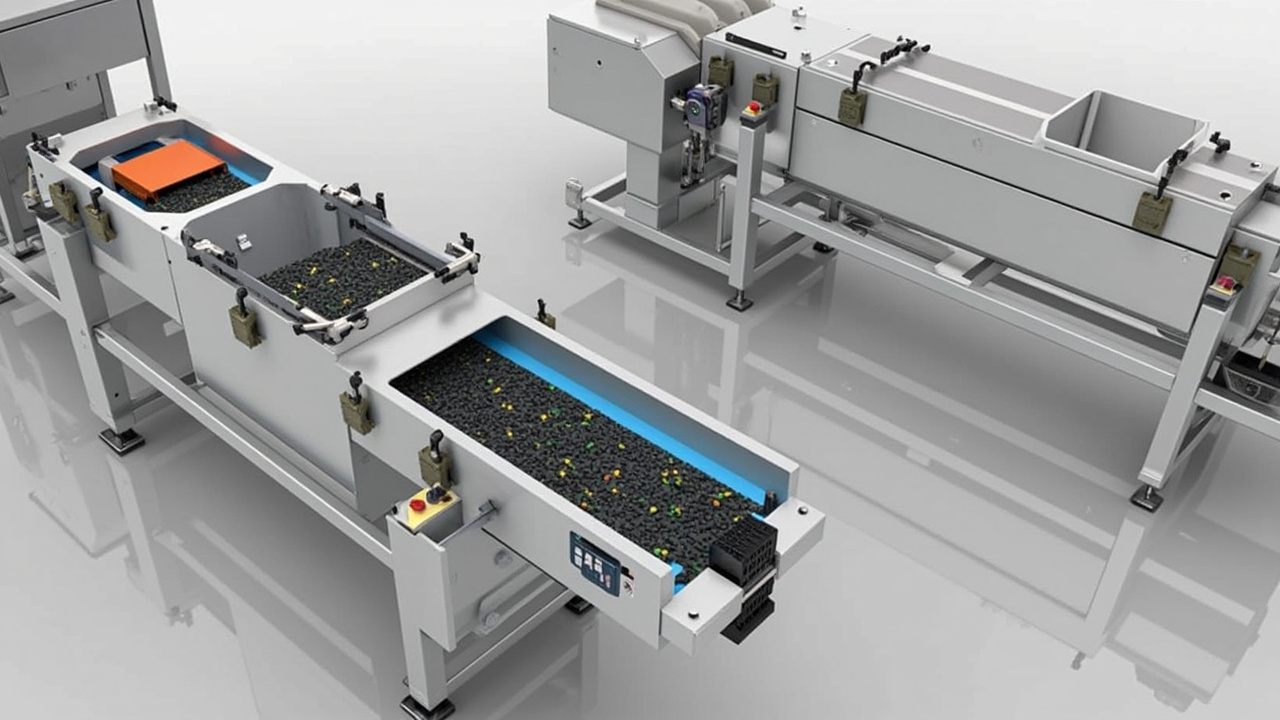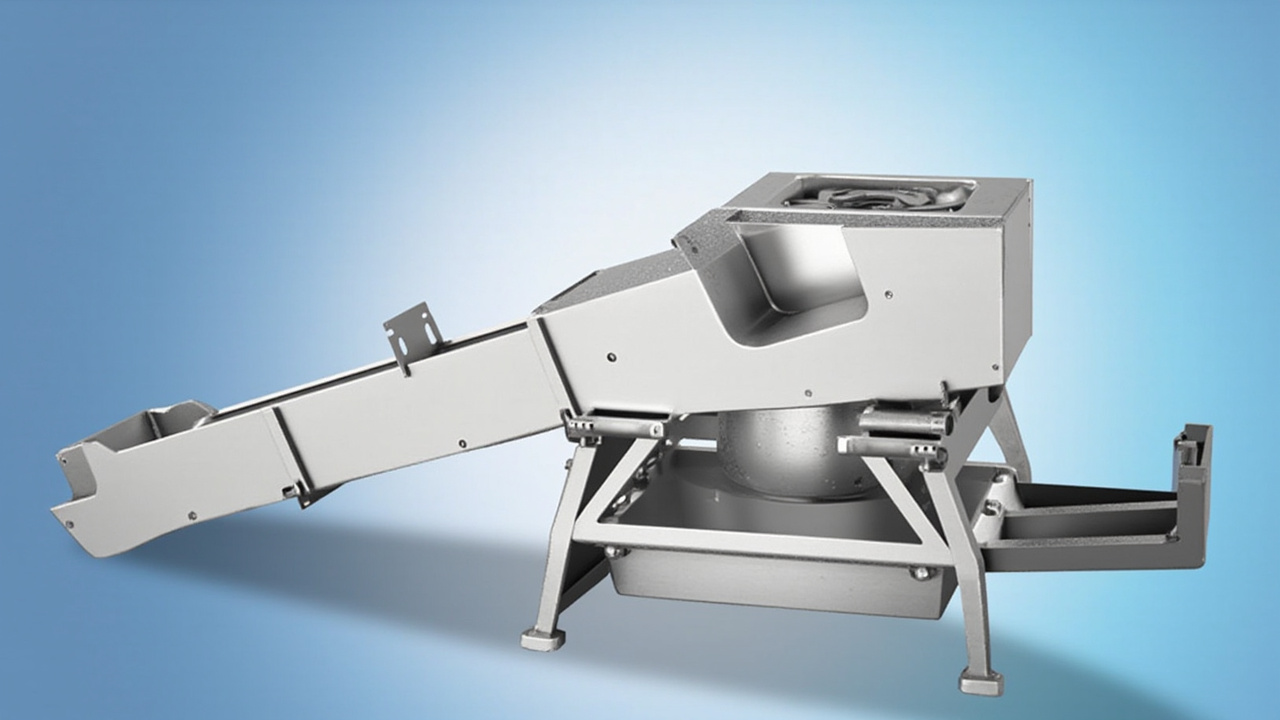
Vibratory Feeder for Nuts: Anti-Nesting Tooling & Orientation Guide
Expert guide to vibratory feeders for nuts. Covers anti-nesting tooling, thread detection orientation, bowl sizing, and feed rate optimization for hex and specialty nuts.

Key Challenges
Nut Feeding Challenges: Nesting, Stacking & Orientation
Nuts are deceptively difficult parts to feed automatically. Their internal thread creates a natural tendency to nest inside each other, forming stacks that jam tooling and block tracks. This nesting behavior is the single biggest challenge in nut feeding, and it becomes more severe with thinner nuts and finer threads. Two hex nuts nested together have a different overall height and external profile than a single nut, which confuses mechanical orientation tooling and leads to double-feeding at the output.
Orientation is the second major challenge. Unlike screws and bolts where the head provides a clear orientation reference, nuts are symmetrical on both faces. Most assembly processes require nuts to be delivered with the thread facing a specific direction, yet the external geometry of a standard hex nut provides no visual or mechanical cue to distinguish one face from the other. This requires specialized detection methods such as thread-sensing probes or vision systems to achieve correct orientation.
Thin nuts present an additional handling difficulty. Nuts with a height-to-diameter ratio below 0.5 tend to ride on edge or flip unpredictably on the track, making stable single-file transport challenging. These parts often require custom track profiles with deeper pockets or magnetic retention to maintain consistent positioning.
Anti-Nesting Tooling Design
Preventing nut nesting requires tooling that separates stacked nuts before they reach the orientation zone. The most effective anti-nesting strategies include:
- Agitation fingers — Small spring-loaded fingers positioned at the bowl entrance that vibrate independently, shaking apart nested nut pairs as they enter the track system.
- Step-down transitions — Track sections that drop sharply by 1.5–2× the nut height. Nested pairs cannot negotiate the step because their combined height exceeds the track wall, while single nuts pass through cleanly.
- Beveled track edges — The inner edge of the track is beveled at 30–45°, creating a surface that single nuts can ride along but nested pairs slide off due to their higher center of gravity.
- Air separation jets — Directed air nozzles that blow apart lightly nested pairs. Effective for nuts that nest loosely but insufficient for tightly threaded-together pairs.
For applications where nesting is severe, a combination of mechanical and pneumatic separation is recommended. Huben's anti-nesting tooling typically achieves 99.8%+ single-nut delivery rates, verified during runoff testing with actual production parts.
Orientation by Thread Detection
Since hex nuts are externally symmetrical, orientation requires detecting the internal thread direction. Several methods are available, each with different accuracy and cost trade-offs:
- Mechanical probe — A spring-loaded pin that extends into the nut bore. If the thread is facing the correct direction, the pin engages the thread and the nut passes. If the thread faces the wrong way, the pin hits the flat face and the nut is rejected. This method is simple and reliable but requires precise adjustment and periodic maintenance.
- Vision system — A camera positioned above the track captures an image of each nut, and software analyzes the thread pattern to determine orientation. This method is highly accurate and adjustable for different nut types but adds cost and complexity.
- Air pressure differential — An air nozzle directed into the nut bore produces different back-pressure readings depending on whether the air hits the thread or the flat face. This method is fast and non-contact but requires clean, oil-free nuts for consistent readings.
Bowl Sizing for Nut Feeding
| Nut Size | Recommended Bowl | Feed Rate | Orientation Method |
|---|---|---|---|
| M2–M4 | 130–200mm | 100–200 ppm | Mechanical probe |
| M4–M8 | 200–300mm | 80–160 ppm | Mechanical probe or vision |
| M8–M14 | 300–400mm | 50–120 ppm | Vision or air differential |
| M14–M24 | 400–600mm | 30–80 ppm | Vision system |
Why Choose Huben for Nut Feeding Systems
Huben Automation has solved nut nesting and orientation challenges for manufacturers across automotive, construction, and electronics industries for over 20 years. Our anti-nesting tooling designs are field-proven in demanding production environments, and every feeder undergoes rigorous runoff testing with your actual nuts before shipping. ISO 9001 certified quality and factory-direct pricing save you 40–60% compared to Western suppliers.
Struggling with nut nesting or orientation issues? Contact our engineering team for a free consultation and custom tooling recommendation.
Recommended Products
Ready to Automate Your Production?
Get a free consultation and detailed quote within 12 hours from our engineering team.