Automotive Parts Feeding Solutions: Vibratory Feeders for Auto Manufacturing

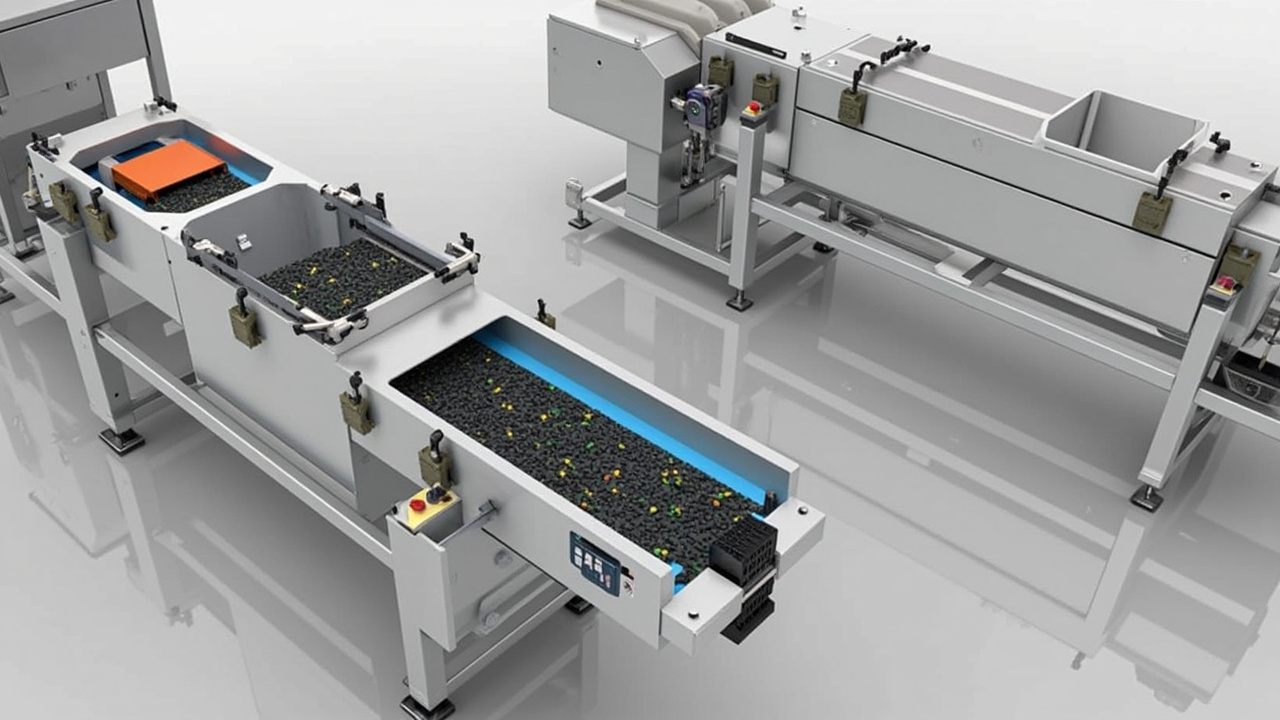
Automotive Parts Feeding: Why It Matters
Modern automotive manufacturing runs on precision and speed. A single vehicle contains over 30,000 parts, and every assembly station depends on a reliable supply of correctly oriented components. When a parts feeding system fails, the entire line stops — and automotive downtime costs between $12,000 and $50,000 per hour. Vibratory feeders have been the backbone of automotive parts feeding for decades, but the requirements have evolved dramatically with tighter tolerances, new materials, and stricter traceability mandates under IATF 16949.
Key Challenges in Automotive Parts Feeding
- High throughput requirements: Cycle times of 30–60 seconds per vehicle demand feed rates of 60–120 parts per minute
- Delicate component surfaces: Painted body clips, plated connectors, and polished sensor housings cannot be scratched
- Strict orientation accuracy: Asymmetric parts require precision tooling for correct assembly orientation
- Multi-part families: A single station may handle variants with quick changeover
- Cleanliness standards: Contamination from feeder debris is unacceptable for sensors and connectors
- Traceability: IATF 16949 requires documented process control for feeder settings and maintenance
- Harsh environments: Stamping press areas and welding cells expose feeders to vibration, dust, and temperature extremes
Huben Expert Tip
For parts with multiple orientation requirements, a vision-guided flexible feeder often provides a better ROI than a traditional bowl feeder due to its rapid changeover capabilities.
Automotive Part Types and Feeder Solutions
| Automotive Part Type | Examples | Recommended Feeder Type | Key Considerations |
|---|---|---|---|
| Fasteners (bolts, screws, nuts) | M5–M12 assembly bolts, self-tapping screws, flange nuts | Vibratory bowl feeder (standard or cascade) | High speed, minimal damage, size sorting |
| Sensors and electronic modules | Pressure sensors, temperature probes, control modules | Vibratory bowl feeder with PU coating + vision verification | Surface protection, ESD-safe, precise orientation |
| Electrical connectors | Wire harness connectors, terminal blocks, sensor pigtails | Vibratory bowl feeder with custom tooling + air selection | Pin protection, orientation accuracy, tangle prevention |
| Stamped metal parts | Brackets, clips, terminals, shielding cans | Vibratory bowl feeder or linear feeder | Part geometry complexity, oil residue handling |
| Plastic clips and retainers | Door trim clips, wire retainers, push pins | Vibratory bowl feeder with soft coating | Lightweight part behavior, static control |
Feeding Fasteners: Bolts, Screws, and Nuts
Fasteners represent the highest-volume feeding application in automotive plants. A mid-size vehicle uses 2,000–3,000 fasteners. Standard vibratory bowl feeders with spiral tracks are the most cost-effective solution. For high-speed applications, cascade bowl feeders achieve feed rates 30–50% higher than standard bowls. Key design features include polyurethane track coatings, adjustable overflow chutes, multi-lane tracks, and integrated escapement devices.
Feeding Sensors and Electronic Modules
Modern vehicles contain 60–100 sensors. These components are expensive, delicate, and must arrive in pristine condition. Sensor feeding requires a vibratory bowl feeder with polyurethane or Teflon coating throughout the contact path. Additional features include reduced amplitude settings (60–70% of standard), vision-guided verification, barcode scanning for lot traceability, and anti-static ionizers.
Feeding Electrical Connectors
Automotive electrical systems use hundreds of connectors per vehicle. Connector feeding demands precision-tooled vibratory bowl feeders with air-jet selection. Critical design elements include low-friction track surfaces, air-jet rejection stations, separate feed lanes for each variant, and fiber-optic discharge verification.
Feeding Stamped Metal Parts
Stamped components emerge from presses coated in forming oil, creating feeding challenges. Linear vibratory feeders are often preferred because they handle oily parts more effectively. Essential modifications include oil-resistant track coatings (PTFE or hardened chrome), drainage channels, wider track clearances, and periodic automatic wash-down systems.
Feeding Plastic Clips and Retainers
Plastic clips are lightweight and prone to static cling. Feeding requires vibratory bowl feeders with soft polyurethane coatings and integrated static control: anti-static ionizing bars, conductive PU track coating, reduced vibration amplitude, and clear bowl covers to prevent air current disruption.
Integration with Automotive Assembly Lines
- Mechanical: Vibration isolation, discharge height matching, ergonomic refill access, safety guarding
- Controls: Profinet/EtherNet/IP communication, part count tracking, low-level alarms, MES integration for IATF 16949 traceability
- Changeover: Quick-change bowl inserts (under 15 min), recipe-based controller settings, RFID-tagged tooling sets
Quality and Traceability: IATF 16949 Requirements
IATF 16949 requires documented feeder setup parameters (Clause 8.5.1.2), feed count traceability linked to production batches (Clause 8.5.2), maintenance schedules and calibration records (Clause 8.5.1.3), and feeder reliability tracking as part of TPM (Clause 8.5.1.5). Huben provides all documentation as standard with every feeder.
Cost Considerations
| Cost Factor | Low-End | High-End | Notes |
|---|---|---|---|
| Standard vibratory bowl feeder | $800 | $3,000 | Depends on size, material, tooling |
| Custom-tooled automotive feeder | $2,500 | $12,000 | Includes precision tooling, coating, sensors |
| Multi-lane or cascade feeder | $5,000 | $20,000 | For high-speed or multi-variant applications |
| Vision verification add-on | $2,000 | $8,000 | Camera, lighting, integration |
| Downtime cost (per hour) | $12,000 | $50,000 | Automotive line stop cost |
Get Expert Automotive Feeding Solutions
With 20+ years of experience serving automotive manufacturers worldwide, ISO 9001 certification, and factory-direct pricing saving 40–60%, Huben Automation delivers automotive-grade vibratory feeder solutions that meet the industry's most demanding requirements.
Contact Huben Automation to discuss your automotive parts feeding application and receive a detailed proposal within 12 hours.
Ready to Automate Your Production?
Get a free consultation and detailed quote within 12 hours from our engineering team.