Threaded Insert Feeding Guide 2026

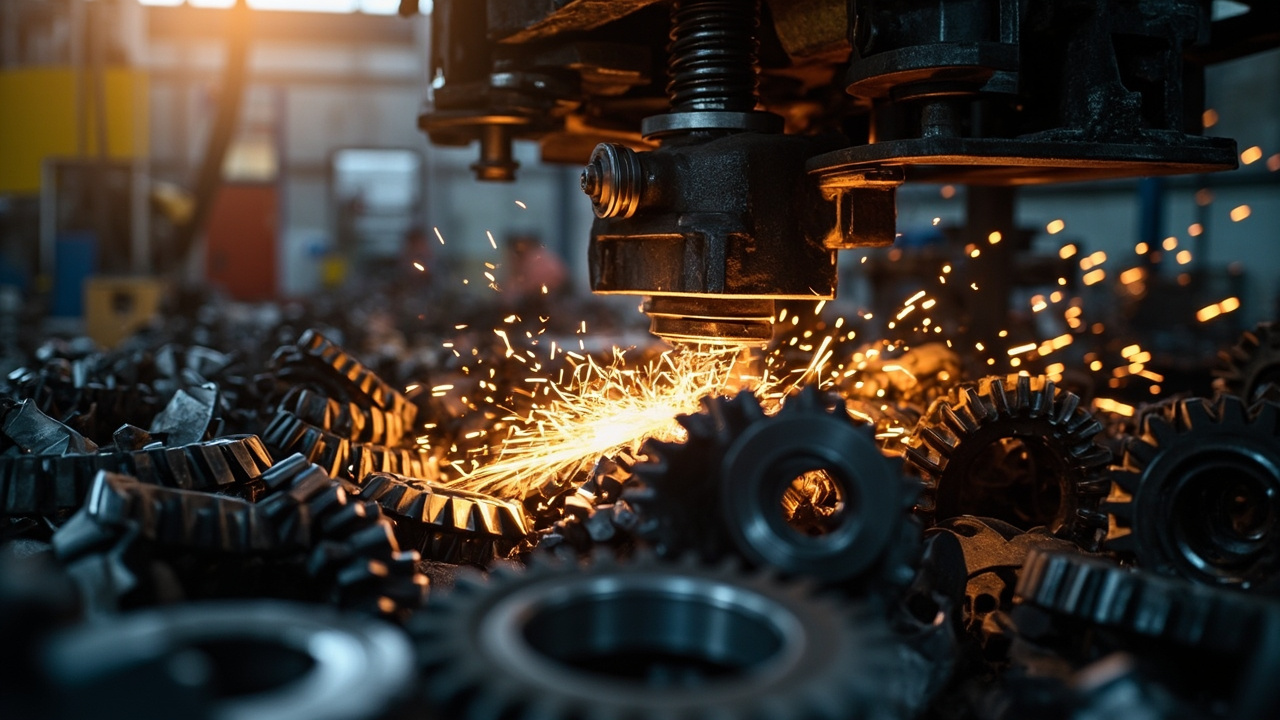
Threaded inserts look simple until the line needs stable orientation
Threaded inserts are small, durable, and often treated like easy parts. In production, they behave more like precision fasteners than generic bulk metal pieces. The feeder has to separate near-identical shapes, prevent double parts, and present the insert to a press, heat-stake, or overmolding station in exactly the state the process expects. If the handoff is loose, the assembly step pays for it immediately.
The main design questions are usually about orientation, nesting, burr condition, and how calm the final release needs to be. That is why insert feeding often sits between fastener logic and cylindrical-part logic. This guide connects naturally with our nut feeding guide, bushing and sleeve guide, and sensor selection article.
What makes insert feeding unstable
Different insert families create different risks even when the outside diameter looks similar.
| Insert case | Main risk | Design focus | What to verify |
|---|---|---|---|
| Short brass insert | Double-part flow or stacking | Separation and queue control | Single-part release rate |
| Knurled insert | Unexpected friction variation | Surface-contact path | Stable movement after refill |
| Flanged insert | Orientation confusion | Use flange as orientation feature | Leading-face consistency |
| Thin-wall insert | Tilt or roll at discharge | Guided final track | Pickup repeatability |
How to choose the right feeder concept for inserts
A dedicated bowl feeder is often the most practical answer when the insert family is stable and the line volume is meaningful. The important question is whether the insert geometry offers one reliable feature the tooling can exploit without becoming too tight to variation.
If the project handles several insert sizes or frequent recipe changes, change parts or a small final verification stage may be worth more than an overly ambitious universal bowl. Insert projects often become unstable when the design tries to absorb too much geometry spread with one fixed tooling path.
For heat-stake or press-in operations, the final release matters as much as upstream orientation. The feeder should not only separate the insert. It should deliver it in a calm, station-ready pose that matches the insertion tooling.
Rules that improve threaded-insert feeding
- Use the most reliable orientation feature in the geometry as early as possible.
- Treat double-part risk as a first-order defect, especially with short inserts.
- Keep the final track stable enough for the actual insertion or pickup step.
- Validate with production-condition parts, including burr and finish variation.
How to validate insert feeders
Run tests with enough lot variation to expose burr or finish differences that can change sliding behavior. Inserts often look robust while still behaving differently from lot to lot.
Measure single-part release, final orientation, and station handoff separately. One headline output number hides too much risk in insert projects.
If the feeder sits in plastic assembly or overmolding work, compare this guide with our plastic parts feeding guide and buffer management article.
Buyer checklist before requesting a quote
- Show the required leading end or station-ready orientation.
- State whether several insert sizes must run on one feeder.
- Provide sample condition, burr history, and finish details.
- Describe the downstream process: robot pick, press-in, heat-stake, or overmolding.
Huben Automation reviews threaded-insert projects around separation, orientation, and stable release into the assembly step. If you want help checking an insert feeder concept, send us the insert samples and process details.
Ready to Automate Your Production?
Get a free consultation and detailed quote within 12 hours from our engineering team.