Feeding Injection-Molded Plastic Parts: Flash, Static, and Cavity Variation 2026

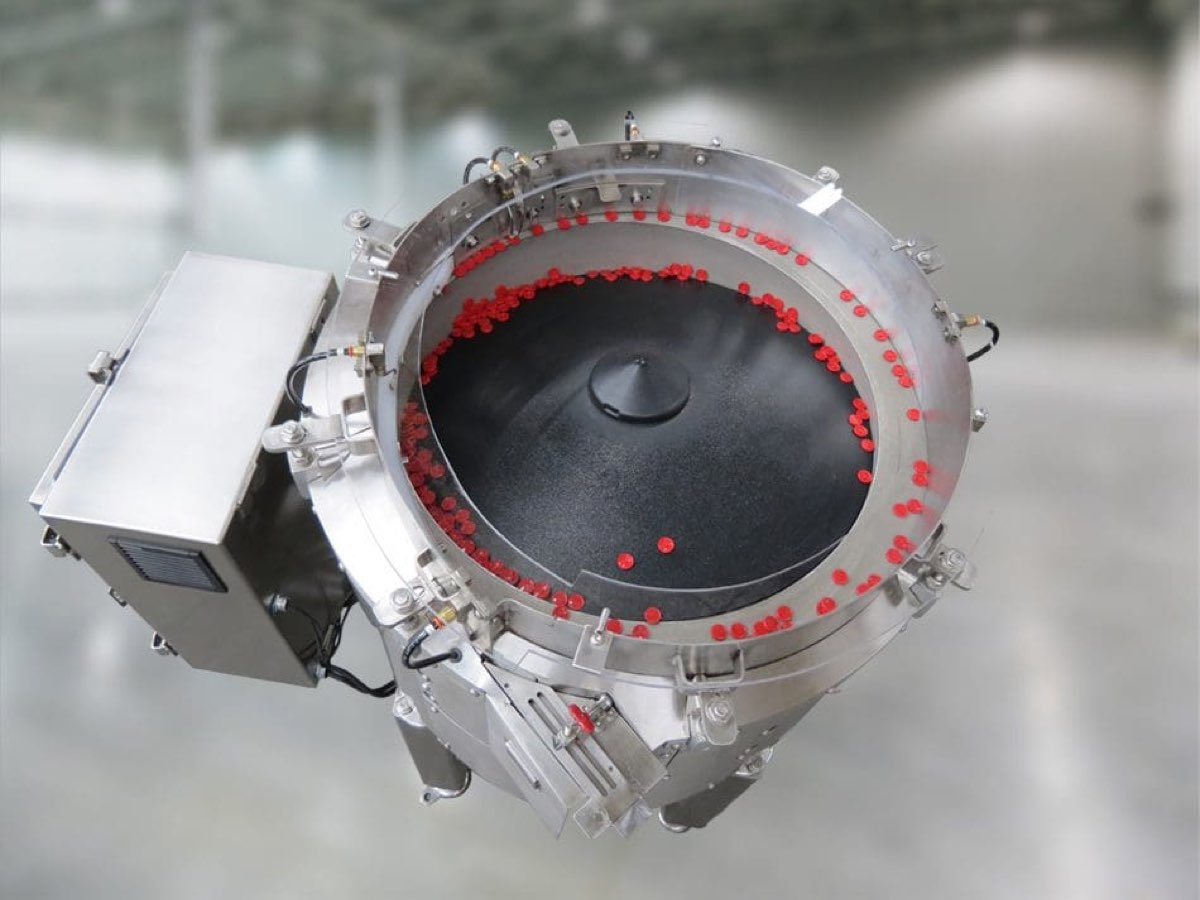
Injection-molded parts behave differently than every other bulk component
Injection-molded plastic parts present a unique set of feeding challenges that cannot be solved by simply adapting a bowl feeder originally designed for metal fasteners. The root of the problem is that injection-molded parts combine low mass, variable friction, and electrostatic behavior into a single package. A fastener has a predictable weight, a known coefficient of friction against steel, and no electrostatic charge. An injection-molded PP cap or an ABS housing has none of those guarantees.
The engineers who succeed with plastic part feeding understand three things early: gate flash and vestige change how the part slides, static electricity changes how the part separates, and multi-cavity molds produce variation that the feeder must absorb. When any one of those factors is ignored, the result is inconsistent feed rate, frequent jams, or cosmetic damage that only shows up at final inspection.
This guide covers the full scope of injection-molded plastic part feeding, from material-specific behavior to static management, gate flash mitigation, and multi-cavity variation handling. It builds on our earlier plastic parts feeding overview and goes deeper into the process-level details that injection molding and assembly engineers need to specify, validate, and maintain reliable feeding systems.
If your team is also working on part geometry for automation, our design for feeding guide covers the geometry-side considerations that pair directly with the process issues discussed here.
Gate flash, vestige, and their impact on feeding dynamics
Gate flash and gate vestige are among the most underappreciated causes of feeding failure in injection-molded plastic parts. The gate is the entry point where molten resin enters the mold cavity. After the part is ejected, the gate location leaves behind a small raised area, a tab, or a witness mark. That tiny feature can behave like a new geometric element that the feeder tooling was never designed to handle.
When parts tumble in the bowl, the gate vestige can catch on track edges, selectors, or wiper blades. A vestige that measures only 0.3 mm to 0.8 mm in height can cause a part that was running at 120 ppm to drop to 40 ppm or jam entirely. The problem is made worse when the gate location changes between production lots or when the mold is serviced and the gate condition is altered.
There are several practical approaches to managing gate flash in the feeding process. The first is to specify gate type during mold design. Submarine gates and tunnel gates tend to leave smaller vestiges compared to sprue or edge gates. For parts where feeding reliability is critical, working with the mold designer to position the gate away from orientation-critical surfaces is one of the highest-leverage decisions available.
The second approach is to accept the gate vestige and design the feeder tooling around it. This means building larger clearance margins at selector points, using wider track gaps at wiper positions, and verifying that the gate location does not interfere with the part's stable resting position on the track. This approach adds complexity to the tooling but preserves the mold design flexibility that process engineers often need for filling and cooling optimization.
The third approach is post-mold gate removal before feeding. If the production line includes a deflashing or trimming station, gate vestige can be removed before parts enter the bowl. This is the most effective solution but also the most expensive because it adds a process step and requires additional fixturing or robotic handling.
Teams should never assume that gate conditions are stable across mold lifetimes. As a mold ages, gate wear changes the flash profile, and parts that previously fed well can begin to jam. Validation testing should always include parts from late-cycle mold conditions, not only freshly maintained molds.
Static electricity management in plastic part feeding
Static electricity is the single most disruptive factor in plastic part feeding that has nothing to do with mechanical design. When non-conductive plastic parts vibrate against each other and against a non-conductive bowl surface, triboelectric charging builds up rapidly. Parts begin to cling to each other, stick to the bowl wall, or bridge across track gaps. The symptom looks like a mechanical jam, but the root cause is electrostatic.
The severity of static buildup depends on the resin family, the ambient humidity, and the bowl surface material. Polypropylene, polyethylene, and acetal are among the worst offenders because they are highly insulating and generate strong charges when rubbed. Nylon is somewhat better because it absorbs moisture from the air, which provides a degree of natural conductivity. ABS and polystyrene fall somewhere in the middle.
Ambient humidity is a major factor. On dry factory floors during winter months, with relative humidity below 30 percent, static problems are dramatically worse. The same feeder that runs cleanly at 55 percent RH may become unusable at 25 percent RH without any mechanical change. This is why static control must be treated as a system-level requirement, not an afterthought.
There are three main strategies for managing static in plastic part feeding. The first is bowl surface selection. Conductive or anti-static coatings on the bowl surface provide a controlled discharge path. Materials such as conductive polyurethane or carbon-loaded nylon allow the accumulated charge to bleed away rather than building to levels that cause part adhesion. These surfaces are now standard on bowls specified for plastic part handling.
The second strategy is environmental control. Maintaining factory humidity in the 45 to 55 percent range significantly reduces triboelectric charging for most resin families. This is a facility-level investment but one that pays off across the entire assembly line, not just the feeder. Ionizing bars or ionizing air blowers positioned near the bowl inlet can also neutralize charge on incoming parts, though they add maintenance overhead because ion emitters need periodic cleaning and calibration.
The third strategy is mechanical. Increasing the track angle slightly helps overcome static-induced sticking by giving gravity more influence over the vibratory motion. Adding a wider gap at critical accumulation points reduces the chance that charged parts will bridge and block flow. The combination of mechanical and electrostatic solutions is almost always more reliable than either approach alone.
For teams dealing with ESD-sensitive products, our ESD control in parts feeding guide covers the additional requirements for protected environments.
Multi-cavity mold variation and its feeding consequences
Most high-volume injection-molded parts come from multi-cavity molds that produce 2, 4, 8, 16, or even 32 parts per cycle. Each cavity in the mold wears differently, fills at slightly different pressures, and cools with small temperature variations. The result is that parts from cavity 1 are measurably different from parts in cavity 8, even though they are nominally the same part number.
For feeding systems, cavity variation is a margin problem. The tooling in a vibratory bowl feeder is typically designed to accept parts within a specified dimensional range. If the variation across cavities pushes some parts toward the upper tolerance limit and others toward the lower limit, the tooling must be wide enough to pass the largest parts while still correctly orienting the smallest parts. This tension is the fundamental challenge of feeding multi-cavity parts.
Consider a small molded connector body with a target dimension of 12.00 mm and a tolerance of plus or minus 0.10 mm. Parts from cavity 1 may measure 12.08 mm on average, while parts from cavity 4 measure 11.94 mm. A selector gap set to 12.10 mm passes everything but provides no orientation discrimination. A gap set to 11.98 mm orients the small parts correctly but rejects the large parts as wrong orientation even though they are perfectly good production pieces. The rejected parts recirculate, reducing effective feed rate and increasing cycle time.
The practical response to multi-cavity variation is to design feeding tooling with adjustable margins and to validate with a full set of cavity-sorted samples. Testing with only one cavity's output gives a false sense of stability. The feeder must be proven with the full range of cavity variation before production approval.
Color sorting adds another layer of complexity. When the same mold runs different colored resins, colorant changes can alter shrink rate, which changes part dimensions. A black version of a part may feed differently than the natural or white version because carbon black affects thermal conductivity and shrinkage. If the feeding system must handle multiple colors of the same part geometry, the tooling must accommodate the combined dimensional range of all color variants.
Teams managing multi-cavity feeding programs should request cavity-by-cavity dimensional data from the molding supplier and use it to set tooling margins. Our part lot variation guide provides additional context on how lot-to-lot differences compound the cavity variation challenge.
Annealed versus as-molded dimensions and time-dependent changes
Injection-molded parts continue to change dimensions after they leave the mold. Residual stresses from uneven cooling cause post-mold shrinkage, and some crystalline resins such as PEEK and POM continue to crystallize for hours or days after molding. Parts that feed correctly immediately after molding may behave differently after 24 hours or after an annealing cycle.
Annealing is a heat treatment process that relieves internal stress and stabilizes dimensions. For engineering resins used in demanding applications, annealing can change critical dimensions by 0.05 mm to 0.15 mm, which is significant for feeding tooling. If the feeding system is validated using as-molded parts but receives annealed parts in production, the feed rate and orientation accuracy can drift.
The feeding engineer should always clarify the state of the parts at the point of feeding. Are they fed directly from the molding press? Are they stored for 24 hours before feeding? Are they annealed or conditioned before they reach the assembly line? Each of these states may require different tooling settings.
For programs where parts transition between multiple dimensional states, the safest approach is to validate the feeder at each state and set tooling to accommodate the combined range. This sometimes means accepting a slightly lower feed rate in exchange for robustness across all conditions. If maximum feed rate is required at every state, separate tooling or a flexible feeder with recipe-based adjustment may be necessary.
Common plastic materials and their feeding characteristics
The table below summarizes the key feeding-relevant properties of the most common injection-molded plastic materials. This data should be used as a starting point for feeder specification and validated with actual production samples.
| Material | Typical weight (small parts) | Static tendency | Surface friction | Gate flash sensitivity | Recommended bowl surface |
|---|---|---|---|---|---|
| Polypropylene (PP) | 0.5-5 g | Very high | Low to medium | Moderate | Anti-static PU or conductive nylon |
| Polyethylene (PE, HDPE, LDPE) | 0.5-8 g | Very high | Low | Low | Anti-static PU or flock coating |
| ABS | 2-30 g | Moderate | Medium | Moderate | Standard PU or nylon bowl |
| Polystyrene (PS) | 1-15 g | High | Low to medium | Low | Anti-static PU or nylon |
| Polyamide (Nylon, PA6, PA66) | 1-20 g | Low to moderate | Medium to high | High | Nylon bowl or standard PU |
| Polyacetal (POM, Delrin) | 1-25 g | High | Very low | Moderate | Nylon bowl with grip-enhanced track |
| Polycarbonate (PC) | 3-40 g | Moderate | Medium | High | Soft PU or nylon bowl |
| PEEK | 2-30 g | Low | Medium to high | Very high | Nylon bowl or hardened PU |
| TPE / TPU (elastomers) | 1-20 g | Moderate | Very high | Low | Low-friction PU or Teflon-PU hybrid |
| PBT | 1-15 g | High | Low to medium | Moderate | Anti-static nylon |
Materials with very high static tendency almost always require active ESD control or anti-static bowl surfaces. Materials with very low surface friction, such as POM and PE, may need grip-enhanced track profiles to prevent parts from sliding backward on the incline. High gate flash sensitivity means the tooling design must account for vestige location and height in the orientation logic.
Tooling strategies specific to injection-molded plastic parts
Tooling for injection-molded plastic parts should follow several design principles that differ from metal part feeding. First, selector points should be wider and more forgiving. Plastic parts are lighter, so they respond more to vibration and less to gravity. A narrow selector that works for a steel washer may cause a plastic part to bounce unpredictably and fall through even when it is in the correct orientation.
Second, reject tooling should use softer actuation. Plastic parts can deform when pushed by aggressive wipers or deflection plates. Once deformed, a part may not recover its original shape and can jam downstream. Pneumatic pushers or spring-loaded deflectors with controlled force are preferred over rigid steel deflectors.
Third, the track profile should be optimized for the part's center of gravity. Many injection-molded parts have ribs, bosses, or hollow sections that shift the center of gravity away from the geometric center. The track must support the part in a way that aligns the actual center of gravity with the stable feeding position, not the theoretical geometric center.
Fourth, accumulation zones should be designed to prevent part-on-part contact damage. When lightweight plastic parts pile up in the bowl, the bottom layers can be scratched by the weight of the upper layers. This is especially critical for cosmetic parts where visible surfaces must remain defect-free. The accumulation zone depth should be limited, and the bowl should include recirculation paths that keep the part population flowing rather than stacking.
Finally, the track surface should be matched to the part's friction coefficient. Smooth PU works for most parts, but low-friction materials like POM or PE may need a textured or stippled surface to provide enough grip. High-friction materials like TPE may need a smoother surface to prevent sticking and allow the part to advance at the required rate.
Color sorting and pre-feeding considerations
Color sorting is sometimes required before feeding when the same feeder handles parts of different colors that must not mix. This is common in consumer goods assembly where a single production line runs multiple product variants. Vision-based sorting systems can be placed upstream of the feeder to verify part color before parts enter the bowl.
Color sorting adds complexity but is often simpler than maintaining multiple feeders for each color variant. A single flexible feeder with a vision inspection zone can handle color verification, orientation, and presentation in one station. For higher-volume lines, a separate optical sorting station before the bulk feed hopper keeps the feeder dedicated to one color at a time.
When color sorting is integrated with feeding, the inspection criteria should include not only color but also surface defects that affect feeding behavior. Gate flash, short shots, and flash-induced dimension changes can all be detected at the inspection stage before parts reach the feeder, reducing jam frequency and improving overall line reliability.
Frequently asked questions
How do I know if static electricity is causing my feeding problem?
Static-induced feeding problems typically show specific symptoms: parts stick to the bowl wall instead of advancing, parts clump together and travel in groups, or parts bridge across track gaps without any mechanical obstruction. If the problem gets worse on dry days or during winter months and improves when humidity increases, static is almost certainly a contributing factor. A simple test is to lightly mist the bowl surface with an anti-static spray and observe whether the feeding behavior improves within a few minutes.
Can the same bowl feeder handle parts from a new mold with different gate locations?
Sometimes, but it depends on how the gate location change affects the part's orientation behavior. If the gate was on the bottom surface and the new mold places it on the side, the part may settle differently on the track. The safe approach is to revalidate the feeder with samples from the new mold. If the gate vestige is in a non-critical area that does not interact with selectors or wipers, the existing tooling may still work. If the vestige is near an orientation feature, tooling adjustment is likely needed.
What is the best bowl surface for feeding clear or transparent plastic parts?
Clear or transparent parts are almost always cosmetic parts, so surface protection is the top priority. A nylon bowl or a flock-coated surface provides the softest contact and the lowest risk of scratching. For higher feed rates, a soft polyurethane coating with a smooth finish is a good compromise. Avoid any surface that has texture or stippling on the contact face, as those features can leave micro-marks on visible surfaces.
How do I handle feeding when the same part comes from different molding suppliers?
Different molding suppliers will produce parts with different dimensional distributions, even if they are working from the same drawing. The feeder tooling must accommodate the combined tolerance range of all suppliers. Start by collecting sample sets from each supplier and measuring the critical orientation dimensions. Set tooling margins to pass the full range. If one supplier's parts are significantly different, consider requesting a gate location adjustment or mold modification to improve feeding compatibility.
Is it better to feed parts directly from the molding press or from bulk packaging?
Direct press-side feeding eliminates the variability introduced by bulk packaging, handling, and settling. Parts go from the mold to the conveyor to the feeder in a controlled flow. However, many production layouts require parts to be packaged, transported, and then fed at a separate assembly station. In those cases, the bulk packaging method matters. Parts that are poured into a hopper from a bag will have different fill dynamics than parts that are gently loaded from a tray. The feeder inlet should be designed for the actual loading method used in production.
What feed rates can I expect for typical injection-molded plastic parts?
Feed rates for injection-molded plastic parts typically range from 20 to 200 ppm, depending on part size, orientation complexity, and cosmetic requirements. Small, simple parts like bottle caps or small connectors can achieve 100-200 ppm on well-designed bowls. Larger parts with complex orientation requirements or strict cosmetic standards typically run in the 20-80 ppm range. Flexible feeders for plastic parts usually operate at 10-60 ppm but offer faster changeover between variants. The actual rate should be validated with production samples under actual factory conditions.
Key takeaways for injection-molded part feeding
Feeding injection-molded plastic parts reliably requires attention to details that are invisible on a drawing. Gate flash and vestige change how parts interact with tooling. Static electricity can override mechanical design if not controlled. Multi-cavity mold variation demands wider tooling margins and thorough validation. Material properties such as friction coefficient and static tendency dictate bowl surface selection. And time-dependent dimensional changes from annealing or post-mold shrinkage must be accounted for in the feeding specification.
The most successful projects treat the feeder as a system component that interacts with the molding process, the factory environment, and the downstream assembly operation. When those interfaces are understood and managed, injection-molded plastic parts can be fed at high rates with excellent cosmetic quality. When they are ignored, the feeding system becomes a persistent production bottleneck.
If your team is evaluating a feeder for a specific injection-molded part, send Huben Automation your sample and target rate. We will assess the gate condition, static risk, cavity variation, and material properties to recommend the right bowl surface, coating, and tooling approach.
Ready to Automate Your Production?
Get a free consultation and detailed quote within 12 hours from our engineering team.