Part Presence Verification in Feeding Cells 2026

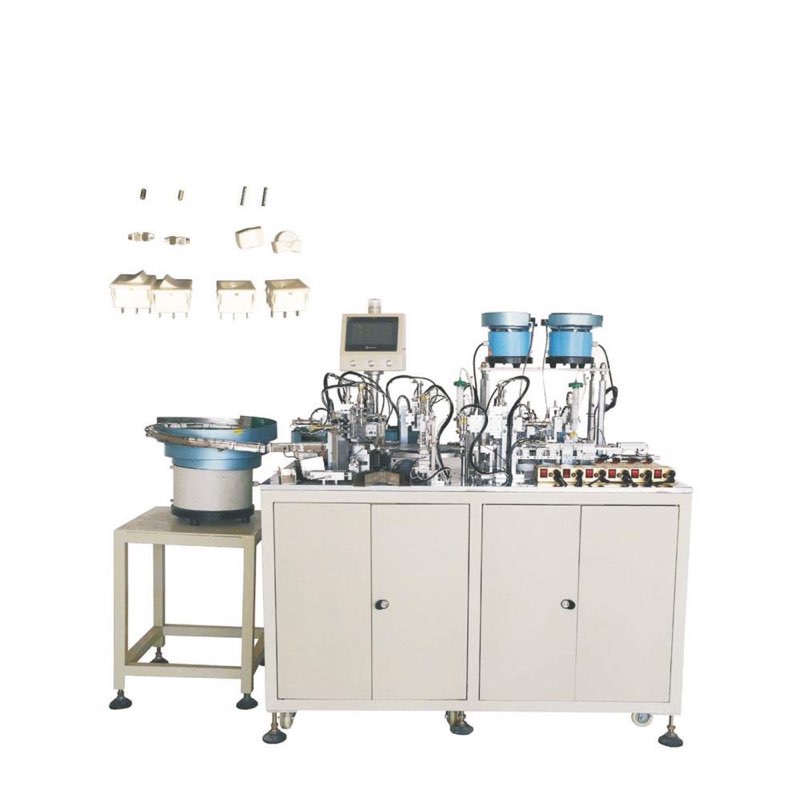
A part detected is not always a part correctly presented
Many feeding cells have a sensor that sees something at the pickup point and calls the job done. That works for simple parts. It fails quickly when orientation, stack state, or exact position matter. Presence and readiness are not always the same thing.
This matters because verification logic decides how much risk the feeder pushes into the next station. This article pairs with our sensor selection guide.
Why simple presence checks often miss the real defect
The first issue is geometry. A sensor may detect two overlapped parts or a rotated part as if everything is fine.
The second issue is motion. A part can be present but still oscillating, which leads to missed picks or poor placement.
The third issue is confirmation level. Some stations only need a rough yes/no. Others need orientation or seat confirmation as well.
| Verification need | Simple presence sensor | Stronger option | When stronger logic helps |
|---|---|---|---|
| One part at stop gate | Often enough | Photoelectric or fiber sensor | Simple robust parts |
| No double parts | Often weak | Height or vision check | Flat or nested parts |
| Exact orientation | Usually weak | Vision or shaped verification | Asymmetric precision parts |
| Stable pick position | Case dependent | Presence plus position timing | Fast robot picks |
How much verification is practical
The goal is not to add sensors everywhere. It is to protect the station from the defects that actually cost money. For some parts, one well-placed sensor is enough. For others, layered checks are worth the complexity.
Vision is useful when geometry or orientation is subtle. Simple sensors are still better where the part state is easy to interpret and speed matters more than extra data.
The best logic usually checks only what the station truly needs to know.
Rules for better presence verification
- Define the actual failure mode first.
- Separate presence, orientation, and stability checks when needed.
- Place sensors where the part state is calm.
- Review false-positive and false-negative cost honestly.
Good verification logic is specific. Generic sensing often shifts the problem downstream.
How to validate verification logic
Test good parts, bad parts, doubles, and unstable presentations deliberately. A verification system should prove what it catches and what it ignores.
Measure how the logic behaves at real cycle speed. A sensor that works during slow debugging may fail at actual takt.
If the cell uses a robot, validate the timing relationship between the ready signal and the pick command.
Buyer checklist before requesting a quote
- State the exact defect the cell must block.
- Describe the acceptable miss and false-reject risk.
- Share the pickup geometry and cycle time.
- Include examples of bad part states if available.
Huben Automation reviews presence verification around real defect modes, timing, and the level of certainty the next station needs. If you want help checking feeding-cell verification logic, send us the part and pickup details.
Ready to Automate Your Production?
Get a free consultation and detailed quote within 12 hours from our engineering team.