Micro Parts Feeding Solutions: Precision Handling for Components Under 5mm

Introduction: The Challenge of Feeding Micro Parts
As manufacturing advances toward miniaturization, the demand for reliable micro parts feeding has grown dramatically. Components under 5mm, and increasingly under 1mm, present unique challenges that standard vibratory feeders cannot address. Surface tension, electrostatic forces, and air resistance dominate the behavior of micro parts, making conventional feeding principles unreliable or impossible.
Industries from medical devices and electronics to watchmaking and aerospace depend on precise handling of miniature screws, pins, springs, electronic components, and optical parts. A feeder that drops one part in a thousand may be acceptable for a 10 mm fastener. For a 0.5 mm contact pin worth several dollars, a single drop is a catastrophic failure. This article explores the specialized equipment, techniques, and design principles that make micro parts feeding reliable and economically viable.
Why Micro Parts Require Specialized Feeding Solutions
The physics of part handling changes fundamentally as dimensions shrink. Understanding these changes explains why standard feeder designs fail and guides the selection of appropriate solutions.
Surface Forces Dominate Gravity
For macroscopic parts, gravity and inertia determine behavior on a vibratory track. For micro parts, surface forces such as van der Waals attraction, electrostatic charge, and surface tension become dominant. A 0.3 mm steel ball can stick to a stainless steel track with enough force to resist normal vibration amplitudes. Electrostatic charge accumulated during bulk handling can cause parts to cling to surfaces or repel each other unpredictably.
Mitigating surface forces requires specialized approaches: ionization bars to neutralize static charge, controlled humidity environments to manage surface tension, and surface treatments that reduce adhesion. These measures add complexity but are essential for reliable micro parts feeding.
Air Resistance and Turbulence
Micro parts have high surface-area-to-mass ratios, making them sensitive to air currents. The airflow from a nearby fan, the movement of an operator, or even thermal convection can dislodge parts from tracks or alter their trajectory. Micro feeding systems often require enclosed tracks or laminar flow environments to prevent air-induced disturbances.
Nesting and Tangling
Small parts with complex geometries, such as micro springs or interlocking clips, tend to nest and tangle in bulk. Standard bowl agitation may tighten tangles rather than separate them. Pre-orientation techniques such as vibratory screening, air separation, or centrifugal pre-feeding are often necessary before the main feeding process.
Damage Sensitivity
Micro parts are often fragile. Thin walls, delicate features, and precise tolerances make them vulnerable to damage from impact, vibration, or compression. Feeding systems must handle parts gently, with controlled acceleration, soft landing surfaces, and minimal drop heights.
Micro Bowl Feeders: Downsized with Precision
Micro bowl feeders are specially designed vibratory feeders with bowls typically 80-150 mm in diameter, compared to 200-600 mm for standard feeders. The reduced scale brings parts into a regime where vibration can be controlled more precisely.
Design Features of Micro Bowls
Micro bowl tracks are machined with extremely tight tolerances, often 0.05-0.1 mm, to match the part dimensions. Track width is precisely matched to part size with minimal clearance to prevent parts from turning or stacking. Wall heights are kept low to reduce surface contact area and minimize adhesion.
Surface finish is critical. Mirror-polished tracks reduce friction and adhesion. Specialized coatings such as diamond-like carbon or fluoropolymer can further reduce surface energy and prevent sticking. Some applications use glass or ceramic inserts for the track surface to eliminate metallic adhesion entirely.
Drive and Control Considerations
Micro bowls require drive units with exceptional amplitude stability and fine adjustment capability. Standard electromagnetic drives with 0.1 mm resolution may be inadequate. Piezoelectric drives, which can control amplitude to sub-micron precision, are increasingly used for micro feeding applications. These drives operate at higher frequencies, typically 100-300 Hz, with amplitudes of 0.01-0.1 mm.
Controllers for micro feeders must provide precise frequency tuning, amplitude feedback, and often phase control between multiple drive points. Digital signal processing enables adaptive control that responds to load changes and maintains consistent feed rates.
| Feature | Standard Feeder | Micro Feeder |
|---|---|---|
| Bowl diameter | 200-600 mm | 80-150 mm |
| Track tolerance | 0.2-0.5 mm | 0.05-0.1 mm |
| Vibration amplitude | 0.5-2.0 mm | 0.01-0.3 mm |
| Operating frequency | 50-100 Hz | 100-300 Hz |
| Drive type | Electromagnetic | Piezoelectric or precision electromagnetic |
| Part size range | 5-100 mm | 0.3-5 mm |
| Feed rate (typical) | 30-200 ppm | 10-80 ppm |
| Surface treatment | Standard polish or PU coat | Mirror polish, DLC, ceramic |
| Static control | Rarely needed | Ionization bars essential |
Vision-Guided Feeding for Micro Parts
Vision-guided flexible feeders have become the preferred solution for many micro parts applications, particularly where multiple part types must be handled or orientation requirements are complex.
How Vision-Guided Micro Feeding Works
Parts are dispersed on a backlit vibrating platform where surface forces are less problematic than in confined tracks. A high-resolution camera captures images of the parts, and vision software identifies each part's position and orientation. A robotic arm or pick-and-place mechanism then selectively picks correctly oriented parts and places them in the downstream process.
For micro parts, camera resolution is critical. A 0.5 mm part may occupy only 50 pixels in a standard industrial camera, insufficient for reliable recognition. Specialized macro lenses and high-resolution sensors (5-20 megapixels) are used to achieve adequate pixel density. Telecentric lenses maintain constant magnification regardless of part height variations, improving measurement accuracy.
Lighting Techniques for Micro Vision
Proper illumination separates micro parts from the background and reveals orientation features. Diffuse backlighting creates silhouettes that work well for simple geometry recognition. Low-angle directional lighting emphasizes surface texture and edge features. Coaxial lighting reduces shadowing for flat parts with engraved markings. Multi-spectrum lighting can differentiate parts by color or material properties.
Robot and Gripper Selection
Micro parts require precision robots with repeatability of 0.01-0.05 mm. Small SCARA robots, compact Cartesian systems, or high-speed delta robots are commonly used. The gripper is equally critical: vacuum grippers with micro-nozzles handle flat parts, while precision pneumatic or piezoelectric grippers grasp cylindrical or irregular shapes. For the smallest parts, adhesive micro-grippers or electrostatic pickup may be necessary.
Vacuum and Pneumatic Assistance Techniques
Pneumatic systems play a vital role in micro parts feeding, from pre-orientation to final placement.
Vacuum Pre-Orientation
Vacuum pre-orientation systems use arrays of micro-nozzles to selectively pick parts from a bulk hopper based on geometry. Parts that match the nozzle spacing and orientation are lifted; others fall back for recirculation. This technique is effective for flat parts such as micro washers, shims, and electronic substrates.
Air-Jet Orientation and Separation
Controlled air jets can separate nested parts, flip lightweight components, or clear jams without mechanical contact. For micro springs, pulsed air jets can untangle nests by exploiting differences in resonant frequency. Air-knife separators use laminar airflow to align elongated parts such as pins and needles before they enter the feeding track.
Vacuum Conveying
For extremely small or fragile parts, vacuum conveying through micro-tubes eliminates mechanical track contact entirely. Parts are entrained in a controlled airflow and transported through smooth-bore tubing to the pickup point. While throughput is lower than mechanical feeding, damage rates approach zero.
Precision Measurement and Verification
Micro parts feeding systems often include inline measurement to verify dimensions, orientation, and presence before downstream processing.
Optical Micrometers and Laser Scanners
Optical micrometers measure part dimensions with 0.001 mm resolution as parts pass through a light curtain. Laser triangulation scanners capture 3D profiles for complex geometry verification. These measurements can trigger reject mechanisms or adjust downstream process parameters based on actual part dimensions.
Weight Verification
For very small parts, individual weighing with micro-balances provides a simple verification that the correct part is present and that no fragments or foreign objects are mixed in. A 1 mg part can be reliably distinguished from a 0.8 mg similar part using precision balances with 0.0001 g resolution.
Electrical Testing
Electronic micro components such as resistors, capacitors, and connectors can be tested for electrical continuity, resistance, or capacitance during the feeding process. Contact probes or non-contact eddy current sensors perform these tests at high speed, rejecting out-of-spec parts before they reach assembly.
Environmental Control for Micro Feeding
The feeding environment significantly impacts micro parts handling reliability. Controlling temperature, humidity, and cleanliness reduces variability and improves yields.
Humidity and Static Control
Maintaining relative humidity between 45-65% reduces electrostatic charge buildup while avoiding condensation. Ionization bars with balanced output neutralize static without introducing charge of the opposite polarity. Grounding all conductive surfaces and using antistatic materials for non-conductive components further reduces electrostatic issues.
Temperature Stability
Temperature variations cause thermal expansion in both parts and feeding equipment. For parts with 0.01 mm tolerances, a 5°C temperature change can alter dimensions by 0.0001 mm, significant relative to the tolerance band. Precision feeding systems may require temperature-controlled enclosures maintaining ±1°C stability.
Cleanroom Compatibility
Medical and semiconductor applications require feeding systems compatible with ISO 14644 cleanroom classes. Stainless steel construction with minimal crevices, sealed bearings, and smooth surfaces prevent particle generation. Some systems are fully enclosed with HEPA-filtered air supply to maintain cleanliness during operation.
Application Examples and Industry Solutions
Micro parts feeding solutions serve diverse industries with specialized requirements.
Medical Device Manufacturing
Medical devices such as insulin pumps, pacemakers, and surgical instruments contain micro components that must be handled without contamination or damage. Medical device feeding systems use SUS316L stainless steel, cleanroom-compatible designs, and validation documentation to meet regulatory requirements. Micro cannulas, implant screws, and drug delivery components are typical applications.
Electronics and Semiconductor Assembly
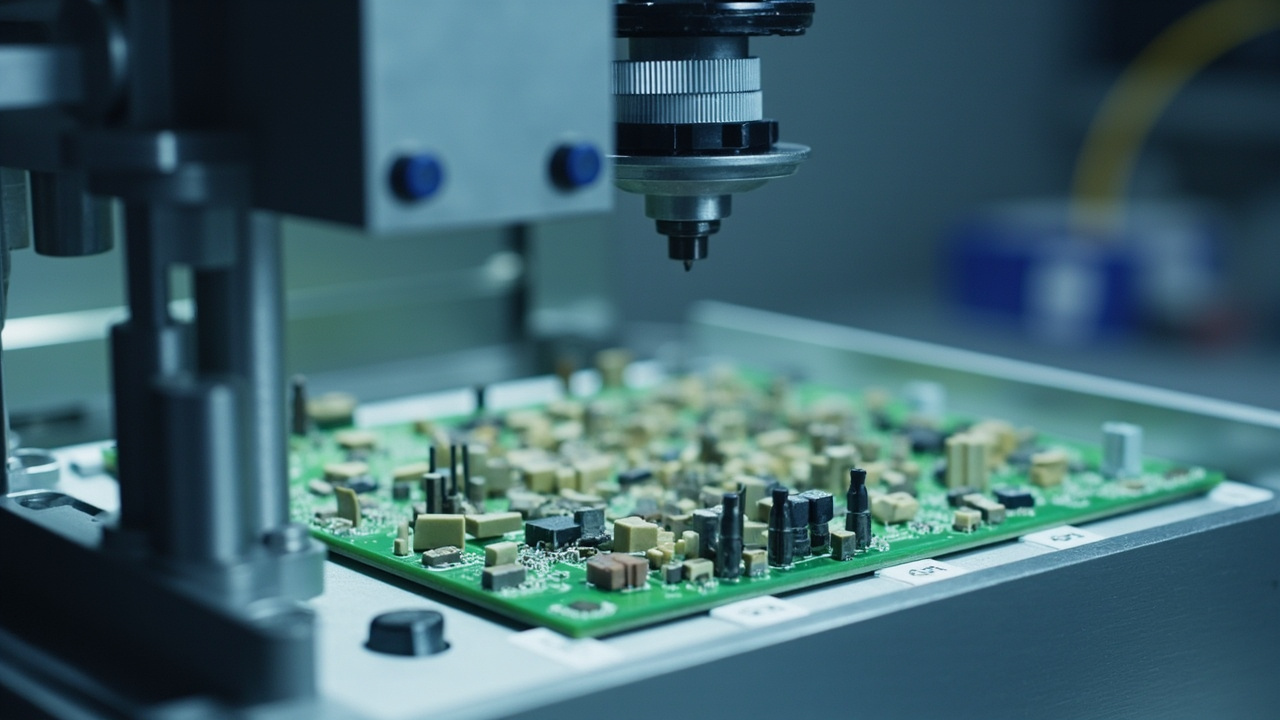
SMD components, micro connectors, and chip-scale packages require feeding with sub-millimeter precision. Vision-guided flexible feeders dominate this space, handling multiple component types on the same line. ESD protection is essential, with conductive materials and grounded surfaces throughout the feeding path.
Watchmaking and Precision Mechanics
Swiss watch manufacturers have long been pioneers in micro parts handling. Jeweled bearings, balance staffs, and escapement components are fed with extreme precision, often using custom-designed micro bowls with ceramic tracks and piezoelectric drives. Feed rates are modest, but orientation accuracy must be perfect.
Frequently Asked Questions
What is the smallest part size that can be fed reliably with vibratory feeders?
With specialized micro bowl feeders and piezoelectric drives, parts as small as 0.3 mm can be fed reliably. Below 0.3 mm, vision-guided flexible feeders or vacuum-based systems become more practical. The practical limit depends on part geometry, material, and required feed rate. Huben Automation has successfully designed feeders for 0.5 mm micro screws and 0.8 mm contact pins.
Why do micro parts stick to feeder tracks?
Surface adhesion forces, including van der Waals attraction, electrostatic charge, and surface tension from moisture, dominate over gravity for micro parts. These forces increase as surface-area-to-mass ratio grows. Mitigation strategies include ionization to neutralize static, controlled humidity, mirror-polished surfaces, low-surface-energy coatings, and reduced vibration amplitudes that minimize impact but still enable movement.
Are vision-guided feeders better than mechanical micro bowls?
For high-mix applications or parts with complex orientation requirements, vision-guided flexible feeders offer significant advantages: no custom tooling, quick changeover between parts, and gentle handling. For single-part, high-volume production of simple geometries, mechanical micro bowls are faster and more cost-effective. Many systems combine both approaches: a micro bowl for initial orientation and vision for final verification.
How do I prevent damage to fragile micro parts during feeding?
Damage prevention strategies include using polyurethane or rubber-coated tracks to cushion impacts, minimizing drop heights between feeding stages, controlling vibration amplitude to avoid excessive acceleration, adding soft landing zones at discharge points, and using vacuum or pneumatic transfer instead of mechanical tracks where possible. Testing with actual production parts under microscope inspection validates damage rates.
What environmental conditions are needed for micro parts feeding?
Optimal conditions include relative humidity of 45-65% to minimize static, temperature stability of ±2°C or better for precision applications, clean air with filtration for sensitive parts, and elimination of strong air currents or vibrations from nearby equipment. Enclosed feeding systems with environmental control are standard for critical applications.
How much do micro parts feeding systems cost?
Micro bowl feeders typically cost $2,500-6,000 depending on precision requirements and special features. Vision-guided flexible feeders for micro parts range from $5,000-15,000 depending on camera resolution, robot specification, and software complexity. Complete integrated systems with environmental control and inline inspection can reach $20,000-40,000. While more expensive than standard feeders, these systems prevent costly damage and downtime in precision manufacturing.
Conclusion: Precision Feeding for the Miniature Future
Micro parts feeding represents one of the most challenging and rapidly evolving areas of automation technology. As products continue to shrink across medical, electronics, and precision engineering industries, the demand for reliable handling of sub-5mm components will only increase.
Success in micro feeding requires understanding the unique physics at small scales, selecting appropriate equipment from micro bowls to vision-guided systems, controlling the feeding environment, and verifying performance with precision measurement. No single solution fits all applications, but the combination of advanced drive technology, intelligent vision systems, and careful environmental control makes reliable micro parts feeding achievable.
Whether you are handling 0.5 mm electronic connectors or 2 mm medical implant screws, contact Huben Engineering Team to discuss your micro parts feeding challenge. We specialize in precision feeding solutions that combine advanced technology with practical manufacturing experience.
Ready to Automate Your Production?
Get a free consultation and detailed quote within 12 hours from our engineering team.