Micro-Fastener Feeding Systems: Handling M1-M3 Screws at High Speed
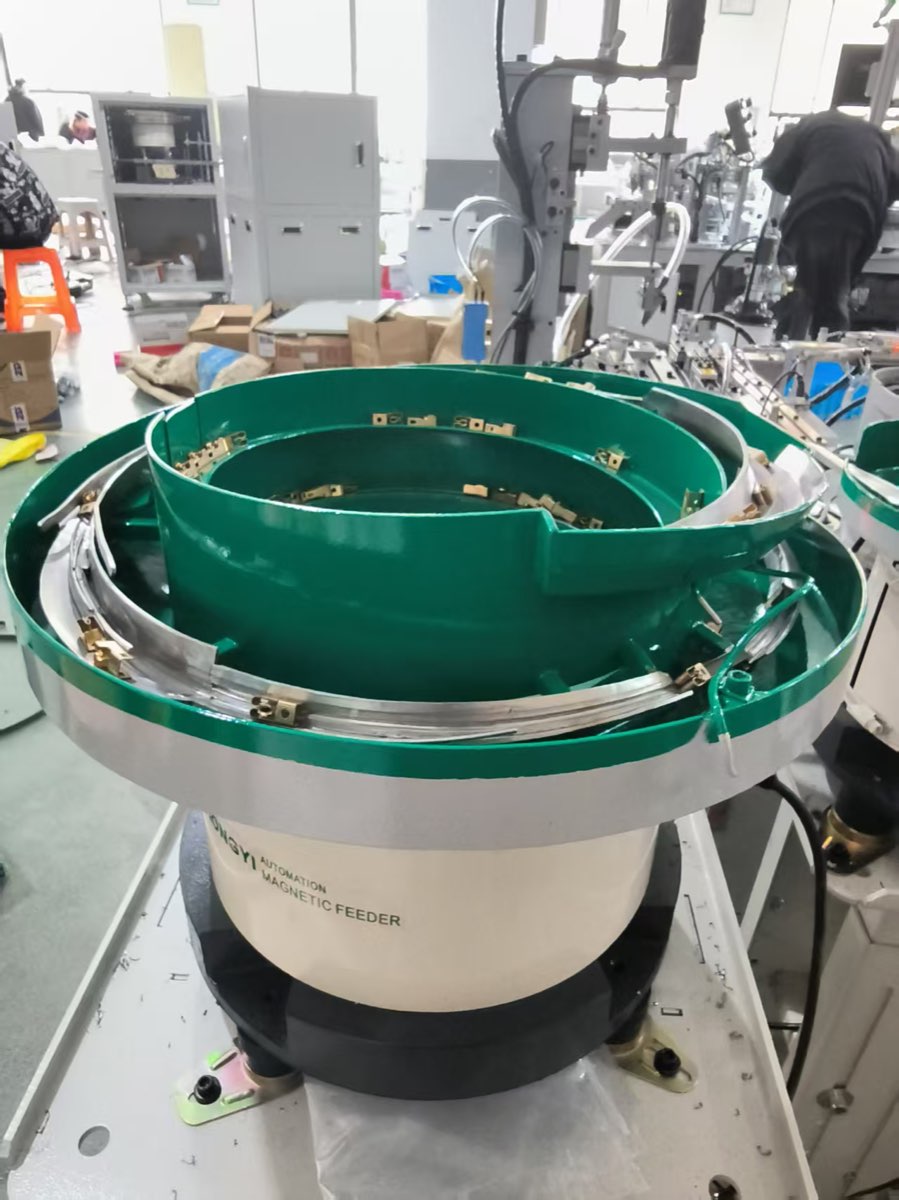
The Challenge of Feeding Micro-Fasteners
As consumer electronics, medical devices, and precision optics become smaller, the demand for handling micro-fasteners—typically M1 to M3 screws—has surged. Feeding these miniature parts at high speed presents unique challenges that do not exist with standard M4-M8 hardware.
At the micro scale, physical forces behave differently. Static electricity, surface tension, and minute manufacturing burrs can cause tiny screws to cling together, bridge across tracks, or misorient. This guide details the engineering strategies required to build a reliable micro-fastener feeding system.
Key Design Factors for Miniature Screws
| Challenge | Physical Cause | Engineering Solution |
|---|---|---|
| Clumping and bridging | Static electricity & oil surface tension | Ionizing air jets & specialized track coatings |
| Misorientation | Center of gravity shifts due to tiny mass | Micro-machined selector profiles & tight tolerances |
| Shingling in track | Over-pressurization from upstream parts | Multi-stage buffer zones & precise amplitude control |
| Jamming at escapement | Dimensional variation in fastener heads | Precision ground escapement jaws & optical verification |
Bowl Design and Micro-Tooling
Standard vibratory bowl feeder construction methods often fail at the micro scale. A gap or weld seam that is acceptable for an M6 bolt will swallow an M1.5 screw head.
- Precision Machining: Instead of traditional welded tracks, micro-feeder tracks are often CNC-machined from solid stainless steel or aluminum blocks. This ensures absolute track continuity without weld distortion.
- Track Width Tolerances: The slot width for hanging micro-screws must be held to within +/- 0.05mm. If the track is too wide, the screw head drops through; if too narrow, the shank binds.
- Vibration Frequency: Micro-feeders typically operate at higher frequencies (100-120 Hz) with much smaller amplitudes. This "micro-vibration" moves light parts smoothly without launching them off the track.
Managing Static and Contamination
Static electricity is the enemy of micro-parts. A static charge that is imperceptible to a human can cause M1 screws to fly off the track or stick to the bowl wall.
- Ionization: Integrate ionizing air blow-offs at key points in the bowl, particularly at the selector and the discharge point. The air must be clean, dry, and regulated to very low pressure to avoid blowing the parts away.
- Coatings: Use anti-static or conductive coatings on the bowl interior. Avoid thick urethane coatings; instead, opt for thin-film hard coatings or specialized polishing that reduces friction without holding a charge.
- Cleanliness: Micro-fasteners must be delivered clean. Oil or cutting fluid from the manufacturing process creates surface tension that binds small parts together, making vibratory separation nearly impossible.
Precision Escapement Design
Getting the screw to the end of the track is only half the battle. Presenting it to an automated screwdriver or pick-and-place robot requires a flawless escapement.
For micro-screws, the escapement jaws must be wire-EDM or precision ground. We often utilize optical sensors or fiber-optic thrubeam sensors to verify part presence and correct seating before the robot engages. Pneumatic blow-feed systems can be used, but the tubing ID and air pressure must be meticulously sized to prevent tumbling the screw in transit.
Buyer Checklist for Micro-Fastener Feeders
- Provide accurate samples: Send at least 5,000-10,000 pieces of the exact fastener you will use in production. Do not substitute "similar" screws.
- Specify the coating: Ask about anti-static measures and track finishes.
- Define the handoff: Clearly establish whether the feeder will present the screw to a vacuum nozzle, a magnetic bit, or a blow-feed tube.
Building a reliable micro-fastener feeder requires precision engineering and specialized tuning. If your project involves M1-M3 screws, contact the Huben Automation engineering team to discuss your application and request a detailed feasibility review.
Ready to Automate Your Production?
Get a free consultation and detailed quote within 12 hours from our engineering team.