Flexible Feeder Robot Integration Guide 2026

Robot integration is where flexible feeders either pay off or disappoint
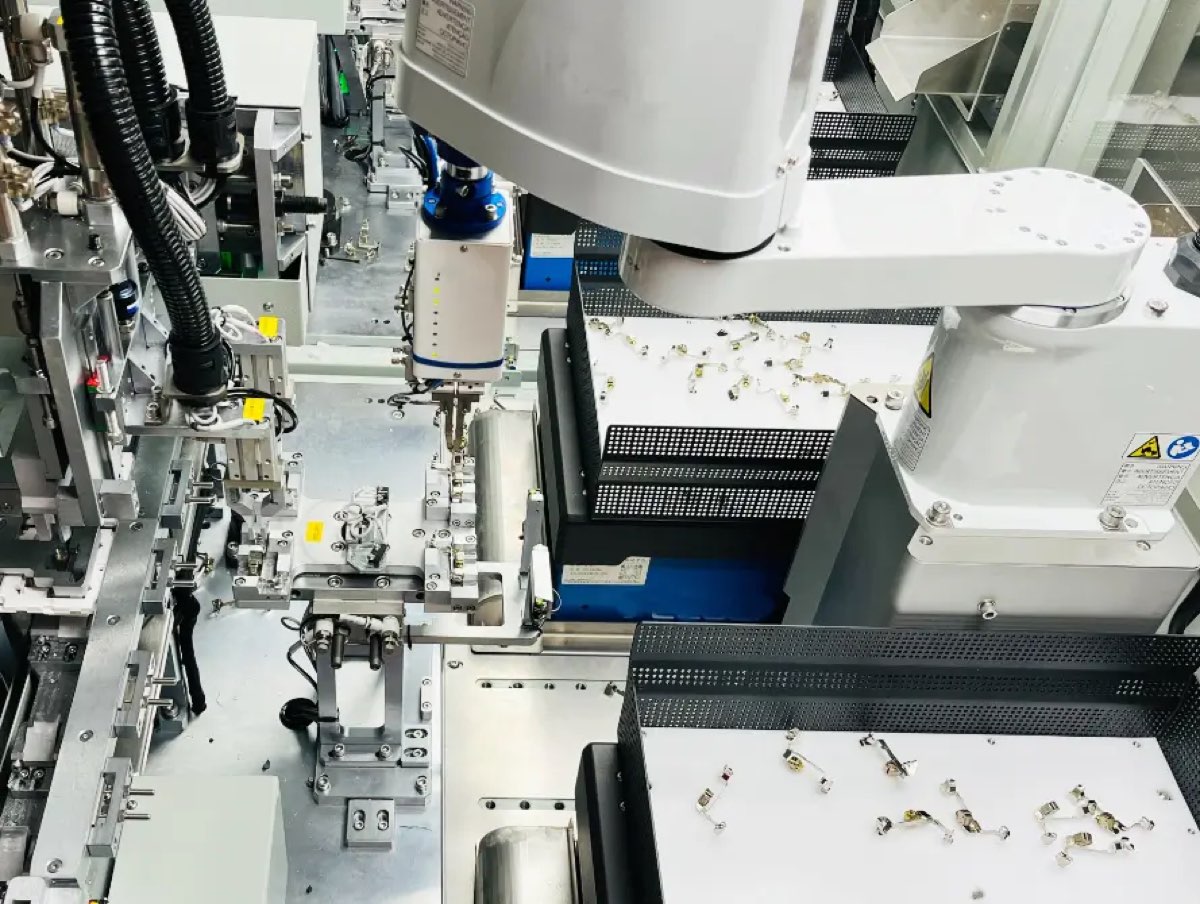
A flexible feeder is not just a vibrating platform with a camera above it. It is a cell. The feeder, vision system, robot, communication layer, and pickup logic all share responsibility for cycle time. When teams only compare platform size or camera resolution, they miss the real question: how fast and how reliably can the robot pick good parts from the platform under production conditions?
Huben's flexible feeder range covers 200 mm, 350 mm, and 500 mm platforms, 2-80 mm part size, 10-60 ppm output, 5 MP vision, and integration with robot platforms such as UR, FANUC, Omron, and Doosan. Those numbers are useful, but they only become valuable after the integrator defines the pick strategy, the communication handshake, and the changeover expectations.
This guide covers the practical parts of integration: cycle time, pick density, robot compatibility, and protocol planning. If your team is still deciding whether to use a flexible system at all, read flexible feeder vs standard bowl feeder first.
Start with cycle time, not only compatibility
It is easy to confirm that a feeder can connect to a robot. It is harder to confirm that the cell will hit the needed cycle time. The feeder may separate parts correctly, but if the robot path is long or the vision cycle waits too long between shots, the output drops fast. That is why flexible feeder planning should start with line demand.
For many projects, the target is not the absolute maximum platform throughput. It is the stable good-part rate the robot can maintain. The cell needs enough pickable parts in view, enough vision speed, and a path that does not waste robot motion. If the feeder spends all day re-spreading the same parts while the robot waits, the platform is technically working but the cell is not.
Teams should also plan for bad picks, part overlap, and low pick density near the end of a cycle. The first few parts on a full platform are easy. Sustained production is where the design proves itself.
| Integration variable | Why it matters | What to define early |
|---|---|---|
| Platform size | Controls spread area and pick density | Part size and parts per image |
| Vision cycle | Sets coordinate update speed | Image frequency and detection rule |
| Robot path | Drives total cell time | Pick height, drop location, safe approach |
| Communication | Determines handshake stability | Protocol, I/O mapping, fault handling |
Robot and protocol planning
Huben flexible feeders support common industrial protocols including Modbus TCP, Profinet, and EtherCAT. That gives integrators room to match the feeder to the robot cell instead of building awkward custom bridges. Still, a supported protocol is only the start. The project also needs a clean handshake: ready, image complete, coordinates valid, pick complete, no-part condition, alarm reset, and recipe change confirmation.
Robot brand matters mostly at the interface layer and the motion style. UR cobots are often chosen for flexible low-to-medium speed cells where simplicity and accessibility matter. FANUC and Omron can fit higher-output industrial cells with tighter integration requirements. The feeder should not lock the project into one robot strategy, but the integration work still changes with the platform.
Recipe handling deserves attention too. If the value of the flexible feeder is fast changeover, the recipe system should switch part logic cleanly. That includes vision parameters, pick angle rules, and any robot-side gripper offsets.
Vision, pick density, and part presentation
A 5 MP camera sounds impressive, but the question is whether the image contains enough usable parts. Flexible feeder performance drops when the platform never presents a strong batch of pick candidates. This happens when parts overlap, when the platform is overloaded, or when the vibration pattern does not suit the part geometry.
Some parts need a large platform just to separate well. Others work on a smaller surface with faster image cycles. The right choice depends on the part envelope and the target number of picks per minute. Small components do not always mean the smallest platform is best. Sometimes the line gains more from a larger spread area than from a compact footprint.
During FAT, ask not only how many coordinates the vision system can produce, but how many of those become successful robot picks over time.
The integration mistakes that slow projects down
The first mistake is leaving cycle-time ownership unclear. Mechanical, controls, and robot teams each assume another group will close the gap. The second is defining communication too late. The third is treating flexible feeding as a drop-in replacement for a bowl feeder without rethinking the cell sequence.
Another common issue is underestimating gripper design. A flexible feeder can locate the part accurately, but the robot still needs a gripper that tolerates slight orientation variation and lifts the part cleanly from the platform. Poor gripper choices erase the benefit of a good feeder.
- Define the handshake before build. Ready, busy, alarm, and no-part states should be agreed in writing.
- Plan recipe changeover as a full cell function. Feeder recipe alone is not enough.
- Test sustained pick rate. Initial pick speed is not the same as shift-long output.
- Review gripper and camera together. Those two define practical pickup success.
How to spec the project well
Before requesting a flexible feeder integration quote, send the part sample, target ppm, robot brand if already chosen, preferred communication protocol, gripper concept if known, and changeover expectation. If the line will run multiple parts, list them together. That allows the integration plan to be evaluated honestly.
Huben Automation supports flexible feeder robot integration as a system-level task, not just a hardware shipment. If you want help sizing the platform and confirming the handshake strategy, send us the part data and robot information and we can review the cell approach.
Ready to Automate Your Production?
Get a free consultation and detailed quote within 12 hours from our engineering team.