Feeding Oily Parts Design Guide 2026

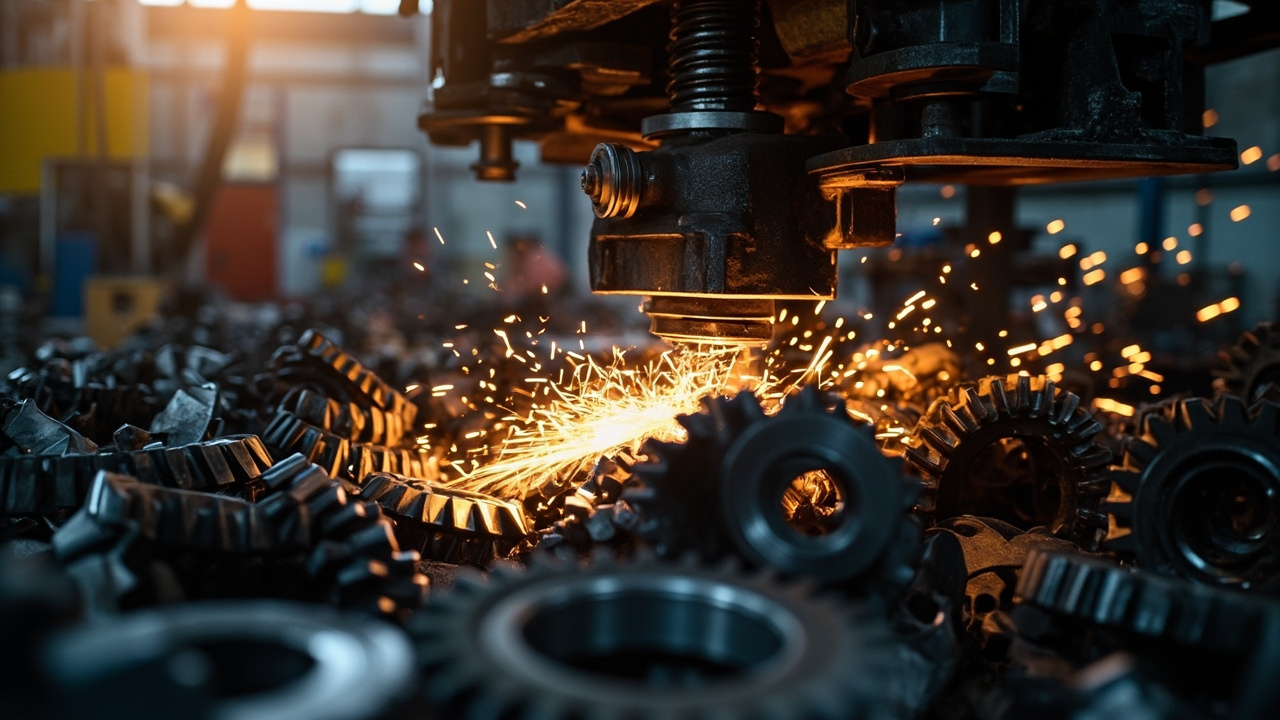
Oil changes the whole feeder, not just the coefficient of friction
Oily parts frustrate feeder projects because the trouble shows up everywhere at once. Parts slip where you wanted traction, stick where you wanted clean separation, carry debris into sensors, and change behavior as the bowl condition evolves during a shift.
That is why a feeder for oily parts should be treated as its own design case, not as a normal feeder with a little extra tuning. Surface strategy, bowl-fill control, track geometry, and cleaning access all matter more once lubrication enters the picture.
This guide covers practical design habits for lubricated stampings, machined parts, and similar metal components. It complements our stamped-parts feeder guide.
Why oil creates unstable feeding
Oil reduces traction on some surfaces and increases drag on others. That combination makes feeder behavior feel inconsistent even when the machine settings have not changed.
Oil also carries contamination. Fine particles, worn coating dust, and process residue can accumulate in track areas and around sensors. A feeder that started clean may become a different machine halfway through a shift if maintenance access is poor.
Finally, oil changes bulk behavior. Parts may cluster or fail to separate cleanly, especially when the bowl is overfilled.
| Oily-part case | Visible symptom | Likely cause | Useful design response |
|---|---|---|---|
| Light oil film | Slip and poor climb | Low traction at track surface | Review coating and angle |
| Heavy lubricant residue | Clustered recirculation | Poor separation in bowl entry | Open the entry and reduce fill level |
| Oily small parts | Sensor false readings | Residue buildup | Choose sensors and access for contaminated conditions |
| Oily stamped parts | Low orientation yield | Parts stick together | Simplify selectors and improve part separation |
Coating, track, and handling choices
Teflon and other low-stick surfaces are common answers for oily parts because they reduce drag and make cleaning easier. That said, coating choice should still be matched to the actual part and not treated as automatic.
Track geometry matters just as much. A poor track stays poor even with a better surface. The goal is to separate parts early and avoid tight pockets where oil and debris build up.
Hopper and refill behavior also deserve attention. Overfilling an oily-parts feeder usually makes every other problem worse.
Rules that improve oily-part feeders
Oily-part projects usually improve when the design reduces dependence on perfect friction.
- Use the real production surface condition. Dry test parts are misleading on oily jobs.
- Keep separation simple at the entry. Clusters need room before precise selection can happen.
- Choose surfaces with cleaning in mind. A feeder that cannot be cleaned easily will drift quickly.
- Validate sensor placement under contamination. Residue affects detection just as much as it affects motion.
On oily jobs, stable behavior usually comes from better design margin, not from turning the controller higher.
How to validate an oily-part feeder
Run the feeder long enough to see how residue changes the system. Very short demos are not useful for oily parts because the surface condition has not had time to evolve.
Check loaded output and orientation separately. Clustering often hurts orientation before it hurts the raw part count.
If the line includes cleaning intervals, validate how quickly the feeder returns to stable behavior after cleaning and refill.
Buyer checklist for oily-part feeder quotations
Oily-part quotations improve when buyers are explicit about the contamination reality.
- Send parts in true production condition. Cleaned samples create the wrong design assumptions.
- Describe the oil or lubricant type if known. This helps with surface and cleaning choices.
- State the expected maintenance window. Cleaning access matters on dirty applications.
- Include any sensor or inspection requirement. Oil affects detection as well as mechanical feeding.
Huben Automation reviews oily-part feeders around surface behavior, contamination control, and maintainability. If you want help checking a lubricated metal-parts project, send us the sample and line target.
Ready to Automate Your Production?
Get a free consultation and detailed quote within 12 hours from our engineering team.