Design for Feeding: How Part Geometry Changes Feeder Cost and Reliability

Why part geometry decides feeder performance
Many teams treat the feeder as a downstream purchasing item, but feeder reliability is often decided much earlier by the part itself. Small geometry decisions, such as chamfer location, head symmetry, flange shape, or allowable contact area, can change the difference between a stable bowl feeder and a system that constantly needs tuning.
Design for feeding means reviewing a part from the perspective of separation, orientation, accumulation, and handoff. A part does not need to be beautiful for automation. It needs enough geometric information for the feeder to tell wrong orientation from right orientation at production speed.
This article pairs well with our tooling design guide and escapement design article, because the part and the tooling always interact as one system.
Geometry features that help or hurt feeding
| Geometry feature | Effect on feeding | Typical consequence |
|---|---|---|
| Clear asymmetry | Makes wrong and right orientation easy to distinguish | Simpler tooling and faster orientation |
| Near-symmetry | Creates ambiguous positions that are hard to reject | More selectors, more recirculation, lower margin |
| Stable center of gravity | Helps the part settle repeatably on the track | Smoother flow and fewer random flips |
| Hooks, open ends, or wire forms | Increases tangling and bridging risk | Lower output and higher jam frequency |
| Fragile cosmetic or sealing surfaces | Restricts allowed contact points and track materials | More coating and gentler tooling design |
Questions designers should ask early in development
- What is the required presentation orientation? A robot or assembly nest usually needs one stable pose, not just general singulation.
- Which surfaces can touch tooling? If a cosmetic face, seal lip, or plated contact cannot be touched, the feeder concept changes immediately.
- Does the part stack, nest, or interlock? Even simple-looking stampings or molded parts can lock together in bulk.
- Can we add a feeder-friendly feature? A small flat, notch, or asymmetrical boss can reduce tooling complexity dramatically.
- Will future revisions remove the feature that makes orientation possible? A redesign that improves molding or stamping may quietly damage feeder robustness.
These questions should be asked before the program freezes the part. After tooling release, the feeder supplier can still solve problems, but the cost usually shifts from easy design changes to custom mechanical complexity.
Practical redesign tactics that usually help
- Increase asymmetry where possible. If both ends look almost the same, consider adding one decisive feature that tooling can detect reliably.
- Create one stable resting surface. Parts that roll, wobble, or rock unpredictably are harder to guide through selectors and escapements.
- Reduce snag points. Sharp hooks, fine tabs, and undercuts increase bridging and tangling in the bowl.
- Protect critical surfaces by design. If scratching is unacceptable, define alternative contact zones so the feeder is not forced to touch the wrong area.
- Control burrs and flash. Tiny manufacturing artifacts can behave like new geometry features and defeat otherwise good tooling.
A redesign does not always mean changing the final function of the part. Sometimes it means adding a temporary handling feature, adjusting a lead-in chamfer, or moving a gate witness away from a critical orientation location.
When the part should drive the feeder choice
Not every part belongs in a hard-tooled bowl feeder. Teams often waste time trying to force one feeder type to solve every automation problem.
- Use a vibratory bowl when the part has clear orientation logic, stable geometry, and a repeatable high-volume requirement.
- Use a flexible feeder when variants change often, geometry is difficult to hard-tool, or the project can tolerate a slower but more adaptable presentation method.
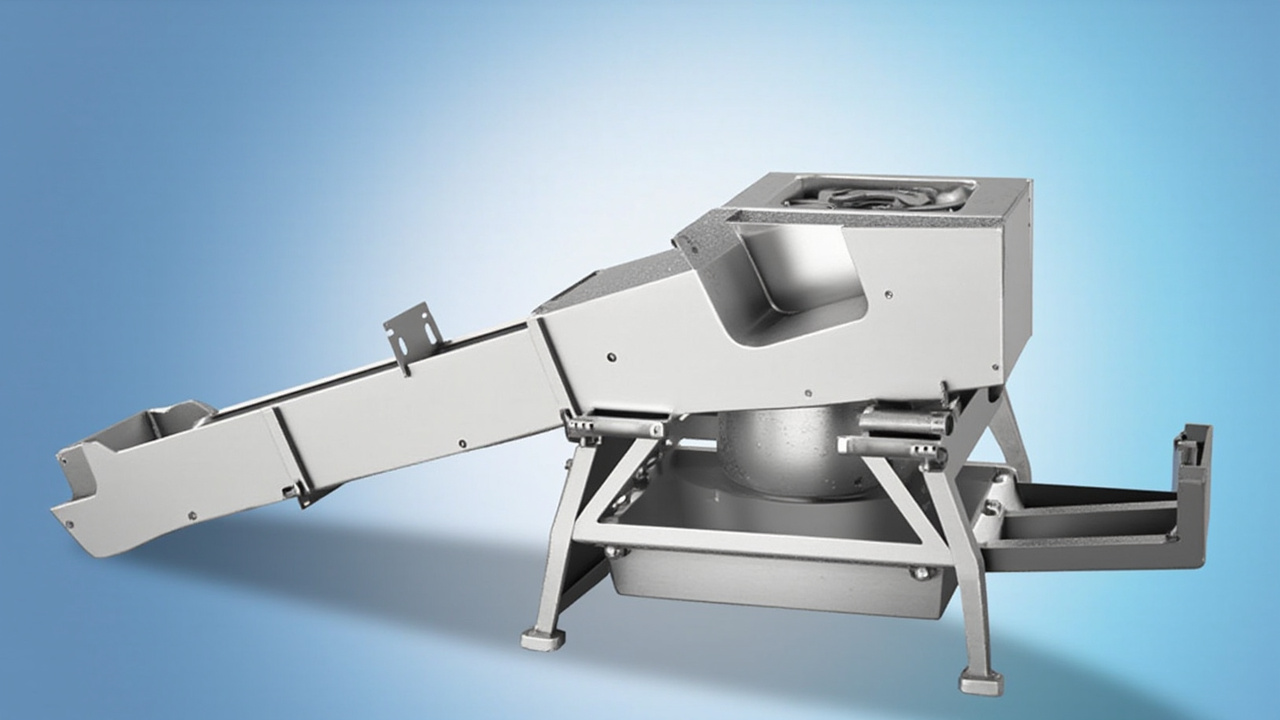
- Use a step feeder or alternative bulk feeder when noise, heavy parts, or large-volume supply make a standard bowl less attractive.
If your team is still weighing the concept, compare this geometry discussion with our tray feeding vs bowl feeding guide and flexible feeder comparison.
How geometry affects validation and launch risk
Geometry problems rarely show up as one obvious failure mode. More often they appear as small losses: reduced output at higher fill levels, random flips at the selector, unstable escapement loading, or lot-to-lot variation that seems unrelated until the team looks closely at the part.
That is why validation should include real production samples, not perfect engineering samples only. The best way to confirm that the geometry is feeder-friendly is to test the actual tolerances, edge condition, and packaging state that production will use. Our feed-rate validation guide explains how to structure that review.
Designer checklist for feeder-friendly parts
- Make the required orientation easy to detect mechanically.
- Define acceptable tooling contact surfaces early.
- Review nesting, tangling, and bulk behavior, not only single-part CAD.
- Check whether normal burrs, flash, or plating change the orientation logic.
- Validate with the real downstream handoff, not just a moving part on a track.
Feeder cost and reliability are often symptoms of part design decisions made months before purchasing enters the project. If you want a feeder-focused geometry review before the design is frozen, contact Huben Automation with your drawing and sample so we can comment on orientation features, likely tooling complexity, and realistic launch risk.
Ready to Automate Your Production?
Get a free consultation and detailed quote within 12 hours from our engineering team.