China Bowl Feeder Quality Control: Inspection Standards & Best Practices

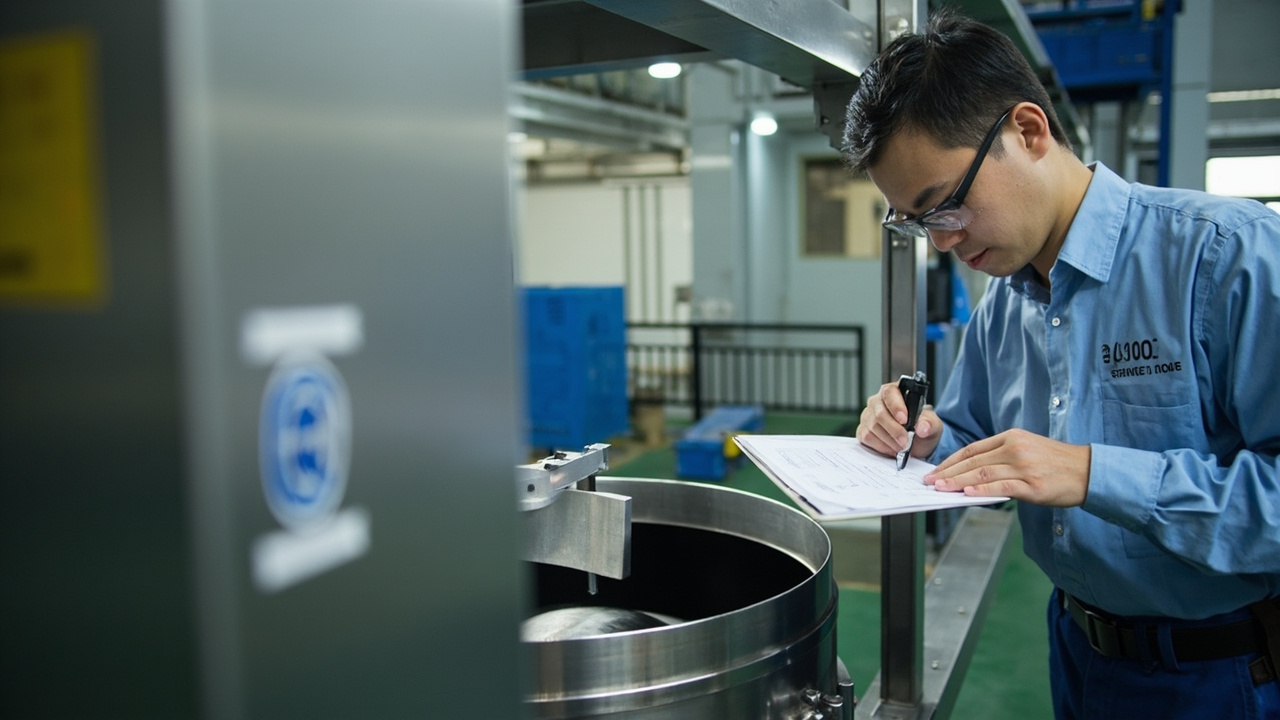
Why Quality Control Matters for China Feeders
China manufactures more vibratory bowl feeders than any other country, supplying automation equipment to automotive plants in Germany, electronics factories in Mexico, and medical device cleanrooms in the United States. Yet buyer experiences vary dramatically. Some manufacturers deliver precision-engineered systems that run for years with minimal intervention. Others ship feeders that jam repeatedly, wear prematurely, or fail to meet agreed feed rates.
The difference is rarely price alone. It is quality control — the systems, standards, and discipline a manufacturer applies from raw material receipt through final acceptance testing. Understanding what good quality control looks like, and knowing which checkpoints to verify, protects buyers from costly production line failures and ensures the feeder performs as specified from day one.
This guide explains the quality control processes that reputable China feeder manufacturers follow, the inspection checkpoints buyers should expect, and the testing standards that separate reliable equipment from problematic shipments. Whether you are evaluating a new supplier or preparing to receive your first unit from China, these practices will help you verify quality before the feeder reaches your production floor.
Incoming Material Inspection
Quality control begins before any metal is cut. The bowl, base, springs, electromagnet, and controller all depend on material properties that cannot be fixed later. A reputable manufacturer inspects every batch of raw material against documented specifications.
Stainless Steel Bowl Material Verification
The bowl track is the most critical component. Manufacturers should verify that stainless steel sheets match the specified grade — typically SUS304 for general industrial use or SUS316L for medical and food applications. Verification includes mill test certificates from the steel supplier, hardness testing with a portable durometer, and spot chemical composition analysis using X-ray fluorescence. Surface finish should be checked for scratches, pitting, and lamination defects that could cause part jamming or premature wear.
Spring Steel and Electromagnet Components
Spring packs determine vibration characteristics and feeder longevity. Manufacturers should test spring steel for correct alloy composition, heat treatment hardness, and fatigue resistance. Electromagnet coils should be checked for correct wire gauge, insulation resistance, and winding integrity. A shorted turn or undersized wire will cause overheating and premature failure.
Controller and Electrical Components
Variable frequency controllers, sensors, and wiring should be sourced from qualified suppliers with traceable part numbers. Incoming inspection should verify model numbers against the bill of materials, test basic functionality, and confirm that voltage ratings match the destination country requirements.
In-Process Quality Checkpoints
Manufacturing a vibratory bowl feeder involves multiple operations, each introducing potential variation. Reputable China manufacturers insert inspection checkpoints between operations rather than relying solely on final testing.
Bowl Track Machining and Welding
After the bowl blank is spun or pressed, dimensional inspection confirms inner diameter, track width, and spiral pitch match the design drawing. Track width tolerances of ±0.2 mm are typical for general industrial feeders, while precision applications may require ±0.05 mm. Welded joints should be inspected for penetration, porosity, and alignment. For food and medical applications, welds must be ground smooth and pass dye-penetrant inspection.
Tooling Fabrication and Fit
Orientation tooling — the baffles, selectors, and grooves that sort parts into correct position — is usually the most customized element. Each tool should be checked against the part drawing and physically tested with production samples. A common failure mode is tooling designed from perfect CAD models that does not account for real-world part variation, burrs, or dimensional tolerance stack-up.
Base Assembly and Spring Alignment
The drive base assembly requires precise spring orientation and magnet gap setting. Manufacturers should measure spring angle, bolt torque, and magnet air gap against the engineering specification. Incorrect spring angle causes uneven vibration and premature fatigue. Incorrect magnet gap reduces drive efficiency and can cause overheating.
Final Functional Testing
Before a feeder leaves the factory, it must run with real parts under conditions that approximate the customer's application. This is where many quality gaps become visible.
Feed Rate Verification
The manufacturer should measure actual feed rate in parts per minute across the full range of controller settings. The test should use the customer's actual production parts, not substitute samples, because part geometry, surface finish, and weight all affect feeding behavior. Feed rate should meet or exceed the specification at the agreed vibration amplitude and bowl fill level.
Orientation Yield Measurement
Orientation yield is the percentage of parts exiting the feeder in the correct position. A yield below 99.5 percent usually indicates tooling that needs refinement. The manufacturer should test orientation yield across multiple bowl fill levels and part lots to confirm robustness.
Run-Time Duration Test
A short run of a few minutes will not reveal thermal issues, intermittent jams, or gradual drift. Reputable manufacturers run feeders for a minimum of two to four hours continuously, monitoring vibration amplitude stability, coil temperature, and any tendency for parts to nest or tangle over time.
Noise Level Measurement
Feeder noise should be measured with a sound level meter at one meter distance, with and without the customer's specified enclosure or cover. Results should be documented and compared against any contractual noise limit.
Factory Acceptance Testing (FAT)
Factory acceptance testing is the formal proof that the feeder meets the purchase specification before it ships. For buyers importing from China, FAT is the last opportunity to identify and resolve issues without the cost and delay of international rework.
What FAT Should Include
A thorough FAT protocol covers mechanical inspection against the drawing, electrical safety testing including grounding continuity and insulation resistance, functional testing with customer parts at specified rates, alarm and sensor verification, controller parameter documentation, and cosmetic inspection for finish quality and labeling.
Buyer Participation in FAT
Whenever possible, buyers should witness FAT in person or via live video conference. Witnessing FAT allows real-time discussion of any observed issues, confirmation that test methods match the buyer's expectations, and direct observation of the feeder running with your parts. If travel is not practical, request detailed video documentation including continuous run footage, close-ups of part flow, and screen recordings of controller settings.
FAT Documentation Package
The manufacturer should provide a complete FAT report including test data sheets, photographs or video files, signed acceptance certificate, and a punch list of any open items with committed resolution dates. This documentation becomes the baseline against which site acceptance testing is compared.
| Quality Checkpoint | Inspection Method | Acceptance Criteria | When Performed |
|---|---|---|---|
| Stainless steel grade | XRF chemical analysis + mill certificate | Matches specified grade (SUS304/316L) | Incoming material |
| Bowl track dimensions | CMM or calibrated gauges | Width ±0.2 mm, pitch ±0.5 mm | After machining |
| Weld quality | Visual + dye-penetrant test | No cracks, full penetration, smooth finish | After welding |
| Spring alignment | Protractor + torque wrench | Angle ±2 degrees, torque per spec | Base assembly |
| Electrical safety | Ground bond + insulation tester | Ground < 0.1 ohm, insulation > 2 Mohm | Final assembly |
| Feed rate | Timed count over 10-minute run | Meets or exceeds specification | FAT |
| Orientation yield | Sample count of 1000 parts | Greater than or equal to 99.5 percent | FAT |
| Run-time stability | Continuous 4-hour run | No jams, no thermal alarms, stable amplitude | FAT |
| Noise level | Sound level meter at 1 meter | Below agreed limit, typically 75-80 dB | FAT |
Site Acceptance Testing (SAT)
Even a feeder that passes FAT perfectly can behave differently after international shipping, reassembly, and connection to local utilities. Site acceptance testing confirms that the installed system performs correctly in the customer's actual environment.
Reassembly Verification
After unpacking, verify that no components were damaged in transit. Check bowl runout, spring alignment, and magnet gap against the factory settings documented in the FAT report. Shipping vibration can loosen fasteners and shift adjustments.
Utility and Environmental Confirmation
Verify that electrical voltage, frequency, and grounding match the feeder requirements. Confirm that compressed air quality, if used for escapements or blow-off, meets the specified cleanliness and pressure. Environmental factors such as ambient temperature and humidity can affect part behavior and should be documented.
Integration with Downstream Equipment
The feeder does not operate in isolation. SAT should confirm correct interface with the robot, assembly machine, or packaging line that receives the parts. Signal timing, part presentation position, and backup sensor logic should all be tested under production conditions.
Operator Training and Documentation Handover
A quality-focused manufacturer provides operator training covering normal operation, routine cleaning, adjustment procedures, and alarm response. Maintenance manuals, spare parts lists, and controller parameter sheets should be delivered in the agreed language.
What Buyers Should Verify
When evaluating a China feeder manufacturer, look beyond the quotation and ask specific questions about their quality control system.
Quality Management Certification
ISO 9001 certification is the minimum expectation. For automotive applications, ask about IATF 16949. For medical devices, confirm ISO 13485 capability. Request the certificate number and verify it with the issuing registrar.
Inspection Equipment and Calibration
Ask what measuring equipment the factory maintains and how often it is calibrated. A manufacturer without calibrated micrometers, hardness testers, or sound level meters cannot reliably verify dimensional or performance specifications.
Traceability System
Can the manufacturer trace a finished feeder back to the specific batch of steel, springs, and controller used in its construction? Traceability is essential for root cause analysis if a field failure occurs.
Previous Customer References
Request references from customers in your industry or region. Ask those references specifically about quality consistency, FAT experiences, and how the manufacturer handled any issues that arose.
Common Quality Failures and Prevention
Even with good intentions, certain quality failures recur in feeder manufacturing. Knowing them helps buyers ask the right prevention questions.
Premature Track Wear
Cause: Incorrect material hardness, inadequate surface finish, or tooling geometry that creates point contact. Prevention: Specify material grade and hardness, request surface roughness data, and review tooling design for distributed contact surfaces.
Inconsistent Feed Rate
Cause: Variable part quality from the customer, unstable controller settings, or bowl design sensitive to fill level. Prevention: Test with multiple part lots during FAT, document controller settings that produce stable output, and design bowl geometry with wider operating windows.
Electromagnet Overheating
Cause: Undersized wire, incorrect voltage, or excessive magnet gap. Prevention: Verify coil resistance and insulation before shipping, confirm voltage compatibility, and measure magnet gap during FAT and SAT.
Part Damage or Contamination
Cause: Unfinished welds, sharp edges, or incompatible coating materials. Prevention: Specify surface finish requirements, request coating compatibility data for your part material, and inspect bowl interior before first use.
Huben Automation Quality Commitment
At Huben Automation, quality control is not a final inspection gate. It is a continuous process embedded in every stage of design, procurement, manufacturing, and testing. Our ISO 9001 certified quality management system includes incoming material inspection with XRF analysis, in-process dimensional checks at every manufacturing stage, two to four hour continuous run testing for every feeder, documented FAT protocols with customer witness options, and complete traceability from raw material to finished unit.
We invite customers to witness FAT in our facility or via live video, and we provide comprehensive SAT support including on-site commissioning assistance when needed. Our factory-direct pricing saves buyers 40 to 60 percent compared to Western suppliers, but we never compromise the inspection and testing standards that ensure reliable long-term performance.
Contact Huben Automation to discuss your quality requirements and schedule a factory tour or virtual FAT witness session.
Frequently Asked Questions
What quality certifications should I look for in a China feeder manufacturer?
At minimum, look for ISO 9001 certification. For automotive applications, IATF 16949 is highly desirable. Medical device feeders should come from a manufacturer with ISO 13485 capability or experience. Always verify certificate numbers with the issuing body, as counterfeit certificates exist.
How long should factory acceptance testing last?
A meaningful FAT should include at least two to four hours of continuous operation with your actual production parts. Short demonstrations of a few minutes will not reveal thermal drift, gradual jamming tendencies, or part lot variation effects.
Can I witness FAT remotely if I cannot travel to China?
Yes. Reputable manufacturers offer live video conferencing during FAT, with the ability to request close-up views, controller screen sharing, and real-time discussion of observations. Request that the manufacturer record and share video files of the complete test for your records.
What should be included in the FAT documentation package?
The package should include signed test data sheets for every checkpoint, photographs or video of the feeder running, a punch list of any open items with resolution commitments, controller parameter settings, and a certificate of conformity. This becomes your baseline for site acceptance testing.
How do I verify that the bowl material is actually SUS304 or SUS316L?
Request mill test certificates from the steel supplier. For additional assurance, ask the manufacturer to perform X-ray fluorescence spot testing and share the results. If you have access to the finished feeder, portable XRF guns can verify material composition on site.
What is the most common quality issue with imported China feeders?
The most common issue is tooling designed from CAD models without adequate testing on real production parts. This causes orientation failures, jams, and damage when the feeder meets actual part variation. Prevention requires that the manufacturer tests with your parts, including edge-case samples, during design and FAT.
Ready to Automate Your Production?
Get a free consultation and detailed quote within 12 hours from our engineering team.