Feeding Cast and Forged Parts: Handling High Weight and Surface Roughness 2026

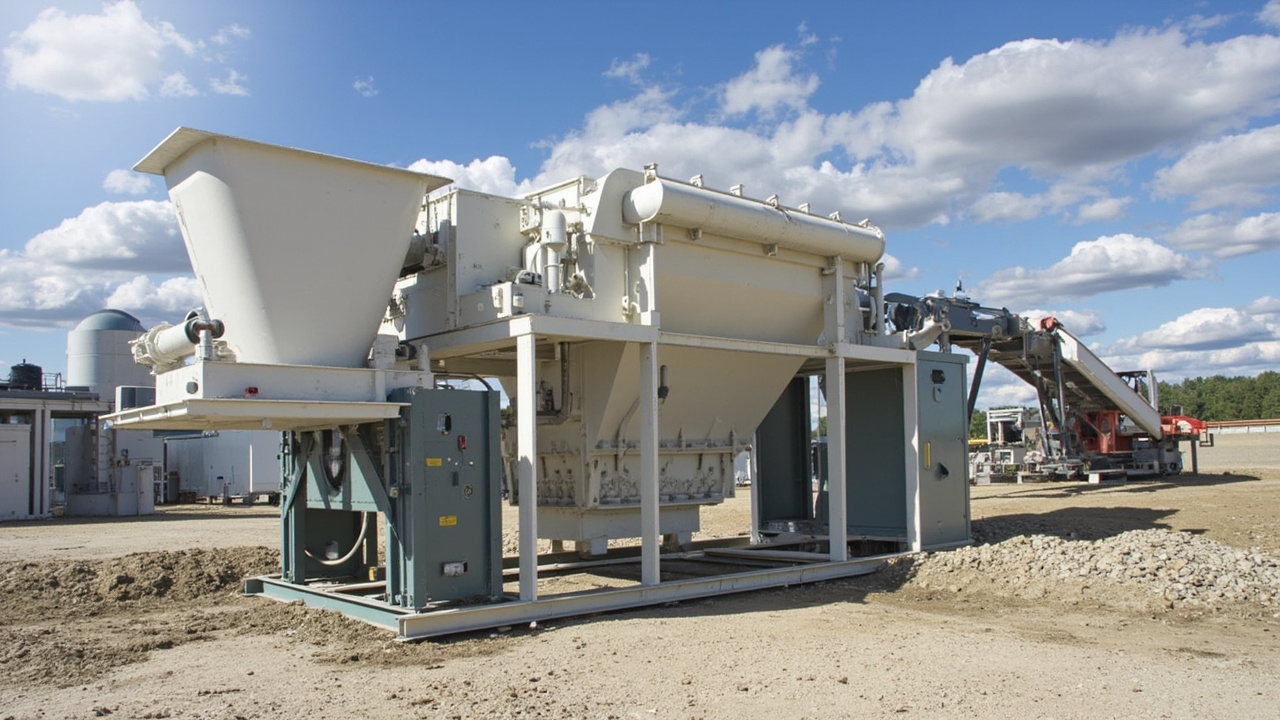
Cast and forged parts are the heavy end of the feeding spectrum
Cast and forged parts sit at the extreme end of the feeding difficulty curve because they combine high mass with rough, unpredictable surfaces. A steel forging that weighs 500 grams and still carries flash and scale from the die presents a fundamentally different feeding challenge than a 2-gram stamped bracket or a 5-gram injection-molded connector. The physics changes when part weight increases. Vibration forces must be higher, track geometry must handle greater momentum, and tooling wear accelerates dramatically when rough surfaces slide against it at production speed.
Foundry and forging operations produce parts that vary widely in surface condition. Sand cast parts carry residual sand and rough as-cast surfaces. Investment cast parts are cleaner but still have gate stubs and surface texture. Forged parts carry die scale, flash, and sometimes oxide layers. All of these surface conditions accelerate tooling wear, contaminate the bowl, and create orientation challenges that smooth machined parts do not present.
This guide addresses the complete scope of feeding cast and forged parts in vibratory bowl feeders and alternative feeding systems. It covers heavy part feeding considerations, rough surface wear on tooling, sand and scale contamination management, part weight limits for bowl feeders, hardened tooling for abrasive surfaces, and shot cleaning integration before feeding. It is written for foundry, forging, and heavy manufacturing engineers who need to move rough, heavy parts from bulk supply to assembly or machining at reliable rates.
The guidance here complements our stamped parts feeder guide and tooling design guide, which cover lighter-weight sheet metal parts and general tooling principles respectively.
Heavy part feeding considerations and weight limits
Part weight is the first and most fundamental constraint in bowl feeder design for cast and forged components. The vibratory motion that moves parts up the spiral track works by applying controlled acceleration to the part. Heavier parts require more force to achieve the same acceleration, which means the drive system must deliver higher energy. But higher energy also means higher stress on the springs, the welds, the track, and the tooling.
Standard vibratory bowl feeders are typically designed for parts up to approximately 500 grams per piece. Beyond this weight, the feeder must be specifically engineered with heavier drive assemblies, stiffer spring packs, and reinforced track construction. For parts in the 500 gram to 2 kilogram range, large-diameter industrial bowls with heavy-duty drives are required. These bowls often have diameters of 800 mm to 1200 mm or more and are built with thick-walled track sections that can withstand the impact forces of heavy parts.
For parts above 2 kilograms, bowl feeders become impractical in most cases. The vibration energy required to move a 5 kg forging up a spiral track is enormous, and the wear on the track surface is extreme. At these weights, alternative feeding methods such as belt conveyors, step feeders, or robot pick-from-bin systems are usually more appropriate. The decision point depends on the specific part geometry, feed rate requirement, and acceptable equipment footprint.
Part weight also affects the track angle design. Heavier parts need steeper track angles to prevent back-sliding under their own weight. The standard track angle for light parts may be 2 to 3 degrees. For heavy forged parts, track angles of 4 to 6 degrees or more may be necessary. The steeper angle increases the required vibration amplitude, which in turn increases the energy input and the wear rate.
Another weight-related consideration is the hopper and elevator system that supplies parts to the bowl. Heavy parts require robust hopper construction and a powerful elevator that can lift the weight without stalling. Chain-bucket elevators or heavy-duty belt conveyors are common choices for cast and forged parts. The elevator discharge must be designed to absorb the impact of heavy parts dropping into the bowl, as this impact can damage the bowl track over time. A wear plate or a rubber-lined impact zone at the bowl inlet is a standard protection measure.
The table below provides general guidance on part weight ranges and the corresponding equipment recommendations for feeding systems.
| Part weight range | Typical bowl diameter | Drive type | Track material | Recommended feed method |
|---|---|---|---|---|
| Up to 100 g | 300-600 mm | Standard electromagnetic or piezo | Stainless steel with optional hardening | Standard vibratory bowl feeder |
| 100-500 g | 500-900 mm | Heavy-duty electromagnetic or servo | Hardened tool steel or wear-resistant stainless | Heavy-duty vibratory bowl feeder |
| 500 g - 2 kg | 800-1200+ mm | Large servo or heavy electromagnetic | Hardened tool steel with replaceable liners | Industrial bowl or step feeder |
| 2-5 kg | Not practical for most bowls | N/A | N/A | Step feeder, belt conveyor, or robot pick |
| Above 5 kg | Not practical | N/A | N/A | Robot pick-from-bin, pallet presentation, or gantry loading |
These ranges are guidelines, not absolute limits. The exact capacity depends on the part geometry, surface roughness, required feed rate, and the specific feeder manufacturer's engineering. A compact but dense part may feed more easily than a large, irregularly shaped part of the same weight because the contact area and center of gravity are different.
Rough surface wear on tooling and track surfaces
Cast and forged parts are inherently rough. Sand cast surfaces have a grit-like texture with peaks and valleys that can reach several hundred microns in height. Forged surfaces carry die scale, which is a hard, brittle oxide layer that breaks off during feeding and acts as an abrasive. Investment cast surfaces are smoother but still rougher than machined surfaces, and they often have gate stubs and parting line flash that create sharp edges.
When rough parts slide against the bowl track at production speed, they act like sandpaper on the track surface. Over time, this wear changes the track geometry, which changes the feeding behavior. A track that was designed with precise angles and clearances becomes worn and uneven, causing parts to bounce, jam, or orient incorrectly. This wear process is accelerated when the parts carry sand, scale, or other abrasive contamination.
The primary defense against tooling wear is hardened tooling. Track surfaces that contact cast or forged parts should be made from hardened tool steel, such as D2 or A2, heat-treated to 58-62 HRC. Hardened steel resists the abrasive action of rough surfaces far better than standard stainless steel, which typically runs at 25-35 HRC in its untreated state. The hardness difference translates directly into tooling life. A stainless track feeding rough castings may need replacement after a few hundred hours of operation. A hardened tool steel track can last several thousand hours under the same conditions.
For extreme wear applications, tungsten carbide or ceramic-coated track sections can be used at the highest-wear locations, such as the bowl inlet, selector points, and wiper positions. These materials are significantly harder than tool steel and resist abrasive wear almost indefinitely. The trade-off is cost and machinability. Tungsten carbide is expensive and difficult to machine, so it is typically used only at specific high-wear points rather than for the entire track.
Replaceable track liners are another practical approach for cast and forged part feeding. Instead of welding the entire track from hardened material, the track surface is made from replaceable hardened inserts that can be swapped out when worn. This approach reduces maintenance time because a worn insert can be replaced in minutes rather than requiring the entire bowl to be removed and rebuilt. The inserts can be made from different materials depending on the wear level at each location, optimizing cost and performance.
Tooling wear monitoring should be part of the regular maintenance schedule. Inspect the track surface monthly for signs of grooving, thinning, or geometry change. Measure the track angle and width at critical points to detect wear-induced changes before they affect feeding performance. Our bowl track wear inspection guide provides detailed procedures for measuring and tracking wear over the life of the equipment.
Sand and scale contamination management
Sand and scale contamination is a feeding problem that exists independently of tooling wear. Sand cast parts arrive from the foundry with residual sand particles embedded in the surface or loose in the part crevices. Forged parts carry die scale, which is a mixture of iron oxides that flakes off during handling and feeding. Both types of contamination end up in the bowl, where they accumulate and create feeding problems.
Accumulated sand and scale create several types of feeding problems. First, the loose particles act as abrasives that accelerate tooling wear on the track, selectors, and wiper blades. Second, the particles build up in track corners, selector gaps, and tooling crevices, gradually changing the effective geometry of the tooling. A selector gap that was designed to be 12.0 mm wide may effectively become 11.5 mm wide after enough debris accumulates, causing parts that should pass to be rejected. Third, sand and scale can contaminate the downstream assembly or machining operation, causing tool wear, assembly interference, or quality defects.
The most effective approach to sand and scale contamination is to remove it before the parts enter the feeding system. Shot blasting or shot peening is the standard cleaning process for cast and forged parts. Shot blasting removes sand, scale, and loose oxide from the part surface, leaving a cleaner surface that is much less likely to contaminate the bowl. If the production line already includes a shot blasting operation before assembly, the feeding system should be positioned downstream of the blast cabinet.
If shot blasting is not available or if residual contamination is still a concern, the bowl can be equipped with a built-in cleaning or separation function. A screened bowl track with small perforations allows loose sand and scale to fall through the track as the parts advance, collecting in a tray below the bowl. This approach does not remove all contamination but it significantly reduces the amount of loose debris that reaches the orientation tooling and the downstream station.
Bowl cleaning is also an important operational practice. Bowls feeding cast or forged parts should be cleaned more frequently than bowls feeding clean machined parts. The cleaning frequency depends on the contamination level but is typically on a daily or shift-by-shift basis. Cleaning involves removing the accumulated debris from the bowl, the track, and the tooling, and then inspecting the tooling for wear or damage before restarting production.
For foundries that produce multiple part types with different contamination levels, our bowl feeder cleanability design guide covers the design features that make cleaning faster and more effective, including accessible track sections, quick-release tooling, and smooth bowl interiors that minimize debris traps.
Hardened tooling specifications for abrasive part surfaces
Hardened tooling is not a single specification but a set of choices that must be matched to the specific part material, surface roughness, and production volume. The general principle is that every surface that contacts the part should be as hard as or harder than the hardest feature on the part surface. For cast iron and steel forgings, this means tool steel at 58-62 HRC is the minimum. For parts with particularly rough as-cast surfaces or embedded sand, even harder materials may be necessary at the highest-wear locations.
The track surface is the primary wear location because the entire part weight slides against it for the full length of the spiral track. For cast and forged parts, the track should be made from or lined with hardened tool steel. The track profile should also be designed with generous radii at transitions to reduce stress concentration points where cracks and wear grooves typically start. Sharp internal corners on the track profile are stress concentrators that fail prematurely under the repeated impact of heavy parts.
Selector tools, which separate correctly oriented parts from incorrectly oriented ones, are the second highest-wear location. Selectors experience impact from parts that hit them at full vibration speed, and the impact force is proportional to the part weight. For heavy cast and forged parts, selectors should be made from through-hardened tool steel with a minimum hardness of 58 HRC. The selector edge should have a small radius (0.5 to 1.0 mm) to prevent chipping, which is a common failure mode for sharp-edged selectors under heavy impact.
Wiper blades, which scrape excess parts off the track, experience sliding wear from every part that passes under them. For cast and forged parts, wiper blades should be made from hardened steel with a smooth, polished surface to reduce friction and wear. The wiper gap should be set wide enough to prevent binding but narrow enough to reject excess parts effectively. A gap that is too tight on rough parts will cause the wiper to wear rapidly and may also damage the part surface.
Escapement mechanisms, which control the release of individual parts, must be designed for heavy part weights. Pneumatic escapements are preferred for heavy parts because they provide controlled, cushioned actuation that absorbs the impact energy. Mechanical escapements with spring-loaded gates are acceptable for lighter forged parts but may fail prematurely on parts above 500 grams because the repeated impact overloads the spring mechanism.
The choice of bowl drive system also matters for heavy parts. Servo-driven bowls provide better amplitude control and higher force output than electromagnetic drives, making them a better match for cast and forged parts. The servo drive can be programmed to provide higher amplitude at startup to overcome the inertia of heavy parts, then reduce to a steady-state amplitude once the parts are moving. This programmable motion profile is not available on standard electromagnetic drives.
Shot cleaning and pre-feeding preparation
Shot cleaning, also known as shot blasting or abrasive blasting, is the most effective way to prepare cast and forged parts for automated feeding. The process uses high-speed abrasive media (typically steel shot, grit, or ceramic media) to remove sand, scale, oxide, and other surface contamination from the parts. The result is a cleaner surface that feeds more reliably and causes less tooling wear.
The shot cleaning process should be designed to produce a surface condition that is compatible with the feeding system. Over-blasting can create a surface that is too rough, which accelerates tooling wear. Under-blasting leaves residual contamination that continues to cause feeding problems. The ideal surface condition is a uniform blast profile with a surface roughness (Ra) of 3 to 8 microns, which is clean enough to feed reliably but not so rough that it causes excessive tooling wear.
The timing of shot cleaning relative to feeding matters. Parts should be fed as soon as possible after shot cleaning because the clean surface will begin to oxidize if left exposed to air and humidity. Freshly blasted steel develops a thin oxide layer within hours, which is generally acceptable for feeding, but longer exposure can lead to more significant surface changes that affect feeding behavior. If parts are stored between blasting and feeding, they should be stored in a dry environment to minimize oxidation.
For production lines where shot cleaning and feeding are in separate locations, the parts should be transported in a way that prevents recontamination. Sealed bins or covered containers prevent dust and debris from settling on the cleaned surface. Open bins or bags allow parts to collect dirt during transport, which defeats the purpose of the cleaning step.
If shot cleaning is not feasible for a particular application, alternative cleaning methods include vibratory tumbling, ultrasonic cleaning, and high-pressure water washing. Vibratory tumbling is effective for removing light scale and sand but is slower than shot blasting. Ultrasonic cleaning is excellent for removing oil and fine debris but does not remove heavy scale or embedded sand. High-pressure water washing removes loose contamination but leaves parts wet, which can cause rust if the parts are not dried before feeding.
Equipment selection and layout for foundry and forging lines
Feeding systems for foundry and forging operations must be designed to survive the environment as well as the parts. Foundry floors are hot, dusty, and subject to significant vibration from nearby equipment such as shakeout machines, molding machines, and conveyors. The feeding system must be isolated from ambient vibration to prevent interference with its own controlled vibratory motion. Rubber isolation mounts or spring isolators between the feeder base and the floor are essential in foundry environments.
Forging lines are often noisier and generate more impact vibration than foundries, particularly near drop hammers and presses. The feeder should be positioned as far as practical from the impact source, and the isolation system should be designed for the specific vibration frequency and amplitude present at the installation location. Our vibration isolation guide covers the isolation design principles that apply to all feeder installations, including those in high-vibration environments.
The feed system layout should also consider the material flow from the casting or forging operation through cleaning, feeding, and into assembly or machining. The most efficient layouts position the feeder as close as practical to the downstream station to minimize the distance that oriented parts must travel. Long linear tracks between the bowl and the assembly station increase the risk of jams and orientation loss, especially for heavy parts that have significant momentum.
For high-volume foundry and forging operations that require feeding of multiple part types, a multi-bowl system or a step feeder with a large capacity may be more practical than a single bowl feeder. The choice depends on the part variety, changeover frequency, and production volume. A step feeder can handle a wider range of part sizes and weights than a bowl feeder but typically runs at lower feed rates and occupies more floor space.
Frequently asked questions
What is the maximum part weight that a vibratory bowl feeder can handle?
Practical maximum part weights for vibratory bowl feeders are typically in the 1 to 2 kilogram range, depending on the part geometry and the feeder's engineering. Large industrial bowls with heavy-duty servo drives can handle parts up to approximately 2 kg at moderate feed rates. Above 2 kg, bowl feeders become increasingly impractical due to the vibration energy required, the track wear rate, and the equipment size. For parts above 2 kg, step feeders, belt conveyors, or robot pick-from-bin systems are generally more appropriate.
How long should hardened tooling last when feeding rough castings?
Hardened tool steel (58-62 HRC) track surfaces feeding rough castings typically last 3,000 to 8,000 hours of operation before replacement is needed, depending on the surface roughness, part weight, and production volume. Tungsten carbide inserts at high-wear locations can last significantly longer, often exceeding 15,000 hours. The actual service life should be tracked by the maintenance team, and replacement should be scheduled based on measured wear, not elapsed time. Inspect the track surface monthly and replace sections where wear has changed the track geometry enough to affect feeding performance.
Can cast parts be fed without shot blasting?
Technically yes, but it is not recommended for production environments. Feeding as-cast parts without cleaning causes rapid tooling wear, frequent jams from sand accumulation, and contamination of downstream operations. If shot blasting is absolutely not available, the minimum alternative is a screened bowl track that allows loose sand to fall through, combined with a daily cleaning schedule for the bowl and tooling. However, the tooling life will be significantly shorter, and the feed rate will be lower due to the increased friction and contamination.
How do I handle forged parts that still have flash attached?
Forged parts with flash should ideally be trimmed before feeding. Flash creates unpredictable geometry that makes orientation tooling much more complex and increases the risk of jams. If flash trimming is not possible before feeding, the tooling must be designed with wider clearances to accommodate the flash. This means wider selector gaps, wider track profiles, and more generous recirculation paths. The trade-off is that wider clearances reduce orientation accuracy, so the feed rate may need to be reduced to maintain acceptable orientation quality.
What is the best bowl drive type for heavy cast and forged parts?
Servo-driven bowls are the best choice for heavy cast and forged parts because they provide higher force output, programmable motion profiles, and better amplitude control than electromagnetic drives. The servo drive can deliver the higher starting torque needed to overcome the inertia of heavy parts, then adjust to a steady-state amplitude optimized for the specific part weight and surface condition. Electromagnetic drives can handle lighter forged parts but may struggle with parts above 500 grams, especially during startup or when the bowl fill level changes.
How do I design the hopper and elevator for heavy cast parts?
Hoppers for heavy cast parts must be built from thick-gauge steel with reinforced corners and discharge gates that can handle the impact of heavy parts. The elevator should be a heavy-duty chain-bucket or belt type rated for the total weight of the parts in the elevator column at maximum fill. The discharge into the bowl should include a wear plate or rubber-lined impact zone to protect the bowl track from the impact of heavy parts dropping from the elevator. The hopper capacity should be sized to provide at least 15-30 minutes of autonomous operation at the target feed rate to reduce the frequency of operator reloading.
Summary and recommendations
Feeding cast and forged parts requires a fundamentally different approach than feeding machined or molded components. The combination of high part weight and rough surface condition demands heavy-duty drive systems, hardened tooling, contamination management, and robust maintenance procedures. Bowl feeders can handle cast and forged parts up to approximately 2 kilograms, beyond which alternative feeding methods should be considered. Shot cleaning before feeding is one of the highest-value process improvements available because it reduces contamination, extends tooling life, and improves feed rate consistency.
The key to success is matching the equipment specification to the part condition. Feeding rough as-cast parts in a standard stainless bowl is a guaranteed path to premature failure. Feeding shot-blasted, relatively clean parts in a hardened tool steel bowl is a recipe for years of reliable operation. The difference between those two outcomes is entirely in the specification and the process integration.
If your foundry or forging operation needs a feeding system for cast or forged parts, contact Huben Automation with your part samples, weight range, surface condition, and target feed rate. We will assess the part characteristics and recommend the right combination of bowl size, drive type, tooling material, and cleaning integration.
Ready to Automate Your Production?
Get a free consultation and detailed quote within 12 hours from our engineering team.