Cap and Lid Feeding Guide 2026

Cap and lid feeding is mostly about orientation control
Caps and lids look simple, but packaging lines expose every weak point in feeder design. Lightweight parts stack, flip, trap air, and sometimes nest tightly enough that the bowl spends more time recirculating parts than presenting them.
The biggest difference between a good cap feeder and a frustrating one is usually not the drive. It is the way the track handles nesting, top-down orientation, and cosmetic contact. A lid that reaches the chute scratched, upside down, or doubled up is no help to a fast downstream machine.
This guide focuses on the practical decisions: bowl size, anti-nesting tooling, surface protection, and when a conveyor-style presentation or alternate feeder concept may be better for packaging work. You can pair it with our packaging automation guide for broader line context.
The four problems that appear first on caps and lids
Nestable shapes are the obvious one. Flat lids and shallow caps can ride inside each other, especially if the part walls taper. Once nested parts enter the track, the reject tooling often sees one shape even though two parts are present.
Low weight is another issue. Lightweight closures bounce more, react more to air movement, and are more sensitive to small changes in vibration amplitude. A setup that feels stable on a heavier plastic may become erratic on a thin-wall cap.
Cosmetic quality also matters. Packaging parts often stay visible to the consumer. That means the feeder has to control marks, not just orientation.
| Part type | Main feeding risk | Best control point | Practical note |
|---|---|---|---|
| Shallow plastic lid | Nesting | Entry separation zone | Needs enough space before tight tooling |
| Flip-top cap | Wrong face-up orientation | Track selector geometry | Often needs staged orientation |
| Decorative closure | Surface marks | Bowl material and coating | Validate with production finish |
| Large lightweight lid | Bounce and fall-back | Amplitude and air control | Too much speed usually hurts |
Choosing the feeder concept for closures
A custom bowl feeder is still the common answer for single-style caps running at moderate to high speed. It gives strong output at reasonable cost when the closure geometry is stable and the finish can tolerate controlled contact.
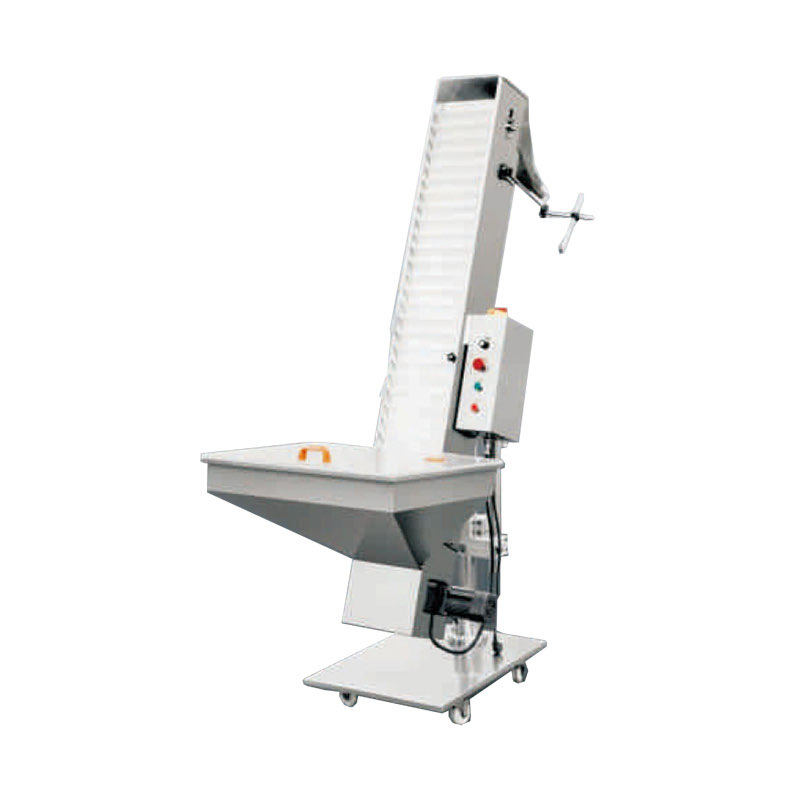
If the line changes closure formats often, or if the closure family includes several similar diameters and heights, quick-change tooling or a flexible feeder may be more economical over time. The lower speed may be acceptable if format changes are frequent.
Hopper support also matters on closure systems. Many closures are light enough that overfilling the bowl creates more trouble than benefit. That is why refill control should be validated with the real part.
Design rules that improve cap and lid feeders
A few design habits reduce trouble on closure projects before the first sample run even starts.
- Control nesting at the bowl entry. It is easier to separate lids early than to reject nested pairs late.
- Protect visible surfaces. If the cap is customer-facing, choose bowl material and track contact points accordingly.
- Validate top-down orientation explicitly. Do not assume symmetry means the downstream machine can accept either face.
- Test with production cartons, not hand-picked parts. Closure quality variation often changes the real feeding result.
A closure feeder should be judged by stable discharge and acceptable surface quality, not by a short burst of peak speed.
How to validate a cap feeder before shipment
Run the feeder through a full hopper refill cycle and watch what happens when the bowl moves from low fill to normal fill. Many closure systems only become unstable at the upper end of that range.
Count double presentations and wrong-face presentations separately. These are different faults and often point to different tooling fixes.
If the line includes capping heads or seal inspection, confirm the feeder output with the actual downstream timing. Packaging lines punish small inconsistencies very quickly.
Buyer checklist before asking for a cap feeder quote
Caps and lids are common parts, but quotations still go better when buyers send the right detail.
- Send finished production parts. Wall thickness and finish variation change feeding more than CAD suggests.
- State whether marks are acceptable. Cosmetic requirements affect bowl material and coating choice.
- Define the required discharge face. Many closures look symmetrical until they reach the next machine.
- List all expected formats. Changeover needs often determine the feeder concept.
Huben Automation sizes cap and lid feeders around nesting behavior, finish protection, and line speed. If you want help reviewing a closure family, send us the cap sample and target output.
Ready to Automate Your Production?
Get a free consultation and detailed quote within 12 hours from our engineering team.