Bowl Feeder for Assembly Machines 2026

A bowl feeder is rarely the whole project
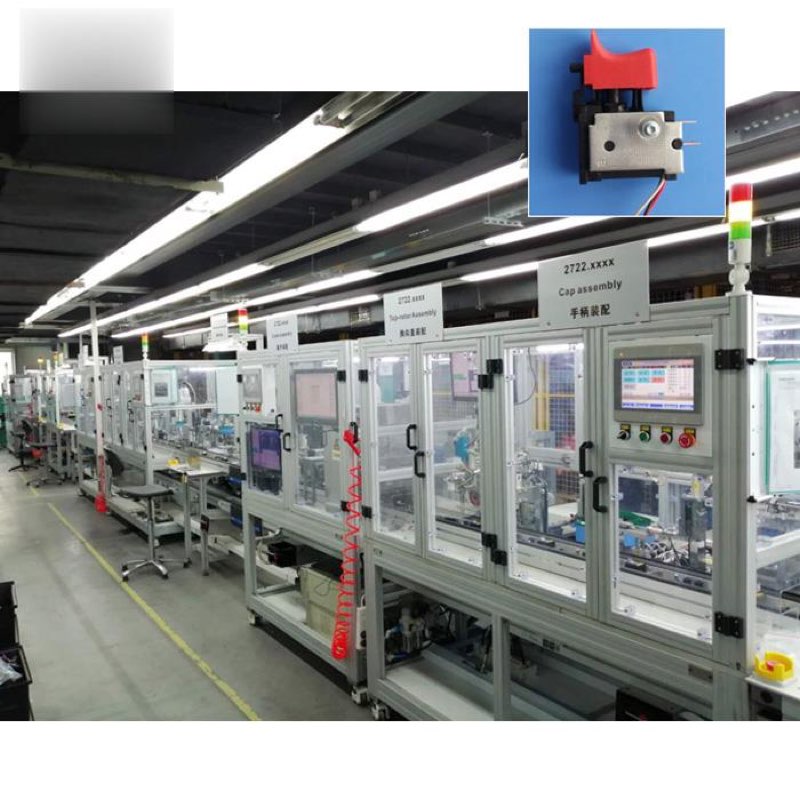
Many buyers start by asking for a bowl feeder, when what they really need is an assembly machine with a feeder inside it. That difference matters. A standalone feeder solves orientation and presentation. An assembly machine solves the process: indexing, picking, insertion, pressing, fastening, checking, and discharge. If the project has several operations and timing dependencies, buying the feeder first can create more integration work later.
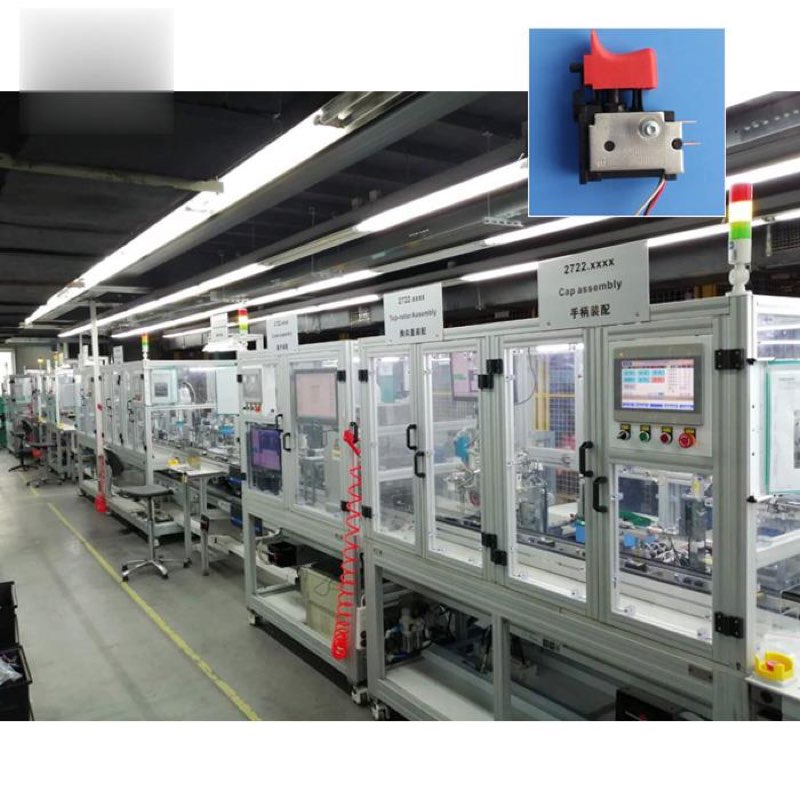
Huben's custom automation systems cover 2-16 rotary or linear stations, cycle times from about 1 to 30 seconds per station, PLC control from Siemens, Mitsubishi, or Omron, and optional vision from Keyence or Cognex. Those numbers tell you something important: the feeder should be sized for the machine rhythm, not only the part.
This guide helps teams decide when they need only a bowl feeder and when they should step up to a full assembly-machine project. If you are still gathering commercial inputs, our custom automation buying guide is worth reading next.
When a standalone feeder is enough
A standalone bowl feeder is usually enough when the downstream equipment already exists and simply needs a stable stream of oriented parts. This is common on screwdriving, packing, inspection, or small handling jobs where the mechanical handoff is already defined. In these cases, the feeder can be sized around ppm, orientation quality, and interface height.
Standalone systems also make sense when the process has only one or two simple operations and the integrator wants to keep the architecture modular. If the feeder can be swapped or serviced separately without harming the rest of the line, modularity becomes a real advantage.
The limit shows up when the process needs several stations, synchronized handshakes, and controlled part transfer between operations. At that point, the feeder is no longer a module at the edge. It is part of the machine rhythm.
| Project type | Best choice | Why |
|---|---|---|
| Single operation, existing machine | Standalone bowl feeder | Simple interface and lower cost |
| Several timed assembly steps | Integrated assembly machine | One controls architecture and stable transfer |
| Frequent part changeover | Depends on tooling strategy | May justify flexible feeding or recipe control |
| New line with feeder, vision, and checking | Integrated project | Better responsibility split and lower integration risk |
When to spec a full assembly system
If the project needs 2-16 stations, index timing, PLC logic, sensors, pneumatics, and possibly vision, it should be discussed as a custom automation system, not as a feeder purchase. This is where line-level performance becomes more important than any one module. The feeder must hand off parts at the right moment, at the right presentation angle, with enough buffer for station variation.
Buyers usually feel this shift when they start asking about cycle time per station, part accumulation between operations, rework handling, and fault recovery. Those are machine questions, not feeder questions. Once the project reaches that point, it is better to keep engineering responsibility consolidated.
This is also the point where the controls package matters. A feeder with one control philosophy and a machine with another can be integrated, but clean integration is cheaper and easier when the whole system is designed together.
Match feeder output to station time
A bowl feeder for an assembly machine should never be selected from a catalog ppm number alone. The machine consumes parts in station cycles, not in a perfect continuous stream. If one station indexes every 2 seconds, the feeder has to support that rhythm with margin, buffering, and the ability to recover from short interruptions.
This is where overbuying and underbuying both happen. Some teams specify a feeder that is far faster than necessary and end up with unstable motion and extra wear. Others match the feeder to the exact nominal station rate and leave no margin for micro-stops or part variation. The right answer is usually a measured buffer above real demand, not a dramatic one.
For multi-part assemblies, each feeder must also be judged against the slowest critical station, not just its own ideal speed.
The integration details that matter later
Handoff height, escapement design, sensor location, and maintenance access all matter once the feeder sits inside a machine base. This is where feeder-only quotations often miss useful detail. A feeder that is easy to tune on a bench may be awkward to service once mounted under guarding beside an index table.
Maintenance teams care about this immediately. If the feeder needs regular adjustment, make sure it can be reached. If the bowl will be removed for cleaning or tooling change, make sure the machine allows it without half a shift of disassembly.
Vision integration also changes the equation. Once the assembly machine includes inspection, reject handling, or force validation, the feeder is only one part of a larger quality loop.
How to quote the project correctly
If the line involves more than a feeder and a simple handoff, send the full process sequence when requesting a quote. Include the number of stations, target cycle time, part list, inspection steps, rework strategy, and the level of operator involvement expected. This is how suppliers separate a feeder module from a true assembly-machine project.
Huben Automation builds both standalone feeders and custom automation systems, which helps when a project sits between the two. If you need help deciding whether the job should be quoted as a feeder or as a multi-station machine, send us the process flow and part samples and we can review the better route.
Ready to Automate Your Production?
Get a free consultation and detailed quote within 12 hours from our engineering team.