China Automation Equipment Wholesale: MOQ, Pricing & Lead Times
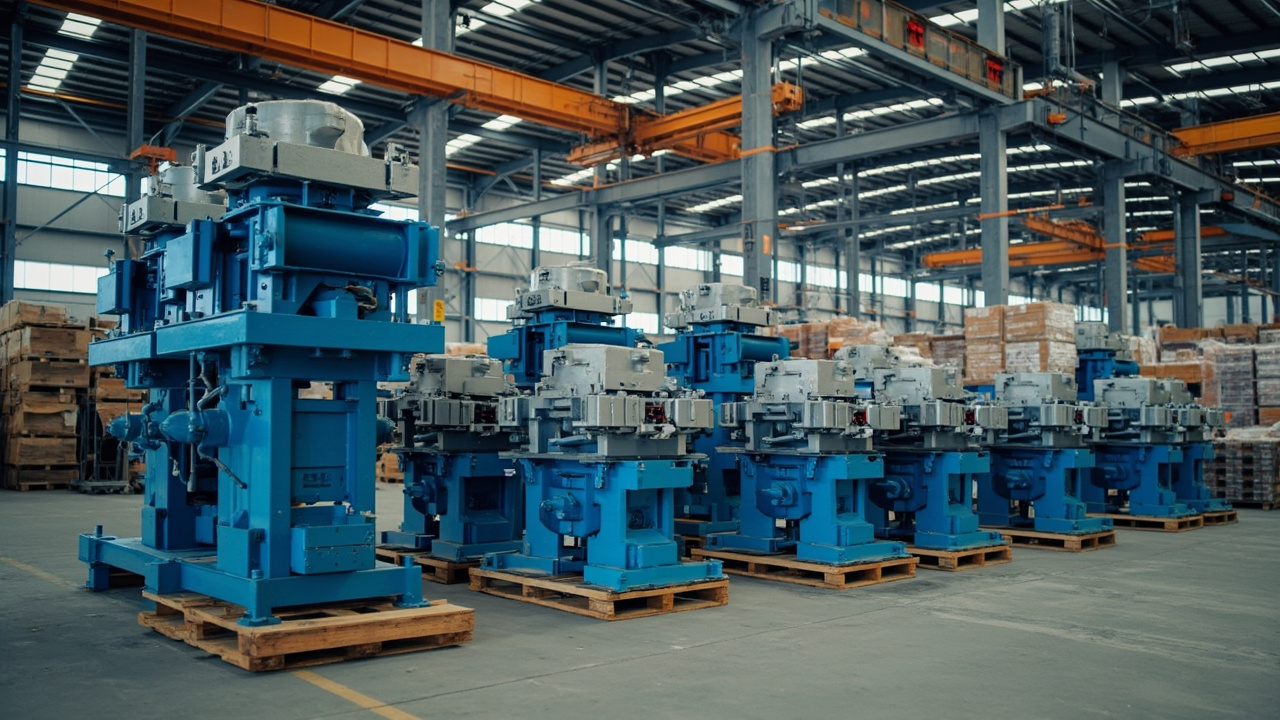
Introduction: Wholesale Automation Equipment from China
As global manufacturing continues to automate, the demand for vibratory feeders, linear drives, and complete parts feeding systems has grown substantially. For distributors, system integrators, and large manufacturers with multiple production lines, buying automation equipment wholesale from China represents a significant opportunity to reduce per-unit costs and secure consistent supply chains.
However, wholesale procurement operates differently from single-unit purchasing. Minimum order quantities, volume pricing tiers, production scheduling, and logistics coordination all require specialized knowledge. This guide provides comprehensive information on wholesale terms, realistic MOQ expectations, volume discount structures, lead time planning, and how to establish successful distributor partnerships with Chinese automation equipment manufacturers.
Understanding Minimum Order Quantities
Minimum order quantities, or MOQs, represent the smallest order a manufacturer will accept. In China's automation equipment sector, MOQs vary significantly based on product type, customization level, and the manufacturer's business model.
Standard Feeder MOQs
For standard vibratory bowl feeders without customization, established manufacturers typically set MOQs at 3-5 units per order. This threshold ensures that production setup costs are amortized across multiple units while remaining accessible to small and medium distributors. Linear vibratory feeders and hopper elevators usually have similar MOQs of 3-5 units.
Custom Feeder MOQs
Custom-tooled bowl feeders designed for specific parts require engineering work and unique tooling fabrication. Consequently, MOQs for custom feeders are higher, typically 5-10 units depending on bowl size and complexity. Some manufacturers accept single-unit custom orders but charge engineering fees that are waived at MOQ threshold.
Complete System MOQs
Integrated feeding systems combining bowl feeders, linear tracks, hoppers, and control cabinets have MOQs of 2-3 systems per order. The higher per-unit value and complex integration work justify lower unit MOQs even though the total order value exceeds $10,000.
| Product Category | Typical MOQ | MOQ Order Value (USD) | Notes |
|---|---|---|---|
| Standard Bowl Feeder (150-300mm) | 3-5 units | $3,000 - $9,000 | Standard specs, no customization |
| Standard Bowl Feeder (350-600mm) | 2-3 units | $5,000 - $12,000 | Larger bowls, lower unit MOQ |
| Linear Vibratory Feeder | 3-5 units | $3,000 - $10,000 | Track length determines pricing |
| Custom Tooled Bowl Feeder | 5-10 units | $12,000 - $35,000 | Tooling amortization required |
| Flexible Vibratory Feeder | 2-3 units | $6,000 - $18,000 | Higher per-unit value |
| Hopper Elevator | 3-5 units | $2,500 - $8,000 | Standard or custom capacity |
| Complete Feeding System | 2-3 systems | $12,000 - $40,000 | Full integration with controls |
| Spare Parts Kits | 10-20 kits | $1,500 - $5,000 | Springs, controllers, sensors |
Volume Pricing and Discount Tiers
Chinese automation manufacturers typically structure volume discounts in progressive tiers. Understanding these tiers helps buyers optimize order quantities to capture the best per-unit pricing without overcommitting capital to inventory.
Tier 1: Standard Order (1x MOQ)
At the minimum order quantity, buyers receive factory-direct pricing without additional volume discount. This tier suits first-time buyers validating product quality or distributors testing market demand for a new product line.
Tier 2: Medium Volume (2-3x MOQ)
Orders at twice to three times the MOQ typically qualify for 5-10% discount off standard pricing. For standard bowl feeders, this means savings of $100-300 per unit. At this volume, manufacturers can optimize raw material purchasing and production batching.
Tier 3: High Volume (4-6x MOQ)
High-volume orders receive 12-18% discounts. This tier is appropriate for established distributors with predictable demand or manufacturers outfitting multiple production lines simultaneously. At this level, buyers should negotiate dedicated production slots and priority scheduling.
Tier 4: Container Load (10x+ MOQ)
Full container load orders, typically 20-50 units depending on feeder size, qualify for maximum discounts of 20-30%. These orders justify custom production line allocation and material bulk purchasing. Manufacturers may also offer favorable payment terms such as 20% deposit, 80% against bill of lading.
Lead Times for Bulk Orders
Lead time planning is critical for wholesale buyers who must coordinate delivery with customer commitments or production schedules. Understanding how lead times scale with order volume helps set realistic expectations.
Standard Feeder Lead Times
For orders within 2x MOQ, lead times remain similar to single-unit orders at 15-25 days. Manufacturers maintain standard component inventory and can parallel-process multiple units through their assembly lines. Orders of 10-20 units extend lead times to 25-40 days as production scheduling accommodates the volume without disrupting other orders.
Custom Feeder Lead Times
Custom-tooled feeders require sequential engineering and tooling fabrication before production begins. For 5-10 unit custom orders, expect 35-50 day lead times. The tooling design phase takes 7-10 days, tooling fabrication 10-15 days, and production 15-25 days. Manufacturers may offer overlapping tooling and production for repeat orders of proven designs.
Factors That Extend Lead Times
Several factors can extend quoted lead times for bulk orders. Custom electromagnetic coils or specified imported components add 7-14 days. Peak production seasons, particularly March-May and September-November, may extend lead times by 20-30%. Large orders placed during Chinese New Year factory closures require special scheduling around the 3-4 week shutdown period.
Distributor Partnership Programs
Established Chinese manufacturers offer formal distributor partnerships that provide benefits beyond standard volume pricing. These programs are designed for resellers, system integrators, and regional distributors who commit to ongoing business relationships.
Exclusive Territory Agreements
Some manufacturers offer exclusive distribution rights for specific geographic regions or industry verticals in exchange for annual purchase commitments. Typical commitments range from $50,000 to $200,000 annually depending on territory size. Exclusivity prevents channel conflict and allows distributors to invest in local marketing and support infrastructure.
Marketing and Technical Support
Partnership programs often include co-marketing support such as product photography, technical documentation, and application case studies. Manufacturers may provide training for distributor technical staff, either at the factory or through video conferences. Huben Automation offers comprehensive distributor onboarding including product training, sales toolkits, and technical documentation packages.
Stocking and Consignment Programs
For distributors with predictable demand patterns, manufacturers may offer consignment inventory arrangements where feeders are produced and held at the factory, with payment due only when units ship to end customers. This reduces distributor working capital requirements while ensuring product availability. Minimum consignment commitments typically start at $30,000 inventory value.
Logistics and Shipping for Bulk Orders
Shipping automation equipment in bulk requires different logistics strategies compared to single-unit orders. Proper planning reduces per-unit shipping costs and prevents damage during transit.
Container Loading Optimization
Standard vibratory bowl feeders are shipped in plywood crates. A 20-foot container accommodates approximately 15-25 standard feeders depending on bowl diameter. A 40-foot container holds 30-50 units. Proper crate design allows stacking two layers high, maximizing container utilization. Working with manufacturers experienced in container loading ensures optimal space usage and safe securing.
Shipping Method Selection
For orders under 100 kg total, air freight remains cost-effective despite higher per-kilogram rates. For container-load orders, sea freight reduces per-unit shipping costs to $50-150 per feeder compared to $150-400 for air freight. Rail freight through China-Europe corridors offers a middle ground at 18-25 day transit times with costs 30-40% below air freight.
Insurance and Risk Management
Marine cargo insurance for sea freight typically costs 0.3-0.5% of declared value. For high-value automation equipment, all-risks insurance is recommended despite the modest premium increase. Verify that your insurance covers both transit damage and manufacturing defects discovered during commissioning.
Quality Assurance for Bulk Orders
Maintaining consistent quality across bulk orders requires structured quality assurance processes. Reputable manufacturers implement systematic inspection protocols for wholesale shipments.
Pre-Production Approval
For custom feeders, manufacturers should produce a first article unit for buyer approval before commencing bulk production. This first article undergoes full dimensional inspection, functional testing with production parts, and performance validation against specification. Approval of the first article locks the production standard for the remaining units.
In-Process Inspection
During bulk production, manufacturers perform in-process inspections at critical stages including bowl fabrication, tooling installation, drive unit assembly, and final integration. Requesting inspection reports with photos at each stage provides visibility without requiring on-site presence.
Final Acceptance Testing
Before shipment, every feeder should undergo final acceptance testing including amplitude verification, feed rate measurement, noise level testing, and continuous run testing for minimum 4 hours. For bulk orders, manufacturers may perform 100% testing on the first 20% of units and statistical sampling on the remainder. Specify your testing requirements clearly in the purchase order.
Payment Terms and Financing Options
Wholesale orders involve significant capital outlay, making payment terms an important negotiation point. Standard terms evolve as the buyer-supplier relationship matures.
New Buyer Terms
For first-time wholesale buyers, manufacturers typically require 30% deposit, 70% before shipment with payment by telegraphic transfer. Some manufacturers accept 30% deposit, 40% before shipment, 30% within 30 days of delivery for orders exceeding $20,000, subject to credit verification.
Established Relationship Terms
After 12-18 months of consistent order history with on-time payments, buyers can negotiate extended terms such as net 30 or net 60 days. Manufacturers may also accept payment by letter of credit for large orders, though banking fees of $300-800 should be factored into total cost.
Third-Party Financing
For distributors unable to finance large inventory purchases, supply chain financing platforms can bridge the gap. Some manufacturers work with export credit agencies that provide financing against confirmed purchase orders. These arrangements typically cost 3-6% annually but preserve distributor cash flow.
Frequently Asked Questions
What is the typical MOQ for wholesale vibratory feeder orders?
Standard vibratory bowl feeders typically have MOQs of 3-5 units. Custom-tooled feeders require 5-10 units due to tooling costs. Complete integrated systems have lower unit MOQs of 2-3 systems because of higher per-unit values. Some manufacturers offer reduced MOQs for first-time buyers as a market entry incentive.
How much discount can I expect for bulk orders?
Volume discounts typically follow progressive tiers: 5-10% at 2-3x MOQ, 12-18% at 4-6x MOQ, and 20-30% for full container loads. The exact discount depends on product type, customization level, and the manufacturer's current capacity utilization. Distributors with annual commitments often negotiate additional 3-5% beyond standard volume tiers.
Can I mix different feeder types in one wholesale order?
Most manufacturers accept mixed orders combining different feeder types to reach MOQ thresholds. For example, an order of 2 bowl feeders and 3 linear feeders may satisfy the 5-unit combined MOQ. Mixed orders are common for system integrators who need variety for different customer applications. Confirm mixed-order policies with your supplier before quoting.
How do lead times change for large volume orders?
Lead times for standard feeders increase modestly with volume: 15-25 days for small orders, 25-40 days for 10-20 units, and 35-50 days for container loads. Custom feeders require proportionally longer lead times. Established manufacturers can parallel-process units to minimize schedule impact. Always confirm realistic lead times before committing to customer delivery dates.
What documentation comes with wholesale orders?
Standard documentation includes commercial invoices, packing lists, certificates of origin, and operation manuals. For wholesale orders, manufacturers should provide serial number tracking sheets, batch inspection reports, and consolidated shipping manifests. CE compliance certificates, material test reports, and calibration certificates are available upon request and may incur modest fees.
How do I become an authorized distributor?
Contact manufacturers directly to discuss distributor partnership programs. Typical requirements include demonstrated industry experience, established customer base, technical support capability, and annual purchase commitments starting at $30,000-50,000. Huben Automation welcomes distributor inquiries and provides comprehensive onboarding support including training, documentation, and marketing materials.
Conclusion: Building a Successful Wholesale Relationship
Wholesale procurement of automation equipment from China offers compelling economics for distributors and large manufacturers who understand the operational dynamics. Success requires realistic MOQ planning, structured volume discount negotiation, careful lead time management, and robust quality assurance protocols.
The most successful wholesale buyers treat their Chinese manufacturing partners as extensions of their own operations rather than transactional suppliers. Investing in relationship building, clear communication, and mutual understanding of capabilities and constraints yields better pricing, priority scheduling, and responsive support when issues arise.
Whether you are a system integrator building feeding cells for end customers, a distributor serving regional manufacturing markets, or a multinational manufacturer standardizing equipment across facilities, wholesale sourcing from established Chinese manufacturers like Huben Automation delivers the cost structure and supply security needed for competitive success.
Ready to discuss wholesale terms for your automation equipment needs? Contact our business development team for customized volume pricing, distributor partnership information, and dedicated account management.
พร้อมที่จะทำระบบอัตโนมัติในการผลิตของคุณ?
รับคำปรึกษาฟรีและใบเสนอราคาละเอียดภายใน 12 ชั่วโมงจากทีมวิศวกรของเรา