Electromagnetic Vibratory Feeders from China: Drive Technology Guide

Understanding Electromagnetic Vibratory Feeders from China
Electromagnetic vibratory feeders represent the most widely used drive technology in automated parts feeding. A precisely engineered electromagnetic coil generates controlled vibration that moves parts through orientation tooling with remarkable consistency. For international buyers evaluating automation equipment, China has become the dominant source of electromagnetic vibratory feeders, supplying approximately sixty percent of global demand while offering pricing forty to sixty percent below European and Japanese alternatives.
This guide examines the electromagnetic drive technology behind Chinese-manufactured vibratory feeders. We cover coil design principles, controller architectures, energy efficiency comparisons, quality assessment methods, and the practical considerations that determine whether a China-sourced electromagnetic feeder will perform reliably in your production environment. Whether you are sourcing your first feeder or evaluating a new supplier, understanding these technical fundamentals helps you ask the right questions and make informed purchasing decisions.
How Electromagnetic Drives Work in Vibratory Feeders
The electromagnetic drive is fundamentally simple yet demands precise engineering. An alternating current passing through a copper coil creates a pulsating magnetic field that attracts a spring-mounted armature. This attraction pulls the bowl base downward; when the current cycles off, the springs return the base to its rest position. The resulting vibration, typically at fifty or one hundred Hertz depending on controller design, propels parts in micro-steps along the track.
Coil Construction and Materials
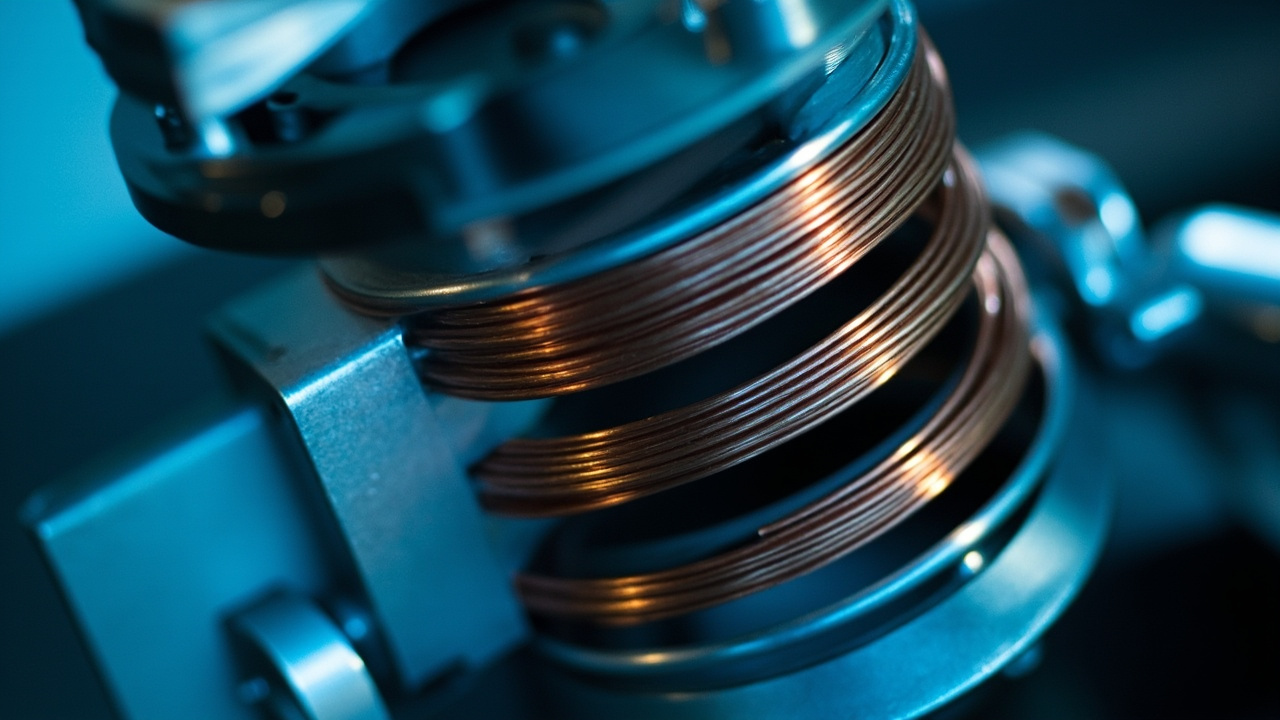
The electromagnetic coil is the heart of the drive system. High-quality coils use magnet wire with temperature class H or higher, rated for continuous operation at one hundred eighty degrees Celsius. The core is laminated silicon steel to minimize eddy current losses. Coil winding must be uniform and tightly packed to achieve consistent magnetic field distribution. Impregnation with epoxy or varnish prevents moisture ingress and wire movement that causes insulation failure.
Chinese manufacturers source coil materials from both domestic and international suppliers. Premium manufacturers use Japanese or German magnet wire with documented thermal ratings. Budget manufacturers may use lower-grade copper with thinner insulation, reducing coil life and increasing failure risk. When evaluating suppliers, ask specifically about magnet wire origin and temperature rating.
Spring System Design
The springs determine how the drive's electromagnetic force translates into useful vibration. Leaf springs, typically made of spring steel or beryllium copper, are arranged in sets of three or four to provide stable, directional vibration. Spring thickness, length, and mounting angle determine the natural frequency of the mechanical system and the ratio of horizontal to vertical vibration component.
Spring design must match the bowl mass, part weight, and desired feed rate. Heavier bowls need stiffer springs; lighter parts need gentler vibration with lower amplitude. Chinese manufacturers with strong engineering capability calculate spring parameters using finite element analysis and validate them through prototype testing. Less sophisticated manufacturers copy spring dimensions from existing designs without analytical verification, which can cause resonance mismatch and poor performance.
Air Gap and Magnetic Circuit
The air gap between the coil core and armature is critical. Too small a gap causes mechanical contact and noise; too large a gap reduces magnetic force and efficiency. Typical air gaps range from zero point five to two millimeters depending on drive size. The gap must remain consistent across the full vibration stroke, requiring precise machining of the core and armature mating surfaces.
Chinese manufacturers with CNC machining capability maintain air gap tolerances within plus or minus zero point one millimeters. This precision ensures quiet operation and consistent force output. Manufacturers using manual grinding or less precise machining may produce drives with uneven gaps that cause noise, uneven vibration, and accelerated wear.
Coil Design Variations in Chinese-Manufactured Feeders
Not all electromagnetic coils are created equal. Chinese manufacturers produce a spectrum of coil designs ranging from basic commodity units to precision-engineered drives that rival European quality. Understanding these variations helps buyers match coil specifications to application requirements.
| Coil Parameter | Economy Grade (China) | Industrial Grade (China) | Premium Grade (China) | European Reference |
|---|---|---|---|---|
| Magnet wire origin | Domestic, unbranded | Domestic branded or Korean | Japanese or German | German or Swiss |
| Temperature class | Class F (155°C) | Class H (180°C) | Class H+ (200°C) | Class H (180°C) |
| Core lamination | Standard silicon steel | Low-loss silicon steel | High-grade oriented steel | Low-loss oriented steel |
| Impregnation | Dip varnish | Vacuum impregnation | Vacuum pressure impregnation | Vacuum pressure impregnation |
| Expected coil life | 3,000-5,000 hours | 8,000-12,000 hours | 15,000-25,000 hours | 15,000-20,000 hours |
| Relative price | 1.0x | 1.4x | 2.0x | 3.5-5.0x |
Single-Coil vs. Dual-Coil Designs
Most electromagnetic feeders use a single coil. However, large bowls or applications requiring high feed rates may use dual-coil drives with two coils operating in push-pull configuration. Dual-coil designs provide stronger vibration force and better symmetry, reducing bowl wobble. Chinese manufacturers offer dual-coil drives for bowls above six hundred millimeters diameter, typically at a forty to sixty percent premium over single-coil equivalents.
Encapsulated vs. Open Coils
Open coils expose the winding to the environment, relying on the bowl base enclosure for protection. Encapsulated coils are potted in epoxy or thermally conductive compound, providing moisture resistance and mechanical protection. For humid environments, washdown applications, or outdoor installation, encapsulated coils are essential. Premium Chinese manufacturers offer encapsulated coils as standard on industrial-grade feeders; economy manufacturers may charge extra or not offer encapsulation at all.
Controller Technology from Chinese Manufacturers
The controller regulates power to the electromagnetic coil, determining vibration frequency, amplitude, and waveform. Controller technology has evolved rapidly in China, with domestic manufacturers now producing digital and variable frequency controllers that match European functionality at significantly lower prices.
Analog Controllers: The Traditional Choice
Analog controllers use triac or thyristor phase control to regulate coil voltage. A potentiometer adjusts amplitude; frequency is fixed at mains frequency or a harmonic. Analog controllers are robust, simple to operate, and inexpensive. Chinese-manufactured analog controllers typically cost fifty to one hundred fifty dollars, compared to two hundred to four hundred dollars for European equivalents.
The limitation of analog controllers is lack of feedback. They cannot compensate for load changes, temperature drift, or mechanical wear. Feed rate gradually changes as bowl fill level varies, requiring operator adjustment. For simple, single-part applications with tolerant downstream processes, analog controllers remain cost-effective. For precision applications, digital controllers are strongly preferred.
Digital Controllers: Precision and Programmability
Digital controllers use microprocessors to regulate output with closed-loop feedback. They measure coil current, detect resonance, and adjust frequency and amplitude to maintain setpoint. Chinese digital controllers typically offer frequency ranges from twenty to four hundred Hertz, multiple programmable presets, soft start and stop, alarm outputs, and RS-485 communication.
Quality varies significantly among Chinese digital controller manufacturers. Controllers from established automation brands use reliable power electronics, proper EMI filtering, and well-designed firmware. Controllers from unknown brands may use undersized components, lack protection circuits, or have firmware bugs that cause erratic behavior. When evaluating digital controllers, request specifications for switching frequency, protection features, and communication protocols.
Variable Frequency Controllers: Advanced Resonance Tracking
Variable frequency controllers can sweep across a frequency range to find and maintain the mechanical resonant frequency automatically. Because resonance changes with bowl load, spring temperature, and part weight, fixed-frequency controllers often operate slightly off resonance, wasting energy and reducing performance. Variable frequency tracking maximizes efficiency and maintains consistent feed rate under varying conditions.
Chinese variable frequency controllers have matured significantly. Early generations had slow sweep algorithms and poor stability; current-generation controllers from reputable manufacturers offer sweep times under five seconds, stable tracking, and minimal hunting. Prices range from three hundred to eight hundred dollars, compared to one thousand to two thousand five hundred dollars for European variable frequency units.
Energy Efficiency: China vs. European Electromagnetic Feeders
Energy consumption matters for both operating cost and environmental impact. A typical electromagnetic feeder draws two hundred to eight hundred watts depending on size and load. Efficiency differences between well-designed and poorly designed drives can exceed thirty percent.
Factors Affecting Efficiency
Operating at resonance is the single largest determinant of efficiency. At resonance, the mechanical system stores and returns energy each cycle, minimizing the electrical power needed to maintain vibration. Off-resonance operation requires continuous power input to overcome mechanical impedance. Variable frequency controllers that track resonance automatically therefore deliver significant energy savings compared to fixed-frequency designs.
Coil design also affects efficiency. Better core materials reduce hysteresis and eddy current losses. Tighter winding packing improves copper utilization. Lower-resistance windings reduce resistive losses. Premium Chinese coils using imported core materials and high-fill-factor winding approach European efficiency levels; economy coils with standard materials may consume twenty to thirty percent more power for equivalent vibration output.
Measured Efficiency Comparison
Independent testing of electromagnetic feeders from multiple sources shows that premium Chinese feeders with variable frequency controllers achieve energy efficiency within five to ten percent of European feeders. Economy Chinese feeders with basic analog controllers may consume twenty to forty percent more energy. The efficiency gap is primarily due to controller technology rather than coil quality; pairing a good Chinese coil with a variable frequency controller yields near-European efficiency at a fraction of the cost.
For buyers focused on total cost of ownership, the energy savings from a variable frequency controller often justify its higher purchase price within one to two years of continuous operation. For intermittent operation or low-cost regions with inexpensive electricity, the payback period may be longer.
Quality Assessment for China Electromagnetic Feeders
Evaluating electromagnetic feeder quality requires attention to both visible craftsmanship and measurable electrical parameters. The following assessment framework helps buyers distinguish reliable manufacturers from suppliers cutting corners.
Visual and Mechanical Inspection
Examine the coil assembly for uniform winding, clean solder joints, and proper impregnation. The core should be free of burrs and corrosion. The armature mating surface should be flat and smooth. Springs should have consistent thickness, clean edges, and proper heat treatment coloration. Mounting holes should be precisely located with clean threads.
The bowl track should be smooth with consistent radius and no tool marks in contact areas. Welds should be clean and fully penetrated. Coating, if present, should be uniform and properly cured. These visible indicators correlate strongly with overall manufacturing discipline.
Electrical Testing
Measure coil resistance with a precision ohmmeter and compare to the manufacturer's specification. Resistance more than ten percent below specification indicates shorted turns; more than ten percent above indicates poor connections or undersized wire. Measure insulation resistance with a megohmmeter at five hundred volts; values below ten megohms indicate moisture ingress or insulation degradation.
Power the drive with a variable transformer and measure current draw at various voltages. Current should increase linearly with voltage up to the rated operating point. Excessive current at low voltage indicates shorted turns or incorrect winding. Compare no-load current to manufacturer specification; high no-load current suggests core losses or air gap problems.
Vibration Performance Testing
Mount the feeder on a test stand and measure vibration amplitude with an accelerometer or displacement sensor. Amplitude should be uniform around the bowl circumference; variation exceeding fifteen percent indicates spring mismatch or mounting problems. Measure noise level at one meter distance; values above eighty-five decibels suggest mechanical contact, loose hardware, or poor resonance tuning.
Run the feeder at rated amplitude for four hours continuously, monitoring coil temperature with an infrared thermometer. Temperature rise above ambient should stabilize below sixty degrees Celsius for Class H coils. Continuously rising temperature indicates insufficient cooling, incorrect voltage, or internal defects.
Comparison with European Electromagnetic Drives
European electromagnetic feeders, particularly from German and Swiss manufacturers, have long set the benchmark for quality and reliability. Understanding where Chinese feeders match, exceed, or fall short of this benchmark helps buyers make value-based decisions.
Where Chinese Feeders Match European Quality
Premium Chinese manufacturers using imported magnet wire, CNC machining, and vacuum pressure impregnation produce coils with electrical characteristics and life expectancy comparable to European units. Digital and variable frequency controllers from established Chinese brands offer functionality and reliability that satisfy most industrial applications. Mechanical fabrication quality, including bowl welding and track finishing, reaches European standards when manufacturers invest in modern equipment and quality systems.
Where European Feeders Maintain Advantage
European manufacturers lead in extreme precision applications requiring sub-millimeter part positioning, in specialized materials for pharmaceutical or food-grade applications, and in integration with advanced automation ecosystems. European brands also offer deeper application engineering support, with decades of accumulated knowledge about specific part families and industries. For buyers needing extensive hand-holding during design and commissioning, European suppliers may justify their premium.
Value Proposition Summary
For standard industrial applications with typical part sizes and feed rates, premium Chinese electromagnetic feeders deliver ninety to ninety-five percent of European performance at thirty to forty percent of the price. The value proposition is strongest for buyers who can perform their own application engineering and do not require extensive supplier support. For buyers without in-house feeding expertise, the engineering support bundled with European pricing may be worth the premium.
Applications Best Suited for China Electromagnetic Feeders
China electromagnetic feeders excel in applications where the combination of reasonable quality and competitive pricing creates compelling value. The following application categories are particularly well suited.
General Industrial Assembly
Fasteners, connectors, and small hardware used in general assembly applications are ideal for Chinese electromagnetic feeders. These parts are robust, have well-understood orientation characteristics, and do not require extreme precision. A standard bowl feeder with analog or basic digital controller handles these applications reliably at low cost.
Automotive Component Feeding
Automotive production uses large quantities of electromagnetic feeders for fasteners, clips, and stamped parts. Chinese feeders serve this market extensively, with many manufacturers offering IATF 16949-aligned quality systems. The high volume and cost pressure of automotive production make Chinese sourcing attractive, provided suppliers meet automotive documentation and traceability requirements. Read our automotive feeding guide for detailed requirements.
Electronics and Consumer Goods
Electronics assembly and consumer goods production require feeders for plastic parts, small metal components, and assemblies. Chinese manufacturers offer ESD-safe construction, soft coatings for surface protection, and compact designs suitable for cleanroom environments. The cost advantage is significant in these high-volume industries where margins are thin.
Packaging and Pharmaceutical
Food-grade and pharmaceutical applications require stainless steel construction, FDA-compliant coatings, and cleanability. Premium Chinese manufacturers offer these features at prices still well below European equivalents. Buyers should verify material certifications and surface finish documentation to ensure compliance with regulatory requirements.
Specifying Electromagnetic Feeders from China
Successful procurement of Chinese electromagnetic feeders begins with clear, complete specifications. Ambiguous or incomplete specifications lead to misunderstandings, delays, and performance shortfalls.
Electrical Specifications
Specify supply voltage, frequency, and phase. Standard Chinese manufacturing assumes two hundred twenty volt, fifty hertz, single phase. If your facility uses one hundred ten volt, sixty hertz, or three-phase power, state this explicitly. Specify whether the controller should include voltage selection or whether a dedicated voltage version is required.
Define required controller features: analog or digital, fixed or variable frequency, number of presets, communication interface, and protection features. If you need integration with a PLC, specify the required I/O signals and protocol.
Mechanical Specifications
Specify bowl diameter, track configuration, and discharge orientation. Provide part samples or detailed drawings with dimensions, weight, material, and surface finish. Describe the required orientation at the discharge point with photographs or diagrams. Specify feed rate in parts per minute and acceptable variation.
Define environmental conditions: temperature range, humidity, exposure to chemicals or washdown, and any explosion protection requirements. Specify coating requirements if parts are delicate or if the application requires food-grade or medical-grade materials.
Quality and Documentation Requirements
Request material certificates for bowl steel, magnet wire, and coatings. Ask for factory test reports showing coil resistance, insulation resistance, vibration amplitude, and noise level. Define acceptance criteria including feed rate, orientation yield, and continuous run duration. Specify documentation required for delivery: operation manual, electrical schematic, spare parts list, and maintenance schedule.
Huben Automation Electromagnetic Feeder Capability
Huben Automation manufactures electromagnetic vibratory feeders across the full quality spectrum from economical standard units to premium custom designs. Our electromagnetic drive technology includes in-house coil winding with Japanese Class H magnet wire, CNC-machined cores with air gap tolerance plus or minus zero point zero five millimeters, vacuum pressure impregnation for coil protection, and digital and variable frequency controllers with auto-tuning and resonance tracking.
We offer single-coil drives for bowls from one hundred to six hundred millimeters diameter and dual-coil drives for larger applications. All drives undergo four-hour continuous testing with customer parts before shipment, with video documentation of vibration performance, coil temperature, and feed rate stability. Our controllers support multiple voltage standards and communication protocols for global deployment.
We encourage buyers to compare our specifications and pricing against both European and other Chinese suppliers. Contact our engineering team for a detailed proposal, or explore our vibratory bowl feeder product range for standard configurations. For broader guidance on sourcing from China, see our automation equipment import guide.
Frequently Asked Questions
How long do electromagnetic coils from Chinese manufacturers typically last?
Economy-grade coils last three thousand to five thousand hours of continuous operation. Industrial-grade coils with Class H wire and vacuum impregnation last eight thousand to fifteen thousand hours. Premium coils using Japanese magnet wire and advanced impregnation can exceed twenty thousand hours, comparable to European coils. Actual life depends on operating voltage, ambient temperature, and duty cycle.
Can I use a European controller with a Chinese electromagnetic drive?
Yes, provided the voltage, current, and power ratings are compatible. The coil electrical characteristics must match the controller output specification. Many buyers pair premium Chinese coils with European controllers to achieve near-European performance at reduced cost. However, the coil and controller should be tuned together as a system for optimal resonance matching.
What causes electromagnetic feeders to overheat?
Overheating results from excessive voltage, off-resonance operation, poor ventilation, shorted coil turns, or mechanical binding. Verify that supply voltage matches the coil rating. Use a variable frequency controller to ensure resonance operation. Ensure the coil has adequate clearance for air circulation. Measure coil resistance to detect shorted turns. Check for mechanical interference that increases load.
Are Chinese electromagnetic feeders noisier than European feeders?
Noise level depends on manufacturing precision rather than country of origin. Well-made Chinese feeders with precise air gaps, balanced springs, and proper resonance tuning operate at sixty-five to seventy-five decibels, comparable to European feeders. Poorly made feeders with loose hardware or incorrect air gaps may exceed eighty-five decibels. Always request noise specifications and verify with pre-shipment testing.
How do I verify coil quality before accepting shipment?
Request coil resistance and insulation resistance measurements from the manufacturer. For large orders, consider third-party inspection including megohm testing and high-pot testing. During pre-shipment verification, run the feeder continuously for at least four hours while monitoring coil temperature. Document vibration amplitude uniformity around the bowl. Reputable manufacturers welcome this verification and will provide the necessary access and instrumentation.
What voltage standards do Chinese electromagnetic feeders support?
Most Chinese manufacturers default to two hundred twenty volt, fifty hertz for domestic production. Export-oriented manufacturers offer multi-voltage controllers or dedicated one hundred ten volt, two hundred volt, two hundred forty volt versions. Specify your voltage and frequency when requesting quotation. Variable frequency controllers often accept a wide input range, but the coil must be wound for the specific operating voltage.
Conclusion
Electromagnetic vibratory feeders from China offer international buyers a compelling combination of proven technology, competitive pricing, and expanding capability. The key to successful sourcing lies in understanding the technical variations among Chinese manufacturers and specifying requirements precisely. Premium Chinese electromagnetic drives using quality magnet wire, precision machining, and modern controllers deliver performance that approaches European standards at significantly lower cost.
Buyers should evaluate coil construction, controller features, and manufacturing quality rather than making assumptions based on country of origin. With proper specification, quality verification, and supplier selection, Chinese electromagnetic feeders provide reliable, efficient parts feeding for general industrial, automotive, electronics, and packaging applications worldwide.
Huben Automation stands ready to demonstrate the quality and value of Chinese electromagnetic feeder technology. Contact us for application engineering support, detailed quotations, and factory verification of our drive technology capabilities.
Готовы автоматизировать производство?
Получите бесплатную консультацию и подробное коммерческое предложение от нашей инженерной команды в течение 12 часов.