How Much Does a Vibratory Feeder Cost: 2026 Price Factors & Ranges

Introduction: What Determines Vibratory Feeder Cost
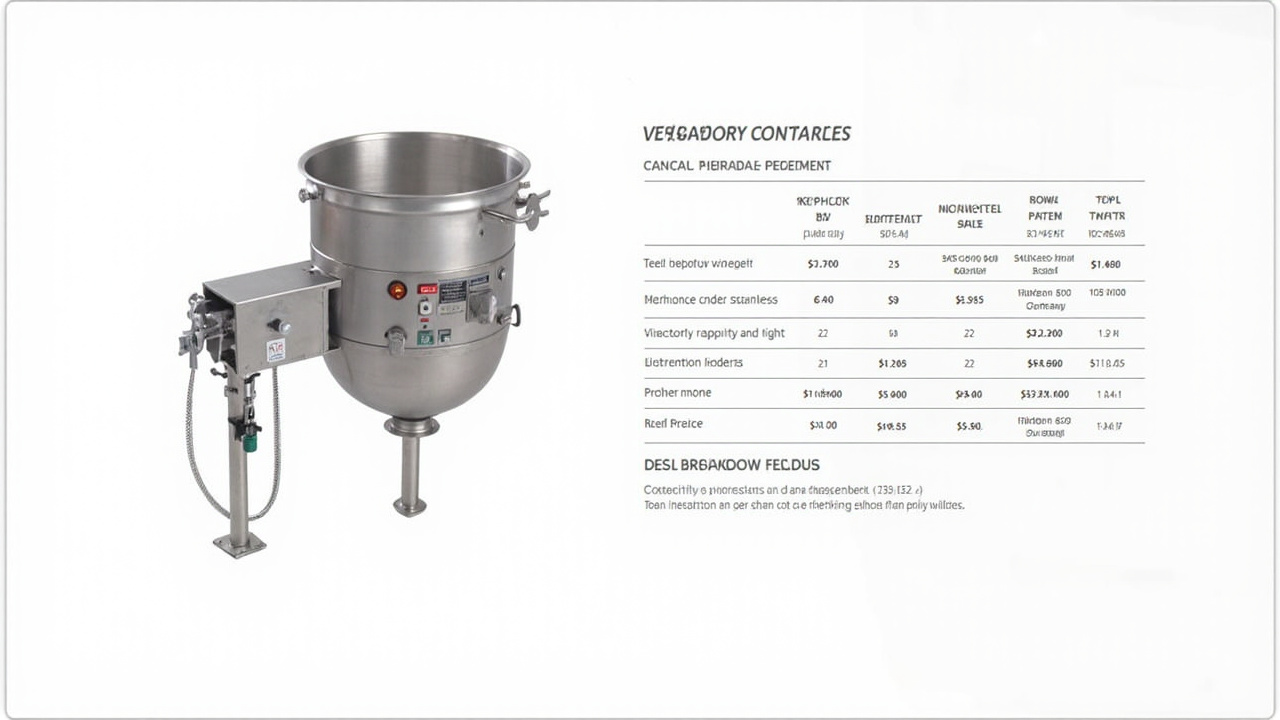
When planning an automation project, one of the first questions buyers ask is: how much does a vibratory feeder cost? The answer is not straightforward. A basic bowl feeder for simple fasteners might cost under $1,500, while a fully customized feeding system with vision inspection and robotic integration can exceed $25,000. Understanding the factors that drive these price differences is essential for accurate budgeting and avoiding unpleasant surprises during procurement.
In 2026, the global vibratory feeder market offers options at every price point, from entry-level Chinese manufacturers to premium European brands. This guide provides a detailed cost breakdown by feeder type, size, and complexity. We examine standard versus custom pricing, expose hidden costs that inflate budgets, and compare regional price differences to help you make an informed purchasing decision.
Cost Breakdown by Feeder Type
The type of vibratory feeder you choose is the single largest determinant of price. Each feeder architecture serves different applications and carries distinct engineering and manufacturing costs.
Vibratory Bowl Feeders
Vibratory bowl feeders remain the most common and cost-effective solution for orienting and feeding small parts. Standard bowl feeders with fixed mechanical tooling typically range from $800 to $3,500 depending on bowl diameter and complexity. A 200 mm diameter bowl with basic orientation tooling for a simple cylindrical part sits at the lower end, while a 500 mm bowl with cascading selectors for an asymmetric component approaches the upper range.
Custom tooled bowl feeders, where the track geometry is engineered specifically for your part, generally cost between $2,000 and $7,000. The price premium reflects engineering time for part analysis, CAD design of tooling features, CNC machining of the track, and iterative testing to achieve stable orientation yield.
Linear Vibratory Feeders
Linear feeders transport parts from the bowl discharge to the pickup point. Standalone linear track units cost $1,000 to $2,500 for standard lengths of 300-800 mm. Dual-track configurations for high-speed applications add 40-60% to the base price. Precision linear feeders with integrated sensors and adjustable vibration zones for delicate parts range from $2,500 to $5,000.
Centrifugal Feeders
Centrifugal disc feeders use rotational force for high-speed feeding of simple, symmetrical parts. They are faster than vibratory feeders but less versatile. Prices start at $2,500 for small discs and reach $6,500 for large high-speed units with multiple discharge stations. The higher cost reflects more complex drive mechanisms and precision balancing requirements.
Flexible Vibratory Feeders
Flexible feeders represent the premium segment, combining a vibrating platform with vision-guided robotic picking. These systems handle multiple part types without retooling, making them ideal for high-mix production. Entry-level flexible feeders with basic backlighting and single-camera vision start at $3,000. Advanced systems with multi-camera setups, AI-based part recognition, and collaborative robot integration range from $6,000 to $12,000.
Step and Elevator Feeders
Step feeders use mechanical elevation to lift parts from a bulk hopper to the feeding height. They are preferred for large, heavy, or delicate parts unsuitable for vibration. Standard step feeders cost $2,000 to $4,500. Elevator feeders with belt or chain mechanisms for very large parts range from $3,500 to $7,000.
| Feeder Type | Size Range | Standard Price (USD) | Custom Price (USD) |
|---|---|---|---|
| Vibratory Bowl Feeder | 150-250 mm | $800 - $1,800 | $1,800 - $3,500 |
| Vibratory Bowl Feeder | 300-450 mm | $1,500 - $3,000 | $3,000 - $6,500 |
| Vibratory Bowl Feeder | 500-650 mm | $2,800 - $4,500 | $5,000 - $9,000 |
| Linear Vibratory Feeder | 300-800 mm track | $1,000 - $2,500 | $2,500 - $5,000 |
| Centrifugal Feeder | 200-500 mm disc | $2,500 - $5,500 | $4,500 - $8,500 |
| Flexible Vibratory Feeder | 300-500 mm platform | $3,000 - $6,000 | $6,000 - $12,000 |
| Step Feeder | 100-300 mm step width | $2,000 - $3,500 | $3,500 - $6,000 |
| Elevator Feeder | Belt/chain type | $3,500 - $5,500 | $5,500 - $9,000 |
| Complete Feeding System | Bowl + linear + hopper | $4,000 - $10,000 | $8,000 - $25,000 |
Standard vs Custom Pricing: Understanding the Gap
The price difference between standard and custom vibratory feeders can be 100-200%, and understanding why helps buyers decide which route suits their application.
Standard Feeders: Economies of Scale
Standard feeders are built from proven designs with minimal engineering overhead. The manufacturer has already solved the orientation challenge for common part families, such as cylindrical pins, flat washers, or hexagonal nuts. Tooling is either universal or quickly adapted from existing templates. Production time is shorter, material waste is lower, and risk of design failure is minimal.
For buyers with common part geometries and high volume requirements, standard feeders offer excellent value. A standard 300 mm bowl feeder for M6 hex nuts might cost $1,800 from a direct China manufacturer, while a custom-designed equivalent for an irregular plastic clip could cost $4,500. If your part fits an established category, always explore standard options first.
Custom Feeders: Engineering for Your Part
Custom feeders begin with a blank sheet. Engineers analyze your part's center of gravity, contact surfaces, preferred resting orientations, and fragility. They design track geometry, selector mechanisms, and air-jet assist features specifically for your component. Multiple prototype iterations may be needed to achieve target feed rates and orientation yields.
The custom process typically involves 20-60 hours of engineering time, 10-30 hours of CNC machining, and 5-15 hours of testing and adjustment. At typical engineering rates, this explains much of the price premium. However, for complex parts or critical applications, custom design is the only path to reliable performance.
Semi-Custom: The Middle Ground
Some manufacturers offer semi-custom solutions that adapt proven bowl designs with part-specific tooling inserts. This approach captures much of the cost savings of standard feeders while accommodating moderately complex parts. Semi-custom feeders typically cost 30-50% more than standard equivalents but 40-60% less than fully custom designs.
Cost Drivers: How Part Complexity Affects Price
Within each feeder category, specific design choices and part characteristics drive incremental costs. Understanding these drivers helps you evaluate quotes and identify where flexibility can reduce spending.
Bowl Diameter and Material
Larger bowls require more material, longer machining time, and more powerful drive units. A 600 mm bowl costs roughly 2.5-3 times more than a 250 mm bowl of equivalent complexity. Material choice also matters: SUS304 stainless steel is standard, while SUS316L for pharmaceutical or marine applications adds 25-35%. Polyurethane coating for gentle part handling adds $200-600 depending on bowl size.
Orientation Steps and Tooling
Each additional orientation mechanism increases engineering and machining costs. A simple gravity selector that reorients parts by dropping them into a slot might add $150-300. A mechanical flipper that inverts parts mid-track adds $400-800. An air-jet selector that blows incorrectly oriented parts back into the bowl adds $300-600 plus compressed air infrastructure. Complex parts requiring four or more orientation steps can double the base feeder price.
Drive Unit and Controller Specifications
The electromagnetic drive unit is the heart of a vibratory feeder. Standard Chinese drives with analog controllers cost $150-300 and are adequate for most applications. Upgrading to a digital frequency controller with stable amplitude under load adds $300-600. Premium Japanese or European drives with closed-loop control and vibration monitoring add $600-1,200 but deliver superior consistency for precision applications.
Sensor and Automation Integration
Basic feeders operate open-loop with manual on-off control. Adding sensors for empty-bowl detection, jam detection, and feed rate monitoring adds $150-400 per sensor. PLC integration with recipe storage and HMI touchscreen interfaces adds $800-1,500. Vision inspection at the discharge point for quality verification adds $2,000-5,000 depending on camera resolution and processing requirements.
Hidden Costs That Inflate Your Budget
The quoted feeder price is rarely the total project cost. Buyers who fail to account for hidden expenses often exceed their budget by 25-45%. Here are the most commonly overlooked cost items.
Sample Parts and Testing
Manufacturers need your actual production parts to design and validate tooling. Shipping samples internationally costs $50-150 per shipment. Some suppliers charge testing fees of $100-300 for complex parts requiring multiple iterations. Always clarify whether sample testing is included in the quoted price.
Packaging and Export Crating
Standard plywood crate packaging costs $80-200 per feeder. Precision feeders with delicate linear tracks may require enhanced packaging with foam inserts and moisture barriers, adding $100-250. For sea freight, vapor-barrier bags and desiccants add $50-100 but prevent corrosion during long transits.
Documentation and Compliance
Basic commercial documentation is always included. However, CE marking documentation, material certificates, factory acceptance test reports, and calibration certificates often incur additional fees. CE compliance packages cost $300-800. Detailed FAT reports with video evidence add $200-400. For regulated industries, validation documentation can add $1,000-3,000.
Shipping, Insurance, and Duties
Air freight for a typical 60 kg bowl feeder costs $200-500 depending on destination. Sea freight for palletized systems starts at $300-600 per cubic meter with 25-40 day transit. Insurance at 110% of invoice value adds 0.3-0.5%. Import duties vary by country: typically 0-5% for vibratory feeders under HS code 8479.89, plus VAT or GST at 5-27%.
Installation and Commissioning
Most feeders are plug-and-play for experienced maintenance teams. However, complex systems with PLC integration, vision systems, or robotic interfaces may require factory technician support. On-site commissioning by Chinese technicians costs $800-1,500 per day including travel. Remote commissioning via video call is increasingly common and costs $200-400 per session.
Spare Parts and Consumables
A prudent buyer budgets 5-10% of the feeder price for initial spare parts. Common wear items include springs, electromagnet coils, controller boards, and tooling inserts. Ordering spares with the initial shipment avoids expensive air freight later. Some suppliers offer spare parts kits at discounted bundle pricing.
Regional Price Differences: China, Europe, and North America
Geographic origin significantly impacts vibratory feeder pricing. Understanding regional differences helps buyers evaluate trade-offs between cost, quality, and support.
China Manufacturers
China is the world's largest producer of vibratory feeders, with hundreds of manufacturers ranging from small workshops to ISO-certified factories. Direct-from-factory pricing is typically 40-70% lower than Western equivalents. A standard bowl feeder costing $1,500 from a Chinese direct manufacturer might cost $3,500-5,000 from a European brand with equivalent specifications.
The quality spectrum in China is wide. Established manufacturers with ISO 9001 certification, CNC machining capability, and in-house engineering teams deliver quality comparable to Western suppliers at significantly lower prices. Smaller workshops may offer tempting prices but often lack engineering rigor and quality consistency.
European Manufacturers
German, Swiss, and Italian vibratory feeder manufacturers are known for precision engineering, premium materials, and advanced control systems. Their products command 2-3 times the price of Chinese equivalents. The premium is justified for ultra-high-precision applications, extreme durability requirements, or industries where brand reputation influences customer perception.
European manufacturers also excel in after-sales support, with local service engineers and extensive spare parts inventories. For buyers in Europe, reduced shipping times and no import duties partially offset the higher purchase price.
North American Manufacturers
US and Canadian manufacturers occupy a middle ground, typically pricing 50-100% above Chinese direct prices but below European premiums. Domestic manufacturing offers advantages for buyers with Made-in-USA requirements, rapid delivery needs, or preference for local support. However, many North American brands source components from China, meaning the actual manufacturing origin may differ from the brand's headquarters.
Total Cost of Ownership: Beyond Purchase Price
Smart buyers evaluate vibratory feeders on total cost of ownership over a 5-10 year lifespan, not just initial purchase price. A cheaper feeder that requires frequent maintenance, consumes excessive power, or causes production downtime can cost far more than a premium unit.
Key TCO factors include energy consumption, where efficient drives save $50-150 annually; maintenance frequency, where robust construction reduces labor costs; downtime cost, where reliable feeders prevent production losses that can exceed $1,000 per hour; and changeover time, where quick-release tooling reduces setup labor. When TCO is considered, a well-built Chinese feeder from a reputable manufacturer often delivers the best overall value.
Frequently Asked Questions
What is the cheapest type of vibratory feeder?
Standard vibratory bowl feeders in the 150-250 mm diameter range are the most economical option, with factory-direct prices starting around $800 from Chinese manufacturers. These are suitable for simple, symmetrical parts in high-volume production. However, the cheapest upfront option is not always the lowest total cost if it lacks durability or requires frequent adjustment.
How much more does a custom feeder cost compared to a standard one?
Custom feeders typically cost 100-200% more than standard feeders of the same size. A standard 300 mm bowl might cost $1,800, while a custom tooled version for a complex part could cost $4,000-5,500. The premium covers engineering analysis, custom tooling design, CNC machining, and testing iterations. For parts with unique geometries or strict orientation requirements, this premium is unavoidable.
Are there ongoing costs after purchasing a vibratory feeder?
Yes, buyers should budget for electricity, periodic maintenance, wear part replacement, and potential downtime. Annual maintenance costs typically run 3-8% of the purchase price for well-built feeders. Wear items like springs may need replacement every 2-5 years at $50-150 per set. Energy costs are modest, usually $100-300 annually depending on run hours and drive efficiency.
Why do Chinese manufacturers charge so much less than European brands?
Lower labor costs, domestic supply chains, and intense local competition enable Chinese manufacturers to offer competitive pricing. Established factories with modern CNC equipment and ISO certification can match European quality for standard and moderately complex feeders. The price gap narrows for highly specialized applications requiring extensive R&D, where European expertise commands a premium.
What hidden fees should I watch for when importing from China?
Common hidden costs include sample shipping and testing fees, export crating and packaging, international freight and insurance, import duties and VAT, banking and payment fees, and on-site commissioning travel. Request an all-inclusive quote or detailed breakdown of excluded costs before placing an order. Reputable suppliers like Huben Automation provide transparent pricing with no hidden fees.
Is it worth paying more for a premium drive unit?
For most standard applications, a quality Chinese drive with digital controller performs reliably at a fraction of premium drive cost. However, for precision applications where amplitude stability affects part orientation accuracy, or for continuous 24/7 operation where reliability is critical, investing in a premium Japanese or European drive can pay for itself through reduced downtime and consistent performance.
Conclusion: Budgeting Smart for Your Vibratory Feeder
Vibratory feeder costs span a wide range, from under $1,000 for basic standard units to over $25,000 for complex integrated systems. The key to smart budgeting is understanding which cost drivers apply to your specific application and where flexibility can unlock savings without compromising performance.
For buyers with common part geometries, standard or semi-custom feeders from established Chinese manufacturers deliver exceptional value. For complex parts or critical applications, the engineering investment in full custom design is justified by reliable long-term performance. In all cases, evaluating total cost of ownership rather than purchase price alone leads to better financial outcomes.
Ready to get a detailed, transparent quote for your vibratory feeder project? Contact the Huben Engineering Team with your part specifications and production requirements. We provide comprehensive quotations within 12 hours, with clear breakdowns of every cost component and no hidden fees.
Pronto para Automatizar sua Produção?
Receba uma consulta gratuita e orçamento detalhado em até 12 horas da nossa equipe de engenharia.