Vibratory Bowl Feeders from China: Complete Buyer's Guide 2026
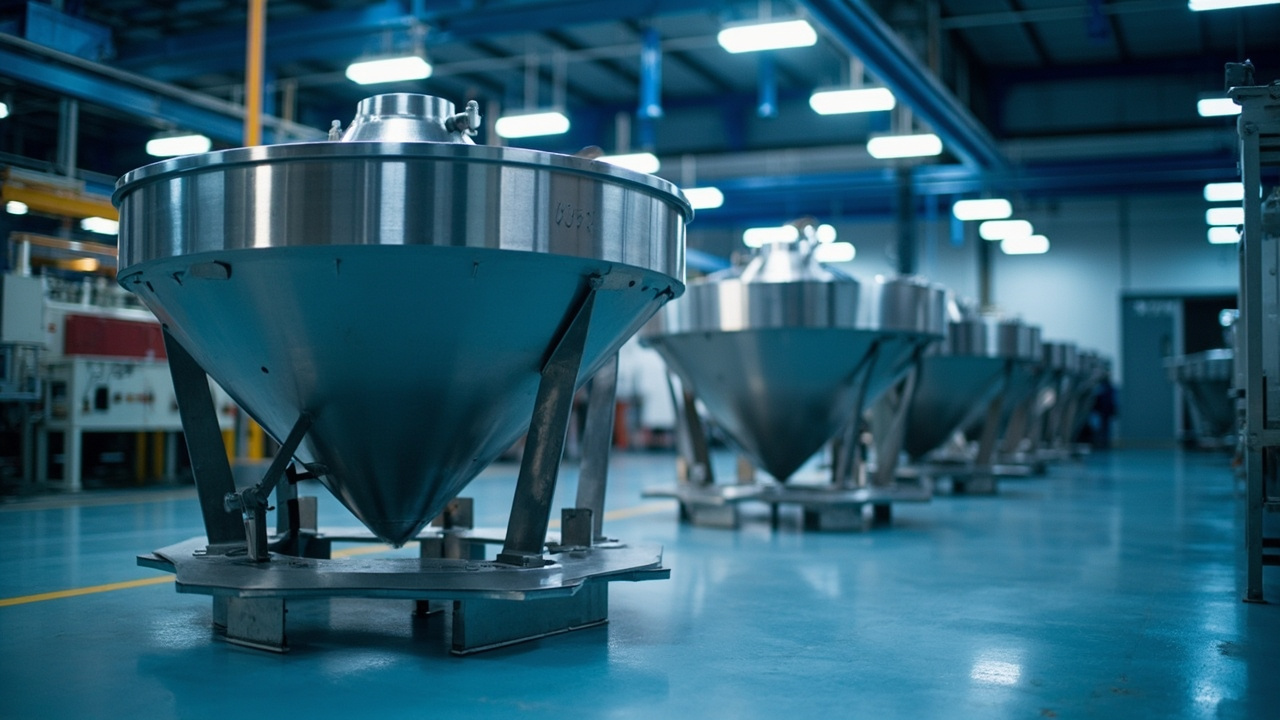
Why Source Vibratory Bowl Feeders from China?
China has established itself as the dominant global manufacturing hub for vibratory bowl feeders, supplying automation equipment to factories across North America, Europe, Southeast Asia, and beyond. Chinese manufacturers now produce over 60% of the world's vibratory feeding equipment, driven by decades of investment in precision machining, electromagnetic engineering, and automation technology. For international buyers, sourcing vibratory bowl feeders from China offers compelling advantages that extend far beyond simple cost reduction.
The cost differential remains significant. A standard vibratory bowl feeder from a reputable Chinese manufacturer typically costs 40-65% less than equivalent equipment from European or Japanese suppliers. However, the evolution of China's manufacturing sector means that price advantages now come with quality standards that meet or exceed international expectations. Leading Chinese manufacturers maintain ISO 9001 certification, employ CNC machining centers with micron-level precision, and utilize electromagnetic coils from the same Japanese suppliers used by Western OEMs.
Beyond economics, Chinese manufacturers offer production flexibility that is difficult to match elsewhere. The concentration of component suppliers, steel mills, surface treatment facilities, and logistics networks within China's industrial zones enables shorter lead times for custom designs. A bowl feeder requiring specialized coating, unique tooling geometry, and integration with vision systems can move from concept to shipment in 4-8 weeks from an established Chinese manufacturer—timelines that would stretch to 12-20 weeks in many Western markets.
Types of Vibratory Bowl Feeders Available from China
Chinese manufacturers produce the full spectrum of vibratory bowl feeder configurations, from basic standard models to sophisticated custom-engineered systems. Understanding the available types helps buyers match equipment to their application requirements and budget constraints.
Standard Electromagnetic Bowl Feeders
Standard electromagnetic bowl feeders represent the most common configuration exported from China. These units use electromagnetic drive coils to generate controlled vibration, moving parts up a spiral track inside a stainless steel bowl. Chinese manufacturers offer bowl diameters ranging from 100mm to 1200mm, with 304 stainless steel construction as the standard material. Drive units typically operate at 50Hz or 60Hz with adjustable amplitude controllers. Standard models from quality Chinese manufacturers perform reliably for simple to moderately complex parts at feed rates up to 300 parts per minute.
Custom-Tooled Bowl Feeders
For parts with complex geometries or precise orientation requirements, custom-tooled bowl feeders are engineered specifically for the application. Chinese manufacturers excel in this segment due to their integrated in-house tooling capabilities. The process involves 3D modeling of the part, simulation of orientation behavior, CNC machining of tooling inserts, and iterative testing. Custom feeders from China typically cost $2,500 to $6,000 depending on bowl size and tooling complexity—significantly below Western pricing for equivalent capability.
Multi-Track and Multi-Lane Bowl Feeders
High-throughput applications may require multi-track bowls that feed multiple parts simultaneously, or multi-lane linear feeders that distribute oriented parts to several downstream stations. Chinese manufacturers have extensive experience with these configurations, particularly for the electronics and automotive industries where high-speed assembly demands parallel feeding paths.
Flexible Vibratory Feeders with Vision Integration
The fastest-growing segment in China's vibratory feeder exports is flexible feeding systems that combine a generic vibrating platform with vision-guided robotic picking. These systems handle multiple part types without mechanical retooling, making them ideal for low-volume, high-mix production. Chinese manufacturers offer flexible feeder platforms starting around $3,500—often including basic vision software integration—compared to $8,000-15,000 for comparable European systems.
Quality Levels Among Chinese Manufacturers
Not all vibratory bowl feeders from China meet the same quality standards. The market spans a wide spectrum from premium manufacturers with international certifications to budget producers focused solely on price. Understanding these quality tiers helps buyers set appropriate expectations and evaluation criteria.
| Quality Tier | Price Range (USD) | Characteristics | Best For |
|---|---|---|---|
| Premium Export Grade | $2,500 - $8,000 | ISO 9001 certified, CNC-machined tooling, Japanese electromagnetic coils, comprehensive testing documentation, CE marking available | High-precision manufacturing, medical devices, automotive Tier 1 |
| Professional Grade | $1,500 - $4,000 | Standardized production, quality inspection, basic documentation, reliable performance for standard parts | General industrial automation, packaging, consumer goods |
| Economy Grade | $800 - $2,000 | Basic functionality, minimal testing, limited documentation, shorter service life | Low-budget projects, simple parts, non-critical applications |
| Budget/Trading Company | $500 - $1,500 | Often resold with unknown origin, inconsistent quality, no engineering support | Not recommended for production environments |
Premium export-grade manufacturers like Huben Automation invest in quality management systems that mirror Western practices. These facilities maintain incoming material inspection, in-process dimensional checks, electromagnetic performance testing, and pre-shipment run-off verification with customer parts. The bowls are fabricated from certified SUS304 stainless steel with uniform thickness, and electromagnetic coils are sourced from established Japanese or German suppliers to ensure consistent drive characteristics.
Professional-grade manufacturers offer reliable equipment for standard applications but may lack the engineering depth for highly complex parts or extensive documentation packages. Economy-grade feeders can provide functional performance for undemanding applications but typically use lower-grade materials, simplified controllers, and minimal quality control. Budget options sold through trading companies often carry significant risk—the buyer has limited visibility into actual manufacturing standards and minimal recourse if equipment underperforms.
Price Ranges and Cost Factors
Pricing for vibratory bowl feeders from China varies based on bowl diameter, tooling complexity, controller features, and order volume. Understanding these cost drivers helps buyers evaluate quotations and identify potential issues.
Bowl diameter is the primary cost determinant. A 200mm standard bowl feeder for simple cylindrical parts might cost $1,200-1,800 from a quality Chinese manufacturer. A 400mm bowl with custom tooling for an asymmetric electronic component could range from $3,500-5,500. Large bowls exceeding 600mm diameter for automotive components typically cost $5,000-10,000 depending on track complexity.
Controller sophistication affects pricing significantly. Basic analog controllers with amplitude adjustment cost $150-300. Digital controllers with frequency tuning, soft-start, and sensor integration range from $300-600. Advanced PLC-compatible controllers with Ethernet connectivity and process monitoring can add $800-1,500 to system cost but provide valuable data for Industry 4.0 integration.
Tooling complexity directly impacts engineering and machining time. Simple orientation features like width selectors or end-to-end selectors add minimal cost. Complex cascading selectors, air-knife separation, or multi-stage orientation can increase tooling cost by 50-150%. However, even complex custom tooling from Chinese manufacturers remains substantially below Western pricing due to lower labor and machining costs.
Surface treatments and special materials also influence pricing. Polyurethane coating for noise reduction and part protection typically adds $200-500 depending on bowl size. FDA-compliant coatings for food or pharmaceutical applications cost 30-50% more than standard industrial coatings. Specialized materials like SUS316 stainless steel for corrosive environments increase material cost by 20-30%.
How to Evaluate Chinese Vibratory Bowl Feeder Manufacturers
Systematic evaluation separates reliable Chinese manufacturers from risky suppliers. The following framework addresses the key dimensions buyers should assess before placing orders.
Technical Capability Assessment
Request detailed technical proposals for your specific application. Capable manufacturers will ask clarifying questions about part behavior, provide preliminary bowl diameter recommendations, and explain their tooling approach. Vague proposals that simply quote standard models without addressing your part's unique characteristics suggest limited engineering depth.
Review the manufacturer's design capabilities. Do they provide 3D models and simulation of part flow? Can they share examples of similar parts they have successfully tooled? Modern Chinese manufacturers increasingly use CAD software and discrete element method (DEM) simulation to validate designs before fabrication—capabilities that reduce risk and improve first-pass success rates.
Manufacturing Infrastructure Verification
Request factory photographs or video tours showing production equipment. Essential capabilities include CNC machining centers for tooling fabrication, welding stations for bowl construction, electromagnetic coil winding equipment, and testing areas with sample parts running on completed feeders. The absence of in-house CNC machining is a red flag—manufacturers outsourcing tooling have less control over quality and longer lead times.
Assess quality control processes. Incoming material inspection, dimensional checking of fabricated bowls, electromagnetic performance testing, and pre-shipment run-off verification should all be part of the standard workflow. Manufacturers unwilling to document these processes may lack systematic quality management.
Export Experience and Documentation
Verify that the manufacturer has experience shipping to your country. Experienced exporters understand packaging requirements for international transit, documentation for customs clearance, and voltage standards for your region. They should provide commercial invoices, packing lists, certificates of origin, and any required compliance certifications without prompting.
Communication quality during the quotation phase predicts post-sale support. Responsive manufacturers with technically competent English-speaking staff are better positioned to resolve issues that arise during installation or operation. Delayed responses, poor technical English, or exclusively sales-focused communication (without engineering involvement) suggest potential support challenges.
Red Flags and Warning Signs
Certain indicators should prompt caution when evaluating Chinese vibratory bowl feeder suppliers. Recognizing these warning signs early prevents costly mistakes.
Unrealistically low pricing often signals corner-cutting. If a quotation is 50% below comparable offers, investigate what is excluded. Common omissions include proper surface treatment, quality electromagnetic coils, adequate testing, or export packaging. The lowest price rarely delivers the lowest total cost of ownership when downtime, rework, and replacement are considered.
Reluctance to provide references from customers in your region suggests either limited export experience or dissatisfied customers. Reputable manufacturers willingly connect prospective buyers with existing customers who can share candid feedback about equipment performance and supplier responsiveness.
Pressure for large upfront payments is another warning sign. Standard practice among established Chinese manufacturers is 30% deposit with order, 70% before shipment. Demands for 50% or higher deposits, or full payment before production begins, may indicate cash flow problems. For larger orders, consider milestone-based payments tied to design approval and production completion.
Lack of technical questions during quotation is concerning. Vibratory bowl feeder design requires understanding part behavior, friction characteristics, and orientation dynamics. Suppliers who quote without asking about these factors are either guessing or selling standard equipment that may not suit your application.
Inability to provide pre-shipment testing video should disqualify a supplier for serious production applications. Video verification of the feeder running with your actual parts is the most important quality gate before shipment. Suppliers unwilling or unable to provide this documentation either lack testing discipline or are concerned about performance.
Due Diligence Checklist for China Sourcing
Before committing to a vibratory bowl feeder purchase from China, complete this due diligence checklist to minimize risk and ensure alignment with your requirements.
Verify business registration and existence through official channels. Request a business license copy and verify the company's registration through China's National Enterprise Credit Information Publicity System or third-party verification services. Confirm that the registered business scope includes manufacturing of automation equipment—not just trading.
Conduct a virtual factory audit via video call. Walk through production areas, observe equipment in operation, and meet the engineering team. Prepare specific questions about their quality control process, typical customers, and export experience. Record the session for later review and comparison with other suppliers.
Request and validate customer references. Contact at least two references, preferably in your industry or region. Ask about delivery timeliness, equipment performance versus specification, responsiveness to technical questions, and whether they would purchase again. References that provide only generic praise without specifics may be less reliable than those offering balanced feedback.
Review quality certifications for authenticity. ISO 9001 certificates should be verifiable through the issuing body's online database. CE declarations should reference applicable directives and standards. Be cautious of suppliers presenting certificates that cannot be independently verified.
Test communication responsiveness. Send technical questions via email and measure response time and quality. Suppliers who respond within 24 hours with technically substantive answers demonstrate organizational capability. Those taking several days to provide superficial responses may struggle with ongoing support.
Start with a small order or prototype when working with a new supplier. A prototype production run allows you to evaluate actual quality, communication, and delivery performance before committing to larger volumes. The cost of a prototype is minimal insurance against selecting an unsuitable long-term partner.
Shipping and Logistics Considerations
International logistics for vibratory bowl feeders from China requires attention to packaging, shipping method, and documentation to ensure equipment arrives in operational condition.
Proper packaging is essential. Bowl feeders should be crated in plywood boxes with vibration isolation between components. The bowl itself requires protection from deformation—foam or rubber supports prevent stress on the track during transit. Controllers and sensors should be packed separately with anti-static protection. Reputable Chinese manufacturers understand these requirements and include appropriate export packaging in their quotations.
Air freight is recommended for most vibratory bowl feeder shipments despite higher cost than sea freight. The typical bowl feeder weighs 30-80kg with dimensions under 1 cubic meter, making air freight economical relative to equipment value. Transit time of 3-7 days reduces project risk and enables faster problem resolution if issues are discovered upon receipt. Expect air freight costs of $200-600 depending on destination and weight.
Sea freight becomes cost-effective for multiple feeders or large systems exceeding 200kg. Proper crating is even more critical for sea freight due to longer transit times and handling intensity. Container loading should position heavy drive units on the bottom with bowls secured against movement. Desiccant packs prevent moisture damage during humid ocean transit.
Documentation requirements vary by destination country but typically include commercial invoice, packing list, bill of lading or air waybill, and certificate of origin. Some countries require additional certifications such as CE marking for European destinations or FCC declarations for the United States. Confirm documentation requirements with your customs broker before shipment and communicate these to your Chinese supplier.
Installation and Commissioning Support
Successful deployment of Chinese vibratory bowl feeders depends on proper installation and commissioning. Understanding the support available from your supplier helps plan resources accordingly.
Most quality Chinese manufacturers provide comprehensive documentation packages including operation manuals, electrical schematics, maintenance schedules, and spare parts lists. Leading suppliers like Huben Automation also provide video installation guides and remote technical support via video call during commissioning. This remote support model has proven effective for international customers, enabling real-time troubleshooting without the cost and delay of on-site visits.
For complex installations or first-time buyers, some manufacturers offer on-site commissioning services for an additional fee. An experienced technician travels to your facility to supervise installation, tune the feeder for optimal performance, and train your operators. While adding $2,000-5,000 to project cost, on-site commissioning can accelerate production startup and build internal capability.
Electrical compatibility requires attention when installing Chinese equipment. Verify that voltage, frequency, and phase match your supply. Most Chinese manufacturers can configure controllers for 110V or 220V, 50Hz or 60Hz operation if specified at order. Plug types and control signal voltages should also be confirmed to avoid interface issues with downstream equipment.
Long-Term Relationship Building with Chinese Suppliers
The most successful international buyers of Chinese vibratory bowl feeders approach supplier relationships as partnerships rather than transactions. Building long-term relationships with capable Chinese manufacturers yields benefits that compound over time.
Repeat customers often receive priority in production scheduling, more favorable payment terms, and access to engineering resources for challenging applications. Suppliers who understand your quality standards, communication preferences, and technical requirements become more efficient with each subsequent order.
Regular communication between orders maintains relationship momentum. Sharing feedback about equipment performance, production changes, or new requirements keeps the supplier engaged and informed. This ongoing dialogue enables proactive suggestions for improvements and early notification of relevant product developments.
Visiting your Chinese supplier in person, when possible, dramatically strengthens the relationship. Factory visits demonstrate commitment, provide deeper insight into capabilities, and create personal connections that facilitate problem resolution. Even a single visit can transform a transactional vendor relationship into a genuine partnership.
Frequently Asked Questions
How do I know if a Chinese vibratory bowl feeder manufacturer is legitimate?
Verify business registration through China's National Enterprise Credit Information Publicity System or paid verification services like Qichamao. Request a virtual factory tour via video call, ask for customer references in your region, and verify quality certifications through issuing bodies. Legitimate manufacturers welcome due diligence; evasive responses suggest caution is warranted.
What quality standards should I expect from a reputable Chinese bowl feeder manufacturer?
Reputable manufacturers maintain ISO 9001 certification, use SUS304 or SUS316 stainless steel for bowls, source electromagnetic coils from established Japanese or German suppliers, and provide pre-shipment testing documentation. Bowl track tolerances should be within 0.1mm, surface roughness Ra 1.6 or better, and electromagnetic drive performance should match specified amplitude and frequency within 5%.
How much can I save by buying vibratory bowl feeders from China compared to European suppliers?
Typical savings range from 40% to 65% for equivalent specifications. A standard bowl feeder costing $4,000-6,000 from a European supplier typically costs $1,500-2,500 from a quality Chinese manufacturer. Custom feeders with complex tooling show similar proportional savings. These savings come from lower manufacturing labor costs, integrated supply chains, and competitive material sourcing rather than quality reduction at reputable manufacturers.
What are the most common problems when importing vibratory bowl feeders from China?
The most common issues are inadequate specification communication leading to mismatched tooling, electrical incompatibility due to voltage or frequency differences, insufficient packaging causing shipping damage, and unclear documentation complicating installation. All of these are preventable through thorough preparation, explicit purchase order specifications, and supplier verification of packaging and electrical requirements before shipment.
How long does it take to receive a custom vibratory bowl feeder from China?
Standard feeders from stock ship within 1-2 weeks. Custom feeders typically require 4-8 weeks from order to shipment depending on complexity: 1-2 weeks for design and approval, 2-4 weeks for production, and 1-2 weeks for testing and preparation. Air freight adds 3-7 days transit time; sea freight adds 20-35 days. Planning 10-12 weeks total for custom feeders with air freight provides reasonable schedule contingency.
Should I work directly with a Chinese manufacturer or use a trading company?
Working directly with the manufacturer provides better pricing, direct engineering communication, and clearer accountability. Trading companies add markup—typically 15-30%—while providing limited technical value. However, trading companies may offer value for very small orders or buyers who need consolidated shipping of diverse products. For vibratory bowl feeders where technical specification is critical, direct manufacturer relationships are strongly preferred. Review our factory vs. trading company guide for detailed analysis.
Conclusion
Sourcing vibratory bowl feeders from China in 2026 offers international buyers an unmatched combination of cost efficiency, manufacturing capability, and production flexibility. The key to success lies in systematic supplier evaluation, clear technical communication, and structured quality verification rather than simply selecting the lowest quotation.
By understanding the quality tiers among Chinese manufacturers, recognizing red flags during supplier evaluation, completing thorough due diligence, and establishing clear specifications and acceptance criteria, buyers can secure equipment that performs reliably at significantly lower cost than Western alternatives. The Chinese manufacturers who have invested in quality systems, export experience, and engineering capabilities represent genuine partners for automation equipment procurement.
Huben Automation operates at the premium export tier of Chinese vibratory bowl feeder manufacturing, with ISO 9001 certification, in-house CNC tooling fabrication, and documented pre-shipment testing for every feeder. We encourage prospective buyers to apply the evaluation frameworks in this guide and welcome the opportunity to demonstrate our capabilities. Contact our engineering team to discuss your specific application, or explore our vibratory bowl feeder product range for detailed specifications. For broader context on importing automation equipment, see our complete import guide.
Pronto para Automatizar sua Produção?
Receba uma consulta gratuita e orçamento detalhado em até 12 horas da nossa equipe de engenharia.