Packaging Automation Feeding Solutions from China

The Critical Role of Feeding in Packaging Automation
Modern packaging lines are engineering marvels capable of filling, capping, labeling, and cartoning products at speeds that exceed human capability. A high-speed bottling line can process six hundred bottles per minute. A blister packaging machine can seal ten thousand tablets per hour. But these machines are only as reliable as the feeding systems that supply them. When caps jam, desiccant packets tangle, or closures arrive upside down, the entire line stops — and packaging downtime is extraordinarily expensive.
China has become a leading source of packaging feeding equipment, with manufacturers supplying vibratory bowl feeders, linear tracks, and complete feeding systems to packaging lines across food and beverage, pharmaceutical, cosmetic, and consumer goods industries worldwide. Chinese suppliers offer competitive pricing, rapid customization for new package designs, and the production scale needed for high-volume packaging operations. This guide explains how vibratory feeding technology serves packaging automation, what to look for when sourcing from China, and how to ensure reliable integration with your packaging line.
Packaging Industry Applications for Vibratory Feeders
Packaging operations use vibratory feeders across a wide range of applications, from the smallest pharmaceutical components to large cosmetic closures. Understanding these applications helps buyers specify the right equipment and evaluate supplier expertise.
Bottle Cap and Closure Feeding
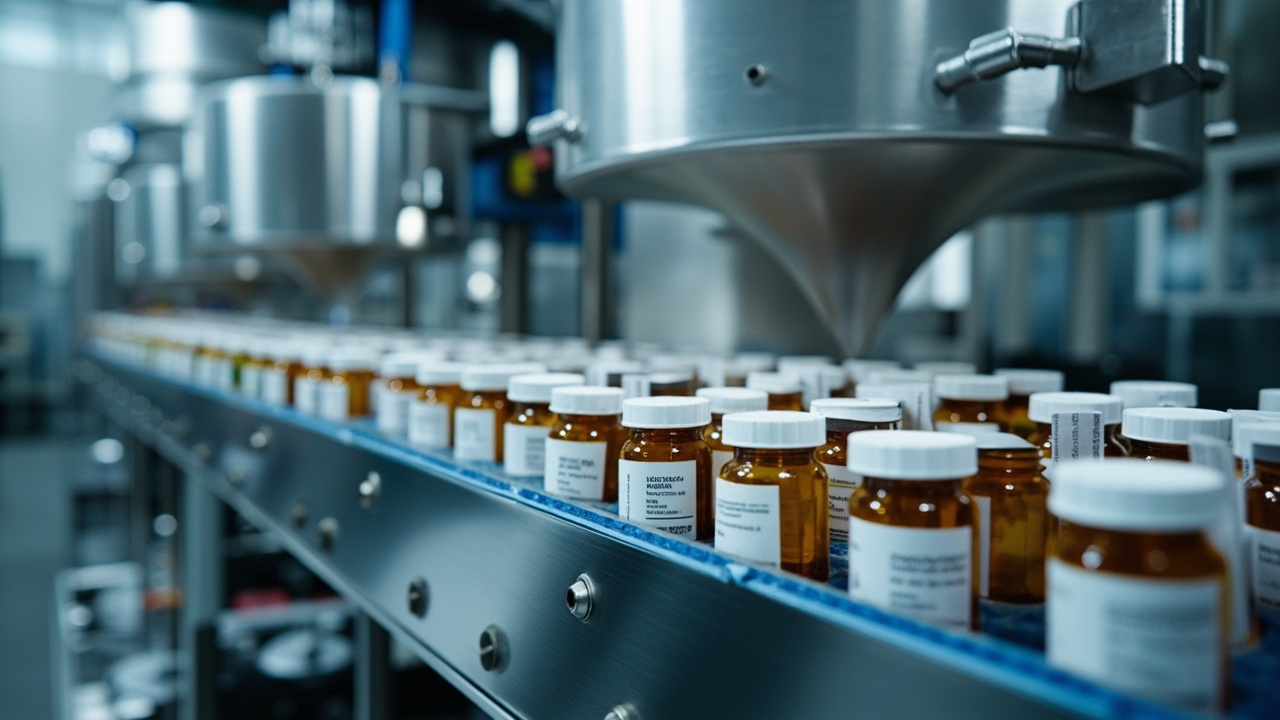
Bottle caps are the most common packaging application for vibratory feeders. A rotary capping machine requires a continuous supply of caps, all oriented open-side down, delivered at a rate that matches the bottling line speed. The feeder must handle cap variations in diameter, height, and thread design while rejecting damaged or deformed caps before they reach the capping chuck. Common cap types include screw caps for beverages and pharmaceuticals, snap-fit caps for cosmetics and household products, child-resistant closures for medications, and pump dispensers and spray triggers for personal care products.
Container and Jar Handling
Some packaging lines use vibratory feeders to orient empty containers or jars before filling. These applications require larger bowl diameters and stronger drive units to handle the increased weight. Container feeding often combines vibratory orientation with pneumatic transfer to the filling station.
Desiccant and Insert Feeding
Pharmaceutical and nutraceutical bottles typically include a desiccant canister or oxygen absorber to maintain product stability. These lightweight, flexible packets are notoriously difficult to feed because they compress, jam, and generate static. Specialized feeder designs use wide track geometry, anti-static coatings, and vacuum-assisted singulation to deliver one packet per bottle with high reliability.
Hardware and Kit Assembly
Consumer product kits — furniture assembly hardware, electronics accessories, automotive maintenance kits — require accurate counting and batching of multiple component types. Vibratory feeders singulate parts for optical counting, then divert measured batches into cartons or blister packs.
| Packaging Application | Typical Parts | Feed Rate Range | Key Design Requirements |
|---|---|---|---|
| Beverage capping | 28mm PCO caps, sports caps, dispenser caps | 200-600 ppm | High speed, open-side-down orientation, damage rejection |
| Pharmaceutical capping | CR caps, CRC closures, snap-on vial seals | 100-300 ppm | Child-resistant feature orientation, cleanroom compatibility |
| Cosmetic packaging | Pump heads, spray triggers, dropper assemblies | 80-200 ppm | Delicate handling, scratch prevention, complex geometry |
| Desiccant insertion | Silica gel canisters, oxygen absorbers | 60-150 ppm | Anti-static, compression-resistant, precise singulation |
| Kit counting and batching | Screws, anchors, brackets, fittings | 100-500 ppm | Accurate counting, multi-part handling, divert gates |
High-Speed Feeding Challenges in Packaging
Packaging lines run faster than almost any other manufacturing environment. Achieving reliable feeding at these speeds requires specific engineering solutions.
Speed and Throughput
A beverage line running six hundred bottles per minute needs six hundred caps per minute minimum, with a buffer to handle transient speed variations. Standard single-track vibratory bowls often cannot achieve these rates. Solutions include cascade bowl feeders that use dual vibration mechanisms to accelerate part movement, multi-lane linear tracks that split one bowl output into four, eight, or twelve parallel streams, and centrifugal feeders for simple symmetrical parts where rotational force can replace vibratory transport.
Orienting Complex Closures
Modern packaging closures have complex geometries — tamper-evident bands, dispensing spouts, directional nozzles — that require sophisticated orientation. Mechanical tooling uses wiper blades, air jets, and gravity traps to reject incorrectly oriented parts. Vision-guided systems can identify orientation features that mechanical tooling cannot distinguish, at the cost of increased complexity and reduced speed.
Damage Prevention
Cosmetic packaging closures have glossy finishes, printed logos, and delicate features that scratch easily. Pharmaceutical caps must not have burrs or cracks that could contaminate product. Feeder track coatings of polyurethane or Teflon protect surfaces during transport. Reduced vibration amplitude minimizes impact forces. Reject stations remove damaged parts before they reach the packaging machine.
Bottle Cap Feeding Systems
Bottle cap feeding exemplifies the challenges and solutions of packaging automation. A well-designed cap feeder must handle multiple cap variants, orient them reliably, and integrate seamlessly with the capping machine.
Bowl Design for Cap Feeding
Cap feeding bowls typically use conical or stepped designs that encourage caps to settle open-side down. The spiral track includes wiper blades that knock stacked caps back into the bowl center. Air jets at critical points blow off caps that are leaning or upside down. The discharge chute includes a final orientation gate that ensures every cap exits in the correct position.
Quick Changeover for Multiple Cap Sizes
Packaging lines frequently switch between product SKUs with different cap sizes. Quick-change systems allow operators to swap bowl inserts, track widths, and discharge chutes in under fifteen minutes. Recipe-based controller settings store vibration parameters for each cap type, eliminating manual tuning during changeover.
Integration with Capping Machines
The feeder discharge must align precisely with the capping machine's cap chute or pick head. Height adjustment mechanisms accommodate different capping machine configurations. Buffer tracks between feeder and capper smooth out transient speed mismatches. Sensors confirm cap presence before the bottle arrives, preventing empty capping cycles.
Pharmaceutical Packaging Feeding
Pharmaceutical packaging imposes regulatory and cleanliness requirements that general industrial feeders cannot satisfy.
Cleanroom and Washdown Compatibility
Pharmaceutical feeders must withstand frequent cleaning and sanitization. Construction from 316L stainless steel with mirror-polished surfaces allows thorough washdown. Sealed drive units prevent moisture ingress during cleaning. All surfaces must be crevice-free to prevent bacterial harborage.
Child-Resistant Closure Handling
Child-resistant closures have complex internal mechanisms that must be correctly oriented for the capping machine to engage properly. The feeder must distinguish between push-and-turn caps, squeeze-and-turn caps, and line-up-arrow caps, orienting each type correctly. Testing with actual production caps, including worn or damaged examples, is essential.
Regulatory Documentation
Pharmaceutical manufacturers need complete documentation of feeder materials, construction, and testing. Material certificates for all stainless steel, surface finish test reports, calibration records for sensors and controllers, and installation and operational qualification protocols should be provided as standard.
Cosmetic and Personal Care Packaging Feeding
Cosmetic packaging emphasizes appearance. A scratched pump head or dented cap is a quality reject even if functionally perfect.
Surface Protection
Cosmetic closures often have metallized finishes, soft-touch coatings, or printed decorations that damage easily. Feeder construction must use soft contact surfaces throughout the transport path. Polycarbonate or acrylic track covers protect against dust while allowing visual inspection. Gentle vibration amplitudes prevent parts from impacting each other.
Complex Geometry Handling
Lotion pumps, spray triggers, and dropper assemblies have levers, tubes, and nozzles that tangle and interlock. Bowl design must discourage nesting. Track geometry should support the part by its most robust feature while keeping delicate elements suspended. Air jets can separate interlocked parts before they reach the discharge.
Color and Variant Management
Cosmetic lines run many product variants with different cap colors and designs. Feeder systems must prevent color mixing during changeover. Purge cycles clear all parts from the system before new material is introduced. Some operations use dedicated feeder sets for each variant, stored on quick-change carts.
Integration with Packaging Lines
A packaging feeder does not operate in isolation. It must integrate mechanically, electrically, and digitally with the broader packaging system.
Mechanical Integration
Vibration isolation prevents feeder vibration from affecting sensitive packaging equipment such as checkweighers or labelers. Discharge height and position must match the receiving machine within tight tolerances. Access for operator refill should not interfere with line flow or safety guarding.
Control System Integration
Modern packaging lines use centralized programmable logic controllers to coordinate all stations. The feeder must communicate its status — running, stopped, empty, fault — via standard industrial protocols. Common protocols include Profinet, EtherNet/IP, and Modbus TCP. Signal response time must be fast enough to prevent empty packages when the feeder runs low.
Line Synchronization
The feeder must speed up and slow down in response to line demand. When the packaging machine pauses for film splicing or fault recovery, the feeder should stop before parts overflow. When the line restarts, the feeder should resume quickly enough to prevent starvation. Variable-frequency controllers with external speed reference inputs achieve this synchronization.
Sourcing Packaging Feeders from China
China offers compelling advantages for packaging feeder sourcing, but buyers should evaluate suppliers carefully.
Production Scale and Speed
Chinese manufacturers operate in dense industrial ecosystems with immediate access to materials, machining, and coating services. This enables rapid prototyping for new package designs and short lead times for production quantities. For packaging lines that launch new products frequently, this responsiveness is valuable.
Cost Efficiency
Factory-direct pricing from China typically runs 40 to 60 percent below equivalent European or North American suppliers. This cost advantage comes from efficient supply chains and manufacturing scale, not from reduced quality. Reputable manufacturers maintain the same material standards and testing disciplines as Western suppliers.
Customization Capability
Packaging feeders are highly customized to specific part geometries. Chinese manufacturers with extensive experience across diverse industries have developed broad problem-solving capabilities. They are often willing to prototype and test multiple design iterations to achieve optimal performance.
Quality Verification
Before shipping, require factory acceptance testing with your actual production parts at target speed. Witness the test in person or via live video. Verify that the manufacturer can provide material certificates, test reports, and calibration documentation. For pharmaceutical applications, confirm cleanroom assembly capability and regulatory documentation experience.
Huben Automation Packaging Feeding Solutions
Huben Automation has supplied vibratory feeding systems to packaging manufacturers worldwide for over twenty years. Our packaging practice includes high-speed cascade and multi-lane feeders for bottle caps and closures, pharmaceutical-grade 316L stainless steel construction with washdown capability, gentle handling designs for cosmetic and personal care packaging, desiccant and insert feeding with anti-static and vacuum-assisted singulation, integration with all major packaging line control systems, and quick-change systems for rapid SKU changeover.
We understand that packaging line downtime costs thousands of dollars per hour, and we engineer our feeders for the reliability that high-speed packaging demands. Our factory-direct pricing delivers this packaging-grade quality at 40 to 60 percent below Western supplier levels.
Contact Huben Automation to discuss your packaging automation feeding requirements and receive a detailed proposal within twelve hours.
Frequently Asked Questions
What feed rates can packaging vibratory feeders achieve?
Standard single-track bowl feeders typically achieve one hundred to three hundred parts per minute. Cascade bowls and multi-lane designs can reach four hundred to eight hundred parts per minute for simple symmetrical parts like bottle caps. The actual rate depends on part geometry, orientation complexity, and downstream cycle time.
How do feeders prevent damaged caps from reaching the capping machine?
Multiple safeguards work together. Mechanical tooling rejects deformed caps that do not match nominal dimensions. Air jets blow off caps with visible damage. Vision systems can inspect caps at the discharge point for cracks, flash, or contamination. Rejected parts return to the bowl center for recirculation or manual removal.
Can one feeder handle multiple cap sizes?
With quick-change tooling, a single feeder base can handle multiple cap sizes. Changeover involves swapping the bowl insert, adjusting track width, and loading the correct controller recipe. Typical changeover time is ten to fifteen minutes for experienced operators. For very different sizes, separate bowl sets may be more practical.
What materials are required for pharmaceutical packaging feeders?
Pharmaceutical applications require 316L stainless steel construction, mirror-polished surfaces with Ra 0.8 micrometers or better, FDA-compliant coatings if used, sealed electrical enclosures rated for washdown, and complete material traceability documentation.
How do I integrate a China-sourced feeder with my existing packaging line?
Provide the Chinese manufacturer with mechanical interface drawings showing discharge height, position, and mounting requirements. Specify your PLC protocol and required signals. Request that the feeder be tested with your cap samples before shipment. Huben Automation provides on-site commissioning support when needed to ensure successful integration.
What is the typical lead time for custom packaging feeders from China?
Standard packaging feeders ship in four to six weeks. Custom-tooled systems for new cap designs typically require eight to twelve weeks including design, prototyping, testing, and production. Pharmaceutical-grade systems with extensive documentation may add two to four weeks. Expedited programs are available for urgent launches.
Pronto para Automatizar sua Produção?
Receba uma consulta gratuita e orçamento detalhado em até 12 horas da nossa equipe de engenharia.