Custom Bowl Feeder Manufacturers in China: Capabilities & Selection
When Standard Feeders Are Not Enough
Standard vibratory bowl feeders handle common part geometries with predictable behavior: cylindrical parts, symmetrical blocks, and simple discs orient reliably using catalog tooling configurations. But modern manufacturing increasingly involves complex asymmetrical components, delicate materials, tight orientation tolerances, and multi-product lines that defy one-size-fits-all solutions.
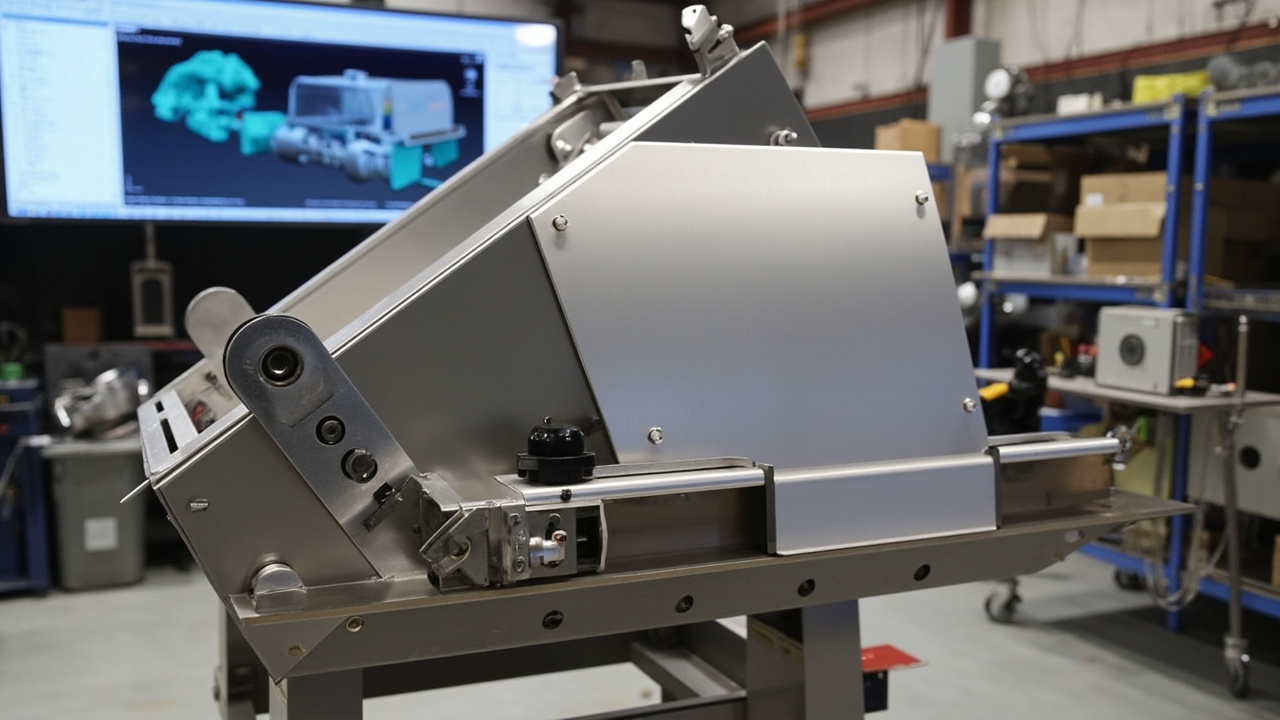
Custom bowl feeder manufacturing addresses these challenges through bespoke tooling design, specialized surface treatments, modified vibration characteristics, and integration-tailored mechanical interfaces. The difference between a standard feeder and a custom-engineered solution often determines whether an automation project succeeds or struggles with chronic jamming, part damage, and throughput shortfalls.
China has developed exceptional capability in custom vibratory feeder engineering, combining advanced 3D design tools, precision CNC manufacturing, and competitive engineering labor costs. This guide explains what distinguishes capable custom manufacturers from those that merely modify standard designs, and how to select the right partner for your bespoke feeding requirements.
What Makes a Manufacturer Truly Custom-Capable
Many suppliers advertise custom capabilities while offering only superficial modifications to standard products. True custom manufacturing requires fundamentally different organizational capabilities than volume production of catalog items.
In-House Engineering Depth
Custom feeder design demands mechanical engineers who understand vibration mechanics, part dynamics, material science, and manufacturing processes. The best custom manufacturers maintain dedicated engineering teams whose sole focus is solving novel feeding challenges. These engineers spend their days analyzing part geometries, simulating orientation behavior, and iterating tooling designs rather than managing production schedules.
Engineering depth manifests in the questions asked during initial inquiry. A custom-capable manufacturer probes your application: What is the downstream process timing? What orientation precision does the robot or assembly machine require? Have you observed part nesting or shingling behavior? What environmental conditions—temperature, humidity, oil contamination—affect part handling? These questions reveal understanding of the integration context that superficially custom suppliers rarely consider.
Rapid Prototyping and Iteration Infrastructure
Custom tooling development involves uncertainty. Even experienced engineers cannot perfectly predict how a complex part will behave on a vibratory track without physical testing. Capable custom manufacturers have invested in rapid prototyping infrastructure: 3D printers for tooling mockups, quick-change bowl fixtures for testing alternative track geometries, and dedicated prototype bays where engineers can run parts for hours to observe failure modes.
Iteration speed matters. A manufacturer that can fabricate and test a revised tooling concept in 2-3 days learns faster and converges on optimal solutions sooner than one requiring 2-3 weeks for each iteration. Ask about typical iteration cycles and whether prototype testing is included in the development process or billed separately.
Vertical Integration in Critical Processes
Custom manufacturers that outsource critical processes—CNC machining, welding, coating, or controller programming—lose control over quality and schedule. Each outsourced operation introduces coordination delay and communication risk. The best custom manufacturers maintain in-house capability for the complete value chain: design, material preparation, machining, fabrication, assembly, testing, and finishing.
This vertical integration is particularly important for custom work because specifications change during development. An engineer who can walk to the CNC machine and discuss a geometry modification with the machinist achieves faster, more accurate implementation than one sending drawings to an external vendor.
The Custom Engineering Process
Understanding how custom manufacturers approach projects helps evaluate their capability and set realistic expectations. A professional custom engineering process typically follows these phases.
Phase 1: Application Analysis and Feasibility Assessment
The manufacturer reviews part samples, drawings, and application requirements to assess feeding feasibility. Not every part can be fed reliably with vibratory technology—extremely lightweight foam parts, heavily interlocking components, or parts with adhesion-prone surfaces may require alternative approaches. An honest feasibility assessment early prevents wasted investment.
During this phase, the engineer analyzes part center of gravity, identifies stable resting orientations, and estimates achievable feed rate based on part geometry and required orientation complexity. They also evaluate integration constraints: available floor space, ceiling height, downstream equipment interface, and environmental conditions.
Phase 2: Conceptual Design and Quotation
Based on application analysis, the engineer develops a conceptual bowl design including track geometry, selector configuration, and drive specifications. This concept becomes the basis for quotation, with defined scope, deliverables, timeline, and price.
A thorough quotation specifies bowl diameter, material and gauge, coating requirements, drive type and power, controller features, and acceptance criteria. It also identifies what the customer must provide: sample parts, dimensional drawings, electrical specifications, and integration interface details.
Phase 3: Detailed Design and Prototyping
After order confirmation, the engineer creates detailed 3D models and manufacturing drawings. For complex parts, prototype tooling may be fabricated from softer materials like aluminum or 3D-printed polymers to validate orientation concepts before committing to hardened steel tooling.
Prototype testing with actual production parts reveals behaviors that simulation cannot predict: subtle nesting tendencies, surface friction variations, and sensitivity to part dimensional tolerances. The engineer observes these behaviors and iterates tooling geometry accordingly.
Phase 4: Production Fabrication and Testing
Once the design is validated, the manufacturer fabricates production tooling and the bowl structure. CNC machining ensures dimensional accuracy of track profiles and selector clearances. TIG welding constructs durable bowl bodies. Surface treatments—polyurethane coating, PTFE lining, or specialized finishes—are applied based on part material and handling requirements.
Final testing is the most critical phase. The complete feeder runs continuously with production parts for a defined period—typically 4-8 hours minimum—measuring feed rate consistency, orientation accuracy, and jam frequency. Testing with edge-case parts, including dimensional tolerance extremes and surface condition variations, validates robustness.
| Process Phase | Duration | Key Deliverables | Customer Involvement |
|---|---|---|---|
| Application Analysis | 3-5 days | Feasibility report, concept sketch | Provide samples, requirements |
| Conceptual Design | 5-10 days | 3D model, technical proposal, quotation | Review concept, confirm scope |
| Detailed Design | 7-14 days | Manufacturing drawings, BOM | Approve design, provide interface specs |
| Prototyping | 5-15 days | Prototype tooling, test report | Review test video, approve iterations |
| Production | 10-20 days | Finished feeder, test documentation | Final acceptance, shipping instructions |
Tooling Design Capabilities That Define Custom Quality
The heart of custom bowl feeder manufacturing is tooling design—the baffles, selectors, rails, and escapements that orient parts as they travel up the spiral track. Several advanced capabilities separate exceptional custom manufacturers from average ones.
Multi-Stage Orientation Systems
Complex parts often require sequential orientation stages rather than a single selector. A part might first be separated from bulk, then pre-oriented by a width gauge, then precisely oriented by a feature-specific selector, and finally verified by a sensor before exiting. Designing these multi-stage systems requires understanding how parts transition between stages and how vibration characteristics affect each stage differently.
Delicate Part Handling
Parts with fragile features—thin walls, protruding pins, polished surfaces—require gentle handling modifications. This may include reduced vibration amplitude, polyurethane-coated contact surfaces, wider track radii to reduce part-to-part pressure, and sensor-driven escapements that release parts individually rather than in batches.
High-Speed Feeding
Achieving feed rates above 200 parts per minute with complex orientations demands precise vibration control, optimized track geometry, and sometimes multi-lane designs that parallelize the orientation process. High-speed custom design requires deeper understanding of vibration physics and part dynamics than standard feeding.
Quick-Change and Flexible Configurations
Some applications require feeding multiple part types on the same line. Custom manufacturers can design quick-change tooling systems where interchangeable selectors and rails mount on standardized bases. More advanced solutions use flexible feeders with vision-guided robotic picking, eliminating mechanical tooling changes entirely.
Materials and Surface Treatments for Custom Applications
Custom feeding challenges often require material and surface treatment selections beyond standard stainless steel bowls.
Polyurethane coating provides a soft, wear-resistant surface that protects delicate parts from scratching and reduces noise. Different durometer ratings—from soft 60A to hard 90A—tailor the surface compliance to part hardness and weight. Polyurethane also improves grip for oily or slippery parts.
PTFE and other low-friction coatings help when parts tend to stick or accumulate static charge. These coatings reduce part-to-track adhesion and can improve feeding consistency for certain plastic and rubber components.
For abrasive parts or high-wear applications, hardened tool steel inserts in critical contact areas extend tooling life. Some manufacturers offer ceramic-coated surfaces for extreme abrasion resistance.
Material selection for the bowl body itself also varies. While SUS304 stainless steel is standard, some applications benefit from SUS316 for chemical resistance, aluminum for reduced weight, or carbon steel with protective coating for cost-sensitive projects.
Integration with Downstream Automation
A custom bowl feeder does not operate in isolation. It must integrate seamlessly with robots, assembly machines, packaging equipment, or inspection systems. Custom manufacturers with automation integration experience design feeders with appropriate mechanical interfaces, sensor configurations, and communication protocols.
Mechanical integration considerations include pick-zone height and orientation relative to the downstream equipment, part presentation geometry that matches end-effector or gripper design, and structural mounting that accommodates vibration isolation requirements.
Electrical integration involves sensor selection—photoelectric, fiber optic, or laser—for part presence and orientation verification. Modern custom feeders may include PLC communication, Ethernet/IP connectivity, or IO-Link sensors for smart factory integration.
How to Select a Custom Bowl Feeder Manufacturer
Selecting the right custom manufacturer requires evaluating capabilities that differ from standard feeder sourcing.
Request detailed case studies of custom projects similar to yours. A manufacturer that has solved comparable challenges demonstrates relevant experience. Ask about iteration count and development timeline for these cases—excessive iterations may indicate weak initial analysis capability.
Evaluate engineering team access. Will you communicate directly with the design engineer, or only through sales staff? Direct engineer communication accelerates problem-solving and reduces miscommunication.
Confirm prototype testing protocols. Does the manufacturer test with your actual parts or substitute similar parts? Do they provide video documentation of testing? Will they iterate if initial designs underperform?
Review intellectual property handling. Custom tooling designs may represent significant engineering investment. Clarify who owns the design files and whether you can reproduce tooling for backup or expansion.
Huben Automation's Custom Manufacturing Approach
Huben Automation has built its reputation on custom vibratory feeder engineering. Approximately 70% of our production involves bespoke designs rather than standard catalog configurations. This specialization has required investment in engineering talent, prototyping infrastructure, and vertical integration that generalist manufacturers rarely match.
Our engineering team includes specialists in vibration mechanics, tooling geometry, and automation integration. Each custom project is assigned a lead engineer who remains responsible from initial analysis through final acceptance. Customers communicate directly with this engineer throughout the project.
Our Ningbo facility maintains complete in-house capability: SolidWorks design stations with motion simulation, CNC machining centers for tooling and bowl fabrication, TIG welding for stainless steel construction, polyurethane and PTFE coating equipment, electromagnetic drive assembly, and dedicated prototype testing bays. This integration enables iteration cycles measured in days rather than weeks.
We encourage customers to review our vibratory bowl feeder capabilities and automation solutions to understand our custom engineering scope. For projects requiring integration with robotic systems or vision guidance, our flexible feeder integration guide provides additional technical context.
Frequently Asked Questions
How much more does a custom bowl feeder cost compared to a standard model?
Custom tooled bowl feeders typically cost 1.5 to 3 times the price of comparable standard feeders, depending on complexity. A simple custom orientation may add only 50% to base price, while multi-stage orientation with sensor verification and integration interfaces may triple the cost. However, the total cost of ownership often favors custom solutions because they reduce downtime, part damage, and manual intervention that standard feeders cannot avoid with difficult parts.
Can any part be fed with a custom vibratory bowl feeder?
Most parts can be fed vibratorily with appropriate custom engineering, but some characteristics make feeding impractical. Extremely lightweight parts below 0.1 gram may not generate enough inertial force to move reliably. Parts with aggressive interlocking geometry may nest so tightly that mechanical separation is unreliable. Heavily contaminated or adhesive-coated parts may stick to tracks regardless of surface treatment. A feasibility assessment with sample parts determines whether vibratory feeding is appropriate.
How many sample parts does a custom manufacturer need for development?
Typically 200-500 sample parts are sufficient for prototype testing and final acceptance validation. More important than quantity is variety—samples should include dimensional tolerance extremes, surface condition variations, and any known defect modes. If parts are expensive or scarce, some manufacturers can work with 50-100 samples by supplementing with 3D-printed surrogates for destructive testing.
What documentation should a custom manufacturer provide?
Complete documentation includes 3D models and 2D drawings of the bowl and tooling, electrical schematics, controller settings and parameters, recommended spare parts list, operation manual, maintenance schedule, and test report with performance data. For integrated systems, PLC programs, sensor calibration procedures, and communication protocol documentation should also be included.
How do I protect my custom tooling design investment?
Clarify intellectual property ownership in the purchase agreement. Some manufacturers retain design file ownership while granting you production rights. Others transfer full ownership including CAD files. If you anticipate needing duplicate tooling or design modifications in the future, ensure you receive native design files rather than only PDF drawings.
Can custom feeders be modified later for different parts?
Many custom feeders can be retrofitted with new tooling for parts with similar size and geometry. The bowl body, drive unit, and controller often remain usable while selectors, rails, and escapements are replaced. Discuss retrofit potential during initial design—manufacturers can design standardized mounting interfaces that simplify future tooling changes. For radically different parts, a new bowl may be more economical than extensive modification.
Conclusion
Custom bowl feeder manufacturing represents the intersection of engineering science, precision manufacturing, and application experience. The best custom manufacturers combine deep theoretical understanding with practical iteration capability and vertical integration that delivers reliable solutions for challenging parts.
China's custom vibratory feeder industry has matured significantly, with leading manufacturers offering engineering sophistication that rivals Western counterparts at substantially lower cost. The key to successful sourcing is identifying manufacturers with genuine custom capability—not merely standard product modifiers—and engaging them as engineering partners rather than commodity vendors.
Huben Automation specializes in custom vibratory feeding solutions for demanding applications across automotive, electronics, medical device, and consumer goods industries. Contact our engineering team to discuss your custom feeding challenge, or explore our tooling design guide for deeper technical insight into custom bowl feeder engineering.
Sedia Mengautomasi Pengeluaran Anda?
Dapatkan konsultasi percuma dan sebut harga terperinci dalam 12 jam daripada pasukan kejuruteraan kami.