Vibratory Feeder Export from China: Documentation, Shipping & Compliance

Understanding Vibratory Feeder Export from China
Exporting vibratory feeders from China involves a structured process of documentation, compliance verification, packaging, and logistics coordination. For international buyers, understanding this process is essential for accurate timeline planning, cost estimation, and risk management. Chinese manufacturers export thousands of automation equipment units monthly, but smooth delivery depends on proper handling of customs classifications, shipping protocols, and destination country requirements.
This guide provides a comprehensive overview of exporting vibratory feeders from China. We cover required documentation, HS code classification, packaging standards, Incoterms selection, customs procedures for major destinations, and compliance certificates. Whether you are a first-time importer or seeking to optimize your existing supply chain, these frameworks help ensure your equipment arrives on time, undamaged, and fully compliant.
Required Export Documentation
Chinese export regulations and destination country import requirements create a substantial documentation burden. Missing or incorrect paperwork is the leading cause of shipping delays and customs holds. Understanding each document's purpose ensures you request the correct paperwork from your supplier.
Commercial Invoice
The commercial invoice is the primary document for customs valuation and duty calculation. It must include seller and buyer complete names and addresses, detailed product description including model numbers and specifications, HS code classification, quantity and unit price, total invoice value, currency, Incoterms, and country of origin. Accuracy is critical—customs authorities in many countries use commercial invoice values to assess import duties, and discrepancies can trigger audits or penalties.
For vibratory feeders, the product description should specify the equipment type (vibratory bowl feeder, linear feeder, centrifugal feeder), bowl diameter or track length, drive specifications, and controller type. Generic descriptions like "automation equipment" may cause classification disputes.
Packing List
The packing list details the physical contents of each shipping package. It should list each package number with dimensions and weight, contents of each package, and total gross weight and volume. Customs inspectors use packing lists to verify that shipments match declarations and to plan physical inspections.
For vibratory feeder shipments, the packing list should separate the bowl assembly, drive unit, controller, and accessories into distinct line items. This separation helps if customs selects specific packages for inspection and simplifies insurance claims if damage occurs to individual components.
Bill of Lading or Air Waybill
The bill of lading (sea freight) or air waybill (air freight) serves as the contract of carriage and document of title. For sea freight, the original bill of lading is typically required for cargo release at destination. For air freight, the air waybill is non-negotiable and cargo releases upon identification.
Ensure that consignee information matches your import license or business registration exactly. Name mismatches between shipping documents and import records are a common cause of customs delays.
Certificate of Origin
The certificate of origin certifies that the goods were manufactured in China. It is required for duty determination under trade agreements and may be necessary for customs clearance in certain countries. Chinese manufacturers can obtain certificates of origin from the China Council for the Promotion of International Trade (CCPIT) or local chambers of commerce.
Some countries have free trade agreements with China that reduce or eliminate import duties on automation equipment. Providing a valid certificate of origin allows you to claim preferential duty rates where applicable.
Export License and Customs Declaration
Vibratory feeders generally do not require Chinese export licenses, as they are not classified as dual-use or military items. However, the supplier must file an export customs declaration with Chinese customs authorities before shipment. This declaration includes product classification, value, destination, and shipping method.
For buyers, the key point is ensuring your supplier is a legitimate exporter registered with Chinese customs. Unregistered suppliers may struggle to complete export formalities, causing delays.
HS Code Classification for Vibratory Feeders
Correct Harmonized System (HS) code classification determines import duty rates, customs inspection probability, and regulatory requirements. Misclassification can result in overpaid duties, shipment holds, or post-clearance audits.
Primary Classification: HS Code 8479.89
Vibratory bowl feeders, linear vibratory feeders, and centrifugal feeders are most commonly classified under HS Code 8479.89, which covers machines and mechanical appliances having individual functions not specified or included elsewhere in Chapter 84. The specific subheading varies by country but typically falls under 8479.89.98 or similar variants.
This classification treats vibratory feeders as general industrial machinery rather than specialized conveying equipment. Import duty rates under this code vary by destination country, typically ranging from 0% to 5% for most developed economies.
Alternative Classification: HS Code 8428.39
Some customs authorities classify linear vibratory feeders and conveyor-type feeding equipment under HS Code 8428.39, which covers continuous-action elevators and conveyors for goods or materials. This classification may apply when the feeder functions primarily as a material transport device rather than an orientation mechanism.
Classification under 8428.39 sometimes carries different duty rates than 8479.89. If your regular customs broker is uncertain about classification, request a binding ruling from your national customs authority before shipment.
Component-Level Classification
When spare parts ship separately from complete feeders, different classifications may apply:
| Component | Typical HS Code | Description |
|---|---|---|
| Electromagnetic drive coil | 8505.90 | Permanent magnets and articles intended to become permanent magnets |
| Controller / PLC | 8537.10 | Electrical control panels and boards |
| Mechanical springs | 7320.20 | Helical springs of iron or steel |
| Stainless steel bowl | 8479.90 | Parts of machines under heading 8479 |
| Linear track | 8479.90 or 8428.39 | Parts of feeder or conveyor |
| Sensor (photoelectric) | 8536.50 | Electrical apparatus for switching or protecting electrical circuits |
Component classification matters for duty calculation when importing spare parts separately. Some countries exempt spare parts from duty when imported with the original equipment but charge duty on subsequent spare part orders.
Packaging for International Shipping
Vibratory feeders contain precision-machined components, sensitive electromagnetic drives, and electronic controllers that require protective packaging for international transit. Inadequate packaging is a leading cause of damage during shipping from China.
Standard Packaging Requirements
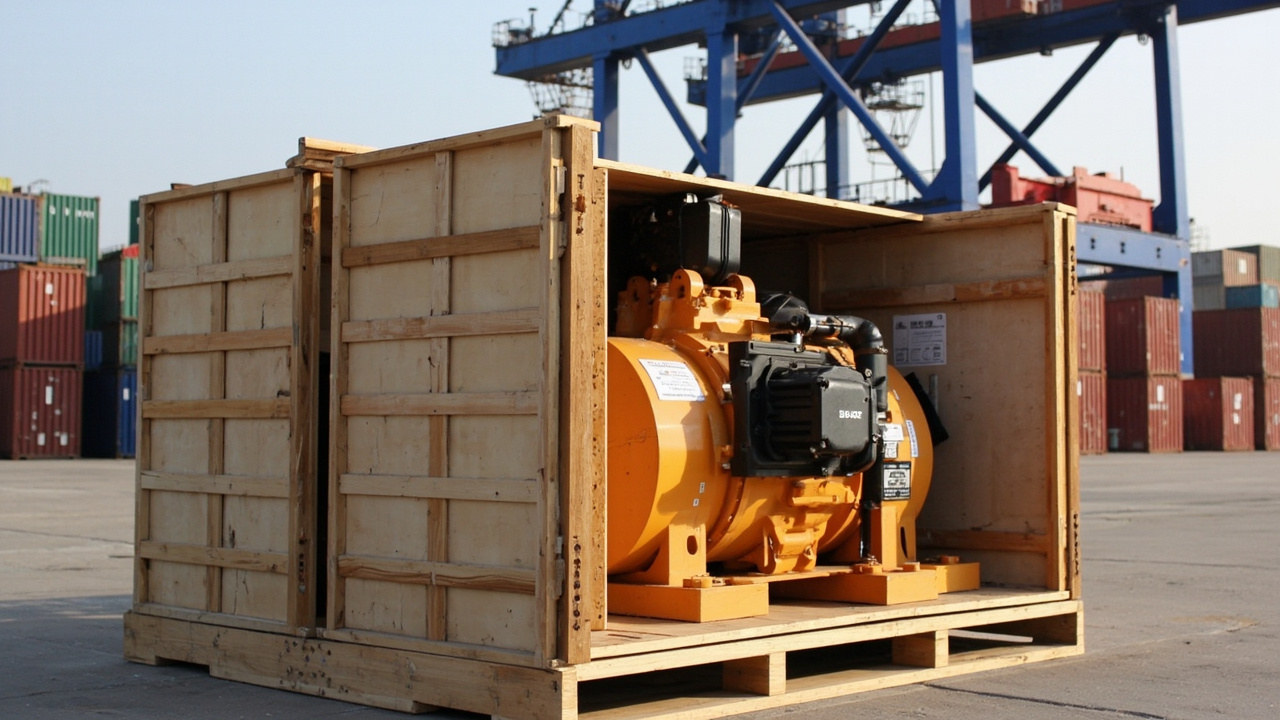
Professional Chinese manufacturers package vibratory feeders in plywood crates with foam padding and moisture barriers. The bowl assembly, being the largest and most delicate component, typically receives individual crating with polyethylene foam inserts conforming to the bowl shape. Drive units are wrapped in anti-static bags and secured in separate compartments within the crate.
Controllers and electronic components require additional protection against moisture and electrostatic discharge. Desiccant packets and vapor barrier bags should be included, especially for sea freight shipments where containers may experience temperature cycling and condensation.
Packaging for Sea Freight
Sea freight exposes cargo to extended transit times, humidity, salt air, and rough handling. For sea shipments, packaging should include marine-grade plywood crates with IPPC ISPM-15 certification, vapor barrier bags with heat-sealed seams, sufficient desiccant for 45-60 day transit, shock indicators or tilt indicators for damage accountability, and blocking and bracing within the container to prevent movement.
Container loading should use lashing straps and dunnage to secure crates against container walls. Loose crates that shift during ocean transit can sustain impact damage even when individually well-packaged.
Packaging for Air Freight
Air freight involves less humidity exposure but more handling transitions and potential for shock during loading and unloading. Air freight packaging can be lighter than sea freight equivalents but should still include adequate foam cushioning, corner protectors, and clear handling instructions. Weight optimization matters for air freight due to cost sensitivity—excessive packaging adds unnecessary freight expense.
Shipping Methods and Transit Times
Selecting the appropriate shipping method balances cost, speed, and risk. Vibratory feeders are relatively dense equipment with moderate volume, making shipping method selection straightforward for most shipments.
Air Freight
Air freight is the recommended method for most vibratory feeder shipments from China. Transit time is 3-7 days to major international airports, and the higher cost is justified by reduced damage risk and faster project timeline. Typical air freight cost for a single bowl feeder system ranges from $200-600 depending on weight and destination.
Air freight is particularly appropriate for custom feeders where project timelines are critical, delicate feeders with precision tooling that benefit from minimal handling, and initial orders where buyers want to validate supplier quality before committing to larger sea freight shipments.
Sea Freight
Sea freight becomes economical for shipments above 1 cubic meter or 100 kg, or when ordering multiple units simultaneously. Transit time is 20-35 days to major ports depending on destination and routing. Sea freight costs typically range from $300-800 per cubic meter including basic port charges.
For complete automation cells or multiple feeder systems, sea freight in a full container load (FCL) provides the best value and security. Less-than-container load (LCL) shipments are viable for smaller volumes but involve additional handling at consolidation warehouses.
Express Courier
Express courier services (DHL, FedEx, UPS) are suitable for spare parts, small controllers, or sample components. Transit time is 3-5 days with door-to-door service. Costs are high for heavy items—a 50 kg feeder shipped by express courier may cost $800-1,500. Express courier simplifies documentation and customs clearance but is rarely economical for complete feeder systems.
Incoterms Selection and Risk Allocation
Incoterms define the division of costs and risks between buyer and seller during international shipment. Selecting the appropriate Incoterm prevents disputes and ensures clear responsibility allocation.
EXW (Ex Works)
Under EXW, the buyer assumes nearly all responsibility. The seller makes goods available at their factory, and the buyer arranges pickup, export clearance, international freight, insurance, import clearance, and inland delivery. EXW gives buyers maximum control but requires significant logistics expertise and established relationships with Chinese freight forwarders.
FOB (Free On Board)
FOB is the most common Incoterm for Chinese exports. The seller delivers goods to the port of shipment, clears export customs, and loads goods onto the vessel. The buyer assumes risk and cost from that point forward. FOB provides reasonable balance—sellers handle Chinese export formalities they understand, while buyers control international freight and select their preferred carrier.
CIF (Cost, Insurance, and Freight)
Under CIF, the seller arranges and pays for freight and insurance to the destination port. Risk transfers to the buyer when goods pass the ship's rail at origin, but the seller bears freight and insurance costs. CIF is convenient for buyers who prefer turnkey shipping arrangements but offers less control over carrier selection and insurance terms.
DAP (Delivered at Place)
DAP extends seller responsibility to delivery at the buyer's specified destination, excluding import clearance and duties. The seller manages the entire logistics chain from factory to buyer's facility. DAP is convenient but typically costs more than FOB arrangements where buyers leverage their own freight relationships.
For most vibratory feeder purchases from China, FOB offers the best balance of control and convenience. Established buyers with freight forwarder relationships may prefer EXW for maximum flexibility. First-time buyers or those without logistics infrastructure may benefit from CIF or DAP arrangements.
Customs Procedures by Major Destination
Customs requirements vary significantly by destination country. Understanding your local requirements prevents clearance delays and compliance issues.
United States Customs
US Customs and Border Protection (CBP) requires formal entry for commercial shipments valued above $2,500. Vibratory feeders typically require formal entry with Harmonized Tariff Schedule classification under 8479.89.98.80. Import duty is typically 0% for vibratory feeders, but the Merchandise Processing Fee (0.3464% of value, minimum $27.75, maximum $538.40) and Harbor Maintenance Fee (0.125% of value) apply.
Importers need an Employer Identification Number (EIN) and should consider establishing a Continuous Bond for frequent shipments. Customs brokers handle documentation preparation and clearance, typically charging $100-200 per entry.
European Union Customs
EU customs procedures vary slightly by member state but follow common frameworks. Vibratory feeders classified under CN Code 8479 89 98 typically face 0-2.7% import duty depending on the specific EU member state and any applicable trade agreements. Value Added Tax (VAT) applies at the standard rate of the destination country, ranging from 17% to 27%.
CE marking is required for vibratory feeders sold in the EU market. Your Chinese supplier should provide a Declaration of Conformity and technical documentation supporting CE compliance. Customs may request CE documentation during clearance, particularly for first-time imports from a new supplier.
United Kingdom Customs
Post-Brexit UK customs operates independently from EU systems. The UK Global Tariff typically applies 0% duty to vibratory feeders under heading 8479.89. Import VAT at 20% applies to the total value including freight and insurance. UK customs requires an EORI number for commercial imports.
Southeast Asian Markets
ASEAN countries have free trade agreements with China that reduce or eliminate duties on vibratory feeders when accompanied by a valid Form E certificate of origin. Import procedures vary by country—Singapore and Malaysia have efficient electronic customs systems, while Indonesia and Vietnam may require more documentation and physical inspection.
Compliance Certificates and Regulatory Requirements
Beyond customs documentation, certain destination markets require specific compliance certificates that your Chinese supplier must provide.
CE Marking for European Markets
Vibratory feeders sold in the European Economic Area must bear CE marking under the Machinery Directive 2006/42/EC. Compliance requires risk assessment, technical file preparation, and Declaration of Conformity issuance. Reputable Chinese manufacturers maintain CE technical files and can provide valid Declarations of Conformity.
Verify that the CE marking on your equipment is genuine. Some unscrupulous suppliers affix counterfeit CE marks. Request the Declaration of Conformity document and verify that it references the correct directive, lists your specific equipment model, and includes the manufacturer's authorized representative in Europe if applicable.
UL Recognition for North American Markets
While UL certification is not legally mandatory for vibratory feeders in the United States, many industrial buyers require UL-recognized electrical components for facility insurance and safety compliance. Chinese suppliers can source UL-recognized controllers, motors, and electrical enclosures. Full UL listing of the complete feeder assembly is rare for Chinese imports but possible for large-volume orders.
RoHS and REACH Compliance
The Restriction of Hazardous Substances (RoHS) directive limits lead, mercury, cadmium, and other hazardous substances in electrical equipment sold in the EU. Registration, Evaluation, Authorization and Restriction of Chemicals (REACH) regulates chemical substances in products sold in the EU. Reputable Chinese manufacturers use RoHS-compliant electrical components and can provide material declarations supporting REACH compliance.
Insurance and Risk Management
International shipping involves risks that prudent buyers mitigate through appropriate insurance coverage.
Cargo Insurance
Cargo insurance protects against loss or damage during transit. All-risk coverage is recommended for vibratory feeders, as it covers damage from handling, moisture, vibration, and temperature extremes. Insurance value should be 110% of the commercial invoice value to cover replacement cost plus incidentals.
For CIF shipments, the seller must provide insurance coverage. Verify that coverage limits and terms meet your needs. For FOB or EXW shipments, arrange your own cargo insurance through your freight forwarder or insurance broker.
Inspection and Documentation for Claims
If damage occurs during transit, documentation is essential for insurance claims. Photograph packaging before opening if external damage is visible. Photograph damaged items immediately upon discovery. Retain all packaging materials for carrier inspection. File claims promptly—most carriers require notification within 7 days of delivery.
Working with Freight Forwarders
Freight forwarders serve as logistics coordinators for international shipments. Experienced forwarders handle documentation, carrier booking, customs clearance, and delivery coordination.
When selecting a forwarder for Chinese exports, look for experience with automation equipment and machinery, established relationships with Chinese agents or offices, knowledge of your destination country's customs requirements, and ability to provide cargo insurance and tracking. Obtain quotations from 2-3 forwarders for comparison. Forwarder fees typically range from $150-400 per shipment plus actual freight costs.
Frequently Asked Questions
What documents does my Chinese supplier need to provide for export?
Your supplier should provide a commercial invoice, packing list, certificate of origin, and bill of lading or air waybill. For regulated destinations, they should also provide CE Declaration of Conformity, material certificates, and any test reports. Confirm the complete documentation package before shipment to avoid customs delays.
How long does customs clearance typically take?
With correct documentation, customs clearance typically takes 1-3 business days at destination for air freight and 3-5 business days for sea freight. Delays occur when documentation is incomplete, HS codes are disputed, or physical inspection is required. Working with an experienced customs broker minimizes clearance time.
Do vibratory feeders require special import permits?
Most countries do not require import permits for vibratory feeders, classifying them as general industrial machinery. Exceptions may apply for countries with import licensing requirements for all machinery or for feeders containing radio frequency equipment. Check with your customs broker or national customs authority for specific requirements.
What is the best shipping method for a single vibratory bowl feeder?
Air freight is generally the best choice for single feeder shipments weighing under 100 kg. The 3-7 day transit time reduces project delay, and the higher freight cost is offset by lower damage risk and faster commissioning. Sea freight becomes economical when shipping multiple units or complete automation cells exceeding 1 cubic meter.
How do I verify that CE marking from a Chinese supplier is genuine?
Request the Declaration of Conformity document and verify that it includes the supplier's name and address, equipment model and serial number, applicable directives (Machinery Directive 2006/42/EC), standards referenced, signatory name and date, and European authorized representative if applicable. Cross-check the notified body number if third-party certification was used. Reputable suppliers provide complete, properly formatted Declarations without hesitation.
Who pays for import duties and taxes?
Import duties and taxes are always the buyer's responsibility unless specifically negotiated otherwise. Under FOB, CIF, and most common Incoterms, the buyer handles import clearance and pays all duties, taxes, and fees at destination. Build these costs into your budget—import VAT alone can add 20-27% to the landed cost in many countries.
Conclusion: Mastering the Export Process
Exporting vibratory feeders from China is a mature, well-established process when handled with proper documentation and logistics planning. The key to success is understanding your responsibilities as an importer, verifying that your Chinese supplier provides complete and accurate documentation, selecting appropriate shipping methods and Incoterms, and working with experienced customs brokers and freight forwarders.
Chinese manufacturers with extensive export experience have refined their processes to minimize delays and complications. They understand documentation requirements for major destinations, maintain proper packaging standards, and coordinate effectively with international logistics providers. Partnering with an experienced exporter like Huben Automation significantly reduces the administrative burden on buyers.
Huben Automation exports vibratory feeders to over 30 countries and maintains comprehensive documentation packages for all major destination markets. Our logistics team coordinates shipping, prepares customs paperwork, and ensures compliance with destination country requirements. To discuss your specific export and shipping needs, contact our team or review our import guide for additional context on the complete procurement process.