What Is a Vibratory Bowl Feeder: Types, Working Principle & Applications
What Is a Vibratory Bowl Feeder?
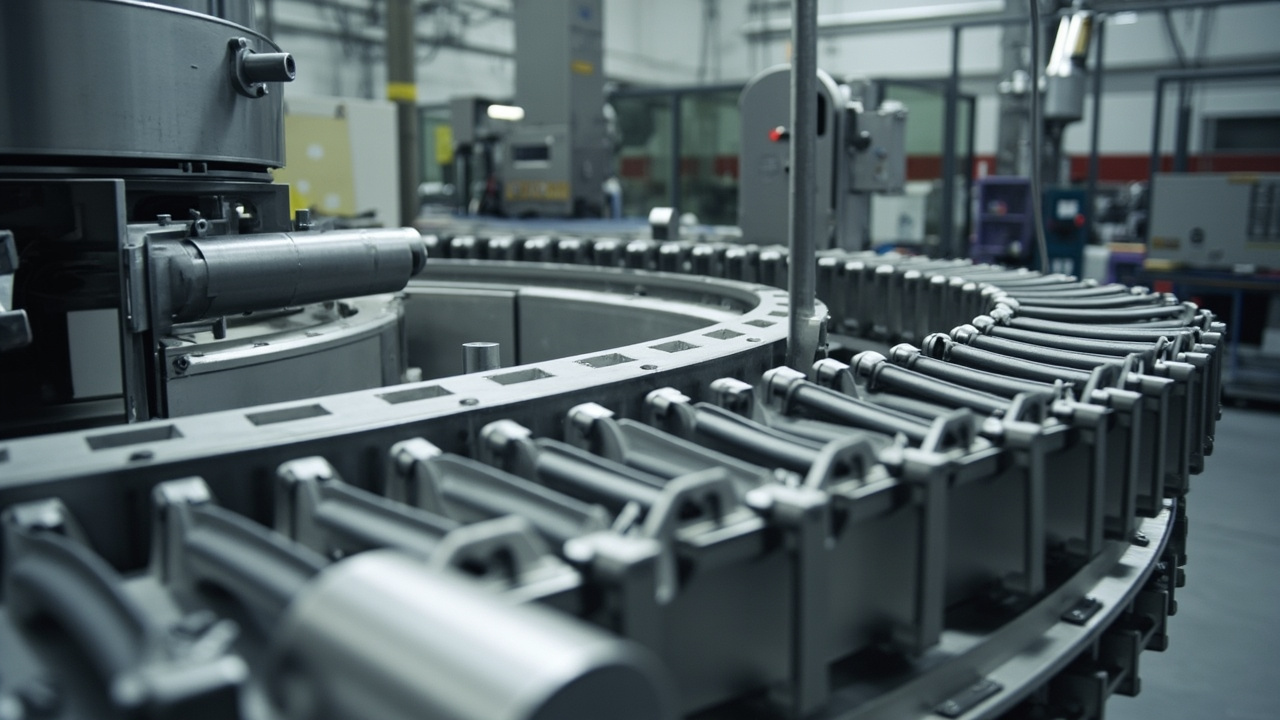
A vibratory bowl feeder is an automated parts handling device that takes bulk components in a random orientation and delivers them in a single, consistent direction to downstream assembly, packaging, or inspection equipment. It is the most widely adopted automatic parts feeding technology in modern manufacturing, serving industries from automotive and electronics to medical devices and consumer goods.
The core concept is simple yet remarkably effective. A bowl-shaped container with an internal spiral track vibrates at a controlled frequency. This vibration causes parts placed inside the bowl to move upward along the spiral track. As parts travel, they encounter custom-designed tooling—selectors, baffles, wipers, and air jets—that allows only correctly oriented parts to pass through, while incorrectly oriented parts fall back into the bowl for recirculation. The result is a continuous stream of singulated, oriented parts exiting the feeder at a predictable rate.
Understanding how vibratory bowl feeders work is essential for anyone evaluating automation equipment. Whether you are a manufacturing engineer designing a new assembly line, a procurement specialist sourcing equipment, or a plant manager seeking to improve throughput, this guide provides the comprehensive technical foundation you need to make informed decisions about vibratory bowl feeder technology.
Vibratory Bowl Feeder Working Principle
The operating principle of a vibratory bowl feeder relies on controlled mechanical vibration to create directed motion of parts along an inclined track. Three primary components work together to achieve reliable feeding:
Electromagnetic Drive Unit
The electromagnetic drive unit is the heart of the vibratory bowl feeder. It consists of an electromagnetic coil and a set of leaf springs arranged at a precise angle. When alternating current passes through the coil, it generates a magnetic field that attracts an armature attached to the bowl. This creates rapid, controlled vibrations—typically at 50 Hz or 100 Hz for mains-powered units, or adjustable frequencies for controller-driven systems.
The spring pack determines the vibration direction. By angling the springs, the drive produces a combined horizontal and vertical motion that causes parts to advance along the track in micro-steps. The amplitude of vibration, controlled by adjusting the input voltage or current, directly influences the feed rate. Higher amplitudes increase feeding speed but may cause part damage or excessive noise.
Piezoelectric Drive Alternative
For applications requiring extremely precise control or very gentle handling, piezoelectric vibratory drives offer an alternative to electromagnetic systems. Piezoelectric actuators use ceramic elements that expand and contract when voltage is applied, generating vibration without magnetic fields or mechanical springs.
Piezoelectric drives provide several advantages: they consume less energy, generate minimal heat, operate at higher frequencies (100-300 Hz), and allow extremely fine amplitude control. They are particularly valued in cleanroom environments and for feeding very small or delicate parts where electromagnetic vibration would be too aggressive. However, piezoelectric drives have lower force output and are generally limited to smaller bowl sizes and lighter parts.
Spiral Track and Orientation Tooling
The bowl interior features a spiral track that winds upward from the bottom center to the outer rim. As parts vibrate, they climb this track. The track width, depth, and surface finish are carefully designed to match the specific part being fed.
Orientation tooling is custom-engineered for each part type. Common tooling elements include:
- Selectors — Narrow sections that allow only parts in the correct orientation to pass
- Wipers — Overhead projections that knock down parts standing too tall
- Air jets — Pneumatic blasts that reject misoriented lightweight parts
- Chutes and slots — Gravity-assisted features that use part center of gravity to achieve orientation
- Return channels — Paths that direct rejected parts back to the bowl bottom for recirculation
Control System
Modern vibratory bowl feeders incorporate sophisticated control systems. Variable frequency controllers allow operators to fine-tune vibration frequency and amplitude for optimal feeding performance. Sensors monitor bowl fill level, track occupancy, and output rate. PLC integration enables the feeder to communicate with downstream equipment, stopping and starting based on production demand.
Advanced controllers feature automatic tuning functions that adjust parameters based on part weight and track load, maintaining consistent feed rates even as bowl contents deplete. Some systems include vibration analysis that detects abnormal operating conditions before they cause failures.
Huben Expert Tip
The natural resonant frequency of a bowl feeder system is determined by the combined mass of the bowl and the spring stiffness. Operating at or near resonance minimizes power consumption and maximizes feeding efficiency. Always work with experienced manufacturers who calculate and verify the resonant frequency during design.
Types of Vibratory Bowl Feeders
Vibratory bowl feeders are categorized primarily by their bowl geometry. The three main types—cylindrical, conical, and stepped—each offer distinct advantages for different part geometries and feeding requirements.
Cylindrical Bowl Feeders
Cylindrical bowl feeders feature vertical or near-vertical walls with a constant diameter from bottom to top. The spiral track maintains a consistent width throughout its length. This geometry is the simplest and most economical to manufacture.
Advantages: Lower manufacturing cost, straightforward tooling design, good for parts with simple geometry, easy to clean and maintain.
Limitations: Parts can stack or nest against vertical walls, less effective for parts that tend to interlock, limited orientation options compared to other types.
Best for: Screws, bolts, nuts, cylindrical parts, and components with regular symmetrical shapes that do not tend to nest or tangle.
Conical Bowl Feeders
Conical bowl feeders have walls that slope outward from bottom to top, creating a widening diameter as parts ascend the track. This geometry naturally discourages part stacking and nesting because the increasing space between walls prevents parts from bridging across the bowl.
Advantages: Reduced part nesting and jamming, better part separation on the track, natural flow toward the outer wall where tooling is located, excellent for flat or disc-shaped parts.
Limitations: Slightly higher manufacturing complexity, track length is shorter for a given bowl diameter, may require larger bowl sizes to achieve the same track length as cylindrical designs.
Best for: Washers, discs, flat stampings, caps, lids, and parts that tend to lie flat or stack on top of each other.
Stepped Bowl Feeders
Stepped bowl feeders combine features of both cylindrical and conical designs. The bowl wall has discrete steps or terraces rather than a smooth slope. Each step creates a ledge that parts must climb, providing additional orientation opportunities and preventing backflow.
Advantages: Maximum orientation control, parts cannot slide backward, multiple orientation stages possible on a single track, excellent for complex asymmetric parts.
Limitations: Highest manufacturing cost, more difficult to clean, longer design and fabrication time for custom tooling.
Best for: Complex asymmetric parts, components requiring multi-stage orientation, parts with features that can engage with step edges for positive orientation control.
| Bowl Type | Wall Geometry | Best Part Types | Relative Cost | Orientation Complexity |
|---|---|---|---|---|
| Cylindrical | Vertical walls, constant diameter | Screws, bolts, cylindrical parts | Low | Simple to moderate |
| Conical | Sloped outward, increasing diameter | Washers, discs, caps, flat parts | Medium | Moderate |
| Stepped | Discrete stepped terraces | Complex asymmetric parts | High | High to very high |
Bowl Material Options
Beyond geometry, bowl feeders differ in construction material:
- Carbon Steel — Economical choice for general industrial applications. Requires protective coating or plating to prevent rust.
- Stainless Steel (SUS304) — Corrosion-resistant, durable, suitable for most manufacturing environments. The most common choice for industrial feeders.
- Stainless Steel (SUS316L) — Superior corrosion resistance for pharmaceutical, medical, and food applications. Meets stringent hygiene requirements.
- Aluminum Alloy — Lightweight, excellent for small bowls and high-frequency applications. Often used with wear-resistant coatings.
- Polyurethane-Coated — Steel bowl with polyurethane lining reduces noise by 10-15 dB, protects delicate part surfaces, and extends bowl life.
Key Applications Across Industries
Vibratory bowl feeders serve virtually every manufacturing sector. Their versatility, reliability, and cost-effectiveness make them the default choice for automated parts feeding.
Automotive Manufacturing
The automotive industry is one of the largest users of vibratory bowl feeders. Applications include feeding fasteners for assembly robots, orienting clips and retainers for interior trim installation, singulating connectors for wire harness assembly, and presenting brake components for automated inspection. The high volume and consistent quality demands of automotive production align perfectly with the strengths of bowl feeder technology.
Electronics Assembly
Electronics manufacturing feeds connectors, switches, LEDs, and small hardware to assembly equipment. The precision required in electronics—parts often measured in millimeters—demands carefully designed bowls with gentle handling features. ESD-safe materials and ionization systems prevent static damage to sensitive components. Learn more about electronics feeding solutions.
Medical Device Production
Medical device manufacturing requires feeders built from SUS316L stainless steel with surface finishes that meet FDA and EU regulatory standards. Applications include feeding syringe barrels, needle hubs, vial caps, and implant components. Validation documentation and traceability are critical requirements in this sector.
Consumer Goods and Packaging
Bottle caps, pump dispensers, spray triggers, and closures are fed at high speeds to capping and packaging machines. The cosmetic and personal care industries particularly value the gentle handling and precise orientation that bowl feeders provide for decorative components with finished surfaces.
Pharmaceutical Manufacturing
Pharmaceutical applications demand compliance with strict hygiene and validation standards. Bowl feeders constructed from certified materials with full traceability feed tablet bottles, vial stoppers, syringe plungers, and cap seals. Clean-in-place designs and smooth surfaces prevent product contamination.
How to Select the Right Bowl Feeder
Selecting the optimal vibratory bowl feeder requires systematic evaluation of your application requirements. Consider these key factors:
Part Characteristics
Begin with a thorough analysis of the part to be fed. Document dimensions, weight, material, surface finish, and any features that affect orientation. Provide multiple sample parts including dimensional variations and any defective examples. Parts with complex asymmetry require more sophisticated tooling and may benefit from stepped bowl geometry. Delicate parts may need polyurethane coating or reduced vibration amplitude.
Required Feed Rate
Determine the parts per minute required by your downstream process. Remember that the feeder must supply parts slightly faster than the consumption rate to account for inefficiencies and transient demands. Bowl size and drive power scale with feed rate requirements. A feeder rated for 200 parts per minute cannot reliably deliver 500 parts per minute without redesign.
Orientation Requirements
Define exactly how the part must exit the feeder. Which features must face up, forward, or toward a specific direction? How many acceptable orientations exist? Complex orientation requirements demand more elaborate tooling and longer tracks, which influence bowl diameter and height.
Environmental Conditions
Consider the operating environment. Cleanrooms require stainless steel construction and sealed drives. Wet or corrosive environments need appropriate material selection and protective coatings. Temperature extremes affect spring performance and may require special materials. Noise restrictions may mandate acoustic enclosures or polyurethane coatings.
Integration Requirements
Plan how the feeder integrates with your existing equipment. What is the mounting configuration? What electrical supply is available? What communication protocols does your control system use? How will the feeder receive start/stop signals? Addressing these questions during selection prevents costly integration problems later.
Frequently Asked Questions
What is the difference between electromagnetic and piezoelectric vibratory bowl feeders?
Electromagnetic bowl feeders use a coil and spring system to generate vibration. They are versatile, powerful, and suitable for a wide range of part sizes and bowl diameters. Piezoelectric feeders use ceramic actuators that change shape under voltage. They offer finer control, lower energy consumption, and gentler handling but have lower force output and are limited to smaller applications. Electromagnetic drives dominate industrial applications due to their power and cost-effectiveness, while piezoelectric drives excel in precision and cleanroom environments.
How do I determine the right bowl size for my application?
Bowl diameter typically ranges from 100 mm to 1200 mm. The correct size depends on part dimensions, required feed rate, and track length needed for orientation. As a rule of thumb, the bowl diameter should be at least 10 times the largest part dimension. Higher feed rates and complex orientation requirements need larger bowls with longer tracks. Your feeder manufacturer will calculate the optimal bowl size based on part samples and performance specifications.
Can a vibratory bowl feeder handle multiple part types?
Standard vibratory bowl feeders with mechanical tooling are designed for a single part type. Changeover to a different part requires replacing the bowl or extensive retooling, typically taking 30 minutes to several hours. For applications requiring frequent changeovers between different parts, flexible vibratory feeders with vision-guided robotic picking offer a better solution, enabling software-based changeovers in minutes.
What maintenance does a vibratory bowl feeder require?
Regular maintenance includes cleaning the bowl and track to remove debris and worn particles, inspecting and tightening mounting bolts, checking spring condition and replacing worn springs, verifying coil electrical connections, monitoring vibration amplitude consistency, and inspecting orientation tooling for wear. With proper maintenance, a quality vibratory bowl feeder operates reliably for 15-25 years. View our complete maintenance checklist.
How noisy are vibratory bowl feeders?
Unenclosed vibratory bowl feeders typically produce 75-90 dB(A) depending on bowl size, part material, and vibration amplitude. This noise level exceeds OSHA workplace limits for extended exposure. Noise reduction measures include polyurethane bowl coatings, acoustic enclosures, rubber isolation mounts, and lower-amplitude operation with frequency optimization. Properly treated feeders can achieve 65-75 dB(A). Read our noise reduction guide.
What is the typical price range for a vibratory bowl feeder?
Standard vibratory bowl feeders from Chinese manufacturers typically range from $1,000 to $3,500 depending on bowl size, complexity, and features. Custom-tooled feeders for complex parts range from $2,000 to $5,000. Complete feeding systems with hoppers, linear tracks, and controls range from $5,000 to $15,000. These prices are typically 40-60% lower than equivalent Western-manufactured equipment. See our detailed pricing guide.
Conclusion
A vibratory bowl feeder is an essential automation component that transforms random bulk parts into an orderly, oriented stream ready for production processes. By understanding the working principle—electromagnetic or piezoelectric vibration driving parts along a spiral track with custom orientation tooling—you can better evaluate feeder options for your specific needs.
The three main bowl types—cylindrical, conical, and stepped—each serve different part geometries and orientation complexities. Cylindrical bowls offer economy and simplicity. Conical bowls prevent nesting and stacking. Stepped bowls provide maximum orientation control for complex parts. Material selection from carbon steel to SUS316L stainless steel ensures compatibility with your operating environment and industry regulations.
Successful feeder implementation begins with thorough application analysis and partnership with an experienced manufacturer. Huben Automation has designed and manufactured thousands of vibratory bowl feeders for customers worldwide, with expertise spanning every major industry and part type. Our engineering team provides free feasibility analysis based on your part samples and production requirements.
Ready to explore how a vibratory bowl feeder can improve your production efficiency? Contact the Huben Engineering Team for a free consultation and quotation tailored to your application.