Small Parts Feeding Equipment from China: Precision & Micro Solutions

Why Small Parts Feeding Is Fundamentally Different
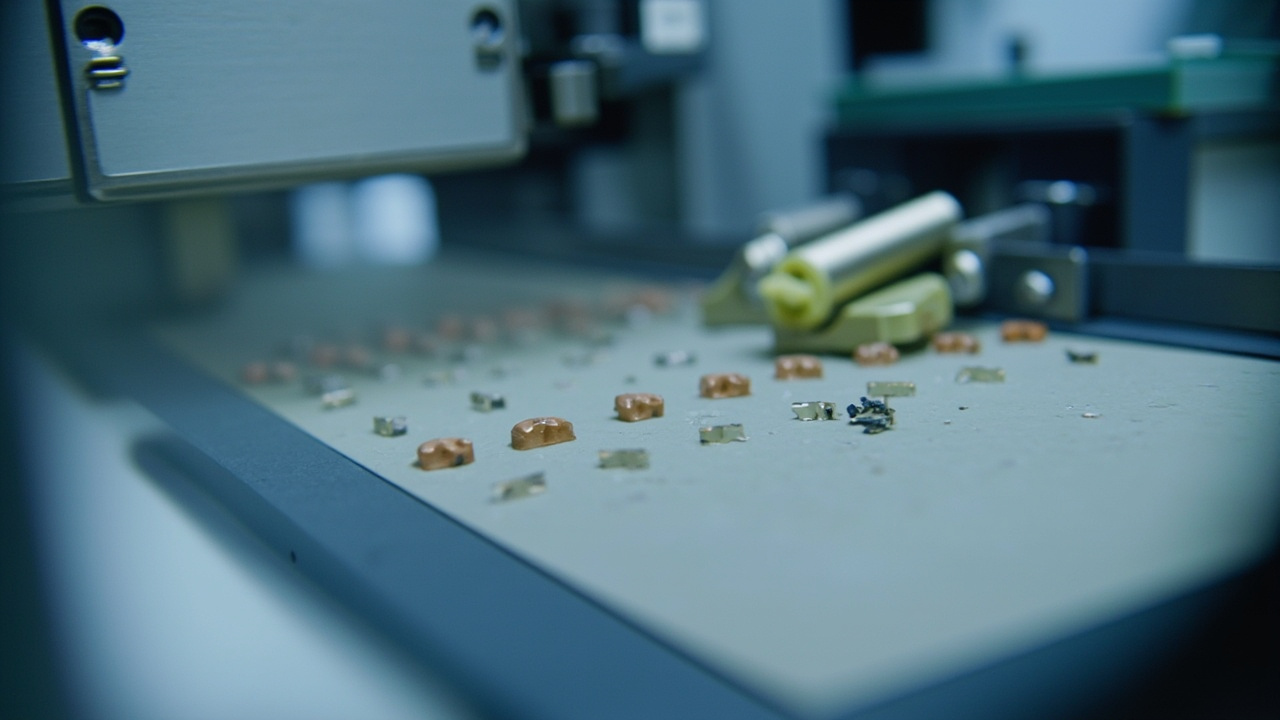
Feeding small parts is not simply a scaled-down version of standard parts feeding. When components measure under 5mm in any dimension, the physics of vibration, friction, and orientation change dramatically. Surface tension from microscopic oil films, static electricity, and even air currents can overwhelm the gravitational and inertial forces that normally govern part movement. At Huben Automation, we have spent years refining techniques specifically for micro component feeding, and the challenges are substantial enough that many generalist feeder manufacturers simply decline these projects.
The global demand for small parts feeding equipment from China has grown rapidly as industries including electronics assembly, medical device manufacturing, and precision instrumentation expand their automated production. These sectors require feeders capable of handling micro screws, tiny springs, miniature connectors, and other components where a fraction of a millimeter makes the difference between proper orientation and a jammed line. Understanding the unique requirements of micro feeding helps buyers evaluate whether a manufacturer truly possesses the specialized expertise this work demands.
Physics Challenges at the Micro Scale
Standard vibratory bowl feeders rely on the principle that parts will move along an inclined track when subjected to directional vibration. For parts above 10mm, this works predictably. Below 5mm, several physical phenomena begin to dominate behavior in ways that disrupt normal feeding mechanics.
Adhesion forces become significant relative to part weight. A 2mm stainless steel screw weighs so little that surface tension from a thin film of oil or even ambient humidity can cause parts to stick together in clumps. Electrostatic charging, particularly with non-conductive plastic components, can cause parts to cling to bowl walls or tooling surfaces. Air resistance affects trajectory when parts are discharged from the bowl track, causing lightweight components to deviate from their intended path.
These effects mean that simply reducing bowl size and track width is insufficient. Successful micro parts feeder China manufacturers must redesign the entire feeding approach, from bowl surface treatments to vibration characteristics to discharge methods. At Huben Automation, we address these challenges through a combination of specialized coatings, adjusted vibration frequencies, and integrated handling systems that account for micro-scale physics.
Precision Tooling for Micro Components
Tooling design for small parts feeding equipment China production represents one of the most technically demanding aspects of feeder engineering. Orientation tooling that works reliably for 8mm components often fails completely at 3mm because the tolerances become too tight for consistent mechanical selection.
Traditional mechanical selectors such as wiper blades, cutouts, and reversing sections must be machined to extremely tight tolerances. A gap that is 0.3mm too wide will allow incorrectly oriented parts to pass; 0.1mm too narrow will cause frequent jams. For parts under 4mm, we frequently recommend hybrid approaches that combine mechanical pre-orientation with vision verification, rather than relying solely on mechanical tooling to achieve final orientation.
Bowl surface finish becomes critical at small scales. Mirror-polished stainless steel reduces friction variation and prevents microscopic burrs from catching on part features. For very light plastic components, we sometimes apply specialized coatings that reduce static buildup while maintaining the smooth surface needed for consistent movement. The bowl track width must typically be held to within 0.1mm of part dimension to prevent sideways shifting while still allowing free movement.
Vision Systems for Micro Feeding Verification
For precision feeding system China projects involving the smallest components, machine vision has become an essential tool rather than an optional add-on. Cameras positioned at the bowl discharge or along the linear track can verify orientation, detect damaged parts, and confirm presence before components enter the assembly station.
Vision-guided micro feeding presents its own technical challenges. Standard industrial cameras may lack the resolution to distinguish features on sub-5mm parts. Lighting must be carefully arranged to create sufficient contrast on small surfaces without generating glare. Processing speed must keep pace with feed rates that, while lower than large-part feeders in absolute terms, still require dozens of parts per minute for efficient production.
At Huben Automation, we integrate compact GigE and USB3 vision cameras with macro lenses specifically selected for small field-of-view applications. Our vision algorithms are trained to recognize part features at scales where human visual inspection would require magnification. The vision system communicates with the feeder controller to reject misoriented parts back into the bowl for recirculation, maintaining high effective feed rates even when individual orientation yield is lower than ideal.
Vibration Characteristics for Small Parts
The relationship between vibration frequency, amplitude, and part movement changes significantly as part mass decreases. Large parts require substantial vibration amplitude to overcome static friction and begin moving. Small parts, conversely, can be launched off the track by excessive amplitude, or driven into chaotic bouncing that prevents orderly progression.
Our miniature vibratory feeder China designs typically operate at higher frequencies than standard feeders, often in the 80-120 Hz range rather than the 50-70 Hz common for larger components. The higher frequency creates more rapid small displacements that keep parts in continuous micro-motion without the large vertical launches that cause tumbling and disorientation. Amplitude is reduced proportionally, sometimes to less than 0.5mm peak-to-peak.
Controller tuning for micro feeders requires more precision than standard applications. Digital controllers with 0.1 Hz frequency resolution and amplitude control in 0.1% increments allow the fine adjustments needed to find the narrow operating window where parts feed smoothly. We frequently use acceleration sensors to measure actual bowl motion and verify that the controller settings produce the intended vibration profile.
Common Micro Components and Feeding Approaches
Different micro component categories present distinct feeding challenges that influence equipment design. The following table summarizes typical approaches for common small parts:
| Component Type | Typical Size | Primary Challenge | Recommended Approach |
|---|---|---|---|
| Micro Screws (M1-M2) | 2-4mm diameter | Tangling and thread engagement | Step feeder or vibratory with anti-tangle track |
| Small Springs | 3-8mm length | Interlocking and nesting | Centrifugal feeder with vision verification |
| Miniature Connectors | 4-6mm body | Delicate pins and orientation | Vibratory bowl with soft tooling and gentle vibration |
| Tiny Washers | 2-5mm OD | Flat stacking and flipping | Vibratory with stepped track and air blow-off |
| Micro Pins | 1-3mm diameter | Rolling and length orientation | Slot track vibratory or flexible feeder with vision |
| Small O-Rings | 3-10mm ID | Stringing and elastic deformation | Specialized bowl with wide track and low amplitude |
| Chip Components (SMD) | 0.6-3.2mm | Extremely light, static sensitive | Flexible feeder with vacuum pickup and vision |
This table illustrates why a single feeding approach cannot address all micro component requirements. A manufacturer claiming expertise in small parts feeding equipment China should demonstrate experience across multiple component types and feeding technologies, not just scaled-down standard bowls.
Integrated Handling Systems for Micro Parts
Feeding is only the first step in micro component automation. Once oriented and discharged, tiny parts require equally precise handling to reach their destination without damage or loss. The interface between feeder and downstream equipment often determines overall system success more than the feeder itself.
Vacuum transfer is commonly used for micro parts, with small-bore suction tubes picking parts from the feeder discharge and placing them into nests or directly onto assemblies. The vacuum pressure must be carefully controlled; too strong and lightweight parts deform or accelerate uncontrollably, too weak and pickup becomes unreliable. We design vacuum manifolds with individual zone control so that each pickup point can be optimized for the specific part being handled.
For extremely small or delicate components, we sometimes integrate linear motor-driven pick-and-place modules that use custom end effectors with compliant features. These systems move more slowly than vacuum transfers but offer gentler handling for fragile parts. The trade-off between speed and gentleness is a key consideration in micro feeding system design.
Cleanliness and Contamination Control
Micro components are disproportionately affected by contamination. A particle that would be insignificant on a 20mm part can completely jam a 2mm component's movement or block a critical feature. Precision feeding system China manufacturers must maintain cleanliness standards appropriate to the component size and end application.
We machine micro feeding tooling in dedicated areas separate from general fabrication to reduce particulate contamination. Stainless steel bowls for micro feeders receive additional cleaning and passivation treatments to remove machining residues. For medical and electronics applications, we can provide tooling in materials compatible with cleanroom wipe-down protocols.
Air blow-off systems used for part separation or rejection must be filtered to prevent introducing contaminants. We typically specify 5-micron filtered air for micro feeding applications, with blow-off nozzles positioned to direct debris away from the part stream rather than into it.
Evaluating China Manufacturers for Micro Feeders
Not every vibratory feeder manufacturer in China possesses the specialized capabilities required for micro component feeding. When evaluating potential suppliers, buyers should look beyond general claims of precision and ask specific questions about micro-scale experience.
Request case studies or references involving parts under 5mm. A manufacturer with genuine micro feeding expertise should be able to describe specific projects, challenges encountered, and solutions implemented. Ask about their smallest successfully fed part and the methods used. Be wary of suppliers who claim micro capability but cannot provide detailed technical explanations of how they address adhesion, static, and vision integration.
Facility inspection, whether in-person or via video, should reveal specialized equipment for micro tooling fabrication. High-speed spindles, wire EDM machines, and optical measurement systems indicate genuine micro machining capability. General CNC centers without micro-specific accessories may struggle to achieve the tolerances required for reliable micro feeding.
At Huben Automation, we welcome detailed technical discussions about micro feeding challenges. Our engineering team can review part drawings, discuss material properties, and propose specific approaches before any commitment is made. We believe that micro feeding success depends on thorough upfront analysis rather than trial-and-error adjustment after delivery.
Cost Considerations for Micro Feeding Systems
Micro feeding systems typically cost more per part handled than standard feeders, reflecting the increased precision and specialized components required. However, the productivity gains from automating micro component handling usually justify the investment for production volumes above moderate levels.
Standard vibratory bowl feeders for 10mm+ parts from China manufacturers typically range from $1,500 to $4,000. Micro feeders for sub-5mm components generally start around $3,000 and can exceed $8,000 for complex multi-component systems with vision integration. The price premium reflects tighter machining tolerances, specialized coatings, more sophisticated controllers, and the additional engineering time required for micro-specific design.
Buyers should evaluate total system cost including downstream handling, not just the feeder itself. A less expensive feeder that requires frequent manual intervention or produces damaged parts may cost more over its lifecycle than a higher-quality system with better integration and reliability.
Frequently Asked Questions
What is the smallest part size you can reliably feed?
At Huben Automation, we have successfully fed components as small as 0.8mm in diameter and 1.2mm in length, though parts below 2mm typically require specialized approaches including flexible feeders with vision guidance. The practical minimum depends on part geometry, material, and the required feed rate. We evaluate each application individually and will decline projects where we cannot confidently achieve reliable performance.
How do you prevent static electricity problems with plastic micro parts?
We address static through multiple approaches: conductive bowl coatings that dissipate charge, ionized air blowers at critical points in the feeding path, humidity control recommendations for the installation environment, and material selection for tooling that minimizes triboelectric charging. For highly sensitive applications, we can integrate continuous static monitoring that alerts operators if charge levels exceed safe thresholds.
Can micro feeders achieve the same speed as standard feeders?
Feed rate for micro components is generally lower in parts per minute than larger parts, though the difference is less dramatic than size alone would suggest. Typical micro feeder rates range from 30 to 120 parts per minute depending on component complexity and orientation requirements. The limiting factor is usually vision processing time or gentle handling requirements rather than the feeder mechanism itself. For very high throughput, we sometimes recommend multiple parallel micro feeders rather than pushing a single unit beyond its reliable operating range.
What maintenance do micro feeders require compared to standard feeders?
Micro feeders require more frequent cleaning due to their sensitivity to contamination, but mechanical maintenance intervals are similar to standard feeders. We recommend daily visual inspection of the bowl and track, weekly cleaning with appropriate solvents, and monthly checks of vibration characteristics using an acceleration sensor. Spring replacement and bearing maintenance follow the same schedules as larger feeders, typically every 8,000 to 12,000 operating hours depending on duty cycle.
How do I know if my part requires a micro-specific feeder or can use a standard design?
As a general guideline, parts where any dimension is under 5mm or where the weight is less than 0.1 grams should be evaluated as micro feeding candidates. However, geometry matters as much as size. A 4mm cube may feed reasonably in a well-designed standard bowl, while a 6mm flat washer with 0.2mm thickness may require micro-specific techniques due to its light weight and tendency to stack. We offer free part evaluation where our engineers review your component drawings and recommend the appropriate feeding approach.
Do you provide sample feeding trials before full production?
Yes, we strongly recommend sample trials for micro feeding applications. We can test your actual parts in prototype tooling to verify feeding behavior, orientation yield, and feed rate before committing to full production tooling. This approach identifies potential issues early when they are still inexpensive to address. Contact our engineering team through our contact page to arrange a sample evaluation.
Conclusion
Small parts feeding equipment from China has evolved significantly, with leading manufacturers like Huben Automation developing specialized expertise in micro component handling. Success requires understanding the unique physics at small scales, investing in precision tooling and vision systems, and integrating gentle downstream handling. Buyers evaluating vibratory bowl feeder manufacturers for micro applications should look for demonstrated experience with sub-5mm components and willingness to engage in detailed technical discussion before proposing solutions.
For more information about our micro feeding capabilities or to discuss your specific application, visit our products page or contact us directly. Our engineering team is available to review your requirements and recommend the most appropriate feeding approach for your micro components.