PLC Integration for Vibratory Feeders: Setup, Programming & Best Practices

Why Integrate Vibratory Feeders with PLCs?
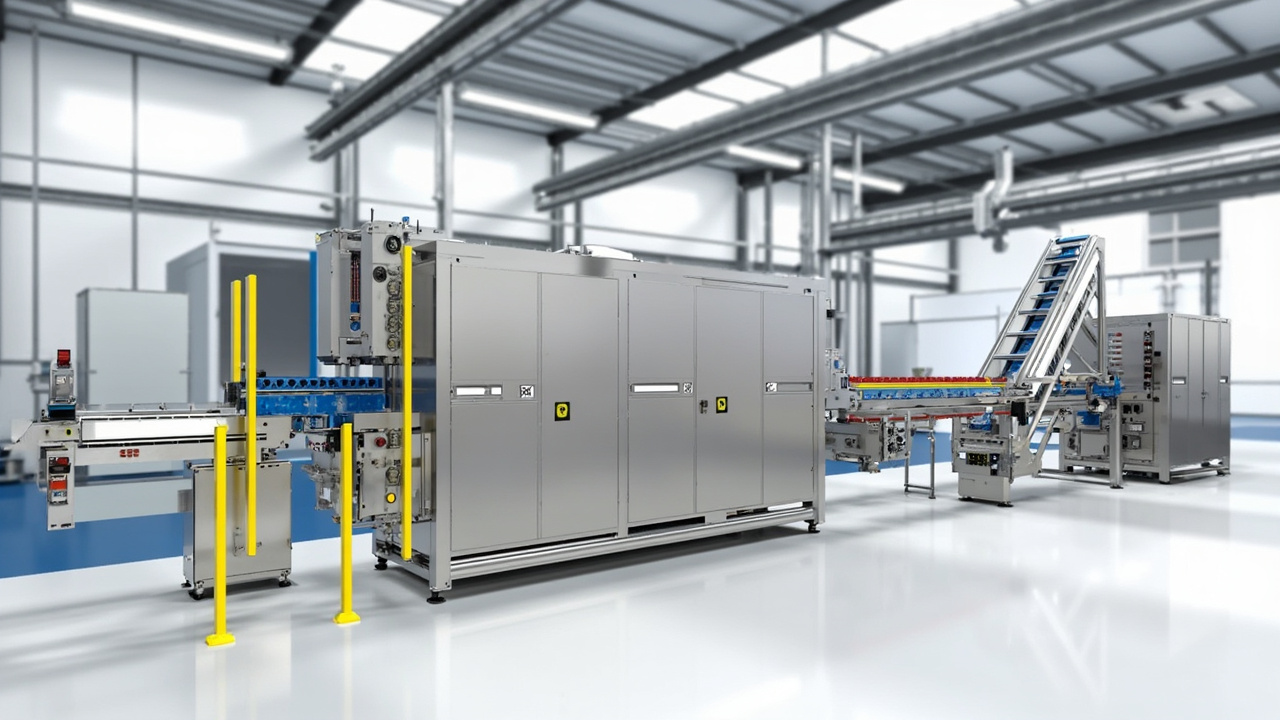
PLC integration transforms a standalone feeder into an intelligent node within your automation architecture, delivering process synchronization, real-time monitoring, quality assurance interlocks, and data-driven optimization.
Communication Protocols
| Protocol | Physical Layer | Max Cycle Time | Data Richness | Setup Complexity | Typical PLC |
|---|---|---|---|---|---|
| Digital I/O | Discrete wires | ~10 ms | Low (on/off) | Very Low | Any |
| Modbus RTU | RS-485 | ~100 ms | Medium | Low | Any |
| Modbus TCP | Ethernet | ~50 ms | Medium | Low | Any |
| Profinet | Ethernet | ~1 ms | High | Medium | Siemens |
| EtherNet/IP | Ethernet | ~1 ms | High | Medium | Rockwell/AB |
| EtherCAT | Ethernet | ~0.1 ms | Very High | Medium-High | Beckhoff |
Huben Expert Tip
Always provide your automation supplier with the exact production parts, including edge-case defective parts. Designing tooling around perfect CAD models often leads to jamming in real-world scenarios.
I/O Signal Mapping
PLC Outputs to Feeder (Control)
- Feeder_Start (BOOL) — Start vibration
- Feeder_Stop (BOOL) — Immediate stop
- Feed_Rate_SP (INT/REAL) — Amplitude setpoint 0–100%
- Alarm_Reset (BOOL) — Clear latched alarms
- Emergency_Stop (BOOL) — Hard-wired safety
Feeder Inputs to PLC (Status)
- Feeder_Running (BOOL) — Actively vibrating
- Part_Detect (BOOL) — Pulse per part at discharge
- Bowl_Empty (BOOL) — Parts below minimum level
- Jam_Alarm (BOOL) — Jam detected
- Alarm_Code (INT) — Numeric fault code
- Feed_Rate_PV (REAL) — Actual feed rate (ppm)
- Part_Count (DINT) — Accumulated count
Programming Examples
Start/Stop with Interlocks
Feeder_Start := Start_Btn AND NOT Alarm_Active AND Downstream_Ready. Implement as sealed-in latch; alarm condition breaks the seal.
Feed Rate Control
Proportional control: Error := Target_Rate - Actual_Rate; Feed_Rate_SP := Feed_Rate_SP + (Kp × Error). Start with Kp = 0.1.
Part Counting and Batch Control
Increment counter on Part_Detect rising edge. Stop feeder when Part_Counter >= Batch_Target.
Alarm Handling
Three-tier response: Warning (log + HMI message), Fault (stop + latch + acknowledge), Critical (E-stop entire line).
Best Practices
- Signal Filtering: RC snubbers on relay coils, shielded twisted-pair cables, 50ms debounce, low-pass filter on analog signals
- Watchdog Timers: Expect Feeder_Running within 2s of Feeder_Start; expect Feed_Rate_PV convergence within 5s
- Safety Interlocks: Hard-wired E-stop, guard interlocks, overload protection — independent of PLC software
Troubleshooting Common Issues
| Issue | Likely Cause | Corrective Action |
|---|---|---|
| No response to start command | Wiring error or wrong address | Verify wiring; confirm PLC output address |
| Inaccurate part count | Missed pulses from slow scan | Use hardware counter; reduce debounce |
| Modbus timeout | Baud rate or address mismatch | Match serial settings; check termination |
| Feed rate oscillates | Gain too high | Reduce Kp; add integral term; increase filter |
| False jam alarms | Sensor vibration/noise | Reposition sensor; add shielding; increase debounce |
Conclusion
Huben Automation delivers factory-direct vibratory feeders pre-configured for your chosen protocol. With over 20 years of integration experience and ISO 9001 certification. Contact Huben Automation to discuss your PLC platform and integration requirements.