Parts Sorting Machines from China: Vision & Orientation Systems

Introduction to Parts Sorting Machines from China
Parts sorting machines have become essential equipment in modern manufacturing, ensuring that only correctly oriented, dimensionally accurate, and visually acceptable components proceed to assembly or packaging operations. China has developed into a major global supplier of parts sorting and orientation equipment, with Chinese manufacturers offering systems that range from simple mechanical sorters to sophisticated vision-based inspection and sorting lines. For international buyers, sourcing parts sorting machines from China presents significant cost advantages alongside an increasingly sophisticated technology landscape.
The evolution of China's parts sorting machine industry mirrors the country's broader manufacturing transformation. Early Chinese sorting equipment was predominantly mechanical, relying on gravity, vibration, and simple dimensional selectors to separate acceptable from unacceptable parts. Today's leading Chinese manufacturers integrate machine vision, laser measurement, robotic handling, and artificial intelligence to deliver sorting accuracy that rivals systems from Germany, Japan, and the United States—at prices that remain 40-60% lower than Western equivalents.
This guide examines the categories of parts sorting machines available from Chinese manufacturers, the technologies they employ, quality assessment criteria, integration considerations, and practical guidance for international buyers. Whether you need a simple orientation sorter for a single component or a multi-station inspection and sorting line with full traceability, understanding the Chinese supplier landscape helps you make informed procurement decisions.
Types of Parts Sorting Machines from China
Chinese manufacturers produce several distinct categories of parts sorting equipment, each suited to different sorting criteria, throughput requirements, and budget constraints. Understanding these categories enables buyers to match technology to application without over-investing in unnecessary capability.
Mechanical Orientation Sorters
Mechanical orientation sorters represent the most basic and economical category of parts sorting equipment from China. These machines use physical features—track width, slot dimensions, ledges, and air jets—to separate parts based on orientation, size, or simple geometric characteristics. A part traveling along a vibratory track encounters selectors that allow correctly oriented components to pass while rejecting or re-circulating incorrectly oriented pieces.
Chinese manufacturers excel at mechanical orientation sorters due to their extensive experience with vibratory bowl feeder tooling. The same engineering skills that design bowl feeder tracks translate directly to mechanical sorting applications. Standard mechanical sorters from China handle parts from 2mm to 100mm at rates up to 500 parts per minute, with pricing from $1,500 to $5,000 depending on complexity. These systems are ideal for high-volume production of single components where orientation is the primary sorting criterion.
Vision-Based Sorting Systems
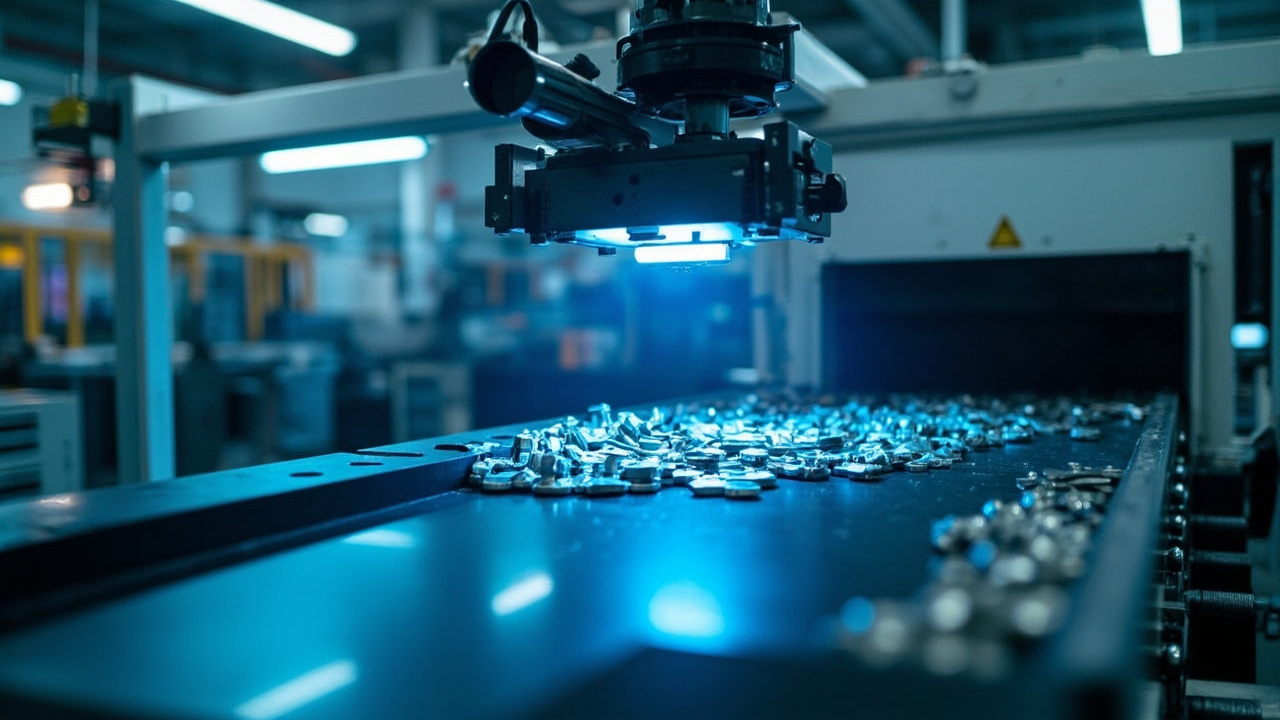
Machine vision has transformed parts sorting capabilities, and Chinese manufacturers have invested heavily in this technology. Vision-based sorting systems use one or more cameras to capture images of parts as they pass through an inspection station. Software analyzes these images to verify dimensions, detect surface defects, confirm orientation, and classify parts by type or quality grade.
Modern Chinese vision sorting systems typically employ high-resolution industrial cameras (2MP to 12MP) with LED or strobe lighting optimized for the inspection task. Processing occurs on industrial PCs running vision software that can be trained for specific part characteristics. Leading Chinese manufacturers offer systems with inspection speeds up to 1,000 parts per minute for simple dimensional checks, or 200-400 parts per minute for complex multi-feature inspection.
Pricing for Chinese vision sorting systems ranges from $5,000 for single-camera benchtop units to $30,000+ for multi-station automated lines with robotic handling. This compares favorably to European vision systems that typically start at $15,000 for basic configurations. The value proposition is particularly strong for applications requiring multiple inspection criteria—dimension, surface defect, and orientation—where a single vision system replaces multiple mechanical checking stations.
Laser Measurement and Sorting Systems
For applications requiring sub-millimeter dimensional accuracy, laser measurement systems offer precision that exceeds typical vision capabilities. Chinese manufacturers produce laser sorting equipment that uses laser triangulation or shadow casting to measure critical dimensions with accuracies of 0.01mm or better. These systems are particularly valuable for precision automotive components, bearing races, and electronic connectors where dimensional variation directly affects assembly fit or electrical performance.
Laser sorting systems from China typically cost $8,000-20,000 depending on the number of measurement axes and throughput requirements. While more expensive than mechanical or basic vision systems, they deliver measurement precision that previously required specialized German or Japanese equipment costing $30,000-80,000.
Weight-Based Sorting Machines
Weight sorting is essential for pharmaceutical capsules, hardware kits, and consumer goods where package contents must meet precise weight specifications. Chinese manufacturers produce checkweighers and weight sorters ranging from compact benchtop units to high-speed in-line systems integrated with packaging lines. Precision ranges from 0.1g for small components to 5g for larger items, with speeds up to 300 weighings per minute for in-line systems.
Chinese weight sorting machines typically cost $3,000-12,000 depending on precision, speed, and integration complexity. The domestic pharmaceutical and food packaging industries have driven significant investment in this technology, resulting in Chinese manufacturers with substantial expertise and competitive pricing.
Robotic Sorting and Bin-Picking Systems
The most advanced category of parts sorting equipment from China combines 3D vision with robotic handling to sort randomly oriented parts from bins, conveyors, or mixed streams. These systems use structured light or stereo vision to locate parts in three-dimensional space, plan collision-free robot trajectories, and place sorted parts into designated containers or downstream processes.
Chinese manufacturers have made remarkable progress in robotic sorting, leveraging the country's strengths in robot manufacturing, machine vision, and software development. Systems are available with collaborative robots for safe human interaction or industrial robots for maximum speed. Pricing starts around $15,000 for basic collaborative robot bin-picking cells and extends to $50,000+ for high-speed industrial systems with advanced 3D vision. These prices remain 30-50% below comparable European or Japanese systems.
Vision System Technologies from Chinese Manufacturers
The performance of vision-based parts sorting depends critically on the underlying vision technology. Chinese manufacturers employ several approaches, with varying capabilities and price points.
| Vision Technology | Inspection Capability | Speed (ppm) | China Price (USD) | Best Applications |
|---|---|---|---|---|
| 2D Area Scan | Presence, orientation, basic dimensions, surface defects | 200-800 | $3,000 - $8,000 | General manufacturing, simple defect detection |
| 2D Line Scan | Continuous surface inspection, high-resolution length measurement | 300-1,000 | $5,000 - $12,000 | Continuous products, wire, tube, strip inspection |
| 3D Structured Light | Height, volume, coplanarity, 3D defect detection | 100-400 | $8,000 - $20,000 | Complex geometry, assembly verification |
| 3D Stereo Vision | Depth measurement, bin picking, robot guidance | 50-200 | $10,000 - $25,000 | Random bin picking, mixed part sorting |
| Multispectral/Hyperspectral | Material composition, contamination, coating verification | 50-300 | $15,000 - $40,000 | Food, pharmaceutical, material verification |
| X-Ray Inspection | Internal defects, assembly verification, foreign object detection | 50-200 | $20,000 - $60,000 | Castings, electronics, safety-critical components |
2D area scan vision is the most commonly deployed technology in Chinese parts sorting machines due to its versatility and cost-effectiveness. Modern Chinese vision systems use high-quality industrial cameras from domestic manufacturers like Hikrobot or international brands like Basler and FLIR. LED ring lights, bar lights, and dome lights provide consistent illumination, while software algorithms handle pattern matching, edge detection, and measurement.
3D vision has advanced rapidly among Chinese manufacturers, driven by demand from automotive and electronics industries. Structured light systems project patterns onto parts and analyze deformation to calculate height maps. These systems verify coplanarity of connector pins, measure solder paste volume, and detect lifted leads on electronic components. Chinese 3D vision sorting systems now achieve accuracies of 0.005mm in the Z-axis, meeting requirements for all but the most demanding semiconductor applications.
Integration Options and Downstream Connectivity
Parts sorting machines rarely operate in isolation. They receive parts from upstream feeders or conveyors and deliver sorted outputs to packaging, assembly, or further processing. Chinese manufacturers offer varying levels of integration capability that buyers should evaluate.
Vibratory bowl feeder integration is the most common configuration for Chinese sorting machines. The sorting system mounts directly on the discharge of a vibratory bowl feeder, inspecting parts as they exit the bowl track. Good reject mechanisms divert failed parts into a separate container while good parts continue to downstream equipment. Chinese manufacturers typically offer pneumatic blow-off, mechanical gate, or solenoid-driven reject mechanisms depending on part characteristics and speed requirements.
Conveyor-fed sorting handles larger parts or higher throughputs than vibratory feeding allows. Parts travel on a belt conveyor past inspection stations, with reject actuators positioned downstream of each station. Chinese manufacturers produce conveyor sorting systems with widths from 100mm to 600mm and speeds up to 100 meters per minute. Multiple inspection stations can be arranged in series for progressive sorting by different criteria.
Robotic cell integration represents the most sophisticated connectivity. The sorting system communicates with a robot controller via Ethernet/IP, Profinet, or Modbus TCP to coordinate inspection and handling. Chinese manufacturers with robotics expertise can deliver complete cells where vision systems guide robots to pick parts from random presentation, inspect them, and place them into sorted containers or fixtures. These integrated cells demonstrate the advanced capabilities that leading Chinese automation suppliers now offer.
Data connectivity for Industry 4.0 is increasingly important. Quality Chinese sorting machine manufacturers provide Ethernet connectivity, OPC-UA interfaces, or MQTT data publishing for integration with manufacturing execution systems (MES). Inspection results, statistical process control data, and equipment status can be transmitted in real-time for production monitoring and quality traceability. Verify that your chosen manufacturer supports your preferred connectivity protocol before ordering.
Quality Control Features in Chinese Sorting Equipment
The effectiveness of a parts sorting machine depends on features that ensure consistent, reliable operation. When evaluating Chinese sorting equipment, assess the following quality control capabilities.
Statistical process control (SPC) functionality tracks inspection results over time and alerts operators when trends indicate process drift. Chinese vision sorting systems increasingly include SPC software that calculates Cpk values, generates control charts, and triggers alarms when measurements approach specification limits. This proactive quality management prevents defective parts from accumulating before an out-of-specification condition is detected manually.
Reject confirmation verifies that rejected parts are actually removed from the production stream. Simple systems rely on timing—assuming that the reject actuator fires at the correct moment. More sophisticated Chinese systems use sensors downstream of the reject mechanism to confirm that a part was actually diverted. If a reject fails to occur, the system can stop the line or trigger an alarm, preventing defective parts from reaching downstream processes.
Good part confirmation provides similar assurance for critical applications. A sensor verifies that a good part actually passed the reject station and continues toward downstream equipment. If a part disappears unexpectedly—perhaps due to a jam or misfeed—the system detects the absence and responds appropriately. These confirmation features are essential for safety-critical and regulated industries where undetected sorting failures have serious consequences.
Self-calibration and validation routines maintain inspection accuracy over time. Ambient lighting changes, camera drift, and mechanical wear can affect measurement precision. Quality Chinese sorting systems include automated calibration procedures that run at defined intervals or on operator command. These routines verify system accuracy using certified reference parts and adjust parameters as needed. Request documentation of calibration procedures and validation protocols when evaluating suppliers.
Evaluating Chinese Parts Sorting Machine Suppliers
Selecting a reliable Chinese supplier for parts sorting equipment requires evaluation beyond product specifications. The following criteria help distinguish capable manufacturers from those that may underperform.
Vision engineering expertise is critical for sorting systems. Ask about the supplier's vision engineering team—how many engineers, their experience level, and typical projects. Request demonstration videos showing the system handling parts similar to yours. Capable vision suppliers can explain their lighting strategy, camera selection rationale, and software algorithms in technical detail. Suppliers who treat vision as a black box or rely entirely on third-party integrators may struggle with challenging applications.
Software capability increasingly differentiates sorting systems. Modern vision sorting requires intuitive user interfaces for setting up new parts, adjusting inspection parameters, and reviewing results. Evaluate the software during demonstration—Is it intuitive? Can operators set up new parts without programmer assistance? Does it provide useful reporting and data export? Chinese manufacturers with strong software teams deliver systems that are easier to use and more flexible than those relying on generic vision software.
Mechanical build quality affects long-term reliability. Examine frame construction, motion components, and environmental protection. Quality Chinese sorting machines use aluminum extrusion or steel tube frames with proper bracing. Linear motion components should be from reputable brands like HIWIN, THK, or Bosch Rexroth. Enclosures should protect electronics from dust, oil mist, and washdown if required for the application. Budget systems may use inferior motion components that wear quickly or lack environmental protection.
Application engineering support ensures successful deployment. The best Chinese sorting machine manufacturers provide application engineering that includes part feasibility analysis, lighting and optics design, software programming, and on-site commissioning. Verify that these services are included in the quotation or available at defined costs. Suppliers who deliver hardware without application support leave buyers to solve integration challenges independently.
Pricing and Total Cost Considerations
Understanding the full cost of parts sorting equipment from China requires looking beyond the initial purchase price to include integration, operation, and support costs.
Base equipment pricing for Chinese parts sorting machines spans a wide range based on technology and capability. Mechanical sorters start around $1,500. Single-camera vision systems range from $5,000-15,000. Multi-camera or 3D vision systems cost $15,000-40,000. Robotic sorting cells start at $20,000 and extend to $80,000+ for complex configurations. These prices typically include the sorting mechanism, control system, basic software, and standard documentation.
Integration costs add 20-50% to base equipment price for most applications. Mechanical integration includes mounting fixtures, part presentation equipment, and reject container arrangements. Electrical integration covers power supply, control signal wiring, and safety system connections. Software integration involves communication with upstream and downstream equipment, data logging configuration, and user interface customization. Some Chinese manufacturers include basic integration support in their pricing; others charge separately. Clarify scope before ordering.
Operating costs include electricity, compressed air for pneumatic reject mechanisms, replacement lighting, and periodic calibration. Vision system lighting has finite life—LED ring lights typically last 20,000-50,000 hours but degrade gradually. Camera lenses may require cleaning or replacement if damaged. These operating costs are modest for most systems but should be included in total cost of ownership calculations.
Training and support costs vary by supplier and application complexity. Basic mechanical sorters require minimal training; sophisticated vision systems may need several days of operator and maintenance training. Chinese manufacturers increasingly offer remote training via video call, reducing travel costs. Verify training scope, duration, and delivery method when evaluating quotations.
Common Applications and Industry Solutions
Chinese parts sorting machine manufacturers have developed specialized solutions for industries with distinctive requirements.
Automotive component sorting demands high throughput, dimensional precision, and traceability. Chinese manufacturers supply sorting systems for fasteners, bearing races, valve components, and electronic connectors used in automotive assembly. These systems often integrate with part marking equipment to apply serial numbers or data matrix codes after successful inspection, enabling full traceability throughout the vehicle life cycle.
Electronics manufacturing requires sorting systems that handle small, delicate components without damage or electrostatic discharge. Chinese manufacturers offer vision sorting systems with ESD protection, gentle pneumatic handling, and magnification optics for components down to 0.5mm. These systems verify polarity, lead integrity, and package marking for passive components, connectors, and semiconductor packages.
Pharmaceutical and medical device sorting must comply with stringent regulatory requirements. Chinese manufacturers serving these industries provide systems with FDA-compliant materials, validation documentation, audit trails, and 21 CFR Part 11 compliant software for electronic records. While not all Chinese manufacturers can meet these requirements, those that do offer compelling alternatives to European and American suppliers at significantly lower prices.
Consumer goods and packaging applications often require sorting by color, decoration, or cosmetic appearance. Chinese vision sorting systems handle these applications with color cameras and specialized lighting that reveals surface characteristics invisible under standard illumination. Sorting criteria might include print alignment, label presence, color consistency, or surface gloss—parameters that directly affect consumer perception of product quality.
Frequently Asked Questions
How accurate are vision-based parts sorting machines from Chinese manufacturers?
Quality Chinese vision sorting systems achieve dimensional measurement accuracies of 0.01-0.05mm depending on camera resolution, optics, and part presentation consistency. 3D structured light systems measure height with accuracies of 0.005-0.02mm. These specifications meet requirements for most automotive, electronics, and general manufacturing applications. For sub-micron precision requirements, verify capabilities with your specific part samples before ordering.
Can Chinese sorting machines integrate with my existing production line?
Established Chinese sorting machine manufacturers design equipment for integration with standard industrial interfaces. Digital I/O, Ethernet/IP, Profinet, Modbus TCP, and RS-485 communication are commonly supported. Mechanical interfaces can be customized to match your conveyor heights, part presentation requirements, and space constraints. Provide detailed integration requirements during quotation to ensure compatibility. Leading manufacturers like Huben Automation offer complete integration engineering as part of project delivery.
What is the typical lead time for custom parts sorting machines from China?
Standard mechanical sorters ship within 2-3 weeks. Single-camera vision systems typically require 4-6 weeks for production and testing. Complex multi-station sorting lines or robotic cells may need 8-14 weeks depending on engineering complexity. Custom software development for specialized inspection algorithms adds 2-4 weeks. Air freight transit adds 3-7 days; sea freight adds 20-35 days. Plan procurement timelines to accommodate these lead times, particularly for complex custom systems.
How do I validate that a Chinese sorting machine will work with my parts?
Reputable Chinese manufacturers offer feasibility testing using your actual parts before order commitment. Send 50-100 sample parts representing normal production variation, including edge-case defective samples if available. The manufacturer tests these parts on their equipment and provides a feasibility report with achievable inspection rates, accuracy estimates, and any identified challenges. For high-value projects, consider an on-site demonstration or pilot installation before full production deployment.
What ongoing maintenance do parts sorting machines require?
Mechanical sorters require periodic inspection of wear components—springs, bearings, and pneumatic cylinders. Vision systems need lens cleaning, lighting inspection, and occasional camera recalibration. Software systems may require updates for new part types or operating system patches. Leading Chinese manufacturers provide maintenance schedules, spare parts recommendations, and remote diagnostic support. Budget 2-5% of equipment cost annually for maintenance and consumables.
Are Chinese parts sorting machines suitable for regulated industries like medical devices?
Yes, but supplier selection is critical. Not all Chinese manufacturers can meet medical device validation requirements. Look for suppliers with ISO 13485 certification, experience delivering equipment to FDA-regulated facilities, and capability to provide IQ/OQ/PQ validation documentation. The equipment must use biocompatible materials where required, maintain audit trails, and support electronic signature workflows. Chinese manufacturers who have invested in these capabilities offer significant cost savings while meeting regulatory requirements.
Conclusion
Parts sorting machines from Chinese manufacturers have evolved from simple mechanical devices to sophisticated vision-based systems that compete with the best equipment from Europe, Japan, and North America. International buyers can access this technology at prices that remain substantially below Western alternatives, provided they select suppliers with genuine engineering capability and quality commitment.
The key to successful procurement lies in matching sorting technology to application requirements, thoroughly evaluating supplier capabilities, and establishing clear acceptance criteria before shipment. Mechanical sorters offer economical solutions for simple orientation tasks. Vision systems provide versatile inspection for complex quality criteria. Robotic sorting enables handling of random presentation and mixed parts. Understanding these options—and the quality variations among Chinese suppliers—empowers buyers to make decisions that optimize both performance and investment.
Huben Automation designs and manufactures parts sorting and orientation systems for international export, integrating vibratory feeding, machine vision, and robotic handling into complete solutions. We invite prospective buyers to review our feeding and sorting product range, explore our vision system capabilities, or contact our engineering team to discuss your specific sorting application. For guidance on evaluating Chinese automation suppliers, see our comprehensive manufacturer assessment guide.