Parts Feeding System Solutions for Manufacturing (2025): Complete Overview

Understanding Parts Feeding Systems
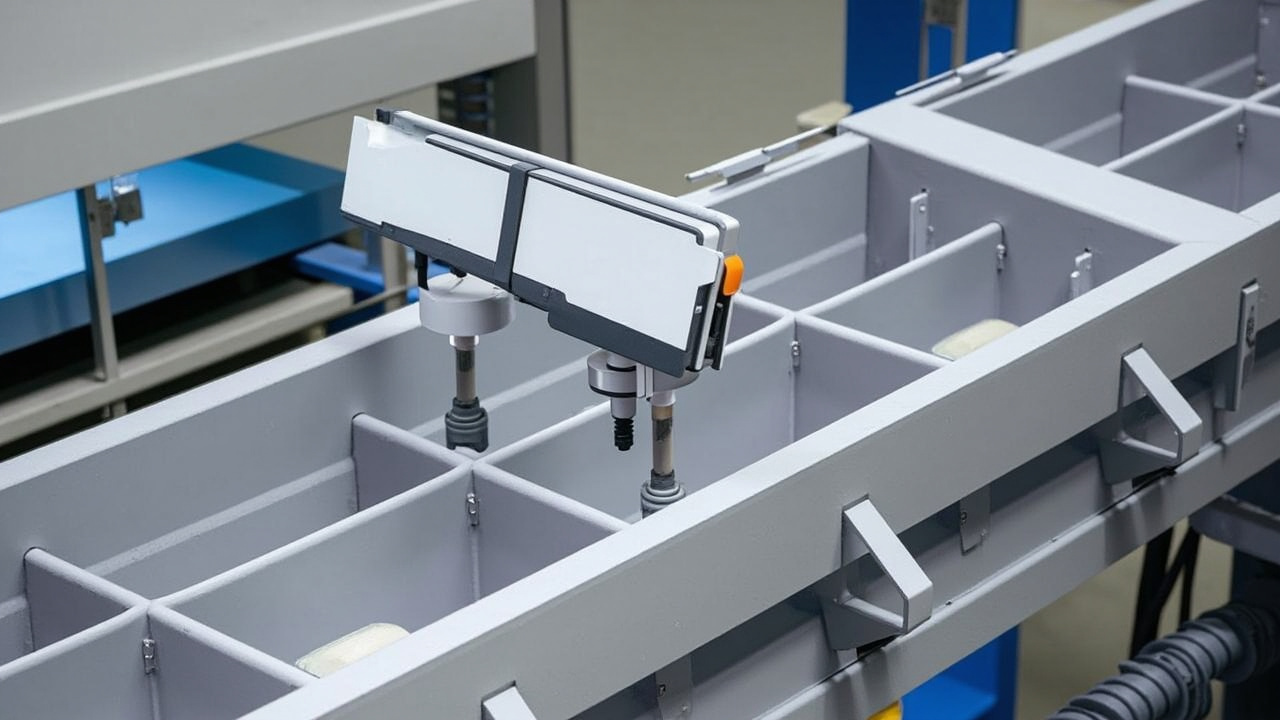
A parts feeding system is the critical link between bulk component storage and automated assembly or packaging processes. It takes randomly oriented parts from a bulk supply and delivers them in a consistent, oriented stream to downstream equipment. The right feeding system can dramatically improve production efficiency, reduce labor costs, and increase product quality.
Types of Parts Feeding Systems
1. Vibratory Bowl Feeders
The most common and versatile feeding solution. Vibratory bowl feeders use electromagnetic vibration to move parts up a spiral track where custom tooling orients them correctly.
- Best for: Small to medium parts, high-volume production
- Speed: 50-300+ parts per minute
- Price range: $1,000 - $5,000 (China direct)
- Part types: Screws, nuts, washers, electronic components, stamped parts
2. Flexible Vibratory Feeders
Vision-guided flexible feeders that can handle multiple part types with software-based changeover. Ideal for modern multi-product manufacturing lines.
- Best for: Multi-part lines, small batches, complex parts
- Speed: 20-60 parts per minute
- Price range: $3,000 - $8,000 (China direct)
- Part types: Any part that a robot can grip
3. Hopper Elevators
Bulk storage and elevation systems that feed parts into bowl feeders or directly to production lines. Essential for automated, unattended operation.
- Best for: Bulk storage, continuous feeding, reducing manual refilling
- Capacity: 10-200 liters depending on model
- Price range: $500 - $2,000 (China direct)
4. Centrifugal Feeders
High-speed feeders using rotational force for simple, symmetrical parts. Faster than vibratory feeders but less versatile.
- Best for: Simple, symmetrical parts at very high speeds
- Speed: 200-1,000+ parts per minute
- Price range: $2,000 - $6,000 (China direct)
5. Step Feeders
Gentle mechanical feeders that use ascending steps to lift and orient parts. Ideal for parts that may be damaged by vibration.
- Best for: Delicate parts, coated surfaces, large components
- Speed: 20-80 parts per minute
- Price range: $1,500 - $4,000 (China direct)
Huben Expert Tip
Always provide your automation supplier with the exact production parts, including edge-case defective parts. Designing tooling around perfect CAD models often leads to jamming in real-world scenarios.
Industry-Specific Feeding Solutions
Automotive Industry
Automotive manufacturing demands high-speed, reliable feeding for fasteners, sensors, connectors, and stamped components. Vibratory bowl feeders with hardened tooling are the standard, often paired with hopper elevators for continuous operation across multiple shifts.
Electronics Manufacturing
Electronic components require gentle handling and precise orientation. Flexible vibratory feeders with vision guidance are increasingly popular for handling diverse PCB components, IC chips, and connectors without dedicated tooling for each part.
Medical Device Manufacturing
Medical parts feeding requires cleanroom-compatible materials (SUS316L stainless steel), validated cleaning procedures, and traceability. Huben Automation provides feeders with FDA-compliant materials and documentation for medical device applications.
Consumer Goods
Consumer product manufacturing often involves high-mix, medium-volume production where flexible feeding systems provide the best ROI. Quick changeover between product variants is essential for profitability.
Designing a Complete Feeding System
A well-designed parts feeding system typically includes multiple components working together:
- Bulk storage — Hopper or bin to hold parts supply
- Elevation mechanism — Hopper elevator or conveyor to lift parts
- Orientation device — Bowl feeder or flexible feeder to orient parts
- Escapement — Mechanism to release parts one at a time
- Transfer system — Conveyor or chute to deliver parts to the workstation
- Sensors and controls — PLC integration for monitoring and control
- Part detection — Vision or sensor-based verification
ROI Calculation: Automating Your Parts Feeding
Here's a simple framework to calculate the return on investment for automated parts feeding:
Manual feeding cost: 1 operator × $15/hour × 2,000 hours/year = $30,000/year
Automated feeding cost: $2,500 (one-time) + $500/year (maintenance) = $3,000 first year
First year savings: $27,000
Payback period: ~1 month
Even with more complex systems costing $10,000-$20,000, the payback period is typically under 12 months for a single-shift operation.
Get a Custom Feeding System Quote
Huben Automation designs and manufactures complete parts feeding systems tailored to your specific requirements. From individual bowl feeders to fully integrated multi-station feeding lines, we provide factory-direct pricing and comprehensive technical support.
Contact us with your part details and production requirements for a free consultation and quote within 12 hours.