Automatic Feeder Machines from China: Types, Prices & Selection Guide
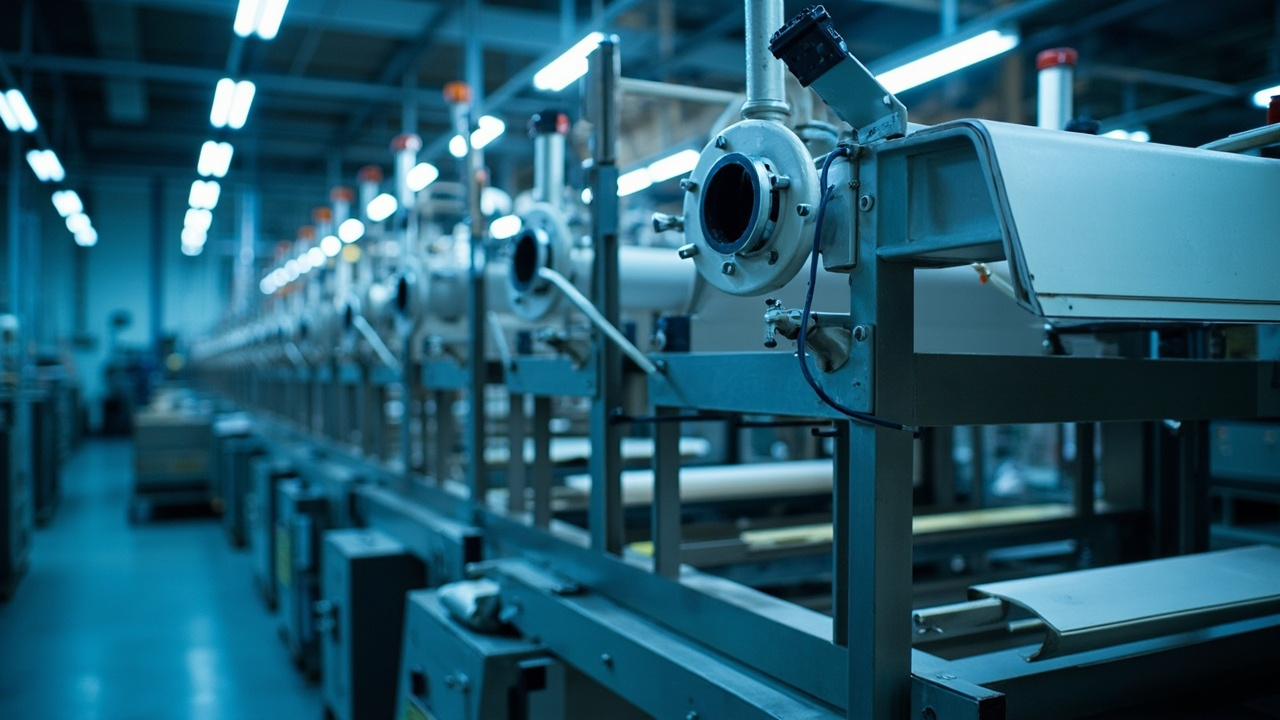
Introduction to Automatic Feeder Machines from China
China has emerged as the world's largest producer and exporter of automatic feeder machines, manufacturing everything from simple vibratory bowl feeders to sophisticated vision-guided flexible feeding systems. Chinese automatic feeder manufacturers now serve production facilities across every continent, delivering equipment that powers assembly lines in automotive plants, electronics factories, pharmaceutical cleanrooms, and consumer goods packaging operations. The scale of China's feeder machine industry creates options for every budget and application—but also requires buyers to navigate a complex landscape of quality levels, technical capabilities, and business practices.
The automatic feeder machine category encompasses several distinct technologies, each suited to different part types, production volumes, and integration requirements. Chinese manufacturers produce the full range, often at prices 40-60% below equivalent European or Japanese equipment. Understanding the available types, their relative strengths, and the pricing landscape helps buyers make informed decisions when sourcing from China.
This guide examines the four primary categories of automatic feeder machines available from Chinese manufacturers: vibratory bowl feeders, centrifugal feeders, flexible feeders with vision systems, and step feeders. For each type, we analyze typical specifications, price ranges from Chinese suppliers, quality indicators, and application suitability. We also provide a structured selection framework that matches feeder technology to production requirements.
Vibratory Bowl Feeders from China
Vibratory bowl feeders remain the most widely produced and exported automatic feeder type from China. These machines use electromagnetic vibration to move parts up a spiral track inside a bowl, with mechanical tooling orienting components correctly as they travel. Chinese manufacturers have refined vibratory feeder production over three decades, achieving quality levels that satisfy demanding international customers.
Standard vibratory bowl feeders from quality Chinese manufacturers handle parts from 1mm to 300mm in size, with bowl diameters ranging from 100mm to 1200mm. Feed rates vary based on part geometry and orientation complexity, typically achieving 50-300 parts per minute for standard configurations. Bowl construction uses SUS304 stainless steel as the baseline, with SUS316 available for corrosive environments and polyurethane coatings for noise reduction and part protection.
The electromagnetic drive unit is the heart of any vibratory feeder. Leading Chinese manufacturers source drive coils from established Japanese suppliers like Nippon Pulse or Shinko, ensuring consistent magnetic performance and long service life. Controller technology spans basic amplitude-adjustment units to sophisticated digital controllers with frequency tuning, soft-start, sensor integration, and PLC communication. Chinese manufacturers offer the full controller spectrum, often at prices 50-70% below Western equivalents.
Pricing for vibratory bowl feeders from China varies by size and complexity. Standard small bowls (150-250mm diameter) for simple parts cost $1,000-2,000. Medium bowls (300-450mm) with custom tooling range from $2,500-5,000. Large bowls (500mm+) for automotive or heavy industrial applications cost $5,000-12,000. These prices typically include the bowl, drive unit, controller, and base plate—substantially complete systems ready for integration.
Centrifugal Feeders from China
Centrifugal feeders, also known as rotary feeders or disc feeders, use rotational force rather than vibration to orient and feed parts. A rotating disc or bowl throws parts outward against a peripheral track, where orientation tooling selects correctly positioned components. Chinese manufacturers produce centrifugal feeders that compete effectively with European alternatives for applications involving simple, symmetrical parts.
The primary advantage of centrifugal feeders is speed. For parts that orient easily—washers, discs, cylinders, and symmetrical blocks—centrifugal feeders can achieve feed rates of 500-2,000 parts per minute, significantly exceeding vibratory feeder capabilities. Chinese manufacturers offer centrifugal feeders with disc diameters from 200mm to 800mm, driven by variable-speed motors with precision control.
Centrifugal feeders from China are particularly popular for the pharmaceutical and food packaging industries, where stainless steel construction and easy cleaning are essential. Chinese manufacturers produce centrifugal feeders with quick-release tooling, tool-less disassembly, and FDA-compliant surface finishes. These specialized configurations cost $3,000-8,000 from Chinese manufacturers compared to $8,000-20,000 from European suppliers.
The limitation of centrifugal feeders is part geometry complexity. Parts with asymmetric features, delicate protrusions, or complex orientation requirements often cannot be handled reliably by centrifugal action. Chinese manufacturers typically recommend vibratory or flexible feeders for such applications, demonstrating technical honesty that builds buyer confidence.
Flexible Feeders with Vision Systems from China
Flexible feeders represent the fastest-growing segment of China's automatic feeder machine exports. These systems replace mechanical tooling with a combination of programmable vibration patterns and vision-guided robotic picking. A generic vibrating platform randomizes parts on a flat surface; an overhead camera identifies correctly oriented components; and a robot or pick-and-place mechanism retrieves suitable parts.
Chinese manufacturers have made significant investments in flexible feeder technology, leveraging the country's strengths in machine vision, robotics integration, and software development. Modern Chinese flexible feeders offer multi-pattern vibration—backlighting for vision, integrated camera mounting, and software that learns part characteristics without extensive programming. These capabilities previously required European systems costing $15,000-40,000; Chinese manufacturers now deliver comparable functionality starting at $4,000-10,000.
The value proposition of flexible feeders is changeover speed. Where a traditional vibratory bowl requires hours of tooling change to handle a different part, flexible feeders switch between parts in minutes through software recipe changes. This makes them ideal for contract manufacturers, low-volume high-mix production, and industries with frequent product changes. Chinese manufacturers increasingly target these applications with flexible feeder platforms designed for easy integration with collaborative robots from Universal Robots, Dobot, and other brands.
Quality assessment for Chinese flexible feeders should focus on vision system reliability, vibration pattern consistency, and software usability. Request demonstration videos showing the feeder handling multiple part types with changeover. Evaluate the vision system's performance with parts that have similar appearance, low contrast, or reflective surfaces—these challenging conditions reveal system limitations.
Step Feeders and Elevator Feeders from China
Step feeders and elevator feeders use mechanical motion rather than vibration or rotation to lift and orient parts. Step feeders use a reciprocating mechanism with pockets that capture parts from a bulk hopper and lift them to a discharge height. Elevator feeders use belts or chains with cleats to achieve similar lifting. Chinese manufacturers produce both types for applications where vibration might damage parts or where vertical lifting exceeds vibratory feeder capabilities.
Step feeders from China are commonly used for heavy parts, delicate components, and applications requiring gentle handling. The mechanical pocket design prevents part-to-part contact during lifting, reducing damage risk for polished, coated, or fragile components. Chinese manufacturers offer step feeders with pocket sizes from 10mm to 150mm, handling parts up to 2kg each. Typical pricing ranges from $2,000-6,000 depending on size and integration complexity.
Elevator feeders serve high-capacity applications where a large bulk hopper must be emptied continuously. Cleated belts or bucket chains lift parts from a deep hopper to a discharge chute, often feeding multiple downstream stations. Chinese manufacturers produce elevator feeders with belt widths from 100mm to 400mm and lifting heights up to 3 meters. These heavy-duty machines cost $3,000-10,000 from Chinese suppliers, roughly 50% below Western pricing.
Automatic Feeder Machine Price Comparison from China
| Feeder Type | Size/Capacity | China Price (USD) | Western Price (USD) | China Savings |
|---|---|---|---|---|
| Vibratory Bowl Feeder (standard) | 200mm bowl, simple parts | $1,000 - $2,000 | $3,000 - $5,000 | 55-65% |
| Vibratory Bowl Feeder (custom) | 400mm bowl, complex tooling | $2,500 - $5,500 | $6,000 - $12,000 | 50-60% |
| Centrifugal Feeder | 400mm disc, pharma grade | $3,000 - $7,000 | $8,000 - $18,000 | 55-65% |
| Flexible Feeder with Vision | Standard platform, basic vision | $4,000 - $10,000 | $12,000 - $30,000 | 60-70% |
| Step Feeder | Medium duty, 50mm pockets | $2,000 - $5,000 | $5,000 - $10,000 | 50-60% |
| Elevator Feeder | 200mm belt, 2m lift | $3,000 - $8,000 | $7,000 - $15,000 | 50-60% |
| Complete Feeding System | Multi-component integrated line | $8,000 - $25,000 | $25,000 - $80,000 | 55-70% |
These price ranges reflect equipment from established Chinese manufacturers with export experience and quality certifications. Budget suppliers may offer prices 20-30% lower but often compromise on material quality, electromagnetic components, or testing rigor. The total cost of ownership—including reliability, spare parts availability, and technical support—usually favors the slightly higher-priced reputable manufacturers.
Selection Criteria for Different Applications
Choosing the right automatic feeder machine requires matching technology to application requirements. The following framework guides selection based on part characteristics, production environment, and operational constraints.
Part Geometry and Fragility
Simple symmetrical parts—washers, discs, cylinders, blocks—perform well in centrifugal feeders where high speed justifies the mechanical complexity. Parts with moderate asymmetry or orientation requirements suit vibratory bowl feeders, where custom tooling can select correct orientations reliably. Complex asymmetric parts, or parts requiring multiple orientation features, may need flexible feeders with vision guidance. Delicate parts that could be damaged by vibration or impact are candidates for step feeders with gentle mechanical handling.
Production Volume and Changeover Frequency
High-volume production of a single part type favors dedicated vibratory or centrifugal feeders optimized for that specific component. The tooling investment pays back through maximized feed rates and minimal downtime. Medium-volume production with occasional changeovers benefits from vibratory feeders with quick-change tooling—many Chinese manufacturers offer tool-less bowl change systems that reduce changeover to 15-30 minutes. High-mix, low-volume production is the natural domain of flexible feeders, where software changeover eliminates mechanical tooling costs entirely.
Integration Requirements
Consider how the feeder interfaces with downstream equipment. Vibratory feeders naturally discharge parts in a linear stream suitable for conveyor transfer, escapement placement, or direct insertion. Centrifugal feeders may require additional linear tracks or blow-off mechanisms to interface with assembly stations. Flexible feeders integrate directly with robotic pick-and-place systems, making them ideal for robotic assembly cells. Step and elevator feeders discharge at height, which may eliminate the need for additional lifting mechanisms in some layouts.
Environmental and Regulatory Constraints
Food, pharmaceutical, and medical device applications impose material and cleanliness requirements that not all Chinese manufacturers can satisfy. Verify that your supplier offers FDA-compliant coatings, 316 stainless steel construction, and cleanability features like quick-release tooling and smooth welds. Reputable Chinese manufacturers serving these industries maintain documentation of material certifications and surface finish testing.
Quality Assessment for Chinese Automatic Feeders
Evaluating quality among Chinese automatic feeder manufacturers requires attention to specific technical details that predict long-term performance.
Electromagnetic drive quality is paramount for vibratory feeders. Ask about coil winding specifications, insulation class, and expected coil life. Quality coils from Japanese or German suppliers should last 10,000+ hours under normal operation. Budget feeders may use domestically produced coils with shorter life and less consistent performance. Request coil specifications and supplier documentation.
Bowl fabrication quality directly affects feeding performance. Examine bowl track smoothness, weld quality, and dimensional consistency. Quality bowls show uniform track width within 0.1mm, smooth welds ground flush with the surface, and consistent spiral pitch. Poor-quality bowls have rough welds, variable track width, and dimensional inconsistencies that cause part jams and inconsistent feed rates.
Controller reliability is often overlooked but critical to operational uptime. Digital controllers with sealed enclosures, quality potentiometers, and clear displays indicate thoughtful design. Controllers with exposed circuit boards, unlabeled controls, or non-standard connectors suggest minimal engineering investment and potential reliability issues.
Testing documentation separates professional manufacturers from amateur operations. Reputable Chinese manufacturers provide pre-shipment test reports showing feed rate measurement, orientation accuracy, and continuous running time with customer parts. The absence of such documentation suggests inadequate quality control.
Evaluating Chinese Manufacturer Capabilities
Beyond product quality, assess the manufacturer's overall capability to support your application. Key indicators include engineering depth, production capacity, export experience, and after-sales support infrastructure.
Engineering depth reveals itself through the quotation process. Capable manufacturers ask detailed questions about part behavior, propose specific solutions rather than generic models, and identify potential challenges before production begins. They provide 3D models or drawings for custom designs and welcome design review discussions. Manufacturers who quote quickly without technical questions may lack the engineering resources to handle complex applications.
Production capacity affects lead times and scalability. Manufacturers with in-house CNC machining, welding stations, and electromagnetic assembly can control quality and schedule more effectively than those outsourcing key processes. Ask about typical lead times for standard and custom orders, and how they handle capacity constraints during peak periods.
Export experience predicts logistics competence and communication quality. Manufacturers with 5+ years of export experience understand international packaging requirements, documentation needs, and shipping procedures. They communicate clearly in English about technical and commercial matters. First-time exporters may struggle with these details, adding risk and delay to your project.
After-sales support is crucial for automatic feeder machines that require tuning and occasional troubleshooting. Verify that the manufacturer offers remote technical support, spare parts availability, and documentation packages. Leading Chinese manufacturers provide video call support, detailed maintenance manuals, and recommended spare parts lists with pricing.
Common Pitfalls When Buying Automatic Feeders from China
International buyers of Chinese automatic feeder machines encounter predictable challenges. Awareness of these pitfalls enables proactive prevention.
Inadequate specification is the most common source of problems. Buyers who provide only a part photograph and requested feed rate receive equipment that may not handle their actual production conditions. Comprehensive specifications should include part drawings with tolerances, material and surface finish details, required orientation with diagrams, target feed rate with acceptable range, downstream equipment interface, environmental conditions, and electrical supply parameters.
Ignoring electrical compatibility causes immediate problems upon installation. Chinese manufacturers typically default to 220V/50Hz unless otherwise specified. Buyers in 110V/60Hz regions must explicitly communicate their electrical requirements and verify that controllers are configured accordingly. Motor rotations, sensor voltages, and control signal levels should also be confirmed before shipment.
Underestimating total landed cost leads to budget surprises. Beyond equipment price, buyers must budget for international freight ($200-1,000 depending on size and method), import duties and taxes (typically 5-20% of declared value), customs brokerage fees ($100-300), and inland transportation. For a $5,000 feeder, total landed cost may reach $6,500-7,500.
Skipping pre-shipment verification is perhaps the most expensive mistake. Once equipment arrives in your facility, leverage to resolve performance issues diminishes significantly. Require video documentation of the feeder running your actual parts at specified feed rates before authorizing final payment. This simple step prevents most performance disputes.
Frequently Asked Questions
What is the most reliable type of automatic feeder machine from China?
Vibratory bowl feeders have the longest track record and widest application range among Chinese automatic feeder exports. The technology is mature, with well-understood engineering principles and extensive supplier experience. For buyers new to Chinese sourcing, vibratory feeders represent the lowest-risk entry point. Flexible feeders offer exciting capabilities but require more sophisticated integration and support.
How do Chinese automatic feeder prices compare to European or Japanese equipment?
Chinese automatic feeders typically cost 40-65% less than equivalent European or Japanese equipment. A standard vibratory bowl feeder that costs $4,000-6,000 from a European supplier costs $1,500-2,500 from a quality Chinese manufacturer. Flexible feeders show even larger differentials: Chinese systems start around $4,000 compared to $12,000+ for European alternatives. These savings reflect lower manufacturing labor costs and integrated supply chains rather than necessarily lower quality at reputable manufacturers.
Can Chinese automatic feeders handle precision parts for medical or electronics applications?
Yes, quality Chinese manufacturers produce automatic feeders that meet precision requirements for medical device and electronics assembly. The key is selecting a manufacturer with experience in your specific industry and verifying their quality systems. Look for ISO 9001 certification, cleanroom-compatible materials, documented testing procedures, and customer references from similar applications. Many Chinese manufacturers now serve Tier 1 automotive and medical device customers with stringent quality requirements.
What warranty and support should I expect from a Chinese automatic feeder manufacturer?
Reputable Chinese manufacturers typically offer 12-month warranties covering manufacturing defects and component failures. Support includes remote technical assistance via email, phone, or video call. Spare parts should be available for shipment within 1-2 weeks. Leading manufacturers like Huben Automation provide lifetime technical support beyond the warranty period, with spare parts availability guaranteed for 10+ years. Verify warranty terms, support channels, and spare parts pricing before ordering.
How do I verify that a Chinese manufacturer can produce the specific feeder I need?
Request detailed technical proposals addressing your specific part and requirements. Ask for photographs or videos of similar feeders they have produced. Conduct a virtual factory tour to observe production equipment and testing facilities. Request customer references from buyers in your industry or region. For complex applications, consider a prototype order to validate capability before committing to full production. Capable manufacturers welcome this verification process and provide extensive documentation.
Are Chinese automatic feeders compatible with European safety standards and CE marking?
Established Chinese manufacturers with export experience can provide CE-marked automatic feeders compliant with the Machinery Directive 2006/42/EC. This includes proper guarding, emergency stop functionality, electrical safety per EN 60204-1, and technical documentation. Verify CE compliance during quotation and request the declaration of conformity with shipment. Note that CE marking is self-certified—reputable manufacturers maintain documentation supporting their declaration, while less scrupulous suppliers may apply CE marks without proper assessment.
Conclusion
The Chinese automatic feeder machine market offers international buyers an extraordinary range of options, from economical standard vibratory bowls to sophisticated flexible feeding systems with integrated vision. The key to successful procurement lies in matching feeder technology to application requirements, evaluating manufacturers systematically beyond price, and establishing clear quality verification gates before shipment.
Vibratory bowl feeders remain the workhorse of automatic feeding, with Chinese manufacturers delivering proven reliability at compelling prices. Centrifugal feeders excel for high-speed simple parts. Flexible feeders enable rapid changeover for high-mix production. Step and elevator feeders handle parts that challenge other technologies. Understanding these distinctions—and the quality variations among Chinese suppliers—empowers buyers to make decisions that optimize both initial investment and long-term operational performance.
Huben Automation manufactures the full spectrum of automatic feeder machines for international export, with ISO 9001 certification, in-house CNC tooling capability, and documented pre-shipment testing for every system. We invite prospective buyers to review our vibratory bowl feeder specifications, explore our flexible feeder technology guide, or contact our engineering team to discuss your specific application requirements. For broader guidance on sourcing automation equipment from China, see our comprehensive manufacturer evaluation guide.