Visiting Vibratory Feeder Factories in China: Audit Guide for Buyers

Why Visit a Vibratory Feeder Factory in China
Buying vibratory feeders from China without seeing the factory is like hiring an employee without an interview. Video calls, photographs, and polished websites can mask operational realities that only become visible when you walk the production floor. A well-executed factory visit reveals whether a supplier has the engineering depth, manufacturing discipline, and quality systems to deliver equipment that performs reliably in your production environment.
This guide prepares international buyers for productive factory visits to Chinese vibratory feeder manufacturers. It covers pre-visit preparation, on-site inspection protocols, equipment assessment criteria, quality control verification, personnel evaluation, and red flags that should disqualify a supplier. Whether you are visiting in person or conducting a detailed virtual audit, these frameworks help you separate capable manufacturers from trading companies and under-equipped workshops.
Pre-Visit Preparation: Research and Planning
A successful factory audit begins weeks before you board a plane or open a video call. Thorough preparation ensures you ask the right questions, inspect the right areas, and make efficient use of limited time on site.
Research the Supplier Background
Before visiting, verify the supplier's business registration through China's National Enterprise Credit Information Publicity System or third-party services like Qichacha. Confirm that the registered address matches the factory location you will visit. Trading companies often claim manufacturing capability while operating from offices with no production equipment. Cross-reference the company name on business licenses with the name used in correspondence.
Review the supplier's export history through customs records if available. Companies with consistent export activity demonstrate established logistics relationships and international customer bases. First-time exporters may lack experience with documentation, packaging standards, and destination country compliance requirements.
Prepare Your Audit Agenda
Share your visit agenda with the supplier at least one week in advance. A professional manufacturer will welcome structured evaluation and prepare relevant documentation. Resistance to specific inspection requests or attempts to restrict access to certain areas signals potential problems.
Your agenda should include production floor walkthrough, quality control area inspection, engineering and design review, testing and validation demonstration, raw material and component storage review, finished goods and packaging area inspection, and management interview. Allocate 3-4 hours for a comprehensive audit of a mid-sized facility.
Bring Physical Samples
Bring your actual production parts to the factory visit. Capable suppliers will want to examine them immediately, discussing orientation challenges, material handling considerations, and tooling approaches. Suppliers who show little interest in your parts or make confident claims without examining them closely may lack the engineering curiosity that predicts project success.
Production Floor Assessment: What to Look For
The production floor reveals more about a manufacturer than any brochure or website. Organization, cleanliness, equipment condition, and workflow efficiency all correlate with product quality and delivery reliability.
Facility Organization and 5S Practices
Chinese manufacturing culture has increasingly adopted 5S methodology—Sort, Set in order, Shine, Standardize, Sustain. A factory that maintains clean aisles, labeled storage locations, and organized workstations demonstrates management discipline that extends to product quality.
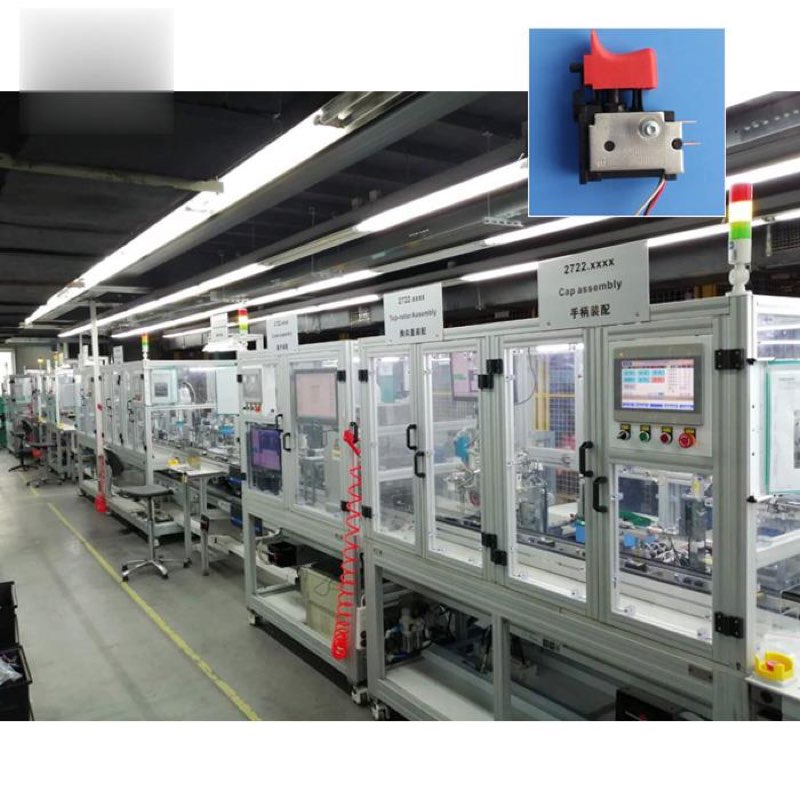
Look for clear material flow paths from raw material receipt through machining, assembly, testing, and shipping. Confused layouts with materials stored in random locations suggest production planning problems. Check whether work-in-progress is tracked with visible status boards or digital systems. Effective production control reduces lead time variation and improves delivery predictability.
Manufacturing Equipment Evaluation
Vibratory feeder manufacturing requires specific equipment capabilities. During your walkthrough, verify that the factory has the following essential equipment:
| Equipment Type | Purpose | Minimum Capability | Red Flag |
|---|---|---|---|
| CNC Lathe | Bowl track machining, tooling fabrication | 2+ machines, modern controls | No CNC, only manual lathes |
| CNC Milling Center | Complex tooling, base plate machining | 3-axis capability | Outsourcing all machining |
| Welding Station | Bowl fabrication, frame construction | TIG welding for stainless steel | Only spot welding capability |
| Vibration Testing Rig | Feed rate validation, tuning verification | Variable frequency drive, measurement tools | No testing before shipment |
| Coordinate Measuring Machine | Precision verification of tooling dimensions | Basic CMM or digital caliper system | No dimensional verification |
| Surface Treatment Area | Polyurethane coating, polishing, cleaning | Dedicated clean area | Coating done outdoors or in dirty corner |
Equipment age matters less than maintenance condition. A well-maintained 10-year-old CNC machine may produce better results than a neglected new machine. Look for clean surfaces, organized tool storage, and absence of excessive vibration or unusual noise during operation.
Work-in-Progress and Production Load
Observe the current production load. A factory with no visible work-in-progress may be under-capacity or primarily a trading operation. A factory overwhelmed with orders may struggle to meet your delivery timeline. The ideal state is steady workflow with visible production schedules and moderate utilization.
Ask to see feeders currently in production for other customers. Respect confidentiality by not photographing customer-specific equipment, but observe the build quality, wiring neatness, and labeling practices. These details predict how your equipment will be built.
Quality Control Systems and Documentation
Quality control separates professional manufacturers from assembly workshops. A robust QC system prevents defects rather than merely detecting them after production.
Incoming Material Inspection
Ask to see the incoming inspection area and records. Stainless steel bowl material should arrive with mill certificates verifying grade—typically SUS304 or SUS316L for pharmaceutical applications. Check whether the factory verifies material grade with spark testing or chemical analysis rather than relying solely on supplier certificates.
Electromagnetic drive components should come from recognized manufacturers. Japanese or German drive coils typically offer better consistency than unbranded alternatives. Ask about component traceability and whether critical parts have secondary supplier qualification.
In-Process Quality Checks
Effective manufacturers inspect work at multiple stages rather than only at final assembly. Ask about inspection points during production:
- After bowl track machining — Dimensional verification of critical tooling features
- After welding — Visual inspection for cracks, porosity, and dimensional distortion
- After surface treatment — Coating thickness measurement and adhesion testing
- After drive unit assembly — Electrical parameter verification and vibration amplitude calibration
Request to see inspection records from recent production. Professional factories maintain detailed checklists with measured values, inspection dates, and inspector signatures. Missing or incomplete records suggest informal quality practices.
Final Testing and Acceptance Procedures
The most critical quality gate is final testing before shipment. A proper final acceptance test should include continuous operation for a defined duration—minimum 4 hours for standard feeders, 8 hours for custom designs—with actual production parts. Feed rate measurement, orientation accuracy verification, noise level check, and vibration amplitude stability under load should all be documented.
Ask to witness a final test if timing permits. Observe whether the testing is rigorous or merely a brief demonstration. Professional factories welcome customer observation of testing and maintain consistent procedures regardless of whether visitors are present.
Engineering Capability and Design Process
Manufacturing equipment is only as good as the engineering that designed it. Evaluating engineering capability helps predict whether the supplier can solve problems that arise during your project.
Engineering Team Assessment
Meet the engineers who would work on your project, not just the sales team. Ask about their educational backgrounds, years of experience, and specific expertise in vibratory feeding applications. A team with mechanical engineering, electrical engineering, and automation specialists indicates comprehensive capability.
Request to see examples of previous design work. CAD models, engineering drawings, and design calculation sheets demonstrate systematic approach. Be cautious of suppliers who claim extensive experience but cannot show detailed design documentation.
Design Process and Simulation
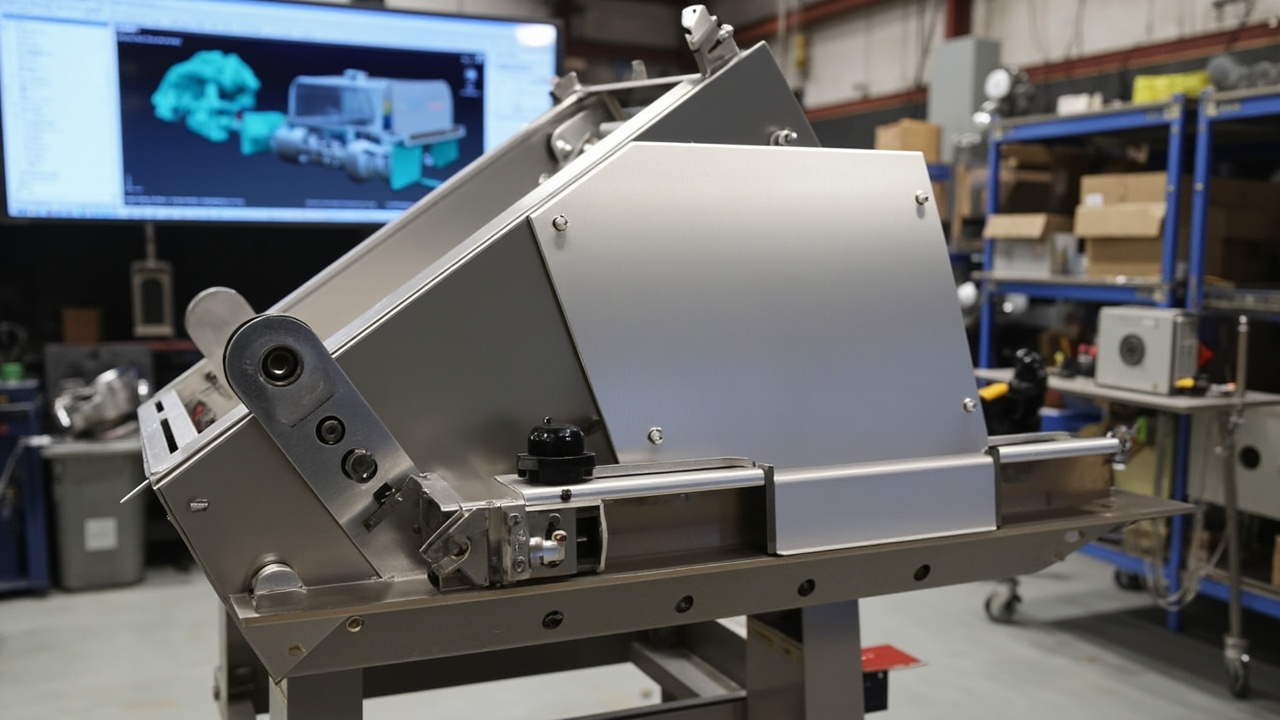
Modern feeder design benefits from simulation tools that predict part behavior before physical prototyping. Ask whether the supplier uses discrete element method (DEM) simulation or similar tools to model part flow and orientation. While not essential, simulation capability indicates investment in engineering sophistication.
More important than software is the design methodology. Strong suppliers follow a structured process: part analysis and orientation study, concept design with multiple alternatives, detailed design with tolerance analysis, prototype build and testing, design refinement based on test results, and final documentation. Suppliers who skip directly from part photo to production without intermediate design steps rely on trial-and-error rather than engineering.
Customization Track Record
If your project requires custom tooling, examine the supplier's customization experience. Ask for examples of challenging parts they have successfully fed—complex geometries, delicate materials, or tight orientation tolerances. Request customer references for similar custom projects.
Review the supplier's change management process. How do they handle design changes after production starts? What is their process for engineering change orders? Professional suppliers have documented procedures that minimize disruption and cost.
Personnel Evaluation and Management Practices
The people building your equipment ultimately determine its quality. Evaluating workforce skill, training practices, and management philosophy provides insight into long-term supplier reliability.
Workforce Skill and Stability
Ask about workforce composition—how many employees, average tenure, and skill levels. High turnover indicates poor working conditions or management practices that may affect quality consistency. Skilled workers with 3+ years of experience produce more consistent results than constantly rotating trainees.
Observe worker engagement during the factory tour. Do employees appear focused and purposeful, or distracted and disengaged? In Chinese manufacturing, workforce morale directly correlates with attention to detail and defect rates.
Training and Certification Programs
Professional manufacturers invest in workforce training. Ask about technical training programs for machinists, assemblers, and quality inspectors. Certifications for welding operators, CNC programmers, and electrical technicians indicate structured skill development.
Cross-training practices are also valuable. Factories where workers understand multiple production stages can adapt to schedule changes and cover absences without quality degradation.
Management Philosophy and Customer Focus
The management team's attitude toward customer relationships predicts post-sale support quality. During your visit, observe how management interacts with floor workers—respectful collaboration suggests a healthy organization. Ask about their approach to customer complaints and warranty claims.
Factories that view customer relationships as long-term partnerships invest in quality and service beyond the initial sale. Those focused solely on transaction volume may cut corners when problems arise.
Red Flags: When to Walk Away
Certain observations during a factory visit should disqualify a supplier regardless of attractive pricing or persuasive sales claims.
Refusal to allow production floor access — Any legitimate manufacturer welcomes customer inspection. Refusal indicates either trading company status or serious operational problems they wish to conceal.
No visible quality control activity — If you observe production without any inspection, measurement, or testing during a multi-hour visit, the factory likely has minimal quality systems.
Excessive reliance on outsourcing — Some outsourcing is normal for specialized processes like heat treatment or surface coating. However, if core machining and assembly are entirely outsourced, the supplier adds little value and quality control becomes difficult.
Inability to explain technical details — When engineers cannot explain why they chose a particular bowl diameter, drive frequency, or tooling geometry, they may be copying designs without understanding the underlying principles.
Poor housekeeping and safety practices — Disorganized facilities with blocked exits, exposed wiring, or missing machine guards suggest management indifference that extends to product quality and worker safety.
Pressure to commit during the visit — Professional suppliers welcome evaluation time and follow-up questions. High-pressure tactics to sign contracts or place deposits during the visit are associated with problematic vendors.
Virtual Factory Audit: Remote Evaluation Protocol
International travel is not always practical. A well-structured virtual audit can provide substantial insight when conducted rigorously.
Video Tour Requirements
Request a live video tour rather than pre-recorded footage. Pre-recorded videos can be edited to omit problem areas. During the live tour, ask the guide to show specific areas: raw material storage with visible material labels, CNC machines in operation with date verification, current work-in-progress with customer-obscured details, quality control station with recent inspection records, testing area with equipment running, and packaging and shipping area.
Ask the guide to pause at each station and answer questions. A factory employee who knows the facility well can describe processes in detail. A sales representative conducting the tour from a remote location may struggle to answer technical questions.
Documentation Review
Request digital copies of quality certificates, recent inspection records, and engineering drawings from previous projects. Review these documents for completeness and consistency. Cross-check dates and project references to verify authenticity.
Ask for video evidence of final testing for a recent shipment. Professional manufacturers routinely document testing and can provide examples without significant delay.
Third-Party Verification
For significant orders, consider hiring a third-party inspection agency like SGS, Bureau Veritas, or TUV to conduct the factory audit on your behalf. These agencies have experienced auditors in major Chinese manufacturing regions and provide standardized reports with photographs and objective assessments. Costs typically range from $500-1,500 depending on scope and location, a modest investment for orders above $10,000.
Post-Visit Evaluation and Supplier Scoring
After the visit, systematically evaluate findings while impressions are fresh. A structured scoring framework prevents emotional decisions based on hospitality or salesmanship.
Rate each supplier across categories: manufacturing capability (equipment, processes, capacity), quality systems (inspection, testing, documentation), engineering depth (design process, problem-solving, innovation), management quality (organization, communication, customer focus), and overall impression (professionalism, transparency, alignment with your needs).
Weight categories according to your project priorities. For complex custom feeders, engineering depth may outweigh manufacturing scale. For standard products, quality systems and capacity may be more important.
Before making a final decision, review our supplier audit checklist and top suppliers guide to contextualize your findings against industry benchmarks.
Frequently Asked Questions
How much does it cost to visit a vibratory feeder factory in China?
A typical 3-5 day business trip to major manufacturing regions like Zhejiang or Guangdong costs $2,000-4,000 including flights, hotels, meals, and local transportation. Visiting multiple factories in the same region reduces per-factory cost. For budgets that do not support travel, a professional third-party factory audit costs $500-1,500 and provides objective assessment without travel expense.
What should I bring to a factory visit?
Bring your actual production parts in sufficient quantity for testing discussions, a printed copy of your technical requirements, a camera for documenting equipment and facility conditions, a notebook for recording observations, and business cards for exchanging contact information. If you have specific compliance requirements, bring relevant standards documents.
How do I know if I am visiting a real factory or a trading company?
Real factories have production equipment in operation, raw materials in storage, work-in-progress on the floor, and workers in production uniforms. Trading companies typically show sample rooms with products from multiple manufacturers, have minimal production equipment, and cannot answer detailed technical questions about manufacturing processes. Verify the business license registration address matches the visit location.
Can I trust video factory tours as much as in-person visits?
Live video tours conducted by factory personnel provide substantial insight but cannot replace physical presence for assessing subtle indicators like ambient noise, vibration, temperature, and overall atmosphere. For orders below $10,000, video audits are usually sufficient. For larger investments, in-person visits or third-party audits are strongly recommended.
What regions in China have the most vibratory feeder manufacturers?
The majority of Chinese vibratory feeder manufacturers are concentrated in Zhejiang Province, particularly Ningbo and Wenzhou, with additional clusters in Guangdong Province around Shenzhen and Dongguan. Ningbo has emerged as a leading hub for precision automation equipment with strong supply chain support and export infrastructure.
How do I schedule factory visits with multiple suppliers?
Plan a 5-7 day trip focusing on one manufacturing region. Contact 4-6 suppliers 3-4 weeks in advance to schedule visits. Allow half a day per factory including travel time between locations. Group visits geographically to minimize transit time. Many buyers work with local agents or interpreters who understand manufacturing terminology and can facilitate communication.
Conclusion: Making Factory Visits Count
A factory visit is one of the most valuable investments in your procurement process. The insights gained from walking a production floor, observing quality practices, and meeting the engineering team provide decision confidence that no quotation or reference check can match.
The best factory audits combine thorough preparation, structured observation, and systematic evaluation. They assess not just what the factory produces today, but how it approaches engineering, quality, and customer relationships—the factors that predict long-term partnership success.
Huben Automation welcomes factory visits and virtual audits from prospective customers. Our facility in Ningbo, Zhejiang features complete CNC machining, in-house engineering, and comprehensive testing capabilities. We encourage buyers to review our product range and manufacturer guide before scheduling a visit, so you arrive with informed questions and clear evaluation criteria. Contact us to arrange your factory tour.
Siap Mengotomasi Produksi Anda?
Dapatkan konsultasi gratis dan penawaran detail dalam 12 jam dari tim engineering kami.