Screw Feeder Systems: Types, Selection & Integration for Automated Assembly

Introduction: The Critical Role of Screw Feeding in Automated Assembly
Screws are among the most common fasteners in manufactured products, and their automated feeding is essential for efficient assembly operations. From electronics and appliances to automotive and furniture, reliable screw feeding directly impacts production speed, product quality, and operator ergonomics. A screw feeder that jams every hundred cycles or delivers screws in wrong orientations creates more problems than it solves.
The screw feeder market offers multiple technologies, each with distinct advantages and limitations. Selecting the wrong type for your application leads to chronic reliability issues, while the right choice delivers years of trouble-free operation. This guide examines the major screw feeder types, provides selection criteria for different applications, explains integration with automatic screwdrivers, and addresses common issues that plague screw feeding systems.
Types of Screw Feeder Systems
Screw feeders fall into three main categories based on their feeding mechanism: vibratory bowl feeders, blow-fed systems, and pick-and-place systems. Understanding how each works enables informed selection.
Vibratory Bowl Screw Feeders
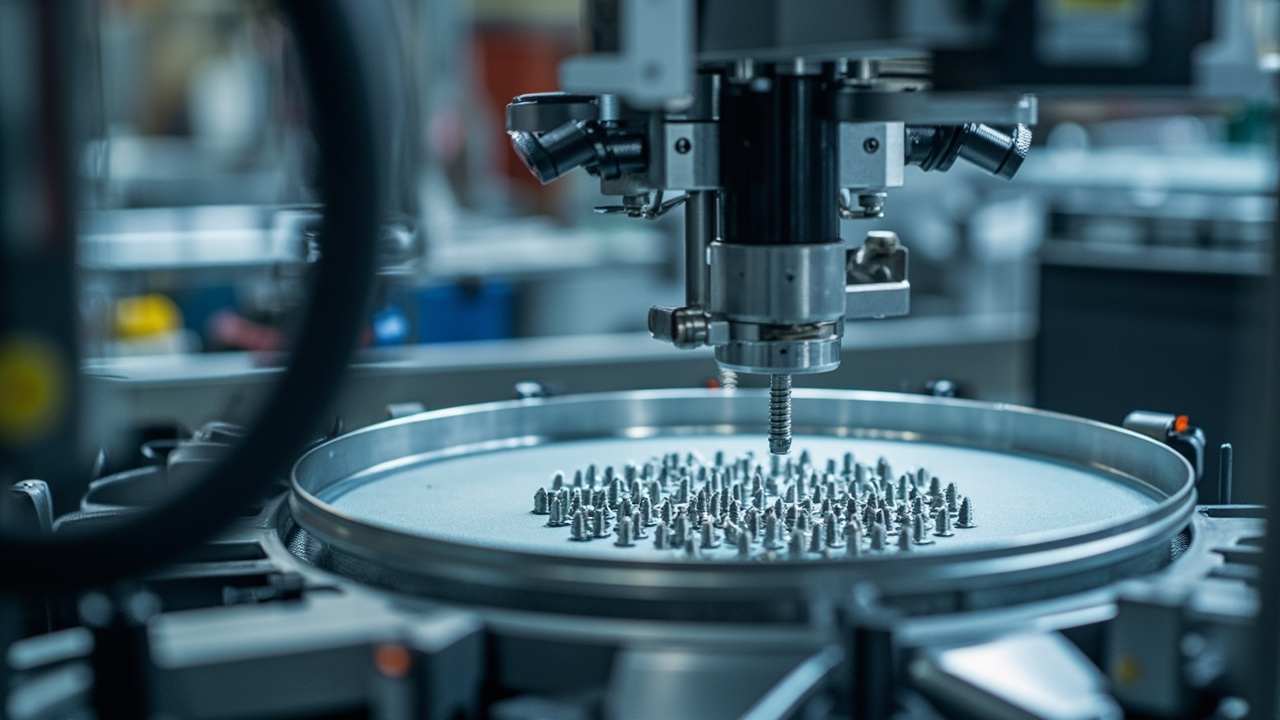
Vibratory bowl feeders are the most widely used screw feeding solution, particularly for small to medium screws from M1.6 to M6. The bowl uses vibration to orient screws along a spiral track, with mechanical tooling ensuring each screw exits head-up and aligned for pickup. These systems are reliable, cost-effective, and well-understood by maintenance teams.
Standard vibratory bowl screw feeders handle screws with conventional head styles: pan head, flat head, round head, and hex head. Specialty screws with unusual head geometries, such as Torx with pins or custom security heads, may require custom tooling. Bowl diameters typically range from 200 mm for small screws to 400 mm for larger fasteners or higher feed rates.
The primary advantage of vibratory bowl feeders is their maturity and simplicity. With no compressed air requirement and minimal moving parts, they are economical to operate and maintain. The main limitation is feed rate: typical rates of 30-80 screws per minute are adequate for manual or semi-automatic assembly but may bottleneck high-speed fully automatic lines.
Blow-Fed Screw Feeders
Blow-fed systems use compressed air to transport screws through flexible tubing from a bulk hopper or vibratory bowl to the screwdriver head. This approach decouples the feeding mechanism from the assembly point, enabling the screwdriver to move freely while screws are delivered on demand.
Blow-fed systems achieve much higher feed rates than vibratory bowls, typically 60-150 screws per minute, making them suitable for robotic assembly and high-speed automatic screwdrivers. The screw is blown through tubing to a presentation nozzle at the screwdriver, where it is held by magnetic or vacuum retention until driving begins.
The disadvantages of blow-fed systems include compressed air consumption, noise from air jets, and potential for screw damage during transport. Screws with delicate finishes or soft materials may be scratched by contact with tubing walls. The tubing length and bend radius must be carefully designed to prevent jams and maintain consistent delivery.
Pick-and-Place Screw Feeders
Pick-and-place systems present screws in fixed positions for robotic or manual pickup. Screws are fed into individual pockets or slots by vibration, gravity, or mechanical indexing. A robot or operator picks each screw and moves it to the assembly point.
This approach offers maximum flexibility for robotic assembly cells where the screwdriver axis may not align with the feed direction. It also enables visual verification of each screw before pickup, reducing the risk of driving damaged or incorrect fasteners. However, pick-and-place is slower than blow-fed systems and requires more complex integration.
Magazine and Tape Feeders
For very small screws in electronics assembly, magazine or tape-and-reel feeders similar to SMD component feeders are sometimes used. Screws are pre-loaded into plastic magazines or embossed carrier tape, which is advanced incrementally to present each screw. This approach eliminates bulk handling issues but requires manual or automated magazine loading.
| Feeder Type | Feed Rate | Screw Size Range | Best For | Price Range (USD) |
|---|---|---|---|---|
| Vibratory Bowl Feeder | 30-80 ppm | M1.6 - M8 | Manual and semi-auto assembly | $1,200 - $4,000 |
| Blow-Fed System | 60-150 ppm | M2 - M6 | High-speed robotic assembly | $3,000 - $8,000 |
| Pick-and-Place | 20-50 ppm | M1.2 - M10 | Flexible robotic cells | $2,500 - $6,000 |
| Magazine Feeder | 15-40 ppm | M1.0 - M3 | Electronics micro screws | $1,500 - $3,500 |
| Flexible Vision Feeder | 25-60 ppm | M1.0 - M6 | High-mix, quick changeover | $4,000 - $10,000 |
Selection Criteria for Screw Feeding Systems
Choosing the right screw feeder requires systematic evaluation of your application requirements against each technology's capabilities.
Screw Specifications
The screw itself is the starting point for selection. Key parameters include thread diameter and length, head style and drive type, material and surface finish, and weight. Long screws over 50 mm may not feed reliably in vibratory bowls due to whipping and tangling. Very small screws under M2 require precision micro feeders or vision systems. Soft materials like brass or aluminum need gentle handling to prevent thread damage.
Self-tapping screws with sharp points require careful track design to prevent point-down jamming. Thread-forming screws with blunt points are generally easier to feed. Coarse threads feed more reliably than fine threads in vibratory systems because the larger pitch reduces nesting tendency.
Assembly Speed Requirements
Match feeder capacity to your cycle time. If your target assembly rate is 40 screws per minute, a vibratory bowl feeder rated at 60 ppm provides adequate margin. For robotic assembly at 80 ppm, blow-fed or dual-bowl systems are necessary. Always specify feed rate with a 20-30% margin above actual need to account for transient slowdowns and system aging.
Integration with Downstream Equipment
Consider how the feeder interfaces with your screwdriver or robot. Vibratory bowl feeders typically discharge to a linear track or dead nest where the operator or robot picks the screw. Blow-fed systems require a presentation nozzle compatible with your screwdriver collet. Pick-and-place systems need robot gripper or vacuum tooling matched to screw head geometry.
Workspace and Ergonomic Constraints
Vibratory bowl feeders occupy fixed floor or bench space and require the operator to reach the discharge point. Blow-fed systems allow the screwdriver to move freely within the tubing length, improving ergonomics for large assemblies. For cells with multiple screw types, consider whether changeover time or dual-feeder configurations better suit your production mix.
Integration with Automatic Screwdrivers
The interface between feeder and screwdriver is where many screw feeding problems originate. Proper integration ensures reliable handoff from feeder to driver.
Magnetic Retention Systems
Magnetic bit holders are the simplest retention method, using a permanent magnet in the screwdriver bit to hold ferrous screws. This works well for steel screws from M2 upward in vertical or near-vertical driving applications. The magnet strength must be sufficient to hold the screw against gravity and acceleration but not so strong that removing the driven screw from the bit is difficult.
Non-ferrous screws such as stainless steel, brass, or aluminum cannot use magnetic retention. For these materials, vacuum retention through a hollow screwdriver shaft is the standard alternative. Vacuum systems require a small vacuum pump or shop air venturi and careful sealing to maintain adequate holding force.
Mechanical Collet and Jaw Systems
Precision automatic screwdrivers often use mechanical collets or spring jaws that grip the screw head during transport and release when driving torque is applied. These systems work with any screw material and provide positive retention regardless of orientation. However, collets must be matched to specific head diameters, limiting flexibility.
Depth Control and Torque Monitoring
Modern automatic screwdrivers integrate depth control and torque monitoring to ensure consistent fastening quality. The feeder must deliver screws reliably enough that the screwdriver encounters a screw on every cycle; missed screws trigger fault conditions that stop the line. Feeder reliability directly impacts overall equipment effectiveness.
Signal Interfaces
Integration between feeder and screwdriver controller typically uses discrete I/O signals: screw request from screwdriver, screw ready from feeder, and fault signals in both directions. Some systems use serial communication or fieldbus protocols for more sophisticated coordination. Ensure your feeder and screwdriver use compatible interface standards before purchase.
Common Issues and Troubleshooting
Even well-designed screw feeding systems experience issues. Understanding root causes enables rapid resolution.
Screw Jamming in Bowl or Track
Jams occur when screws stack, cross, or wedge in the track. Common causes include excessive vibration amplitude causing screws to jump and stack, worn track tooling that no longer discriminates orientation correctly, foreign objects or damaged screws in the bulk supply, and incorrect track width for the screw diameter. Solutions include reducing amplitude, inspecting and replacing worn tooling, filtering bulk supply, and verifying track dimensions.
Inconsistent Feed Rate
Feed rate variation often traces to bowl loading level, with rates dropping as the bowl empties. Level sensors that pause the downstream process when the bowl is low prevent starvation. Vibration amplitude drift due to spring wear or voltage fluctuation also causes inconsistency. Digital controllers with amplitude feedback stabilization solve this problem.
Screw Damage During Feeding
Damage manifests as scratched finishes, deformed threads, or damaged drive recesses. Causes include metal-to-metal contact in uncoated bowls, excessive vibration causing screws to hammer against each other, and sharp edges in track tooling. Polyurethane bowl coating, reduced amplitude, and radiused tooling edges reduce damage.
Blow-Fed System Jams and Missed Deliveries
Blow-fed systems jam when screws tumble in tubing, wedging against bends or diameter restrictions. Minimum tubing bend radius should be 10 times the screw diameter. Excessive air pressure causes tumbling; insufficient pressure causes stalling. Optimal pressure depends on screw size and tubing length, typically 0.3-0.6 MPa for M3-M5 screws. Nozzle wear or contamination also causes missed deliveries.
Cross-Threading and Stripping During Driving
While primarily a screwdriver issue, feeder-induced problems contribute to cross-threading. Screws delivered slightly off-axis or with damaged threads are more likely to cross-thread. Ensuring the feeder presents screws consistently aligned and undamaged reduces downstream assembly defects.
Advanced Features and System Options
Modern screw feeding systems offer features that improve reliability, traceability, and ease of use.
Multiple Screw Handling
Dual-bowl or multi-lane feeders handle two or more screw types on the same assembly station, reducing changeover time. Each lane feeds independently, with selector gates directing screws to the appropriate discharge point. These systems are valuable for products requiring multiple fastener types in the same assembly sequence.
Screw Counting and Verification
Inline sensors count screws as they pass from feeder to screwdriver, verifying that each assembly receives the correct number of fasteners. Missing screw detection triggers immediate alarm and typically stops the line to prevent incomplete products from advancing. This feature is essential for safety-critical assemblies.
Quick Changeover Design
For high-mix production, quick changeover features reduce setup time between screw types. Tooling cartridges that swap in minutes, digital controller recipes that store parameters for each screw, and color-coded components all accelerate changeover. Some flexible feeder systems handle multiple screw types without mechanical changeover, using vision to identify and orient each type.
Maintenance Best Practices
Preventive maintenance extends screw feeder life and prevents the chronic issues that plague neglected systems.
Daily maintenance includes checking for loose screws or debris in the bowl, verifying that vibration amplitude is within specification, and inspecting the discharge point for wear. Weekly tasks include cleaning the bowl and track with appropriate solvent, checking spring pack condition, and verifying sensor alignment. Monthly maintenance involves inspecting tooling for wear, lubricating bearings per manufacturer specification, and checking electrical connections for looseness or corrosion.
Blow-fed systems require additional maintenance: inspecting tubing for wear or kinking, cleaning air filters and regulators, checking nozzle condition, and verifying vacuum pump performance for vacuum retention systems. Replace flexible tubing annually or when visible wear appears.
Frequently Asked Questions
What is the most reliable type of screw feeder?
For manual and semi-automatic assembly of standard screws, vibratory bowl feeders are the most reliable and mature technology, with decades of proven performance. For high-speed robotic assembly, blow-fed systems offer the best speed but require more maintenance. The most reliable choice depends on matching the technology to your specific screw specifications, speed requirements, and integration constraints.
Can vibratory feeders handle stainless steel screws?
Yes, vibratory feeders handle stainless steel screws effectively. Because stainless steel is non-magnetic, magnetic retention at the screwdriver requires special high-strength rare-earth magnets or vacuum retention. The feeder itself operates identically for stainless and carbon steel screws. Note that stainless steel screws are softer than hardened steel and may require gentler vibration amplitudes to prevent thread damage.
What screw sizes can be fed automatically?
Vibratory bowl feeders reliably handle screws from approximately M1.6 to M8, depending on length-to-diameter ratio. Blow-fed systems work best from M2 to M6. Below M1.6, micro screw feeders with precision tracks or vision guidance are required. Above M8, the screw mass typically requires step feeders or custom heavy-duty bowls. Very long screws over 60 mm may need special anti-whipping track design.
How do I prevent screws from jamming in the feeder?
Jam prevention starts with proper feeder specification for your screw geometry. Ensure track width is 1.3-1.5 times screw diameter. Maintain vibration amplitude within the manufacturer's recommended range. Keep the bulk hopper clean and free of damaged screws or foreign objects. Use bowl coating appropriate for your screw material. Regular inspection and replacement of worn tooling prevents jams caused by loss of orientation discrimination.
Are blow-fed systems noisy?
Blow-fed systems generate noise from compressed air discharge, typically 75-85 dB at the presentation nozzle. This can be reduced with mufflers, enclosed nozzle designs, or acoustic enclosures. For operators working nearby, hearing protection may be required. Vibratory bowl feeders are generally quieter, operating at 60-75 dB depending on bowl size and mounting.
How much does a complete screw feeding system cost?
Entry-level vibratory bowl screw feeders cost $1,200-2,500. Complete systems with automatic screwdriver integration range from $4,000-10,000 depending on screwdriver specification and control features. Blow-fed systems for robotic integration typically cost $5,000-12,000. High-mix flexible feeders with vision guidance range from $6,000-15,000. These investments typically pay back within 6-18 months through labor savings and quality improvement.
Conclusion: Building Reliable Screw Feeding Operations
Screw feeding is a mature technology, but success requires careful matching of feeder type to application requirements. Vibratory bowl feeders remain the workhorse for most assembly operations, offering reliability and simplicity at moderate cost. Blow-fed systems serve high-speed robotic applications where their speed advantage justifies additional complexity. Pick-and-place and flexible systems fill niches requiring maximum flexibility or gentle handling.
The key to reliable screw feeding lies in understanding your screw specifications, assembly speed requirements, and integration constraints before selecting equipment. Invest in quality components, follow preventive maintenance practices, and train operators to recognize early warning signs of developing problems.
Need help selecting the right screw feeder for your assembly operation? Contact the Huben Engineering Team with your screw specifications and cycle time requirements. We design and manufacture screw feeding systems optimized for your specific fasteners and assembly environment.
Siap Mengotomasi Produksi Anda?
Dapatkan konsultasi gratis dan penawaran detail dalam 12 jam dari tim engineering kami.