Parts Orienting Machines from China: Bowl & Flexible Solutions
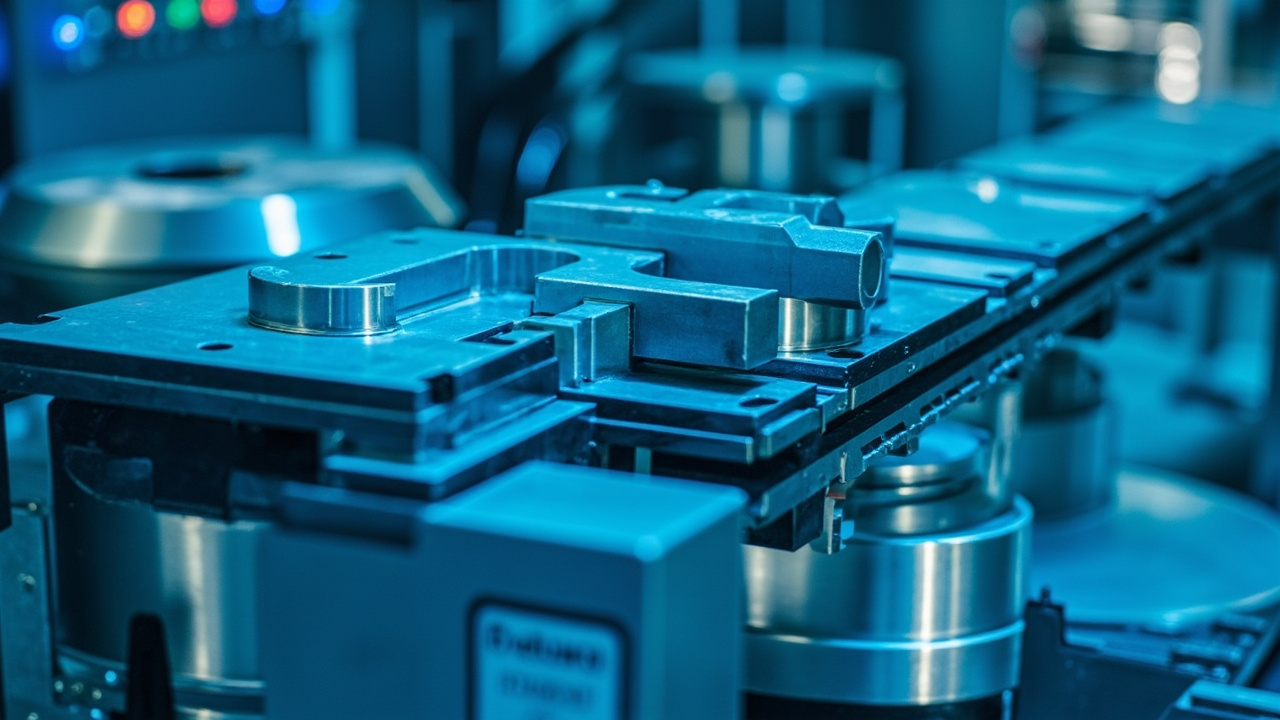
Introduction to Parts Orienting Machines from China
Parts orienting is the critical first step in automated assembly, packaging, and processing operations. Before a screw can be driven, a connector inserted, or a cap applied, the part must be presented in a consistent, predictable orientation. Parts orienting machines from Chinese manufacturers have become the backbone of production lines worldwide, delivering reliable orientation capabilities at prices that enable automation even for cost-sensitive applications.
China's parts orienting machine industry has matured significantly over the past two decades. Early Chinese orientation equipment was often criticized for inconsistent performance and limited engineering support. Today's leading Chinese manufacturers produce orienting machines that meet international quality standards, supported by experienced engineering teams capable of solving complex orientation challenges. The combination of competitive pricing—typically 40-60% below European or Japanese alternatives—and capable engineering makes Chinese parts orienting machines an attractive option for manufacturers worldwide.
This guide examines the two dominant approaches to parts orienting available from Chinese manufacturers: vibratory bowl orienters with mechanical tooling, and flexible orienting systems using vision-guided robotic handling. We analyze the strengths and limitations of each approach, provide selection guidance based on application requirements, and offer practical advice for evaluating Chinese suppliers. Whether you need to orient a single fastener for high-speed assembly or handle multiple electronic components with frequent changeovers, understanding the Chinese orienting machine landscape helps you make the optimal choice.
Vibratory Bowl Orienters from China
Vibratory bowl orienters remain the most widely deployed parts orienting technology globally, and Chinese manufacturers are the world's largest suppliers of this equipment. The fundamental principle—using controlled vibration to move parts up a spiral track while mechanical selectors allow only correctly oriented components to exit—has been refined by Chinese engineers through millions of installations across virtually every manufacturing industry.
A typical vibratory bowl orienter from a quality Chinese manufacturer consists of a stainless steel bowl with a custom-tooled spiral track, an electromagnetic drive unit generating controlled vibration, an amplitude controller for tuning performance, and a base with isolation springs. The bowl is engineered specifically for the part being oriented, with track width, selector geometry, and discharge configuration optimized for reliable orientation at target feed rates.
Chinese manufacturers offer bowl orienters with diameters from 100mm to 1200mm, handling parts from 1mm micro-components to 300mm industrial parts. Bowl materials include SUS304 stainless steel for general applications, SUS316 for corrosive environments, and coated bowls for noise reduction or part protection. Track configurations range from simple single-discharge designs to complex multi-track bowls feeding several downstream stations simultaneously.
The tooling design determines orienting performance. Chinese engineering teams use a combination of experience, CAD modeling, and prototype testing to develop tooling that reliably orients parts with the required face, end, or rotational position. Common tooling elements include width selectors that reject parts exceeding a dimensional threshold, end-to-end selectors that filter parts by length, undercut selectors that catch parts by protruding features, and air-knife separators that blow away lightweight incorrectly oriented pieces.
Pricing for Chinese vibratory bowl orienters varies with bowl size and tooling complexity. Standard small bowls (150-250mm) for simple cylindrical parts cost $1,000-2,000. Medium bowls (300-450mm) with moderate tooling complexity range from $2,500-5,000. Large bowls (500mm+) with intricate multi-stage tooling for complex asymmetric parts cost $5,000-12,000. These prices include bowl, drive unit, controller, and base—substantially complete systems ready for production integration.
Flexible Orienting Systems from China
Flexible orienting systems represent a fundamentally different approach that has gained significant traction among Chinese manufacturers. Rather than using mechanical tooling designed for a specific part, flexible systems use programmable vibration patterns to randomize parts on a flat platform, then employ machine vision to identify correctly oriented components for robotic picking.
The Chinese flexible orienting market has expanded rapidly, driven by the country's strengths in machine vision, collaborative robotics, and software development. Modern Chinese flexible orienting systems typically include a programmable vibration platform with multiple vibration zones, an overhead industrial camera with appropriate lighting, vision processing software trained for specific parts, and integration with a robot or pick-and-place mechanism. Some systems include the robot as an integrated package; others are designed for buyer-supplied robots.
The primary advantage of flexible orienting is changeover speed. Where a vibratory bowl orienter requires hours of physical tooling change to handle a different part, flexible systems switch between parts in minutes through software recipe changes. This makes flexible orienting ideal for contract manufacturers, low-volume high-mix production, and industries with frequent product changes. Chinese manufacturers have targeted this segment aggressively, offering flexible orienting platforms starting around $4,000—often including basic vision software and robot communication.
Flexible orienting also handles part families that challenge mechanical tooling. Parts with highly similar dimensions but different features, delicate components that cannot tolerate repeated contact with selectors, and components with no stable resting orientation may all be candidates for flexible orienting. The vision system evaluates each part individually, selecting only those meeting orientation criteria regardless of how they arrived on the platform.
However, flexible orienting has limitations. Feed rates are typically lower than vibratory bowl orienters—50-150 parts per minute versus 100-500 parts per minute for mechanical systems. The vision processing and robot motion introduce cycle time that mechanical orienting avoids. Additionally, flexible systems require more floor space, more complex integration, and more sophisticated maintenance support. Chinese manufacturers are candid about these trade-offs, helping buyers select appropriate technology for their specific requirements.
Comparing Orienting Approaches: Bowl vs. Flexible
| Comparison Factor | Vibratory Bowl Orienter | Flexible Orienting System |
|---|---|---|
| Orienting method | Mechanical selectors on spiral track | Vision identification + robotic picking |
| Part changeover time | 2-8 hours (tooling change) | 5-30 minutes (software recipe) |
| Typical feed rate | 100-500 parts per minute | 50-150 parts per minute |
| Part size range | 1mm to 300mm | 5mm to 100mm (typical) |
| Best part geometry | Parts with stable resting orientations | Complex, asymmetric, or delicate parts |
| Floor space required | Compact (0.5-1.5 sq meters) | Larger (1.5-4 sq meters with robot) |
| Integration complexity | Simple (linear discharge) | Moderate (robot + vision integration) |
| China price range | $1,000 - $12,000 | $4,000 - $15,000 |
| Operating cost | Low (electricity, occasional springs) | Moderate (vision maintenance, robot service) |
| Multi-part capability | One part per bowl | Multiple parts via software recipes |
| Orienting accuracy | Very high (99.5%+ for well-tooled parts) | High (99%+ with good vision tuning) |
This comparison reveals that neither technology is universally superior. Vibratory bowl orienters excel in high-volume, single-part applications where maximum feed rate and minimum cost are priorities. Flexible orienting systems shine in multi-part, low-volume environments where changeover speed justifies the higher equipment cost and lower throughput. Many production facilities use both technologies—bowl orienters for stable high-volume products and flexible systems for new products, prototypes, and low-volume variants.
Selection Guide for International Buyers
Choosing between vibratory bowl and flexible orienting requires systematic analysis of production requirements. The following framework guides buyers through key decision factors.
Production Volume and Product Mix
High-volume production of a single part type strongly favors vibratory bowl orienting. The tooling investment amortizes across millions of parts, and the higher feed rate maximizes production line throughput. For volumes exceeding 100,000 parts per year with minimal product changes, vibratory bowl orienters from Chinese manufacturers deliver the lowest cost per oriented part.
Medium-volume production with occasional changeovers—perhaps quarterly product variations or seasonal models—can be handled by either technology. Vibratory bowl orienters with quick-change tooling systems reduce changeover to 30-60 minutes. Flexible systems eliminate tooling changes entirely. The choice depends on changeover frequency and the cost of downtime during changeovers.
High-mix, low-volume production is the natural domain of flexible orienting. If your facility produces hundreds of different parts in batches of 1,000-10,000 pieces, the tooling and changeover costs of vibratory bowl orienters become prohibitive. Flexible orienting systems from Chinese manufacturers handle this scenario efficiently, with software recipes storing parameters for each part type.
Part Geometry and Orientation Complexity
Parts with stable resting orientations and clear dimensional differences between correct and incorrect positions orient reliably in vibratory bowls. Cylinders, blocks, discs, and parts with obvious asymmetries fall into this category. Chinese bowl orienter manufacturers have extensive experience with these geometries and can predict orienting performance accurately.
Parts with complex geometries, multiple similar orientations, or no natural stable resting position challenge mechanical tooling. Components that tumble rather than slide, parts with fragile protrusions that break on selector contact, and items with subtle orientation differences may require flexible orienting. The vision system evaluates each part individually,不受机械选择器物理限制的影响。
Feed Rate Requirements
Downstream equipment often dictates required feed rate. High-speed assembly machines, continuous packaging lines, and multi-station indexing machines may need 200-500 oriented parts per minute. Vibratory bowl orienters from Chinese manufacturers achieve these rates for appropriately designed applications. Flexible orienting systems typically operate at 50-150 parts per minute depending on vision complexity and robot speed. If your application demands high feed rates, vibratory bowl orienting is usually the only practical choice.
Precision and Repeatability Requirements
Both technologies can achieve high precision when properly engineered. Vibratory bowl orienters deliver parts in consistent position and orientation, with discharge trajectory predictable enough for direct insertion into fixtures or escapements. Flexible orienting systems achieve precision through accurate vision measurement and calibrated robot placement. For applications requiring placement accuracy better than 0.1mm, either technology can succeed with appropriate engineering, but vibratory bowl orienting has a longer track record at the highest precision levels.
Total Cost of Ownership
Initial equipment price is only one component of total cost. Vibratory bowl orienters have lower operating costs—primarily electricity and occasional spring replacement. Flexible systems incur higher operating costs for vision system maintenance, robot service, and software updates. However, flexible systems eliminate tooling costs for new parts, which can be substantial for vibratory bowl orienters. Calculate total cost over the expected production life, including tooling, changeover labor, maintenance, and downtime, to make an economically sound decision.
Evaluating Chinese Orienting Machine Suppliers
The quality and capability of Chinese parts orienting machine suppliers varies significantly. Systematic evaluation helps identify manufacturers capable of delivering reliable equipment and ongoing support.
Engineering Assessment for Bowl Orienters
Request a technical proposal that addresses your specific part and orientation requirements. Capable bowl orienter manufacturers will ask detailed questions about part behavior, propose specific tooling approaches, and estimate achievable feed rate and orienting accuracy. They should provide preliminary bowl diameter recommendations based on part size and required feed rate. Vague proposals that simply quote standard models without addressing your part's unique characteristics indicate limited engineering capability.
Ask about their tooling design process. Do they use CAD modeling? Can they provide 3D simulations of part flow? Do they build prototypes before final production? Leading Chinese manufacturers use modern design tools and prototype testing to validate tooling before committing to production bowl fabrication. This reduces risk and improves first-pass success rates.
Request photographs or videos of similar parts they have oriented. Experienced manufacturers maintain libraries of successful applications and can demonstrate relevant experience. If they claim capability with your part type but cannot show examples, proceed with caution.
Engineering Assessment for Flexible Orienting Systems
Flexible orienting evaluation requires additional attention to vision and robotics capabilities. Ask about the vision software—Is it proprietary or third-party? What part training process is required? How many parts can be stored as recipes? Can the system handle parts with low contrast, reflective surfaces, or complex textures?
Robot integration is another critical factor. Does the manufacturer supply the robot as part of the system, or do you need to provide your own? What robot brands are supported? How is communication between vision system and robot implemented? Chinese manufacturers with strong robotics partnerships—particularly with domestic robot brands like Estun, Inovance, or international brands like Universal Robots—deliver more reliable integration than those improvising robot communication.
Request a demonstration with your actual parts if possible. Many Chinese flexible orienting manufacturers offer remote demonstrations via video call, showing their system handling customer parts and achieving target performance. This provides valuable validation of capability before commitment.
Manufacturing Quality Verification
For bowl orienters, manufacturing quality directly affects performance and longevity. Verify that the manufacturer uses certified stainless steel with documented material composition. Bowl tracks should be fabricated with consistent dimensions—request dimensional inspection reports showing track width variation within 0.1mm. Electromagnetic coils should be from reputable suppliers with documented specifications. Controllers should have proper enclosures, clear labeling, and standard connectors.
For flexible systems, manufacturing quality encompasses mechanical platform construction, camera and lighting mounting, and electrical integration. The vibration platform should use quality actuators with consistent performance. Camera mounting must be rigid enough to maintain calibration during operation. Cable management should protect vision and robot cables from damage during motion.
Export Experience and Support Infrastructure
Manufacturers with extensive export experience understand international shipping requirements, documentation needs, and voltage standards. They communicate clearly in English and respond promptly to technical inquiries. Verify that they provide comprehensive documentation including operation manuals, maintenance guides, electrical schematics, and spare parts lists.
After-sales support is crucial for orienting machines that require tuning and occasional troubleshooting. Leading Chinese manufacturers offer remote technical support via video call, enabling real-time guidance during installation and commissioning. Spare parts availability should be confirmed—common wear items like springs, coils, and controllers should be available for shipment within one week.
Pricing Landscape for Chinese Orienting Machines
Understanding pricing for Chinese parts orienting machines helps buyers evaluate quotations and budget appropriately.
Vibratory bowl orienters follow a clear price progression based on size and complexity. Small standard bowls (150-250mm) with simple tooling cost $1,000-2,500. Medium bowls (300-450mm) with custom tooling for moderately complex parts range from $2,500-6,000. Large bowls (500mm+) with intricate multi-stage tooling cost $6,000-15,000. Multi-track bowls feeding multiple stations command premiums of 30-50% over single-track equivalents. These prices are typically 50-65% below European or Japanese manufacturers for equivalent specifications.
Flexible orienting systems from Chinese manufacturers start around $4,000 for basic platforms with single-camera vision and buyer-supplied robot. Integrated systems including collaborative robot, vision software, and programming for 3-5 parts typically cost $8,000-15,000. High-speed systems with industrial robots, multi-camera vision, and advanced software range from $15,000-30,000. Even at these prices, Chinese flexible orienting systems remain 40-60% below Western alternatives.
Additional costs to budget include integration engineering for connecting the orienting machine to downstream equipment, shipping and customs clearance (typically $300-1,000 depending on size and method), installation and commissioning support if required, and spare parts inventory for critical wear components.
Integration Best Practices
Successful deployment of Chinese parts orienting machines depends on thoughtful integration with upstream and downstream equipment.
Upstream part presentation must provide a consistent bulk supply to the orienting machine. Vibratory bowl orienters typically include a bulk hopper that holds 10-30 minutes of production parts. The hopper should be sized for your refill frequency and positioned for convenient access. Flexible orienting systems may use bulk hoppers, conveyor infeed, or manual loading depending on application. Ensure that upstream equipment delivers parts at a rate that prevents starvation without overwhelming the orienting system.
Downstream interface design is critical for both technologies. Vibratory bowl orienters discharge parts in a linear stream that can feed directly into escapements, conveyors, or pick positions. The discharge height, trajectory, and spacing must match downstream equipment requirements. Chinese manufacturers can customize discharge chutes and linear tracks to achieve proper interface. Flexible systems deliver parts to designated pick positions or containers based on robot programming—coordinate this placement with downstream handling requirements.
Electrical integration requires attention to control signals. Most Chinese orienting machines provide standard 24V DC I/O for run/stop commands, status feedback, and alarm signals. Verify voltage compatibility and signal definitions before installation. For flexible systems with robots, communication with downstream PLCs or machine controllers may use Ethernet/IP, Profinet, or Modbus TCP. Confirm protocol support during quotation.
Environmental considerations affect long-term reliability. Orienting machines should be mounted on rigid, level surfaces that do not amplify vibration. Protect electronics from excessive dust, moisture, or temperature extremes. Chinese manufacturers specify environmental operating ranges; ensure your facility conditions fall within these limits or request environmental protection upgrades.
Frequently Asked Questions
How do I choose between a vibratory bowl orienter and a flexible orienting system from China?
The choice depends primarily on production volume, product mix, and part geometry. Vibratory bowl orienters excel for high-volume single-part applications with stable part geometries, offering higher feed rates and lower equipment cost. Flexible orienting systems are preferred for high-mix low-volume production, frequent changeovers, or parts that challenge mechanical tooling. Many facilities use both technologies—bowl orienters for stable high-volume products and flexible systems for new products and variants. Review our comparison table and selection framework in this guide for detailed guidance.
What orienting accuracy can I expect from Chinese parts orienting machines?
Quality Chinese vibratory bowl orienters achieve 99.5-99.9% orienting accuracy for well-designed applications—meaning 995-999 of every 1,000 parts exit in the correct orientation. Flexible orienting systems typically achieve 99-99.5% accuracy depending on vision system tuning and part presentation consistency. Achieving these accuracy levels requires proper engineering, appropriate tooling or vision programming, and correct tuning during commissioning. Reputable Chinese manufacturers guarantee orienting accuracy in their quotations and verify achievement during pre-shipment testing.
How long does it take to change over a vibratory bowl orienter to a different part?
Changeover time depends on bowl design and tooling complexity. Standard bowls with bolt-on tooling inserts can be changed in 30-60 minutes by experienced operators. Bowls with welded or permanently attached tooling require complete bowl replacement, taking 2-4 hours including drive unit re-tuning. Chinese manufacturers increasingly offer quick-change tooling systems that reduce changeover to 15-30 minutes. When evaluating suppliers, ask specifically about changeover procedures and time for your anticipated part mix.
Can Chinese flexible orienting systems handle parts with reflective or transparent surfaces?
Reflective and transparent surfaces challenge machine vision systems worldwide, not just Chinese equipment. Quality Chinese manufacturers address these challenges through specialized lighting techniques—diffuse dome lighting eliminates specular reflections, backlighting silhouettes transparent parts, and polarized filters reduce glare. Request feasibility testing with your actual parts if surface characteristics are challenging. Capable vision engineers can usually find lighting and optics solutions, but verification with real parts is essential before ordering.
What spare parts should I stock for Chinese parts orienting machines?
For vibratory bowl orienters, stock electromagnetic coils (the highest-failure component, though quality coils last 10,000+ hours), suspension springs (wear items requiring replacement every 2-5 years), controller fuses, and any part-specific tooling that might be damaged by wear or accident. For flexible orienting systems, stock camera cables, lighting modules, robot gripper fingers, and vibration platform actuators. Your Chinese supplier should provide a recommended spare parts list with pricing and typical replacement intervals. Leading manufacturers like Huben Automation include spare parts recommendations in every documentation package.
How do Chinese parts orienting machines compare to European brands in reliability?
Premium Chinese manufacturers now produce orienting machines with reliability comparable to mid-tier European brands. The key differentiator is supplier selection rather than geography. Reputable Chinese manufacturers using quality materials, proper quality control, and systematic testing deliver equipment that operates reliably for years with routine maintenance. Budget Chinese suppliers cutting corners on materials or testing produce less reliable equipment. Evaluate suppliers based on their specific quality systems, not national origin. Our China vs. Western manufacturer comparison provides detailed analysis.
Conclusion
Parts orienting machines from Chinese manufacturers offer international buyers a compelling combination of capable engineering, proven technology, and competitive pricing. Whether your application calls for the high-speed simplicity of a vibratory bowl orienter or the versatile changeover capability of a flexible vision-guided system, Chinese suppliers can deliver solutions that meet your requirements at substantially lower cost than Western alternatives.
Success in sourcing Chinese orienting equipment depends on matching technology to application, evaluating suppliers systematically, and establishing clear performance criteria before shipment. Vibratory bowl orienters remain the workhorse technology for high-volume production, with Chinese manufacturers delivering reliable performance through refined mechanical engineering. Flexible orienting systems address the growing need for rapid changeover and multi-part handling, leveraging China's investments in machine vision and robotics.
Huben Automation manufactures both vibratory bowl orienters and flexible orienting systems for international export, with ISO 9001 certification, in-house tooling fabrication, and documented pre-shipment testing. We invite prospective buyers to review our vibratory bowl orienter specifications, explore our flexible orienting technology guide, or contact our engineering team to discuss your specific orienting challenge. For comprehensive guidance on sourcing automation equipment from China, see our manufacturer evaluation guide.
Siap Mengotomasi Produksi Anda?
Dapatkan konsultasi gratis dan penawaran detail dalam 12 jam dari tim engineering kami.