Ningbo Vibratory Feeder Manufacturers: Industry Cluster Analysis
Why Ningbo Matters in Global Vibratory Feeder Manufacturing
Ningbo, a major port city in Zhejiang Province on China's eastern coast, has emerged as one of the world's most concentrated centers for vibratory bowl feeder manufacturing. Within a 100-kilometer radius of downtown Ningbo, dozens of specialized manufacturers design, fabricate, and export vibratory feeding equipment to every major manufacturing region on earth.
This clustering is not accidental. Ningbo's rise as a vibratory feeder hub reflects decades of industrial development, strategic geography, deep supply chain ecosystems, and specialized knowledge accumulation that create sustainable competitive advantages difficult to replicate elsewhere. For international buyers, understanding why Ningbo dominates this niche helps explain supplier capabilities, lead times, and the broader context of Chinese automation equipment sourcing.
This article analyzes the Ningbo vibratory feeder manufacturing cluster: its historical development, current competitive advantages, comparison with rival clusters, and what buyers should know when sourcing from this region.
Historical Development of Ningbo's Feeder Industry
Ningbo's industrial foundation dates to the late 1980s and early 1990s, when China's economic reforms created opportunities for private manufacturing enterprises. The region's metalworking tradition—Ningbo and surrounding areas had long produced hardware, tools, and small machinery—provided a skills base that translated naturally into precision automation equipment.
The first vibratory feeder manufacturers in Ningbo emerged to serve local plastic injection molding and metal stamping industries. As these manufacturers accumulated experience and invested in CNC equipment, their capabilities expanded beyond simple feeders to complex custom designs. By the early 2000s, several Ningbo companies had begun exporting to Southeast Asia and the Middle East.
The critical inflection point came during the 2010s, when rising labor costs across China accelerated automation adoption. Domestic demand for vibratory feeders surged, providing Ningbo manufacturers with the volume and revenue needed to invest in advanced equipment, engineering software, and quality systems. This domestic growth created the scale foundation for international competitiveness.
By 2020, Ningbo had established a self-reinforcing cluster: specialized suppliers of electromagnetic coils, precision springs, vibration controllers, and stainless steel sheet metal located near final assemblers, creating efficient supply chains and knowledge spillovers that benefited all participants.
Geographic and Logistics Advantages
Ningbo's geography provides structural advantages that directly benefit vibratory feeder manufacturing and export.
Port Access and Shipping Efficiency
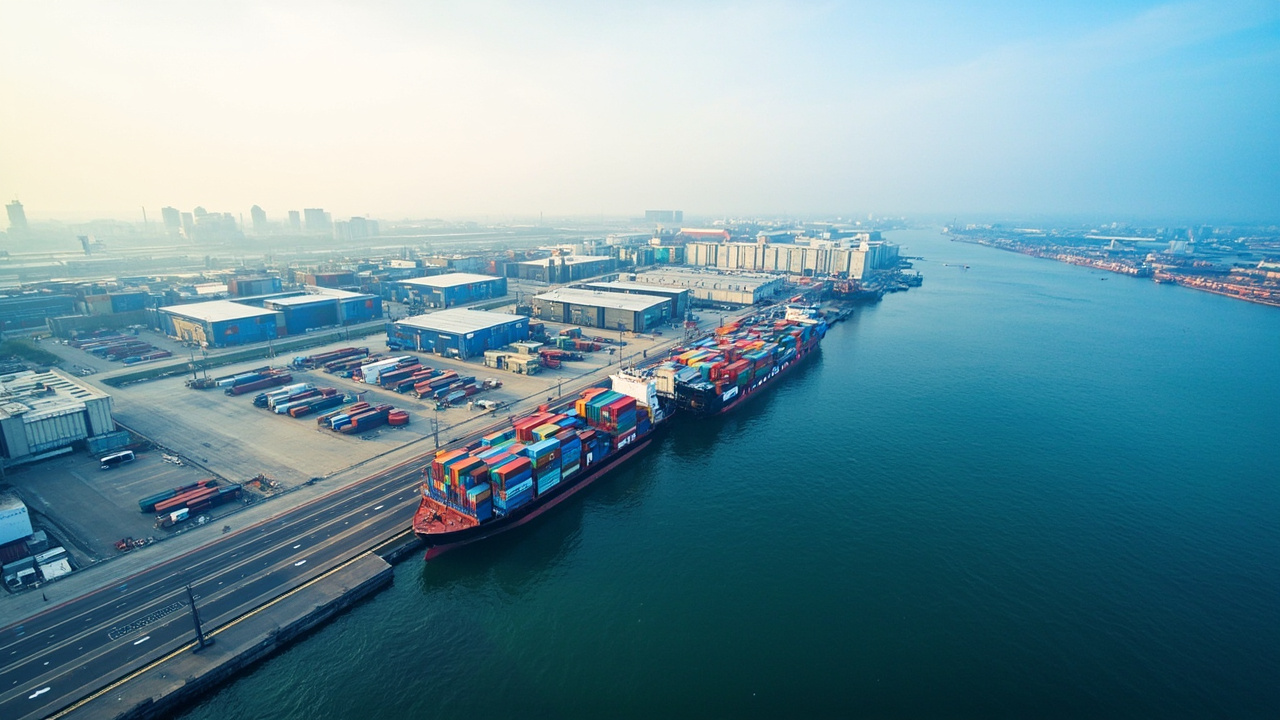
Ningbo-Zhoushan Port is the world's third-busiest container port by throughput, handling over 30 million TEUs annually. For vibratory feeder manufacturers, this means competitive freight rates, frequent sailings to major destinations, and minimal inland transportation costs. A feeder manufactured in Ningbo can be loaded onto an export vessel within 50 kilometers of the factory gate.
Compare this to inland manufacturing locations where parts must travel hundreds of kilometers by truck or rail to reach a coastal port. Each additional logistics segment adds cost, time, and handling risk.
Proximity to Shanghai
Ningbo sits approximately 200 kilometers south of Shanghai, connected by highway and soon by high-speed rail freight. This proximity provides access to Shanghai's international airport for urgent air freight shipments, financial services for trade financing, and a vast pool of engineering talent graduating from Shanghai universities.
Shanghai's Pudong International Airport offers direct cargo flights to Europe, North America, and Southeast Asia. When a customer needs a replacement controller or critical spare part urgently, Ningbo manufacturers can deliver to the airport and have it airborne within hours.
Zhejiang's Manufacturing Ecosystem
Zhejiang Province has one of China's highest densities of private manufacturing enterprises. Beyond vibratory feeders, the province produces machinery, electrical equipment, automotive components, and consumer goods. This dense manufacturing ecosystem creates demand for automation equipment—including vibratory feeders—while simultaneously supplying the components and services needed to produce that equipment.
Supply Chain Depth and Vertical Integration
The most powerful competitive advantage of the Ningbo cluster is its deep, specialized supply chain. Vibratory bowl feeder manufacturing requires numerous components and services, many of which are available within the cluster.
| Component/Service | Local Availability | Impact on Manufacturing |
|---|---|---|
| Stainless steel sheet (SUS304/316) | Multiple distributors within 30km | Same-day material procurement, competitive pricing |
| Electromagnetic coils | Specialized winding shops in cluster | Custom coil specifications, fast turnaround |
| Vibration springs | Dedicated spring manufacturers | Consistent spring rate, fatigue resistance |
| CNC machining services | Extensive machine shop network | Precision tooling fabrication, quick iterations |
| Polyurethane coating | Specialized coating applicators | Delicate part protection, noise reduction |
| Electronic controllers | Local PCB assembly houses | Custom controller features, fast prototyping |
| Precision bearings | Regional distribution centers | Reliable supply for drive units |
| Export packaging and crating | Specialized packaging suppliers | Professional export preparation |
This supply chain density enables Ningbo manufacturers to respond quickly to custom orders, iterate designs rapidly, and maintain competitive costs without sacrificing quality. When a design engineer needs to modify a coil specification or test a new polyurethane formulation, local suppliers can deliver within days.
Comparison with Other Chinese Manufacturing Clusters
While Ningbo dominates vibratory feeder manufacturing, other Chinese industrial clusters compete in related automation equipment segments. Understanding these differences helps buyers choose the right sourcing region for their specific needs.
Ningbo vs. Dongguan (Pearl River Delta)
Dongguan, in Guangdong Province near Shenzhen, is China's electronics manufacturing capital. Its vibratory feeder suppliers specialize in small precision parts for electronics assembly—SMD components, connectors, small plastic pieces. Dongguan manufacturers excel at high-speed feeding of tiny parts and integration with electronics production equipment.
However, Dongguan has suffered from severe cost inflation over the past decade. Labor costs, facility rents, and environmental compliance expenses have risen sharply, pushing commodity production inland or to Southeast Asia. Ningbo maintains a cost advantage while offering comparable engineering quality for most feeder applications.
Dongguan's logistics infrastructure—proximity to Shenzhen and Guangzhou ports—is excellent, but Ningbo's port capacity and shipping frequency are superior for heavy machinery exports.
Ningbo vs. Suzhou (Yangtze River Delta)
Suzhou, near Shanghai in Jiangsu Province, hosts many foreign-invested automation equipment manufacturers and their Chinese suppliers. The Suzhou cluster emphasizes high-precision equipment for semiconductor, medical device, and advanced electronics applications.
Suzhou manufacturers typically command premium prices reflecting their precision focus and higher operating costs. Ningbo offers better value for standard and moderately complex custom feeders, while Suzhou may be preferable for ultra-high-precision applications requiring cleanroom compatibility or sub-micron positioning accuracy.
Ningbo vs. Tianjin (Bohai Rim)
Tianjin serves northern China's heavy industrial base. Its automation suppliers specialize in large, robust equipment for automotive and appliance manufacturing. Vibratory feeders from this region tend to be heavier-duty, with thicker gauge construction and higher power drives.
For typical parts feeding applications involving small to medium components, Ningbo manufacturers offer more relevant experience and better design refinement. Tianjin may be preferable for very large parts or harsh industrial environments.
Ningbo vs. Inland Emerging Regions
Cities like Wuhan, Chengdu, and Changsha have attracted manufacturing investment with lower costs and government incentives. Some vibratory feeder production has relocated to these inland areas.
However, inland clusters lack the deep supply chain ecosystem that Ningbo has developed over decades. Critical components may require procurement from coastal suppliers, extending lead times. Engineering talent pools are shallower, and export logistics involve additional transportation segments. For buyers prioritizing lowest possible price on simple standard feeders, inland suppliers may be worth considering. For custom projects or time-sensitive orders, Ningbo's ecosystem advantages are decisive.
Quality and Innovation Trends in Ningbo
The Ningbo vibratory feeder cluster has evolved significantly in quality and technical sophistication. Early manufacturers competed primarily on price, sometimes sacrificing material quality and process control. Today's leading Ningbo manufacturers have invested in the systems and capabilities needed for international markets.
ISO 9001 certification is now standard among export-oriented Ningbo manufacturers. Some have pursued additional certifications: ISO 14001 for environmental management, CE marking for European market access, and UL component recognition for North American electrical safety compliance.
Engineering capabilities have advanced with adoption of 3D CAD software, CNC machining centers, and in some cases finite element analysis for vibration simulation. The best manufacturers now offer design services that rival Western engineering consultancies at a fraction of the cost.
Innovation in the cluster includes development of smart feeders with integrated sensors and IoT connectivity, flexible feeding systems combining vibration with vision-guided robotics, and advanced surface treatments for specialized applications. These innovations emerge from the competitive pressure of serving demanding international customers alongside cost-sensitive domestic buyers.
Practical Considerations for Buying from Ningbo
International buyers sourcing vibratory feeders from Ningbo should understand several practical aspects of working with this cluster.
Factory visits are straightforward. Ningbo Lishe International Airport receives domestic flights from major Chinese cities and limited international connections. Most Ningbo manufacturers are located within a 30-minute drive from the airport or downtown area. A well-planned visit can include 3-4 factory tours in a single day.
Language capability varies. Leading export manufacturers employ English-speaking staff, often engineers who can discuss technical specifications fluently. Smaller or domestically focused manufacturers may require translation support.
Payment practices follow Chinese export norms: typically 30% deposit, 70% before shipment, via wire transfer. Some established manufacturers accept letters of credit for large orders. Currency is usually quoted in US dollars or euros for international orders.
Lead times for standard feeders range from 2-4 weeks. Custom designs require 6-10 weeks depending on complexity. Shipping by sea to Europe takes 25-35 days; to North America 20-30 days; to Southeast Asia 7-14 days. Air freight reduces transit to 3-7 days but increases cost significantly.
Huben Automation's Role in the Ningbo Cluster
Huben Automation is headquartered in Ningbo, strategically positioned to leverage the cluster's supply chain advantages while maintaining direct control over engineering and manufacturing quality. Our location provides same-day access to specialized suppliers of coils, springs, controllers, and precision machined components.
Our facility embodies the cluster's evolution from price competition to quality engineering. We maintain ISO 9001 certification, CE-marked products, and engineering processes that meet international standards. Our export experience spans 30 countries, with established logistics relationships that ensure reliable delivery.
We encourage prospective customers to visit our Ningbo facility and observe how cluster advantages translate into manufacturing capability. For those unable to travel, we provide comprehensive video documentation of our production processes and quality testing. Explore our vibratory bowl feeder products or our China manufacturer comparison guide for additional context.
Frequently Asked Questions
Why has Ningbo specifically become a vibratory feeder hub rather than other Chinese cities?
Ningbo's emergence reflects a combination of historical metalworking skills, geographic advantages, entrepreneurial private enterprise culture, and self-reinforcing cluster effects. The city's manufacturing tradition provided foundational capabilities, while port access and proximity to Shanghai enabled export growth. Once initial feeder manufacturers succeeded, knowledge spillovers and supplier specialization attracted more entrants, creating the dense ecosystem that exists today.
Are Ningbo vibratory feeder manufacturers cheaper than European or Japanese suppliers?
Yes, typically 40-60% less expensive for equivalent specifications. This cost advantage comes from lower labor costs, deep local supply chains, and intense competition within the cluster. However, the gap narrows for highly complex custom systems where engineering labor represents a larger share of total cost. The value proposition is strongest for standard and moderately complex custom feeders.
How does quality from top Ningbo manufacturers compare to Western brands?
Leading Ningbo manufacturers now match Western quality for most applications. They use identical materials—SUS304 stainless steel, Japanese electromagnetic coils, European bearings—and maintain comparable dimensional tolerances. Where differences persist, they are typically in documentation depth, long-term spare parts availability, and brand reputation rather than fundamental equipment performance.
Can I visit multiple Ningbo manufacturers in a single trip?
Yes, this is one of the cluster's advantages for buyer evaluation. Most manufacturers are located within a 50-kilometer radius, allowing 3-4 factory visits per day with proper scheduling. We recommend coordinating visits in advance and preparing consistent technical requirements to enable meaningful comparison.
What industries do Ningbo feeder manufacturers primarily serve?
The cluster serves diverse industries: automotive components, electronics assembly, medical devices, consumer goods, hardware, and packaging. Individual manufacturers often develop specializations based on their engineering strengths and customer history. Huben Automation, for example, has deep experience in automotive, electronics, and medical device feeding applications.
Is the Ningbo cluster at risk of relocation to lower-cost regions?
Some commodity production has moved inland or to Southeast Asia, but the Ningbo cluster's deep supply chain and specialized knowledge create stickiness for higher-value manufacturing. Custom engineering, rapid prototyping, and quality-sensitive production remain concentrated in Ningbo because these activities benefit most from the ecosystem. The cluster is evolving upmarket rather than disappearing.
Conclusion
Ningbo's dominance in vibratory bowl feeder manufacturing is the result of decades of accumulated expertise, strategic geography, and self-reinforcing cluster dynamics. For international buyers, sourcing from this cluster offers access to engineering sophistication, manufacturing quality, and competitive pricing that is difficult to match elsewhere.
The cluster's evolution from price competition to quality engineering means that leading Ningbo manufacturers now compete on capability and reliability rather than cost alone. Buyers who understand this evolution and evaluate suppliers accordingly can build productive, long-term partnerships.
Huben Automation is proud to be part of the Ningbo vibratory feeder manufacturing tradition. We combine cluster advantages with international quality standards and export experience. Contact us to discuss your project requirements, or learn more about evaluating vibratory feeder suppliers to make informed sourcing decisions.
Siap Mengotomasi Produksi Anda?
Dapatkan konsultasi gratis dan penawaran detail dalam 12 jam dari tim engineering kami.