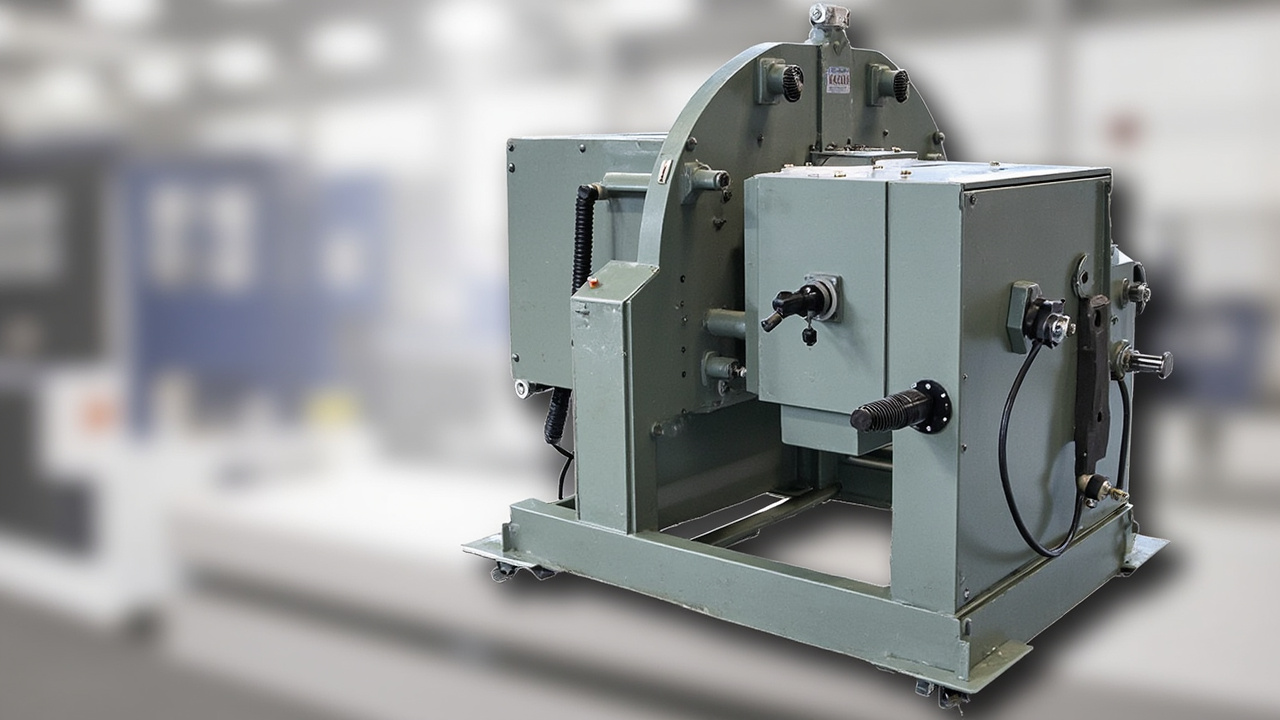
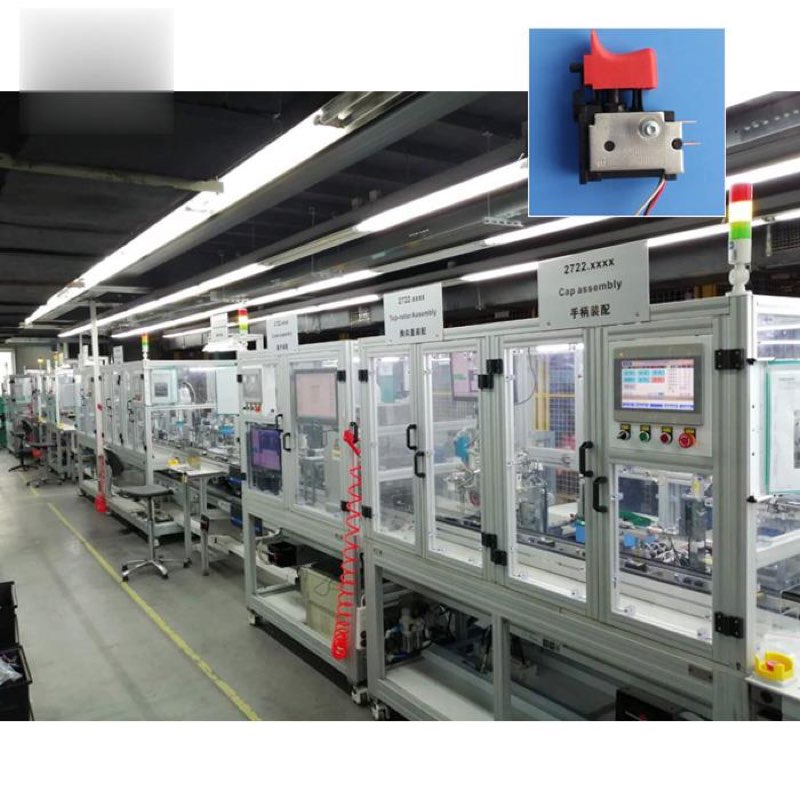
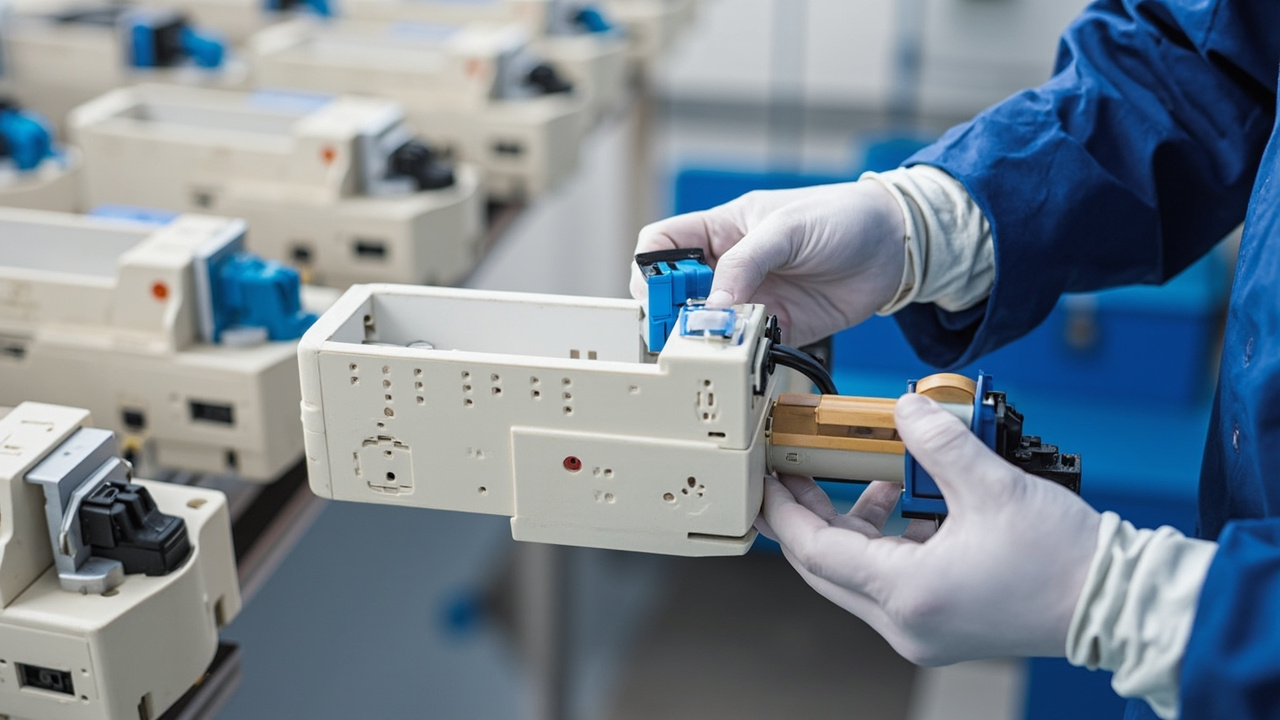
Industrial Vibration Feeders from China: Heavy-Duty & High-Speed Options

What Defines an Industrial Vibration Feeder?
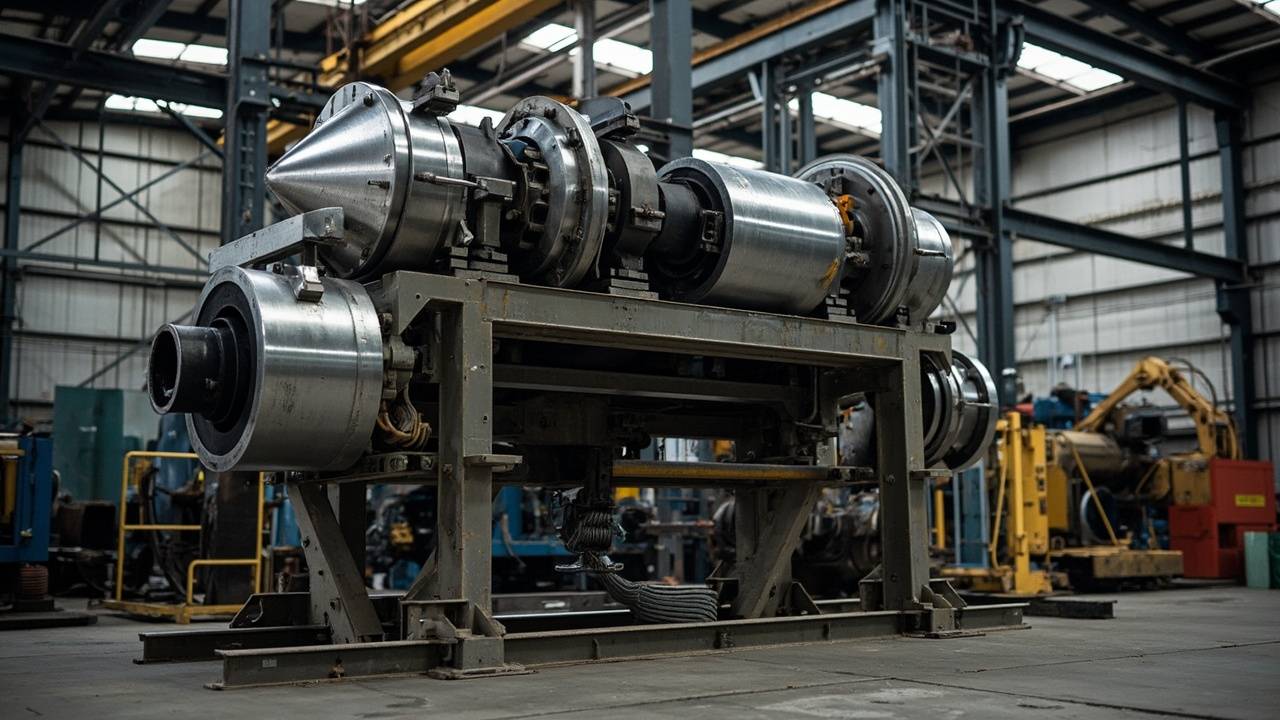
Industrial vibration feeders occupy a distinct category within the broader parts feeding market. Unlike standard feeders designed for light-duty assembly stations or laboratory automation, industrial feeders must survive the harsh realities of factory floors running three shifts, seven days a week. They handle larger, heavier parts at higher feed rates, often in environments where dust, oil mist, temperature swings, and occasional operator abuse are normal operating conditions rather than exceptional events.
At Huben Automation, we define industrial-grade feeders as systems rated for continuous operation exceeding 6,000 hours annually, handling parts weighing over 50 grams or measuring more than 30mm in critical dimensions, and achieving feed rates above 200 parts per minute for simpler geometries. These specifications demand fundamentally different engineering approaches than those used for lighter-duty equipment. Buyers seeking industrial vibration feeder China suppliers should understand these distinctions to evaluate proposals accurately.
Heavy-Duty Construction Features
The physical construction of an industrial feeder must account for forces and wear patterns that would destroy standard equipment. Bowl thickness, base casting mass, spring pack design, and drive unit sizing all scale with duty level. A bowl that performs adequately for 8-hour daily shifts may crack at the base mounting flange within months when pushed to continuous operation.
Our heavy duty vibratory feeder China designs use bowls fabricated from 3mm to 5mm thick stainless steel rather than the 1.5mm to 2mm common in light-duty units. The increased material thickness provides stiffness that prevents flexural fatigue, reduces acoustic noise by raising the bowl's natural frequency above the operating range, and extends wear life when handling abrasive parts such as castings or forgings. For extreme applications involving very heavy parts or severe impact loading, we offer bowls with reinforced mounting rings and gusseted track transitions.
The drive base receives equal attention. Industrial feeders use cast iron or heavy welded steel bases rather than stamped aluminum or light castings. Mass matters for vibration isolation and stability; a base that is too light will transmit excessive vibration to the mounting structure and may walk across the floor during operation. Our industrial bases typically weigh 40-120 kilograms depending on bowl size, with integrated isolation mounts that reduce transmitted vibration by 80% compared to unisolated designs.
High-Speed Feeding Mechanics
Achieving high feed rates while maintaining orientation accuracy represents one of the central engineering challenges in industrial feeder design. Simply increasing vibration amplitude to push parts faster eventually causes tumbling, disorientation, and track overflow. Effective high-speed design requires optimizing the entire part path from bowl bottom to discharge point.
Track geometry for high speed feeder manufacturer China systems uses steeper climb angles than standard feeders, typically 3 to 5 degrees rather than 1 to 2 degrees. The steeper angle increases the forward velocity component of vibration-induced motion, moving parts along the track faster without requiring higher amplitude. However, steeper angles also increase the tendency for parts to slide backward between vibration cycles, so the track surface finish and tooling design must compensate.
Multiple discharge lanes become essential at high feed rates. A single-lane feeder capable of 150 parts per minute cannot simply be pushed to 300 parts per minute without overwhelming downstream equipment and increasing jam frequency. Our industrial designs frequently incorporate 2 to 4 parallel discharge lanes, each fed from a common bowl but independently tooled and controlled. This approach maintains manageable part density in each lane while achieving aggregate rates of 400-800 parts per minute for suitable components.
Sensor integration prevents the overflow conditions that plague high-speed installations. Level sensors in the bowl monitor part quantity and signal the supply hopper to pause when capacity is reached. Optical sensors at each discharge lane detect jams or starvation and trigger automatic adjustments or alarms. These sensors are not optional accessories for industrial feeders; they are essential components that protect both the feeder and downstream equipment from damage.
Large Bowl Design and Manufacturing
Industrial applications often require bowl diameters of 600mm to 1,200mm, dimensions that push the boundaries of vibratory feeder engineering. Large bowls present challenges in maintaining uniform vibration amplitude around the circumference, preventing standing wave patterns that create dead zones where parts do not move, and ensuring structural integrity under cyclic loading.
Our large capacity vibratory feeder China manufacturing process begins with finite element analysis of each bowl design. We model the vibration modes to identify natural frequencies and nodal points where motion amplitude drops to zero. The bowl geometry is then adjusted to separate operating frequencies from natural frequencies by at least 15%, preventing resonance that would cause uneven feeding or excessive stress. This analysis is particularly important for bowls exceeding 800mm diameter, where the first bending mode can fall within the normal operating range if not carefully designed.
Manufacturing large bowls requires specialized forming equipment. We use CNC spinning machines capable of handling blanks up to 1,500mm diameter, producing the conical bowl shape with consistent wall thickness and smooth internal surfaces. Welding of track sections is performed by certified welders using automated TIG processes that minimize distortion and heat-affected zone size. Each large bowl receives stress-relief heat treatment after fabrication to prevent stress corrosion cracking during service.
Drive Systems for Industrial Duty
The electromagnetic drive unit is the heart of any vibratory feeder, and industrial applications demand units with substantially higher power ratings and thermal capacity than standard versions. Continuous operation at high amplitude generates significant heat in the drive coil, and inadequate thermal management leads to insulation degradation and premature failure.
Our industrial feeders use drive units with Class H insulation (rated to 180°C) rather than the Class B (130°C) common in light-duty units. Coil windings are vacuum-impregnated with high-temperature varnish that improves heat transfer and prevents moisture ingress. Magnetic laminations are 0.5mm thick high-silicon steel that reduces eddy current losses and associated heating. These features add cost but are essential for reliability in continuous-duty applications.
Controller selection matters equally. Industrial feeders require controllers with current ratings 50-100% higher than the drive unit's nominal current to handle the inrush and overload conditions that occur during jam recovery or bowl loading. We specify controllers with true RMS current measurement and thermal modeling that predicts coil temperature rather than simply measuring instantaneous current. This predictive approach prevents thermal damage by reducing amplitude before critical temperatures are reached.
Environmental Protection and Sealing
Factory environments expose feeders to conditions that would quickly disable unprotected equipment. Metalworking operations generate abrasive dust and chips. Food and pharmaceutical production requires washdown compatibility. Outdoor or unheated installations subject feeders to temperature extremes and condensation.
Our industrial parts feeder China designs offer protection levels from IP54 (dust and splash resistant) to IP69K (high-pressure steam washdown) depending on application requirements. Sealing measures include gasketed controller enclosures, potted sensor connections, and sealed drive units with labyrinth seals that exclude contaminants while allowing thermal expansion. For extremely dusty environments such as foundries or cement plants, we can provide positive-pressure enclosures that maintain clean air inside the controller housing.
Temperature compensation extends operating range. Electromagnetic drive force varies with coil temperature, causing amplitude drift as the drive warms up. Our industrial controllers include temperature compensation algorithms that adjust drive current to maintain constant vibration amplitude across the full operating temperature range. This feature is essential for outdoor installations or processes where ambient temperature varies significantly between day and night shifts.
Industrial Feeder Applications by Industry
The following table summarizes typical industrial feeder specifications across major application sectors:
| Industry | Typical Part Weight | Bowl Size | Feed Rate | Key Requirements |
|---|---|---|---|---|
| Automotive Forging | 100-500g | 800-1200mm | 60-120/min | Impact resistance, heavy-duty base, heat tolerance |
| Metal Casting | 50-300g | 600-1000mm | 80-150/min | Abrasion-resistant coating, dust sealing, robust tooling |
| Construction Fasteners | 30-200g | 500-800mm | 120-200/min | High speed, multiple lanes, thread protection |
| Agricultural Equipment | 80-400g | 700-1100mm | 40-100/min | Rugged construction, outdoor rating, low maintenance |
| Food Processing | 10-100g | 400-700mm | 150-400/min | Stainless steel 316L, FDA coatings, washdown compatible |
| Recycling & Sorting | 20-150g | 600-900mm | 100-300/min | Abrasion resistance, multi-material compatibility |
| Heavy Electrical | 150-1000g | 800-1200mm | 30-80/min | Very heavy base, low frequency, gentle handling |
These specifications illustrate the diversity of industrial feeding requirements. A feeder designed for automotive forging would be entirely unsuitable for food processing, and vice versa. Application-specific engineering is not a marketing phrase but a technical necessity.
Reliability and Maintenance Planning
Industrial feeders must deliver predictable performance with minimal unplanned downtime. Mean time between failures (MTBF) targets for industrial applications typically exceed 20,000 hours, compared to perhaps 8,000 hours acceptable for light-duty use. Achieving this reliability requires both robust design and disciplined maintenance.
We provide detailed maintenance schedules with each industrial feeder, specifying inspection intervals, replacement part numbers, and expected service life for wearable components. Spring packs, the most frequently replaced item, typically last 8,000 to 15,000 hours depending on operating amplitude. Drive coils in industrial units should exceed 30,000 hours under normal conditions. Bowl wear life varies enormously with part abrasiveness; a feeder handling polished stainless steel fasteners may last indefinitely, while one processing sand-cast iron may require bowl refurbishment every 2-3 years.
Condition monitoring extends component life and prevents catastrophic failures. Vibration sensors on the bowl detect changes in motion characteristics that indicate spring degradation or drive problems. Temperature sensors in the drive coil provide early warning of insulation degradation. Current monitoring reveals mechanical issues such as bearing seizure or bowl obstruction. Our industrial controllers can integrate these sensors and provide predictive maintenance alerts through standard industrial communication protocols.
Integration with Downstream Equipment
Industrial feeders rarely operate in isolation. They feed stamping presses, forging hammers, CNC machines, assembly stations, packaging lines, and inspection systems. Each downstream process imposes specific requirements on feeder discharge timing, part presentation geometry, and communication protocols.
We design discharge chutes and linear tracks that match the downstream equipment's input requirements. For press feeding, this may mean orienting parts for robotic pickup with specific gripper clearances. For assembly stations, we may need to present parts at exact elevations and angles for direct insertion. For packaging lines, multiple lanes may need to converge into a single file for counting and bagging. These integration details often consume more engineering effort than the feeder itself.
Communication with plant control systems is standard for industrial installations. Our controllers support digital I/O, Modbus RTU/TCP, Profinet, and EtherNet/IP protocols, allowing the feeder to exchange status information and receive commands from the plant PLC or SCADA system. This integration enables automatic changeover when production switches between part numbers, centralized monitoring of feeder health, and coordination with upstream and downstream equipment.
Selecting an Industrial Feeder Manufacturer
The industrial feeder market includes both specialized manufacturers and generalists who attempt to cover all applications. When evaluating potential suppliers for demanding applications, buyers should assess specific capabilities rather than general reputation.
Ask about the largest and heaviest parts the manufacturer has successfully fed. Request references from installations running continuous duty for more than two years. Inquire about failure modes and mean time to repair for their industrial products. A manufacturer with genuine heavy-duty experience will have detailed knowledge of these metrics; one without it will speak in generalities.
Factory inspection reveals much about manufacturing capability. Look for large-format fabrication equipment, stress-relief ovens, and vibration test stands. Ask to see finite element analysis reports for large bowl designs. Review the controller's software to verify it includes industrial features such as condition monitoring and network communication.
At Huben Automation, we specialize in industrial-grade feeding systems with proven performance in demanding applications worldwide. Our engineering team includes specialists in heavy-duty mechanical design, industrial control systems, and application integration. We welcome challenging applications that other manufacturers decline.
Frequently Asked Questions
How do industrial feeders differ from standard vibratory bowl feeders?
Industrial feeders use thicker bowl material, heavier bases, higher-capacity drive units, and more robust controllers than standard feeders. They are designed for continuous 24/7 operation, higher feed rates, larger parts, and harsher environments. Standard feeders typically handle parts under 30mm and 20g in light-duty applications, while industrial feeders manage parts exceeding 50mm and 100g in demanding factory conditions.
What is the maximum feed rate achievable with industrial vibration feeders?
Feed rate depends on part geometry, orientation complexity, and downstream equipment capacity. For simple symmetrical parts such as cylindrical rollers or spheres, rates exceeding 1,000 parts per minute are achievable with multi-lane designs. For complex parts requiring precise orientation, 100-300 parts per minute is more typical. We evaluate each application to determine the maximum reliable rate rather than quoting theoretical numbers that cannot be sustained in production.
Can industrial feeders handle hot or oily parts from forging and machining operations?
Yes, with appropriate design modifications. Hot parts up to 200°C require heat-resistant bowl coatings and possibly water-cooled bases. Oily parts need specially textured track surfaces that maintain grip despite lubricant films, along with oil collection and drainage provisions. We have extensive experience feeding forged automotive components and machined parts directly from production equipment, and we design each system for the specific thermal and contamination conditions present.
What communication protocols do your industrial feeders support?
Our standard industrial controllers support digital I/O, Modbus RTU, Modbus TCP, Profinet, and EtherNet/IP. Custom protocol implementations are available for specific plant requirements. All protocols support standard commands such as start/stop, amplitude adjustment, and status reporting, plus industrial-specific functions including batch counting, fault diagnostics, and preventive maintenance alerts.
How long should an industrial feeder last before major overhaul?
With proper maintenance, our industrial feeders typically operate 8-12 years before requiring major refurbishment. Bowls may need recoating or welding repair every 3-5 years depending on part abrasiveness. Drive units should exceed 10 years of continuous service. Spring packs require replacement every 1-2 years. We offer refurbishment services that restore feeders to original performance at a fraction of replacement cost.
Do you provide installation and commissioning support for international customers?
Yes, we provide comprehensive installation support including remote guidance via video, on-site commissioning by our engineers where travel permits, and detailed installation manuals with alignment procedures. For customers who prefer local support, we can train your maintenance technicians at our factory before shipment. Contact our sales team to discuss support options for your location.
Conclusion
Industrial vibration feeders from China have matured into reliable, high-performance equipment suitable for the most demanding production environments. Success in heavy-duty applications requires attention to construction details, drive system capacity, environmental protection, and downstream integration that general-purpose feeders cannot provide. Buyers evaluating industrial feeder options should seek manufacturers with demonstrated experience in their specific application type and willingness to engineer solutions rather than simply supply standard products.
Huben Automation specializes in industrial-grade feeding systems engineered for continuous duty, high throughput, and harsh environments. To discuss your heavy-duty feeding requirements, visit our products page or contact our engineering team for a detailed application review.
Siap Mengotomasi Produksi Anda?
Dapatkan konsultasi gratis dan penawaran detail dalam 12 jam dari tim engineering kami.