Flexible Parts Feeding Systems: Vision-Guided & Robot-Integrated Solutions

What Is a Flexible Parts Feeder?
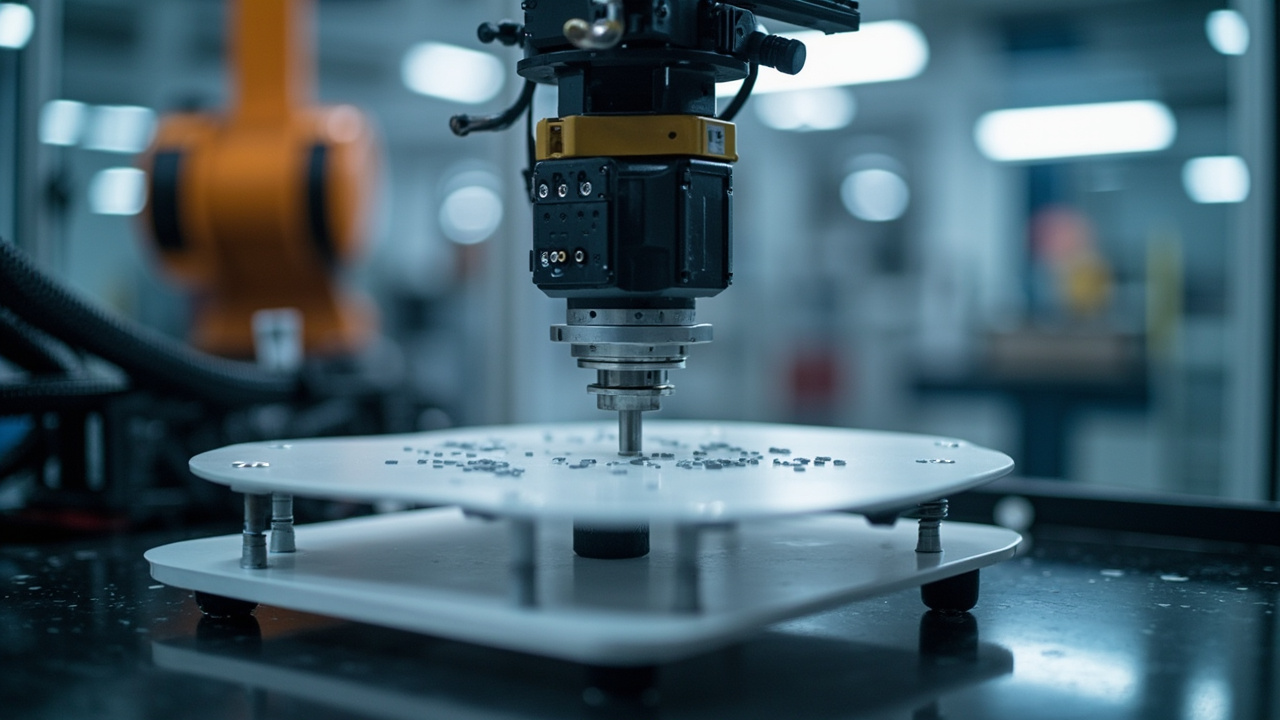
A flexible parts feeder is an advanced automated feeding system that combines a programmable vibrating platform, machine vision cameras, and robotic pick-and-place equipment to handle multiple part types without mechanical changeover. Unlike traditional vibratory bowl feeders or centrifugal feeders that require custom tooling for each specific part, flexible feeders use software-defined recipes and artificial intelligence to identify, locate, and pick parts in varying orientations from a flat surface.
The term "flexible" refers to the system's ability to accommodate different parts through software configuration rather than physical retooling. This flexibility makes these systems ideal for high-mix, low-volume production environments, contract manufacturing operations, and any application where frequent product changeovers would make dedicated mechanical feeders economically impractical.
Flexible feeding represents the convergence of three mature technologies: precision vibration control, high-speed machine vision, and collaborative robotics. Each technology has decades of industrial application, but their integration into unified feeding systems is a more recent development that is transforming how manufacturers approach parts handling. Compare flexible feeders with standard bowl feeders to understand when each approach delivers better value.
How Flexible Parts Feeders Work
The operation of a flexible parts feeder follows a continuous cycle of dispersion, detection, selection, and pickup. Understanding each stage helps explain both the capabilities and limitations of this technology.
Programmable Vibration Platform
The foundation of a flexible feeder is a flat vibrating platform, typically circular or rectangular, driven by electromagnetic or piezoelectric actuators. Unlike conventional vibratory feeders that use fixed vibration patterns, flexible feeder platforms employ programmable controllers that can generate an almost infinite variety of motion patterns.
These vibration patterns serve multiple purposes. Spreading motions distribute parts across the platform surface to prevent overlapping. Separation motions create space between individual parts so the vision system can identify each one distinctly. Flip motions tumble parts to expose different faces, increasing the probability that some parts will present in a pickable orientation. Consolidation motions gather unpicked parts toward the center for recirculation.
Advanced platforms use multiple independently controlled vibration zones, allowing different areas of the platform to move with different patterns simultaneously. This zonal control enables sophisticated part manipulation—spreading in one area while consolidating in another, for example.
Machine Vision System
An overhead camera system captures images of the platform surface and analyzes them to identify part positions and orientations. Modern flexible feeders use high-resolution industrial cameras with frame rates of 30 to 120 frames per second, enabling real-time detection even on fast-moving production lines.
The vision software performs several critical functions:
- Part detection — Identifies individual parts against the platform background using edge detection, blob analysis, or deep learning models.
- Orientation recognition — Determines the position and rotation of each detected part, typically reporting X, Y coordinates and rotation angle (Theta).
- Quality filtering — Rejects parts with visible defects, incorrect features, or orientations that the robot cannot successfully pick.
- Pick prioritization — Ranks detected parts by pickability, proximity to the robot, and strategic value for platform clearing.
Traditional vision systems relied on rule-based algorithms with carefully tuned parameters for each part type. Modern systems increasingly use deep learning and convolutional neural networks trained on thousands of part images. These AI-powered vision systems generalize better to part variations, lighting changes, and unexpected orientations, reducing setup time and improving robustness.
Robotic Picking System
A robot equipped with an appropriate end effector picks correctly oriented parts from the platform and places them into the production process. The robot receives target coordinates from the vision system and executes pick-and-place operations with precision.
Robot selection depends on part size, weight, required speed, and workspace constraints:
- SCARA robots — Fast, precise, and cost-effective for planar pick-and-place within a limited workspace. Ideal for small parts and high-speed applications.
- 6-axis articulated robots — Versatile and capable of complex motions, suitable for parts requiring reorientation during pickup or placement in confined spaces.
- Collaborative robots (cobots) — Safe to operate alongside humans without guarding, though generally slower than industrial robots. Suitable for mixed human-robot workstations.
- Delta robots — Extremely fast parallel kinematic robots ideal for high-speed lightweight part picking in packaging and food applications.
End effector design is critical for flexible feeding success. Vacuum grippers work well for flat parts with sufficient surface area. Mechanical grippers with adjustable fingers accommodate varying part sizes. Magnetic grippers handle ferrous parts. Some systems use interchangeable end effectors that change automatically based on the active recipe.
Control Integration and Recipe Management
The vibration platform, vision system, and robot must operate in tight coordination. A central controller manages the sequence: vibrate to spread parts, capture image, analyze positions, command robot picks, and repeat. Cycle times typically range from 0.5 to 3 seconds per pick depending on part size, robot speed, and vision complexity.
Recipe management software stores configuration parameters for each part type: vibration patterns, vision detection parameters, robot pick offsets, and placement coordinates. Changing between parts requires only loading the appropriate recipe—a process that takes minutes rather than the hours required for mechanical feeder changeover. Learn about recipe management best practices.
Huben Expert Tip
The key to flexible feeder performance is optimizing the interaction between vibration patterns and vision detection. A vibration pattern that spreads parts perfectly for one part type may cause another part type to nest or tangle. Invest time in developing part-specific vibration sequences during commissioning—this upfront effort pays dividends in pick rates and system reliability.
Types of Flexible Feeding Systems
Flexible feeding systems vary in their mechanical configuration, vision approach, and integration complexity. Understanding these variations helps match the right system to your application.
Vibration Plate Flexible Feeders
The most common configuration uses a single flat vibrating plate as the feeding surface. Parts are dumped onto the plate from a bulk hopper or manual loading station. The plate vibrates to spread and separate parts. An overhead camera views the entire plate surface. One or more robots pick parts from the plate.
This configuration is versatile, proven, and relatively compact. Plate sizes range from 200 mm x 200 mm for small parts to 600 mm x 600 mm for larger components. Multiple robots can serve a single large plate to increase throughput.
Conveyor-Based Flexible Feeders
Some systems replace the vibrating plate with a slow-moving conveyor belt. Parts are spread on the belt and carried past a vision station where a stationary camera captures images. Robots pick parts from the moving belt or from accumulation zones downstream of the vision station.
Conveyor-based systems offer continuous flow and can handle higher volumes than plate-based systems. They are particularly suitable for larger parts or applications where parts arrive from an upstream process rather than being loaded in bulk.
Multi-Zone Programmable Platforms
Advanced flexible feeders divide the platform into independently controlled zones, each with its own vibration actuators. This enables sophisticated part manipulation—spreading in one zone, flipping in another, and consolidating in a third. Multi-zone platforms improve handling of parts with challenging geometries and increase overall pick rates by optimizing different areas for different functions.
AI-Vision vs. Rule-Based Vision
Vision systems fall into two categories. Rule-based systems use programmed algorithms—edge detection, template matching, geometric pattern matching—to identify parts. They work well for consistent parts in controlled lighting but require significant setup time and may fail with part variations or unexpected orientations.
AI-powered vision systems use deep learning models trained on large datasets of part images. They generalize better to variations, tolerate changes in lighting and background, and often require less setup time. The tradeoff is that they need sufficient training data and may require retraining for significantly different part types.
| System Type | Platform | Best For | Throughput | Relative Cost |
|---|---|---|---|---|
| Vibration Plate | Flat vibrating surface | Small to medium parts, high mix | 20-60 ppm | Medium |
| Conveyor-Based | Moving belt | Larger parts, continuous flow | 30-100 ppm | Medium-High |
| Multi-Zone | Independently controlled zones | Complex parts, maximum flexibility | 30-80 ppm | High |
| Rule-Based Vision | Any platform | Consistent parts, stable environment | 20-80 ppm | Lower |
| AI Vision | Any platform | Variable parts, challenging conditions | 20-80 ppm | Higher |
Advantages of Flexible Feeding
Flexible feeding systems offer compelling advantages that are driving rapid adoption across manufacturing industries.
No Mechanical Tooling Changeover
The primary advantage of flexible feeders is the elimination of mechanical tooling. Changing from one part to another requires only a software recipe change—typically 1 to 5 minutes. Compare this to 30 minutes to 4 hours for vibratory bowl feeder changeover. For production environments with frequent changeovers, this time savings alone can justify the investment.
Multi-Part Capability on a Single System
A single flexible feeder can handle dozens or even hundreds of different part types by storing multiple recipes. This consolidation reduces equipment count, floor space requirements, and capital investment compared to maintaining dedicated feeders for each part. Contract manufacturers particularly benefit from this capability, as they can handle diverse customer requirements with minimal equipment.
Accommodation of Part Design Changes
When a part design changes slightly—a new material, a dimensional tweak, an added feature—traditional feeders may require tooling modification or replacement. Flexible feeders accommodate many design changes simply by updating the vision model and pick parameters. This agility is invaluable in industries with rapid product evolution like consumer electronics and medical devices.
Gentle Part Handling
Robotic picking can be gentler than mechanical orientation tooling. Parts are lifted from the platform rather than being pushed, flipped, and scraped along tracks. For delicate parts with critical surface finishes, flexible feeding can reduce damage rates compared to vibratory or centrifugal feeding.
Reduced Part-to-Part Contact
In traditional feeders, parts constantly rub against each other and the track surface during orientation. Flexible feeders spread parts on a flat surface where contact is minimized. This reduction in part-to-part contact decreases surface damage, contamination, and wear debris generation.
Limitations and Challenges
Despite their advantages, flexible feeders are not suitable for every application. Understanding their limitations prevents costly mismatches.
Lower Throughput Than Dedicated Feeders
Flexible feeders typically achieve 20 to 60 parts per minute, with high-end systems reaching 100 to 200 parts per minute under ideal conditions. This is significantly slower than vibratory bowl feeders (200-800 ppm) or centrifugal feeders (1,000-3,000 ppm) for simple parts. For high-volume single-part production, dedicated mechanical feeders remain more economical.
Higher Initial Investment
The integration of vibration, vision, and robotics makes flexible feeders more expensive than single-technology feeders. A complete flexible feeding system typically costs $5,000 to $15,000 compared to $1,000 to $5,000 for a vibratory bowl feeder. The investment is justified when changeover savings, multi-part capability, and flexibility value are factored into total cost of ownership.
Part Entanglement and Overlapping
Parts that nest, tangle, or stack on each other challenge flexible feeders. While vibration patterns can separate many part types, some geometries inevitably overlap in ways that prevent reliable vision detection or robot picking. Springs, O-rings, chain links, and parts with interlocking features are particularly problematic.
Vision System Limitations
Vision systems struggle with certain conditions: parts that are transparent or highly reflective, parts with low contrast against the platform background, environments with changing lighting conditions, and parts with featureless surfaces that provide no orientation reference. While advanced AI vision mitigates many of these challenges, some part types remain difficult to detect reliably.
Robot Workspace Constraints
The robot must reach all pickable parts on the platform while avoiding collisions with surrounding equipment. Workspace planning is critical and may limit platform size or robot selection. Parts near platform edges or in corners may be unreachable, reducing effective platform utilization.
ROI and Economic Analysis
The economic case for flexible feeders depends heavily on your production scenario. A systematic analysis reveals when flexible feeding delivers positive return on investment.
Scenario Analysis
Scenario 1: Single Part, High Volume, No Changeover
A manufacturer produces one part type at 500 parts per minute, 24 hours per day, 250 days per year. A dedicated vibratory bowl feeder at $3,000 is the clear winner. The flexible feeder's higher cost and lower throughput provide no compensating benefit. ROI favors the vibratory bowl by a wide margin.
Scenario 2: Five Parts, Weekly Changeovers
A contract manufacturer produces five different parts, with changeovers every one to two weeks. Five vibratory bowl feeders at $2,500 each cost $12,500 in equipment, plus approximately 2 hours of changeover labor per switch at $50/hour. Annual changeover cost: 25 changeovers × 2 hours × $50 = $2,500. One flexible feeder at $8,000 handles all five parts with 5-minute software changeovers. Payback period: approximately 18 months.
Scenario 3: High-Mix, Low-Volume, Daily Changeovers
A job shop produces 20 different parts in batches of 1,000 to 5,000 units, with daily or twice-daily changeovers. Dedicated feeders for 20 parts would cost $40,000+ and occupy enormous floor space. Changeover labor would be prohibitive. A flexible feeder system at $10,000 with near-instant recipe changes is the only practical solution. ROI is immediate.
Total Cost of Ownership Factors
When evaluating flexible feeders, consider these TCO components:
- Initial equipment cost — Platform, vision system, robot, controller, and integration.
- Recipe development cost — Time to create and validate recipes for each part type.
- Changeover time savings — Labor reduction from minutes instead of hours.
- Reduced tooling inventory — No need to store and maintain multiple sets of mechanical tooling.
- Floor space savings — One flexible feeder replaces multiple dedicated feeders.
- Scrap reduction — Gentler handling may reduce part damage and defect rates.
- Future product flexibility — Ability to handle new parts without capital investment.
Use our ROI calculator to model the economics for your specific production scenario.
Integration Best Practices
Successful flexible feeder implementation requires attention to integration details that are often overlooked.
Upstream Part Supply
Flexible feeders need a reliable supply of bulk parts to the platform. Options include manual loading for low-volume applications, vibratory hoppers that automatically refill the platform, and conveyor transfers from upstream processes. The supply mechanism must not introduce parts in a way that causes immediate nesting or stacking.
Downstream Part Acceptance
The robot must place picked parts into downstream equipment or containers with precision. Placement accuracy requirements depend on the application—some processes tolerate millimeter-level placement error, while others require sub-millimeter precision. The robot program must account for part geometry, gripper compliance, and placement surface geometry.
Lighting and Environmental Control
Vision system performance depends heavily on consistent lighting. Enclosed flexible feeders with integrated LED lighting eliminate ambient light variation and improve detection reliability. Dust, oil mist, and vibration from nearby equipment can degrade vision performance and should be managed through enclosure and isolation.
Safety Considerations
Industrial robots operating at high speeds require safety guarding to protect operators. Collaborative robots reduce guarding requirements but operate more slowly. Risk assessment according to ISO 12100 should identify all hazards and specify appropriate safeguards. Learn about cobot integration for feeding applications.
Frequently Asked Questions
What types of parts work best in flexible feeders?
Flexible feeders work best with rigid parts that do not nest or tangle, have visible features for orientation detection, and weigh between 1 gram and 500 grams. Ideal parts include machined components, molded plastic parts, stamped metal pieces, and electronic hardware. Parts with flat surfaces for vacuum gripping, distinct visual features for orientation, and stable geometries that do not interlock perform particularly well. Parts that are challenging include springs, O-rings, chain links, very thin flexible parts, and parts with highly reflective or transparent surfaces.
How long does it take to set up a flexible feeder for a new part?
Initial recipe creation for a new part typically takes 30 minutes to 2 hours depending on part complexity and operator experience. This includes defining vibration patterns, training the vision model, setting robot pick parameters, and validating performance. Once created, switching to an existing recipe takes 1 to 5 minutes. Compare this to 30 minutes to 4 hours for mechanical feeder changeover. The time savings become significant when changeovers are frequent.
Can flexible feeders replace all my vibratory bowl feeders?
Not in most cases. Flexible feeders and vibratory bowl feeders serve different application niches. Flexible feeders excel at high-mix, low-volume production where changeover flexibility justifies their higher cost and lower throughput. Vibratory bowl feeders remain superior for high-volume single-part production where their speed, simplicity, and lower cost deliver better economics. Most manufacturers benefit from a hybrid approach: vibratory bowls for stable high-volume products and flexible feeders for variable or low-volume products. Read our detailed comparison.
What happens when the vision system cannot identify a part?
Modern flexible feeders handle unidentified parts gracefully. The vision system flags unrecognized objects, and the vibration controller can execute a "clearing" pattern that moves unidentifiable parts to a reject area or back into the bulk supply. As the system operates, it accumulates data on challenging parts and can use this data to improve detection algorithms. Some AI-powered systems continue learning in production, gradually improving recognition rates over time.
How do I justify the higher cost of a flexible feeder to management?
Build a business case based on total cost of ownership rather than initial price alone. Quantify changeover time savings, reduced tooling costs, eliminated downtime from changeover errors, floor space savings from consolidated equipment, and the strategic value of being able to handle new parts without capital investment. For high-mix environments, the payback period is often 12-24 months. For low-mix environments, flexible feeders may not be justifiable on cost alone—consider them instead for their strategic flexibility value. Use our ROI calculator to build your business case.
Do flexible feeders require specialized programming expertise?
Modern flexible feeders are designed for operation by manufacturing technicians rather than robotics PhDs. Recipe creation uses graphical interfaces where operators define vibration sequences by selecting from pre-programmed motion patterns, train vision models by showing examples of good parts, and configure robot picks through point-and-click teaching. While some learning curve exists, most technicians become proficient after training on 5-10 different parts. Advanced optimization may benefit from experienced support, but day-to-day operation does not require specialized expertise.
Conclusion
Flexible parts feeding systems represent a significant evolution in automation technology, combining programmable vibration, machine vision, and robotics into unified solutions that handle diverse parts without mechanical changeover. For manufacturers operating in high-mix, low-volume environments, these systems can transform production economics by eliminating changeover downtime, reducing tooling inventory, and enabling rapid response to changing demand.
The technology is not a universal replacement for traditional feeders. Vibratory bowl feeders and centrifugal feeders retain clear advantages in high-volume, single-part applications where their speed, simplicity, and lower capital cost deliver superior value. The intelligent manufacturer deploys each technology where it excels: mechanical feeders for stable high-volume production, flexible feeders for variable and evolving product mixes.
Successful flexible feeder implementation requires careful attention to part suitability, vision system configuration, robot integration, and recipe management. The upfront investment in proper commissioning pays dividends in reliability and performance. Partnering with an experienced manufacturer who understands both the technology and your production requirements ensures a successful deployment.
Huben Automation designs and integrates flexible feeding systems tailored to your specific parts and production environment. Our engineering team provides comprehensive support from feasibility analysis and part testing through recipe development and production commissioning.
Interested in exploring whether flexible feeding is right for your application? Contact the Huben Engineering Team for a free part evaluation, demonstration, and ROI analysis.
Siap Mengotomasi Produksi Anda?
Dapatkan konsultasi gratis dan penawaran detail dalam 12 jam dari tim engineering kami.