Vibratory Feeder Preventive Maintenance: Schedule, Checklist & Best Practices

Why preventive maintenance is essential for vibratory feeder reliability
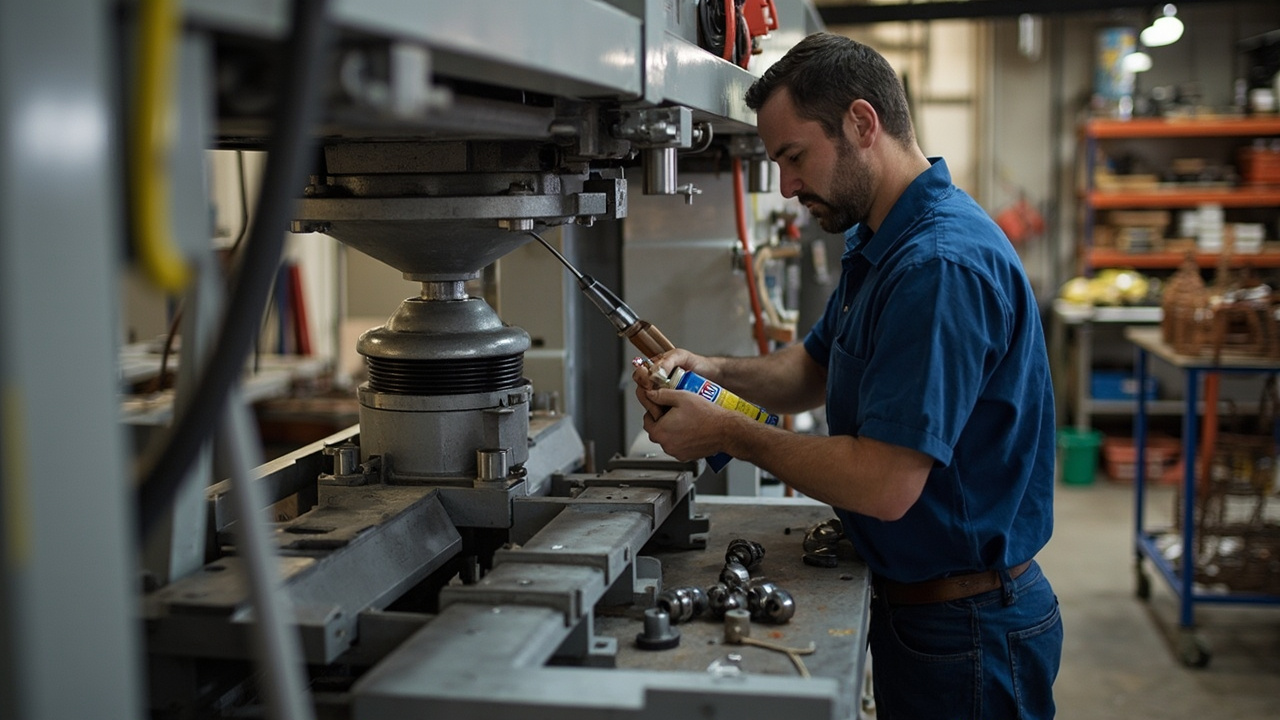
Vibratory feeders are workhorses of automated manufacturing. They operate for thousands of hours per year, often in demanding environments with dust, oil, temperature variation, and continuous vibration. Despite their mechanical simplicity, they are not maintenance-free. Neglected feeders develop problems gradually: feed rates drift, noise increases, parts begin to jam, and eventually the system fails catastrophically. When a feeder stops, the entire production line stops with it. The cost of unplanned downtime almost always exceeds the cost of a disciplined preventive maintenance program.
Preventive maintenance for vibratory feeders is not complicated, but it must be systematic. The maintenance tasks are well understood: inspect and clean the bowl, check and tighten fasteners, examine the spring packs, measure the coil air gap, verify controller settings, and replace wear parts before they fail. What separates reliable operations from chaotic ones is consistency. A feeder that receives attention every week will outlast and outperform a feeder that is only serviced when it breaks.
This article provides a complete preventive maintenance framework for vibratory feeders, organized by frequency: daily, weekly, monthly, and annual tasks. We include detailed inspection checklists, guidance on common wear parts, lubrication and coil maintenance procedures, and best practices for record keeping that turn maintenance from a cost center into a reliability driver. For related troubleshooting guidance, see our vibratory bowl feeder troubleshooting guide and vibratory feeder spare parts strategy guide.
Daily maintenance tasks: the first line of defense
Daily maintenance tasks are quick checks that take only a few minutes but catch problems before they escalate. These tasks should be performed at the start of each shift or at a consistent time each day. The operator or technician performing the checks should have a simple checklist and should record any abnormalities.
Visual inspection of the bowl and track: Look for part jams, foreign objects, excessive product buildup, and damage to the bowl coating or surface. Remove any debris using appropriate tools. Never insert hands into a running feeder. Check that the bowl is filled to the correct level. Overfilling causes recirculation and part damage; underfilling reduces feed rate and may allow parts to tumble rather than feed smoothly.
Listen to the feeder: A healthy vibratory feeder produces a consistent, rhythmic hum at its operating frequency. Changes in sound character such as rattling, clanking, grinding, or high-pitched squealing indicate mechanical problems. Rattling often means loose hardware. Grinding may indicate coil strike or worn bearings. Squealing can come from dry or damaged springs. Train operators to recognize normal sound so they can detect abnormal sound immediately.
Observe feed rate and part flow: Watch parts moving up the track. They should advance smoothly and consistently. Stalling, backsliding, or erratic movement suggests that tuning has drifted or that mechanical condition has degraded. Compare the observed feed rate to the documented baseline. A gradual decline in feed rate is often the first indicator of spring fatigue, coating wear, or coil degradation.
Check controller indicators: Verify that the controller display shows normal values for frequency, amplitude, and current. Note any alarm indicators or error codes. If the controller has a current readout, compare it to the baseline. A gradual increase in current at constant amplitude indicates increasing mechanical load, possibly from worn bearings, damaged springs, or product buildup.
| Daily task | What to check | Normal condition | Action if abnormal |
|---|---|---|---|
| Bowl visual inspection | Jams, debris, coating damage, fill level | Clean track, intact coating, correct fill level | Clear jams, clean debris, note coating damage, adjust fill |
| Sound check | Consistency, pitch, presence of unusual noises | Steady rhythmic hum at operating frequency | Investigate rattling, grinding, or squealing immediately |
| Feed rate observation | Part movement smoothness and speed | Smooth, consistent advancement at target rate | Check tuning, inspect springs, verify bowl condition |
| Controller indicators | Frequency, amplitude, current, alarms | Values match baseline, no alarms | Investigate current drift, address alarm codes |
| Discharge area | Part presentation, backup, escapement function | Correct orientation, no backup, clean handoff | Clear backup, check escapement timing, verify downstream |
Weekly maintenance tasks: verifying mechanical integrity
Weekly maintenance goes deeper than daily checks, focusing on mechanical fasteners, pneumatic systems, and wear indicators that develop over days rather than hours. Schedule 15-30 minutes per feeder for these tasks, preferably during a planned production break.
Fastener inspection and tightening: Vibration naturally loosens fasteners over time. Check all mounting bolts that secure the bowl to the drive unit, the drive unit to the base, and the base to the floor or machine frame. Use a torque wrench where torque specifications are available. Pay special attention to tooling fasteners: selector blades, baffles, and orientation features must remain securely positioned. A loose selector can cause sudden, dramatic drops in orientation accuracy.
Spring pack visual inspection: Examine the leaf springs or fibroflex springs that connect the moving bowl to the stationary base. Look for cracks, corrosion, deformation, and delamination. Even a hairline crack in one spring alters the resonant frequency and vibration characteristics of the system. If you find any damage, replace the entire spring pack rather than individual springs, because matched sets are required for balanced vibration.
Pneumatic system check: If the feeder uses air jets for part rejection, track assistance, or escapement actuation, verify the air pressure at the feeder inlet. Typical requirements are 0.4-0.6 MPa (60-90 psi). Check air filters and drain any accumulated moisture. Inspect air nozzles for clogging and verify that jets are aligned with their targets. Misaligned air jets waste compressed air and can cause part damage or misorientation.
Electrical connection inspection: Check that power cables, coil leads, and sensor cables are secure and free from chafing or insulation damage. Vibration can cause cable fatigue at connection points. Ensure that cable glands and strain reliefs are intact. Loose electrical connections cause intermittent operation, controller faults, and in extreme cases arcing or fire.
Monthly maintenance tasks: deep inspection and adjustment
Monthly maintenance requires more time, typically 30-60 minutes per feeder, and addresses components that wear or drift over weeks of operation. These tasks should be scheduled during planned maintenance windows and performed by a technician with appropriate tools and training.
Spring pack replacement assessment: Even if no visible cracks are present, springs fatigue gradually. Measure the free length of each spring and compare to the original specification. A shortened spring indicates fatigue and reduced stiffness. Check for corrosion that may not yet have caused cracking but has reduced cross-section and strength. If springs show any sign of degradation, schedule replacement before failure.
Coil air gap measurement: The air gap between the electromagnetic coil and the armature plate is critical to feeder performance and coil life. Use a feeler gauge to measure the gap at multiple points around the coil circumference. Typical specifications range from 0.5 mm to 1.5 mm depending on the drive unit design. An uneven gap indicates worn springs, loose mounting, or armature deformation. A gap that is too small risks coil strike; a gap that is too large reduces magnetic efficiency and increases current draw.
Bowl coating and track condition: Inspect the entire bowl surface for coating wear, peeling, gouging, or contamination buildup. For polyurethane-coated bowls, measure coating thickness in high-wear areas and compare to original specifications. A worn coating exposes the substrate, which increases part damage risk and alters feeding behavior. Schedule recoating when wear reaches the predetermined threshold, not after complete failure.
Controller calibration verification: On digital controllers, verify that the displayed frequency and amplitude match actual values. If the controller has an auto-tune function, run it and compare the resulting frequency to the historical baseline. A significant shift in resonant frequency indicates mechanical changes such as spring fatigue, mass changes from coating buildup, or mounting degradation. Document all readings for trend analysis.
Lubrication of non-contact bearings: If the feeder design includes pivot bearings, guide rods, or other sliding elements, apply the manufacturer-specified lubricant. Use only the recommended lubricant type and quantity. Excess lubricant attracts dust and product fines, creating a grinding paste that accelerates wear. In food-grade or cleanroom applications, verify that the lubricant is compatible with the environmental requirements.
Annual maintenance tasks: comprehensive overhaul
Annual maintenance is a thorough review of the entire feeding system, typically performed during a planned shutdown. It may require several hours per feeder and should include replacement of wear parts that are approaching end of life, regardless of whether they have failed.
Complete spring pack replacement: Even if springs appear serviceable, annual replacement is good practice for critical production feeders. Springs are relatively inexpensive compared to the cost of unplanned downtime. Replacing them on a schedule eliminates the risk of fatigue failure during production. Always replace the complete matched set, and verify that replacement springs are the correct specification for the drive unit.
Coil removal and inspection: Remove the coil assembly and inspect it for signs of overheating, strike damage, or moisture ingress. Check the coil resistance with an ohmmeter and compare to the manufacturer's specification. A significant change in resistance indicates internal shorting or open windings. Inspect the coil housing for cracks or damage to the encapsulation. Clean the coil face and the armature mating surface thoroughly.
Controller deep inspection and firmware update: Open the controller enclosure and inspect for dust buildup, moisture, loose connections, and component damage. Clean with dry compressed air. Check that cooling fans operate correctly and that ventilation openings are clear. If the controller manufacturer has released firmware updates that improve performance or add features, consider updating during the annual maintenance window.
Structural inspection: Examine the bowl, base, and frame for cracks, deformation, or corrosion. Pay special attention to weld areas and stress concentration points. Check that vibration isolation mounts are intact and correctly rated. Worn isolation mounts transfer excessive vibration to the supporting structure, which increases noise and can cause adjacent equipment problems.
Baseline re-establishment: After completing annual maintenance, run the feeder under standard conditions and record comprehensive baseline data: resonant frequency, amplitude at target feed rate, current draw, sound level, and feed rate. Compare these values to previous years to identify long-term trends. This baseline becomes the reference for the next year's daily, weekly, and monthly checks.
Common wear parts and their replacement intervals
Understanding which parts wear and at what rate allows you to stock spare parts and schedule replacements proactively. The following table summarizes the most common wear items in electromagnetic vibratory feeders.
| Wear part | Typical life | Failure mode | Consequence of failure | Inspection method |
|---|---|---|---|---|
| Leaf springs / fibroflex springs | 6-24 months | Fatigue cracking, corrosion, loss of stiffness | Feed rate drop, noise, coil strike, catastrophic mechanical failure | Visual inspection, free length measurement, resonance frequency drift |
| Bowl coating (PU, Teflon, etc.) | 12-36 months | Abrasion, peeling, chemical degradation | Part damage, changed feeding behavior, substrate corrosion | Visual inspection, thickness measurement in wear zones |
| Electromagnetic coil | 3-7 years | Insulation breakdown, overheating, moisture damage | Complete feeder shutdown, potential fire risk | Resistance measurement, thermal imaging, visual inspection |
| Armature plate | 5-10 years | Strike damage, wear, corrosion | Increased air gap, reduced magnetic efficiency, noise | Feeler gauge measurement, visual inspection for scoring |
| Selector blades and tooling | 6-18 months | Abrasion, bending, loosening | Orientation errors, part jams, feed rate reduction | Visual inspection, dimensional check against drawing |
| Vibration isolation mounts | 2-5 years | Rubber fatigue, compression set, chemical attack | Excessive vibration transmission, noise, structural damage | Visual inspection, deflection under load |
| Controller capacitors | 5-10 years | Electrolyte drying, capacitance loss | Output instability, reduced amplitude, controller failure | ESR measurement, visual inspection for bulging |
Lubrication guidelines for vibratory feeders
Most electromagnetic vibratory feeders have few lubrication points by design, because lubricant attracts contamination and the vibration environment tends to expel grease from bearings. However, some designs include pivot points, guide rods, or anti-friction bearings that require periodic lubrication.
Always use the lubricant specified by the feeder manufacturer. Different lubricants have different base oils, thickeners, and additives that are chosen for specific operating temperatures, loads, and environmental conditions. Substituting a generic lubricant may seem harmless but can lead to premature wear, seal damage, or contamination of the product.
Apply lubricant sparingly. In a vibratory feeder, excess lubricant does not stay where it is put. It migrates under vibration, attracting dust and product fines to form an abrasive slurry. In food-grade applications, excess lubricant creates a contamination risk that can trigger audit failures. Use the minimum quantity that provides adequate film thickness on the bearing surfaces.
In cleanroom and food-grade applications, verify that the lubricant is rated for the environment. Food machinery lubricants must be NSF H1 registered for incidental food contact. Cleanroom lubricants must have low particulate generation and outgassing characteristics. Document the lubricant type, lot number, and application date in the maintenance record.
Coil maintenance: protecting the heart of the drive
The electromagnetic coil is the most expensive single component in a vibratory feeder and the one whose failure causes the longest downtime. Proper coil maintenance is therefore a high-return investment.
The primary cause of coil failure is overheating. Overheating results from over-driving (excessive amplitude or frequency), inadequate cooling, coil strike (armature contacting the coil face), or prolonged operation at resonance mismatch. Monitor coil temperature during normal operation to establish a baseline. Infrared thermometers or thermal imaging cameras can detect hot spots without disassembly.
Moisture is the second major cause of coil failure. In wet or humid environments, condensation can form inside the coil housing, leading to insulation breakdown and corrosion. Ensure that the coil enclosure has adequate sealing for the operating environment. In washdown applications, use coils with IP65 or higher rating, and verify that cable entries are properly sealed.
The air gap is the third critical factor. An air gap that is too small causes coil strike, which damages both the coil face and the armature. An air gap that is too large reduces magnetic coupling, forcing the coil to draw more current for the same output and increasing heat generation. Measure the air gap monthly and adjust if necessary according to the manufacturer's procedure.
Maintenance record keeping and trend analysis
Maintenance records transform reactive repair into predictive reliability. Without records, you cannot identify trends, optimize replacement intervals, or demonstrate compliance with quality system requirements. Every feeder should have a dedicated maintenance log, whether paper-based or digital.
The minimum record set should include: date and time of maintenance, name of technician, tasks performed, measurements taken (frequency, amplitude, current, air gap, spring dimensions), parts replaced, lubricants applied, abnormalities noted, and follow-up actions required. Photographs of wear conditions can be valuable for remote troubleshooting and warranty claims.
Trend analysis is where records deliver their greatest value. Plotting coil current over time reveals gradual mechanical degradation before it causes failure. Tracking resonant frequency shows spring fatigue progression. Monitoring coating thickness predicts when recoating will be needed. These trends allow maintenance to be scheduled at the optimal time: before failure, but not unnecessarily early.
Modern digital controllers with communication capability can automate much of the data collection. Current, frequency, amplitude, and run hours can be logged automatically to a plant database or SCADA system. This automation reduces transcription errors and enables real-time alarming when parameters drift outside normal limits.
Frequently asked questions about vibratory feeder maintenance
How often should I replace the springs in my vibratory feeder?
Leaf springs and fibroflex springs typically last 6 to 24 months depending on operating conditions, part load, and environment. High-load, high-speed, or corrosive environments accelerate fatigue. Inspect springs weekly for cracks and measure free length monthly. Replace the complete matched set at the first sign of cracking, significant length change, or when resonant frequency has drifted more than 5% from baseline. Annual replacement is recommended for critical production feeders regardless of apparent condition.
What causes a vibratory feeder coil to overheat?
Coil overheating is caused by excessive current draw, which can result from over-driving (amplitude too high), operating far from resonance, a too-large air gap, mechanical binding, shorted turns in the coil, or inadequate cooling. Check the controller settings against the baseline, measure the air gap, inspect for mechanical interference, and verify that the coil enclosure ventilation is clear. Continuous operation above the coil's thermal rating will eventually cause insulation failure.
How do I know when the bowl coating needs to be replaced?
Replace the bowl coating when visual inspection reveals peeling, deep gouges, or wear-through to the substrate. For quantitative management, measure coating thickness in high-wear track areas monthly and establish a minimum acceptable thickness based on your application's part protection requirements. A gradual increase in part damage or a change in feeding behavior can also signal coating degradation even before visible wear appears.
Should I perform maintenance with the power on or off?
Most maintenance tasks require power to be locked out and verified de-energized before beginning work. This includes fastener tightening, spring inspection, air gap measurement, and coil work. The only tasks performed with power on are operational checks: observing part flow, listening to sound, and reading controller displays. Always follow your facility's lockout-tagout procedures. Never insert hands or tools into a running feeder.
What maintenance records do I need for ISO 9001 or IATF 16949 compliance?
Quality system standards require documented maintenance planning, execution records, and evidence of effectiveness. Your records should show that maintenance is planned based on equipment criticality, performed according to documented procedures, and reviewed for effectiveness. Key records include the maintenance schedule, work orders or checklists with technician signatures, measurement data, calibration records for maintenance tools, and evidence of corrective action when maintenance reveals problems.
Can I extend maintenance intervals if my feeder is running well?
Extending intervals based on condition monitoring data is sound reliability engineering, but extending them based on convenience is risky. If you have consistent measurement data showing stable parameters over multiple intervals, you may justify a modest extension. However, the default approach should be to follow the manufacturer's recommendations or your own historically validated schedule. Feeder failures are sudden and expensive; the cost of a slightly conservative interval is usually far less than the cost of unplanned downtime.
Building a maintenance culture that sustains performance
Preventive maintenance is not a set of tasks. It is a discipline and a culture. The best-maintained feeders belong to organizations where maintenance is respected as a technical function, where technicians have the time and tools to do the job properly, and where records are reviewed and acted upon by management.
The investment in preventive maintenance pays returns in multiple ways. Direct costs are reduced through fewer emergency repairs and less secondary damage from catastrophic failures. Production costs are reduced through higher uptime and more consistent feed rates. Quality costs are reduced through fewer part damage events and orientation errors. And safety costs are reduced through elimination of hazardous failure modes such as coil fires or flying debris from broken springs.
Huben Automation designs vibratory feeders for maintainability, with accessible components, clear maintenance access, and documentation that supports your preventive maintenance program. Our factory-direct support includes maintenance training, spare parts recommendations, and technical consultation to help you optimize your maintenance strategy. If you need assistance developing a maintenance plan for your feeding equipment, contact our service team. You can also explore our vibratory bowl feeder products or read our spare parts strategy guide for additional reliability planning guidance.
अपने उत्पादन को स्वचालित करने के लिए तैयार हैं?
हमारी इंजीनियरिंग टीम से 12 घंटे के भीतर मुफ्त परामर्श और विस्तृत कोटेशन प्राप्त करें।