फ्लेक्सिबल फीडिंग के लिए रोबोट एंड इफेक्टर गाइड 2026

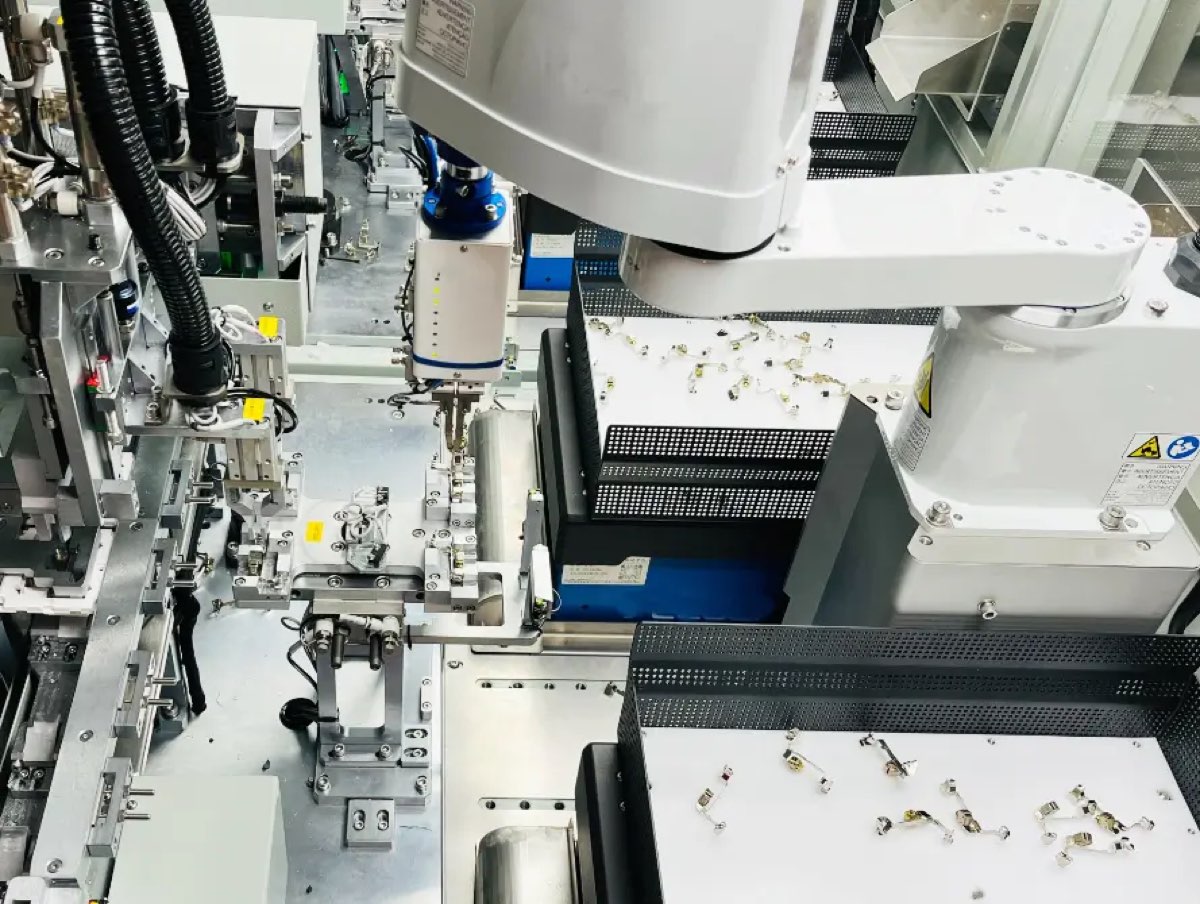
फ्लेक्सिबल फीडर performance depends on the ग्रिपर more than many teams admit
A फ्लेक्सिबल फीडर can spread parts beautifully and still miss the target cycle because the एंड इफेक्टर is wrong. That is one of the most common integration mistakes on vision-guided feeding cells.
Engineers sometimes treat the ग्रिपर as a late-stage accessory. In practice, it is part of the feeder concept. The camera can find a part, but the रोबोट still needs a pickup tool that tolerates slight position variation, clears neighboring parts, and releases reliably at the next station.
This guide looks at the practical choice between वैक्यूम, mechanical, magnetic, and custom hybrid ग्रिपरs for flexible feeding cells. It builds on our फ्लेक्सिबल फीडर रोबोट integration guide.
Why ग्रिपर choice becomes the cycle-time bottleneck
Flexible feeding produces controlled variation, not perfect certainty. Parts may be at slightly different angles, may sit near neighbors, or may present small height differences depending on the spread pattern. The ग्रिपर has to live with that reality.
वैक्यूम tools are simple, but not universal. They work well on flat accessible surfaces and badly on porous, oily, or unstable parts. Mechanical fingers add security, but they also add collision जोखिम and require better path control.
Small parts raise another issue: clearance. The camera may identify a correct pick point, but if the ग्रिपर footprint is too large, the रोबोट still cannot make the move cleanly.
| एंड इफेक्टर type | Best fit | Common weakness | Good use case |
|---|---|---|---|
| वैक्यूम cup | Flat accessible faces | Weak on porous or oily surfaces | Simple molded parts and housings |
| Two-finger ग्रिपर | Defined edge pickup | Needs clearance | Connectors and rigid small parts |
| Magnetic tool | Ferrous metal parts | Material limited | Stamped steel parts with clear access |
| Custom hybrid tool | Complex mixed constraints | Higher design effort | High-value or high-mix ऑटोमेशन cells |
Match the ग्रिपर to the part, not the रोबोट brand
The रोबोट brand matters less here than the part itself. A UR, FANUC, or Omron रोबोट can all work with the right pickup tool if the part and path are understood clearly.
वैक्यूम is often the fastest first option because it is easy to build and debug. Mechanical or hybrid tools become necessary when the part lacks a stable वैक्यूम face or when the process demands stronger अभिविन्यास control during transfer.
Where the cell runs many variants, quick-change or adaptable ग्रिपर designs deserve early attention. Otherwise the feeder may change over faster than the pickup tool can.
Rules for better end-effector selection
Most flexible-feeding projects improve when the pickup tool is designed together with the vision and spread strategy.
- Define the preferred pickup face first. A ग्रिपर without a stable pickup assumption becomes trial-and-error.
- Check clearance around the part. Vision can find the part, but the ग्रिपर still needs physical access.
- Validate release at the destination. Pickup is only half the task if the tool cannot place cleanly.
- Test sustained pick success, not only first-pick success. Production performance is what counts.
A ग्रिपर that is slightly less elegant but far more forgiving often wins on the real line.
How to validate ग्रिपर choice
Run the feeder and रोबोट together long enough to measure real pick success, not only coordinate quality. That number usually tells the truth faster than any individual subsystem metric.
Include bad-part spacing, low pick density, and recipe change conditions in the test. These are the states that often expose a weak tool.
If the cell uses inspection after placement, include release अभिविन्यास and part stability in the सत्यापन plan. The right pickup with the wrong release is still a problem.
Checklist before specifying the ग्रिपर
A better end-effector decision usually begins with a few clear inputs.
- Send the real part and preferred pickup face. The tool must be designed around actual geometry.
- Describe neighboring-part spacing on the feeder. Clearance often decides whether वैक्यूम or fingers are realistic.
- State changeover expectations. High-mix cells may justify modular tooling.
- Include placement requirements. The next station may care as much about release as pickup.
Huben ऑटोमेशन reviews flexible-feeding ग्रिपरs around part access, pickup reliability, and overall cell speed. If you want help checking an end-effector concept, send us the part data and रोबोट process details.
अपने उत्पादन को स्वचालित करने के लिए तैयार हैं?
हमारी इंजीनियरिंग टीम से 12 घंटे के भीतर मुफ्त परामर्श और विस्तृत कोटेशन प्राप्त करें।