Vibration Bowl Feeders from China: Engineering, Quality & Pricing
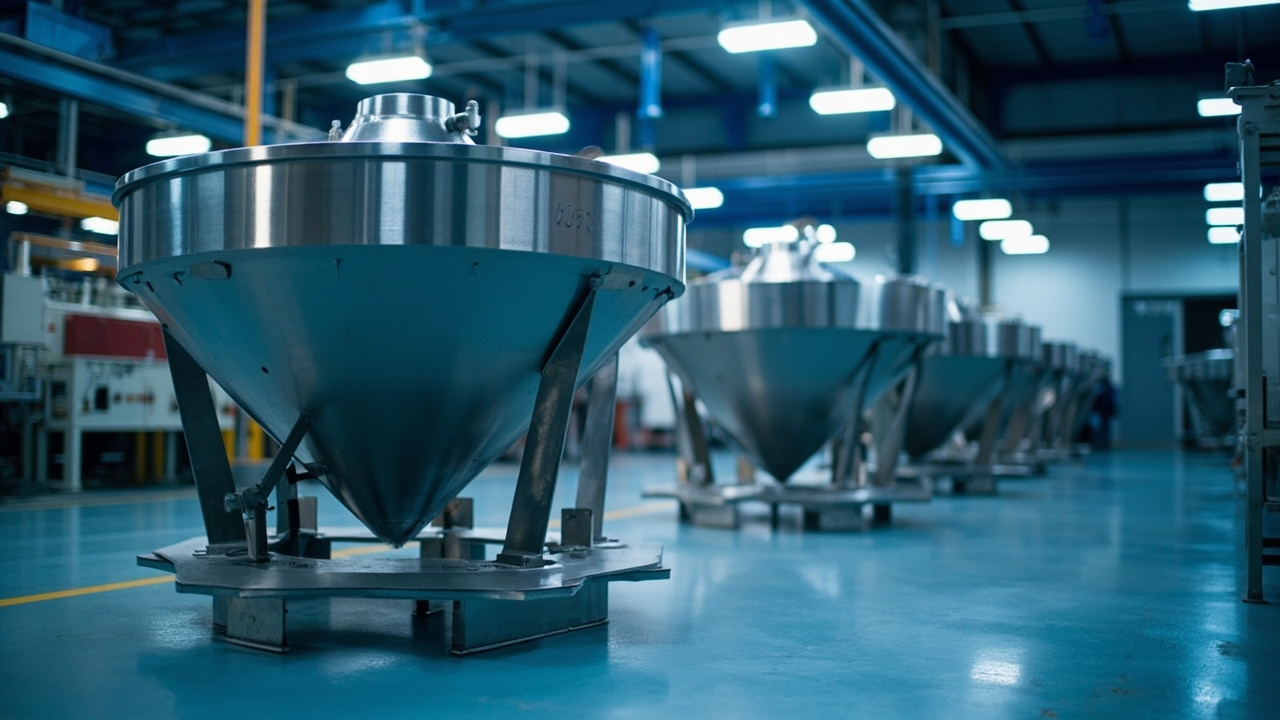
Engineering Fundamentals of Vibration Bowl Feeders
Vibration bowl feeders represent one of the most elegant solutions in industrial automation, using controlled mechanical vibration to transform chaotic bulk parts into an orderly, oriented stream. Chinese manufacturers have refined this technology over three decades, developing engineering capabilities that serve industries from electronics assembly to automotive production. Understanding the fundamental engineering principles helps buyers evaluate equipment quality and supplier competence.
The core mechanism relies on electromagnetic vibration to create controlled movement along a spiral track inside a bowl. When alternating current passes through electromagnetic coils, it generates pulsating magnetic fields that attract and release an armature attached to the bowl. This rapid oscillation—typically 50 or 60 times per second—creates micro-movements that cause parts to advance along the track. The amplitude and frequency of vibration determine feed rate, part movement characteristics, and orientation behavior.
Chinese manufacturers have mastered the electromagnetic drive systems that power vibration bowl feeders. Leading suppliers source high-grade silicon steel for magnetic cores and use precision-wound copper coils with Class F or H insulation rated for continuous operation. The drive unit design—including spring geometry, mass distribution, and magnetic gap—determines vibration characteristics that must be matched to bowl size and part weight. Quality Chinese manufacturers engineer drive systems with adjustable parameters that accommodate bowls from 100mm to 1200mm diameter.
Bowl Design and Tooling Engineering
The bowl itself is where engineering artistry meets manufacturing precision. Chinese bowl fabricators work with SUS304 stainless steel as the standard material, forming sheet metal into helical tracks through a combination of spinning, welding, and CNC machining. The track geometry—width, depth, spiral pitch, and surface finish—must be precisely matched to the parts being fed.
Track width typically exceeds part width by 1-2mm to allow free movement while preventing jamming. For cylindrical parts, the track may include a return flange that prevents parts from falling off. The spiral pitch—the vertical rise per revolution—ranges from 15mm to 50mm depending on part size and desired feed rate. Chinese engineers calculate optimal pitch based on part center of gravity, contact friction, and required orientation transitions.
Orientation tooling represents the most application-specific aspect of vibration bowl feeder design. Chinese manufacturers employ experienced tooling engineers who understand how parts behave under vibration. Common tooling elements include:
Width selectors allow parts below a threshold dimension to pass while rejecting oversized pieces. These are machined from tool steel and precisely positioned to create the correct gap.
End-to-end selectors filter parts by length, typically using a slot or bridge that catches parts oriented vertically while allowing horizontal parts to pass.
Undercut selectors capture parts by protruding features, using precisely positioned ledges that engage specific part geometry.
Air-knife separators use controlled air jets to blow away lightweight or incorrectly oriented parts without mechanical contact.
Advanced Chinese manufacturers use CAD modeling and discrete element method (DEM) simulation to validate tooling designs before fabrication. This computational approach predicts part flow behavior, identifies potential jam points, and optimizes selector geometry—reducing prototype iterations and improving first-pass success rates.
Electromagnetic Drive Systems
The electromagnetic drive is the heart of every vibration bowl feeder, and its quality directly determines reliability and performance. Chinese manufacturers offer varying drive quality levels that buyers should understand.
Premium drive units use laminated silicon steel cores with minimal eddy current losses, precision-ground to maintain consistent magnetic gaps. Copper windings use magnet wire with heavy-build insulation rated for 180°C continuous operation. Leading Chinese manufacturers source drive coils from established Japanese suppliers or produce in-house with equivalent specifications. These quality coils maintain consistent electromagnetic force over 10,000+ operating hours.
Spring systems provide the mechanical restoring force that creates resonant vibration. Chinese manufacturers typically use chrome-silicon alloy steel springs with calculated stiffness matched to bowl mass and desired vibration frequency. Spring geometry—number of leaves, thickness, and angular orientation—affects vibration direction and amplitude. Quality spring systems maintain calibration over years of operation; inferior springs fatigue quickly, causing performance degradation.
Controller technology has advanced significantly among Chinese manufacturers. Basic controllers provide simple amplitude adjustment through a potentiometer. Digital controllers add frequency tuning, soft-start ramps that prevent part spillage during startup, and sensor integration for level detection or part-present confirmation. Advanced controllers offer PLC communication via Ethernet/IP or Modbus, process monitoring, and automated tuning algorithms that optimize vibration parameters for specific parts.
Quality Benchmarks for Chinese Vibration Bowl Feeders
Evaluating vibration bowl feeder quality requires attention to specific engineering details that predict long-term performance. The following benchmarks help buyers assess Chinese-manufactured equipment.
| Quality Parameter | Premium Grade | Professional Grade | Economy Grade |
|---|---|---|---|
| Bowl material | Certified SUS304/SUS316 with mill certs | Standard SUS304 | Lower-grade stainless or carbon steel |
| Track tolerance | ±0.1mm width consistency | ±0.2mm width consistency | ±0.5mm or greater variation |
| Weld quality | TIG welded, ground flush, Ra 1.6 | TIG welded, partially ground | MIG welded, rough finish |
| Electromagnetic coils | Japanese/German origin, 10,000+ hr life | Quality domestic or imported | Basic domestic coils |
| Controller type | Digital with PLC communication | Digital with basic features | Analog potentiometer only |
| Testing documentation | Full test report with customer parts video | Basic performance test | Minimal or no testing |
| Surface coating | Polyurethane or FDA-compliant options | Standard industrial coating | No coating or basic paint |
Premium-grade vibration bowl feeders from Chinese manufacturers like Huben Automation meet or exceed these benchmarks. Bowl fabrication uses certified stainless steel with documented material composition. Tracks are CNC-machined to maintain consistent width within 0.1mm. Welds are TIG-processed with full grinding and surface finishing to Ra 1.6 or better. Electromagnetic coils are sourced from established suppliers with documented specifications and expected life ratings.
Professional-grade feeders offer reliable performance for standard applications with good quality control but may lack advanced features like comprehensive testing documentation or PLC-compatible controllers. Economy-grade feeders provide basic functionality at lower cost but compromise on material quality, manufacturing precision, and component longevity. Understanding these tiers helps buyers match equipment investment to application criticality.
Customization Capabilities
One of the strongest advantages of Chinese vibration bowl feeder manufacturers is their willingness and ability to customize equipment for specific applications. Unlike mass-produced standard models, custom-engineered feeders address unique part characteristics, integration requirements, and performance targets.
Bowl geometry customization includes diameter selection based on part size and feed rate requirements, track configuration for complex orientation sequences, and special features like multi-discharge outlets or integrated escapements. Chinese manufacturers with in-house CNC machining can produce tooling inserts with complex geometries that would be impractical with manual fabrication.
Material customization extends beyond standard SUS304. SUS316 stainless steel provides enhanced corrosion resistance for pharmaceutical and chemical applications. Titanium-coated bowls reduce wear when feeding abrasive parts. Polyurethane linings protect delicate components from metal-to-metal contact while reducing noise by 10-15 decibels.
Controller customization includes voltage and frequency configuration for different regions, special control algorithms for difficult-to-feed parts, and integration with factory automation networks. Chinese manufacturers increasingly offer IoT-enabled controllers that report operational status, feed rates, and maintenance alerts to central monitoring systems.
Integration accessories complete the customization picture. Linear feeders that extend the bowl discharge track, hopper elevators that maintain bulk part supply, and sensor systems that detect jams or empty conditions can all be engineered as part of a complete feeding solution. Chinese manufacturers with systems integration capability deliver complete turnkey solutions rather than standalone bowl feeders.
Pricing Structure and Value Analysis
Understanding how Chinese manufacturers price vibration bowl feeders helps buyers evaluate quotations and identify value opportunities.
Base bowl fabrication represents 25-35% of total cost for standard feeders. The steel material, spinning/forming labor, welding, and track machining all contribute to this component. Larger bowls require more material and longer machining time, creating the diameter-based pricing progression that buyers observe.
Electromagnetic drive units account for 20-30% of system cost. Premium drives with imported coils and advanced controllers cost significantly more than basic units. However, the drive unit's reliability directly affects operational uptime, making this an area where quality investment pays dividends.
Tooling engineering and fabrication represents 15-40% of cost depending on complexity. Simple width selectors require minimal engineering and machining. Complex multi-stage orientation with cascading selectors, air-knife separation, and precision escapements demands extensive engineering time and precision fabrication. Chinese manufacturers' integrated tooling capabilities keep these costs 50-70% below Western pricing.
Controller and electrical components range from 10% for basic analog units to 25% for advanced digital controllers with communication capabilities. The controller selection should match integration requirements—basic controllers suffice for standalone operation, while networked controllers enable Industry 4.0 connectivity.
When evaluating quotations, buyers should request detailed cost breakdowns that separate these components. This transparency reveals where a manufacturer is investing and helps identify quotations that may be cutting corners on critical elements like electromagnetic components or tooling precision.
Supplier Evaluation for Engineering Depth
Not all Chinese vibration bowl feeder manufacturers offer equivalent engineering capability. Evaluating technical depth during the quotation process helps identify suppliers capable of delivering reliable custom solutions.
Request a technical proposal that addresses your specific part and application. Capable manufacturers will ask detailed questions about part geometry, material, surface finish, and behavior under vibration. They should propose specific bowl diameter, track configuration, and tooling approach rather than simply quoting a standard model. Vague proposals that ignore your part's unique characteristics suggest limited engineering resources.
Review the manufacturer's design process. Do they provide 3D CAD models of proposed bowl designs? Can they simulate part flow using DEM or other analytical methods? Do they build prototypes before final production? Modern Chinese manufacturers increasingly employ these engineering tools, reducing risk and improving outcomes.
Assess manufacturing capability through factory documentation or virtual tours. Essential equipment includes CNC machining centers for tooling fabrication, precision welding stations, electromagnetic coil winding equipment, and testing areas where sample parts run on completed feeders. Manufacturers outsourcing critical processes like CNC machining have less quality control and longer lead times.
Verify testing protocols. Quality manufacturers test every feeder with customer parts before shipment, documenting feed rate, orientation accuracy, and continuous running performance. Request sample test reports from previous projects to evaluate testing rigor. The absence of systematic testing is a significant red flag.
Common Engineering Challenges and Solutions
Certain part characteristics create challenges for vibration bowl feeder design. Understanding how Chinese manufacturers address these challenges helps buyers evaluate supplier capability.
Lightweight parts that float or tumble rather than sliding along the track require reduced vibration amplitude and modified track geometry. Chinese engineers may add track covers, reduce spiral pitch, or incorporate vacuum assist to maintain part control. Parts below 0.5 grams present particular challenges that require specialized engineering.
Fragile parts that cannot tolerate repeated impacts with selectors or track surfaces need gentle handling solutions. Polyurethane track coatings, reduced vibration amplitude, and air-knife separation (which avoids mechanical contact) are techniques Chinese manufacturers employ. Step feeders may be recommended as an alternative for extremely delicate components.
Parts with similar orientations that are difficult to distinguish mechanically may require vision-assisted sorting downstream of the bowl feeder. Chinese manufacturers increasingly integrate vision systems with bowl feeders to verify orientation before parts proceed to assembly.
Heavy parts above 200 grams require larger drive units, reinforced bowl construction, and modified spring systems. Chinese manufacturers engineer heavy-duty feeders with drive systems rated for continuous operation under high inertial loads.
Maintenance and Longevity Considerations
Vibration bowl feeder lifespan depends on design quality, operating conditions, and maintenance practices. Chinese manufacturers vary significantly in the durability of their equipment.
Electromagnetic coils are the most common failure point, though quality coils should last 10,000+ hours under normal conditions. Signs of coil degradation include reduced vibration amplitude, overheating, or visible insulation damage. Leading Chinese manufacturers use coils with thermal protection and provide replacement procedures in their documentation.
Spring fatigue gradually reduces vibration efficiency. Chrome-silicon springs in quality feeders typically maintain performance for 3-5 years of continuous operation. Replacement springs should match original specifications exactly—incorrect spring rate changes vibration characteristics and may damage the drive unit.
Bowl wear occurs gradually, particularly at high-feed-rate applications or with abrasive parts. Track surfaces may develop wear patterns that affect part movement. Polyurethane coatings extend bowl life by 2-3x for abrasive applications. When wear becomes significant, bowl replacement or re-machining restores performance.
Controller electronics can fail due to power surges, moisture ingress, or component aging. Quality controllers with sealed enclosures and surge protection last significantly longer than basic units. Chinese manufacturers should provide controller specifications including environmental ratings and expected service life.
Frequently Asked Questions
What is the difference between a vibration bowl feeder and a vibratory bowl feeder?
These terms are interchangeable in industry usage. Both refer to bowl-shaped feeding equipment that uses vibration to orient and feed parts. Some manufacturers prefer "vibration" while others use "vibratory"—there is no technical distinction. Chinese manufacturers and international buyers use both terms synonymously.
How do I determine the right bowl diameter for my application?
Bowl diameter depends on part size, required feed rate, and orientation complexity. As a general rule from Chinese manufacturers: parts under 20mm suit 150-250mm bowls; 20-80mm parts need 300-450mm bowls; parts over 80mm require 500mm+ bowls. Higher feed rates and complex orientation generally require larger bowls to provide sufficient track length. Capable manufacturers calculate optimal diameter based on your specific requirements rather than applying generic rules.
Can Chinese vibration bowl feeders handle food-grade or pharmaceutical applications?
Yes, established Chinese manufacturers produce vibration bowl feeders that meet FDA and pharmaceutical standards. Key requirements include SUS316 stainless steel construction, FDA-compliant polyurethane coatings, smooth welds ground flush with surfaces, and documentation of material certifications. Not all Chinese manufacturers offer these specifications—verify food-grade capability before ordering. Huben Automation provides pharmaceutical-grade feeders with full material traceability and validation documentation.
What is the typical lead time for a custom vibration bowl feeder from China?
Standard feeders from stock ship within 1-2 weeks. Custom feeders typically require 4-8 weeks: 1-2 weeks for design and customer approval, 2-4 weeks for production, and 1-2 weeks for testing and preparation. Complex applications with multi-stage tooling or special materials may extend to 10-12 weeks. Air freight adds 3-7 days transit; sea freight adds 20-35 days. Planning 10-14 weeks total for custom feeders with air freight provides reasonable schedule contingency.
How much maintenance do vibration bowl feeders require?
Quality vibration bowl feeders require minimal routine maintenance. Daily tasks include checking for part accumulation, verifying proper vibration amplitude, and inspecting for visible damage. Weekly maintenance involves cleaning the bowl track and checking controller settings. Annual maintenance should include spring inspection, coil resistance measurement, and controller calibration. With proper maintenance, premium feeders operate reliably for 10+ years. Budget feeders may require more frequent attention due to lower component quality.
Can I upgrade an existing vibration bowl feeder for a different part?
Sometimes. If the new part is similar in size and geometry to the original, existing tooling may be modified or supplemented. However, significantly different parts usually require new bowl fabrication or at least extensive tooling replacement. Chinese manufacturers can evaluate your existing feeder and advise on upgrade feasibility. In many cases, purchasing a new feeder designed specifically for the new part proves more cost-effective than extensive modification, particularly when the original application remains active.
Conclusion
Vibration bowl feeders from Chinese manufacturers offer international buyers a compelling combination of engineering capability, manufacturing quality, and competitive pricing. The key to successful procurement lies in understanding the engineering fundamentals that determine feeder performance, evaluating suppliers based on technical depth rather than price alone, and establishing clear quality verification before shipment.
Premium Chinese manufacturers have invested in the engineering tools, quality systems, and export experience needed to deliver vibration bowl feeders that perform reliably in demanding international applications. By focusing on electromagnetic drive quality, bowl fabrication precision, tooling engineering capability, and systematic testing, buyers can identify suppliers capable of becoming long-term partners for automation equipment needs.
Huben Automation manufactures vibration bowl feeders at the premium export tier, with ISO 9001 certification, in-house CNC tooling fabrication, and comprehensive pre-shipment testing for every system. We encourage buyers to apply the evaluation frameworks in this guide and welcome the opportunity to demonstrate our engineering capabilities. Contact our engineering team to discuss your specific application requirements, or explore our vibration bowl feeder product specifications for detailed technical information.
¿Listo para automatizar su producción?
Obtenga una consulta gratuita y un presupuesto detallado en 12 horas por parte de nuestro equipo de ingeniería.