Vibratory Bowl Feeder Manufacturers in China: 2026 Comparison Guide
Introduction to China's Vibratory Feeder Manufacturing Landscape
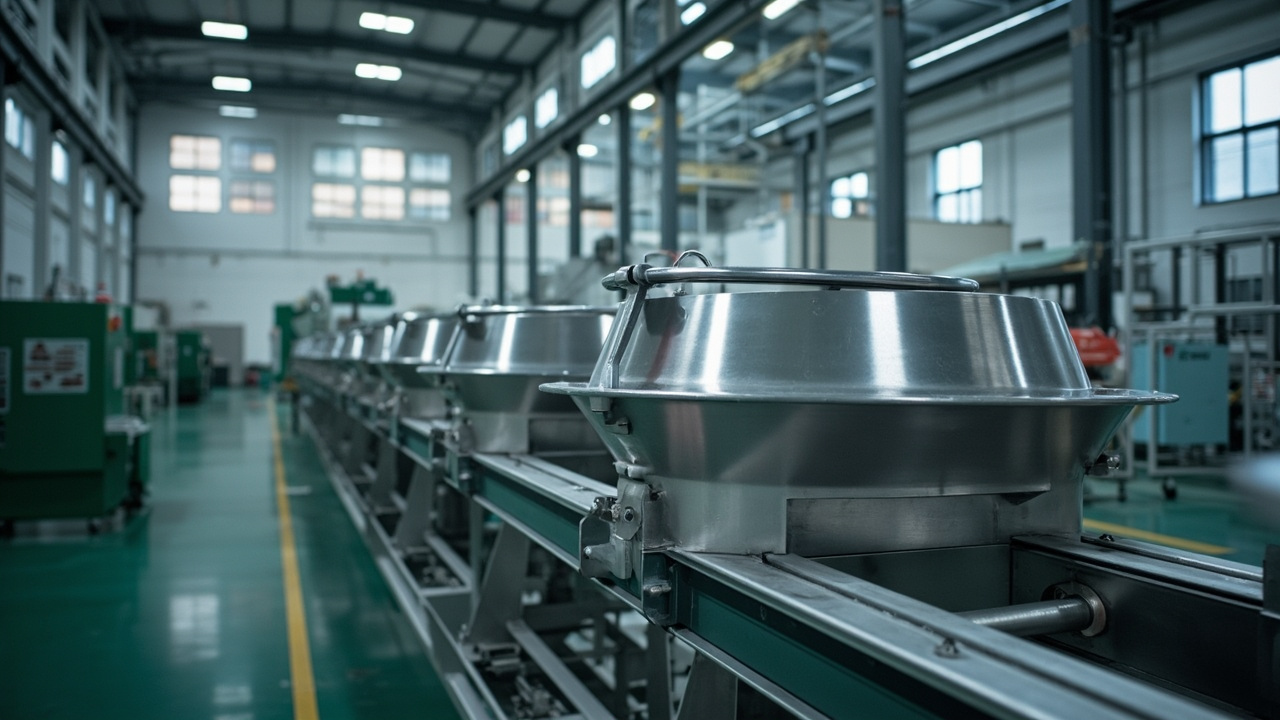
China has established itself as the global center for vibratory bowl feeder manufacturing, producing an estimated 65-70% of the world's parts feeding equipment. From small workshops serving domestic assembly plants to large-scale OEM factories exporting to Europe, North America, and Southeast Asia, the Chinese vibratory feeder ecosystem spans every conceivable quality tier, price point, and technical capability.
For international buyers, this abundance of choice creates both opportunity and risk. The same region that produces precision feeders for German automotive Tier 1 suppliers also hosts trading companies that resell commodity equipment with minimal quality control. Understanding the different types of manufacturers, their regional clusters, and how to evaluate them is essential for making a successful sourcing decision.
This guide provides a comprehensive comparison of vibratory bowl feeder manufacturers in China, organized by manufacturer type, regional cluster, and evaluation criteria. Whether you need a single standard feeder or a complex multi-line feeding system, the frameworks here will help you identify the right partner.
Types of Vibratory Bowl Feeder Manufacturers in China
Not all entities selling vibratory bowl feeders from China are manufacturers in the traditional sense. The market includes several distinct business models, each with different strengths, weaknesses, and appropriate use cases.
Direct OEM Manufacturers
Direct OEM manufacturers design, fabricate, and assemble vibratory bowl feeders in their own facilities. They maintain in-house engineering teams, CNC machining centers, welding shops, and assembly lines. These factories typically offer the best combination of price, customization capability, and technical support.
Characteristics of direct OEM manufacturers include ownership of production equipment, ability to provide factory video tours, in-house tooling design capability, and direct warranty responsibility. They can modify bowl track geometry, adjust electromagnetic drive specifications, and integrate custom sensors or escapements without coordinating with third parties.
Trading Companies and Distributors
Trading companies do not manufacture equipment themselves. Instead, they source from multiple factories and resell to international buyers, often adding 15-40% margin to the factory price. While they offer convenience—consolidated quoting, English-language project management, and familiar payment terms—they introduce opacity into the supply chain.
The primary risk with trading companies is that you rarely know which factory actually builds your feeder. Quality can vary dramatically between orders if the trader switches suppliers to optimize margin. Technical support also becomes more complicated, as the trader must relay communication between you and the actual manufacturer.
Custom Engineering Shops
Custom engineering shops occupy a middle ground. They may outsource basic fabrication but perform design, assembly, testing, and integration in-house. These shops excel at complex, low-volume projects where standard catalog feeders are insufficient. They often serve specific industries—medical device, automotive, electronics—where regulatory compliance and precision requirements demand specialized expertise.
Commodity Volume Producers
At the lower end of the market, commodity volume producers manufacture standardized bowl feeders in large quantities with minimal customization. These factories optimize for cost above all else, using thinner gauge materials, generic electromagnetic coils, and simplified controller designs. While prices can be 30-50% below direct OEM manufacturers, the trade-offs in durability, precision, and after-sales support are significant.
| Manufacturer Type | Price Level | Customization | Quality Consistency | Best For |
|---|---|---|---|---|
| Direct OEM Manufacturer | Moderate | High | High | Custom projects, repeat orders |
| Trading Company | High | Low-Medium | Variable | Small orders, convenience priority |
| Custom Engineering Shop | High | Very High | High | Complex integration, regulated industries |
| Commodity Volume Producer | Low | Minimal | Low-Medium | Cost-sensitive, simple parts, high volume |
Regional Manufacturing Clusters
Vibratory bowl feeder manufacturing in China is geographically concentrated in several industrial clusters, each with distinct characteristics shaped by local supply chains, labor pools, and industrial heritage.
Yangtze River Delta: Shanghai, Suzhou, and Ningbo
The Yangtze River Delta represents China's most mature automation equipment manufacturing region. Ningbo, in particular, has emerged as a specialized hub for vibratory feeder production, with dozens of manufacturers serving both domestic and export markets. The region benefits from proximity to precision machining suppliers, steel distributors, and electromagnetic component factories.
Manufacturers in this cluster typically offer mid-to-high quality equipment with strong engineering capabilities. Lead times are competitive, and logistics infrastructure—Ningbo-Zhoushan Port is one of the world's busiest container ports—supports efficient export shipping. Many manufacturers here have 15-25 years of experience and established quality management systems.
Pearl River Delta: Dongguan, Shenzhen, and Guangzhou
The Pearl River Delta cluster is dominated by electronics manufacturing, and its vibratory feeder suppliers reflect this specialization. Feeders for electronic components—SMD parts, connectors, small plastic pieces—are particularly well-represented here. The region's rapid prototyping ecosystem also supports faster tooling iteration for custom projects.
Quality varies widely in this cluster. High-end manufacturers serving multinational electronics brands maintain excellent standards, while lower-tier suppliers compete aggressively on price. The region's cost inflation over the past decade has pushed some commodity production inland, leaving more sophisticated manufacturers in the coastal cities.
Bohai Rim: Tianjin and Qingdao
The Bohai Rim cluster serves northern China's heavy industrial base, including automotive and appliance manufacturing. Vibratory feeder manufacturers here tend to specialize in larger, heavier parts—metal stampings, castings, machined components—rather than the small precision parts typical of southern clusters.
Inland Emerging Regions: Wuhan, Chengdu, and Changsha
Inland cities have attracted vibratory feeder manufacturing as coastal costs rise. These emerging regions offer lower labor and facility costs, but supplier ecosystems are less mature. Precision machining subcontractors and specialized material suppliers may be harder to find, potentially extending lead times for complex custom projects.
How to Evaluate Vibratory Feeder Manufacturers
Selecting the right manufacturer requires systematic evaluation across multiple dimensions. The following criteria help separate capable partners from risky choices.
Engineering and Design Capability
A manufacturer's engineering capability determines whether they can solve your specific parts feeding challenge or merely sell you a standard catalog item. Key indicators include in-house 3D design software (SolidWorks, AutoCAD), finite element analysis capability for vibration simulation, and experience with your part type or industry.
Request examples of previous projects similar to yours. A manufacturer that has successfully fed parts with comparable geometry, material, and orientation requirements will require less experimentation and deliver faster time-to-production.
Manufacturing Equipment and Process Control
Modern vibratory bowl feeder manufacturing requires precision machining, welding, and surface treatment capabilities. CNC lathes and milling centers enable accurate bowl track fabrication. TIG welding equipment with experienced operators ensures durable bowl construction. Polyurethane or PTFE coating facilities protect delicate parts and reduce noise.
Ask about inspection equipment—coordinate measuring machines, vibration analyzers, and surface roughness testers indicate a commitment to dimensional accuracy and performance consistency.
Quality Management and Certifications
ISO 9001 certification is the baseline expectation for any manufacturer serving international markets. It demonstrates documented quality processes, traceability, and continuous improvement discipline. For regulated industries, additional certifications may be relevant: ISO 13485 for medical devices, IATF 16949 for automotive, or ISO 14001 for environmental management.
Beyond certificates, ask about incoming material inspection, in-process quality checks, and final acceptance testing procedures. A manufacturer that tests every feeder with actual production parts before shipment delivers measurably better field performance.
Export Experience and Documentation
Manufacturers with extensive export experience understand international shipping requirements, customs documentation, and voltage standards. They can provide CE marking for European markets, UL-compliant electrical components for North America, and appropriate power supply configurations for your region.
Request references from customers in your country or region. Direct feedback about communication quality, delivery reliability, and after-sales support provides more actionable insight than any factory audit.
Communication and Project Management
Technical communication is often the most underestimated factor in China sourcing. Vibratory feeder design requires detailed discussion of part geometry, orientation requirements, feed rates, and integration constraints. A manufacturer with English-speaking engineers who understand technical terminology will reduce miscommunication and design iteration.
Evaluate response speed, question quality, and willingness to challenge assumptions. The best manufacturers ask probing questions about your application rather than simply accepting whatever specifications you provide.
Red Flags and Warning Signs
Certain patterns should trigger heightened scrutiny or immediate disqualification when evaluating Chinese vibratory feeder manufacturers.
Refusal to provide factory video or virtual tour suggests the entity may be a trading company claiming to be a manufacturer. Unusually low pricing—significantly below other quotes for equivalent specifications—often indicates material substitution, omitted features, or hidden costs that appear later. Pressure for large upfront deposits before technical review or sample production creates unnecessary risk.
Vague or evasive answers about tooling design methodology, material specifications, or quality testing procedures indicate weak technical capability. Inability to provide customer references from your region or industry raises questions about relevant experience. Finally, websites with only mobile contact numbers, no fixed address, or copied content from other manufacturers are associated with higher fraud risk.
Pricing Landscape Across Manufacturer Types
Understanding typical price ranges helps set realistic expectations and identify outliers that warrant investigation.
| Feeder Type | Commodity Producer | Direct OEM | Custom Engineering Shop |
|---|---|---|---|
| Standard bowl feeder (basic) | $600 - $1,200 | $1,000 - $2,500 | $2,500 - $4,000 |
| Custom tooled bowl feeder | $1,200 - $2,500 | $2,000 - $5,000 | $4,000 - $8,000 |
| Multi-track bowl feeder | $2,000 - $4,000 | $3,500 - $7,000 | $6,000 - $12,000 |
| Flexible vision feeder | Not typically offered | $3,000 - $8,000 | $6,000 - $15,000 |
| Complete feeding system with hopper | $2,500 - $5,000 | $4,000 - $10,000 | $8,000 - $20,000 |
These ranges reflect factory-direct pricing. Trading companies typically add 15-40% margin. Prices also vary with bowl diameter, material thickness, coating requirements, and controller sophistication.
Why Huben Automation Stands Among China's Top Manufacturers
Huben Automation operates from Ningbo, Zhejiang Province, at the heart of China's most mature vibratory feeder manufacturing cluster. With over two decades of experience and 200+ completed projects across 30 countries, Huben represents the direct OEM manufacturer category at its best.
Our in-house capabilities span the complete production chain: 3D design and vibration simulation, CNC machining of bowl tracks and tooling, TIG welding of stainless steel bowls, polyurethane and PTFE coating application, electromagnetic drive assembly and testing, and final acceptance verification with customer parts. This vertical integration ensures quality control at every stage and eliminates the coordination delays common when outsourcing critical processes.
Huben maintains ISO 9001 certification with documented procedures for incoming inspection, in-process verification, and final testing. Every feeder undergoes minimum 4-hour continuous running validation with actual production parts before shipment. We provide CE-marked equipment, voltage configurations for global markets, and comprehensive English-language technical documentation.
Our engineering team specializes in difficult-to-feed parts—asymmetrical geometries, delicate materials, high-speed requirements—that challenge commodity manufacturers. We invite prospective customers to review our vibratory bowl feeder product range and automation solutions to assess our capabilities against their requirements.
Frequently Asked Questions
How do I verify that a Chinese vibratory feeder manufacturer is actually a factory and not a trading company?
Request a live video call showing their CNC machines, welding stations, and assembly area. Ask to see parts with your company name or project identifier on work orders. Verify the business license (营业执照) shows manufacturing in the business scope. Direct manufacturers can typically provide detailed answers about material specifications, machining tolerances, and welding procedures without delay.
What is the typical lead time for a custom vibratory bowl feeder from China?
Standard feeders from stock or with minimal customization ship in 2-3 weeks. Custom tooled bowl feeders require 4-6 weeks for design, fabrication, and testing. Complex multi-track systems or flexible vision feeders may need 8-12 weeks. These timelines assume clear specifications and prompt sample part delivery. Add 1-2 weeks for sea freight or 3-5 days for air freight to most destinations.
Should I visit the factory in person before placing an order?
For orders above $10,000 or complex custom projects, a factory visit provides valuable insight into actual capabilities, organization, and quality culture. However, many successful partnerships begin with video audits, sample production, and progressive order sizing. If visiting, plan to spend a full day observing production, reviewing quality records, and meeting the engineering team.
What quality problems are most common with low-cost Chinese vibratory feeders?
The most frequent issues include electromagnetic coils wound with undersized copper wire leading to overheating, bowl tracks machined with insufficient precision causing part jams, generic controllers lacking stable frequency control, and thin-gauge stainless steel bowls that deform under continuous vibration. These problems manifest as reduced feed rates, frequent jamming, excessive noise, and shortened service life.
How important is the manufacturer's location within China?
Location affects logistics cost, lead time, and access to specialized suppliers. Coastal clusters like Ningbo and Dongguan offer superior port access and mature supplier ecosystems. Inland manufacturers may offer lower prices but face longer material procurement times and higher shipping costs to international ports. For standard feeders, location matters less. For complex custom systems requiring specialized components, proximity to precision machining and electronics suppliers is advantageous.
Can Chinese manufacturers provide after-sales support for international customers?
Capability varies dramatically. Established export-oriented manufacturers offer remote video support, detailed troubleshooting documentation, and spare parts shipping. Some provide on-site installation and training for large projects. Evaluate after-sales commitment during the quoting phase—manufacturers that invest in comprehensive manuals, spare parts kits, and responsive technical support demonstrate long-term partnership orientation.
Conclusion
China's vibratory bowl feeder manufacturing landscape offers exceptional value and capability for informed buyers. The key to success is understanding the different manufacturer types, evaluating candidates systematically across engineering, quality, and communication dimensions, and recognizing red flags that signal elevated risk.
Direct OEM manufacturers in established clusters like Ningbo and Suzhou offer the best balance of price, quality, and customization for most applications. Trading companies add cost and opacity. Commodity producers sacrifice durability and precision for low initial price. Custom engineering shops justify premium pricing only for the most complex integration challenges.
Huben Automation welcomes the opportunity to demonstrate why we are counted among China's leading vibratory bowl feeder manufacturers. Contact our engineering team for a detailed discussion of your parts feeding requirements, or explore our product capabilities and parts feeding solutions to learn more about our approach to automation equipment manufacturing.
Bereit, Ihre Produktion zu automatisieren?
Erhalten Sie eine kostenlose Beratung und ein detailliertes Angebot innerhalb von 12 Stunden von unserem Ingenieurteam.