Linear Vibratory Feeders: Selection, Design & Integration Guide

What Is a Linear Vibratory Feeder?
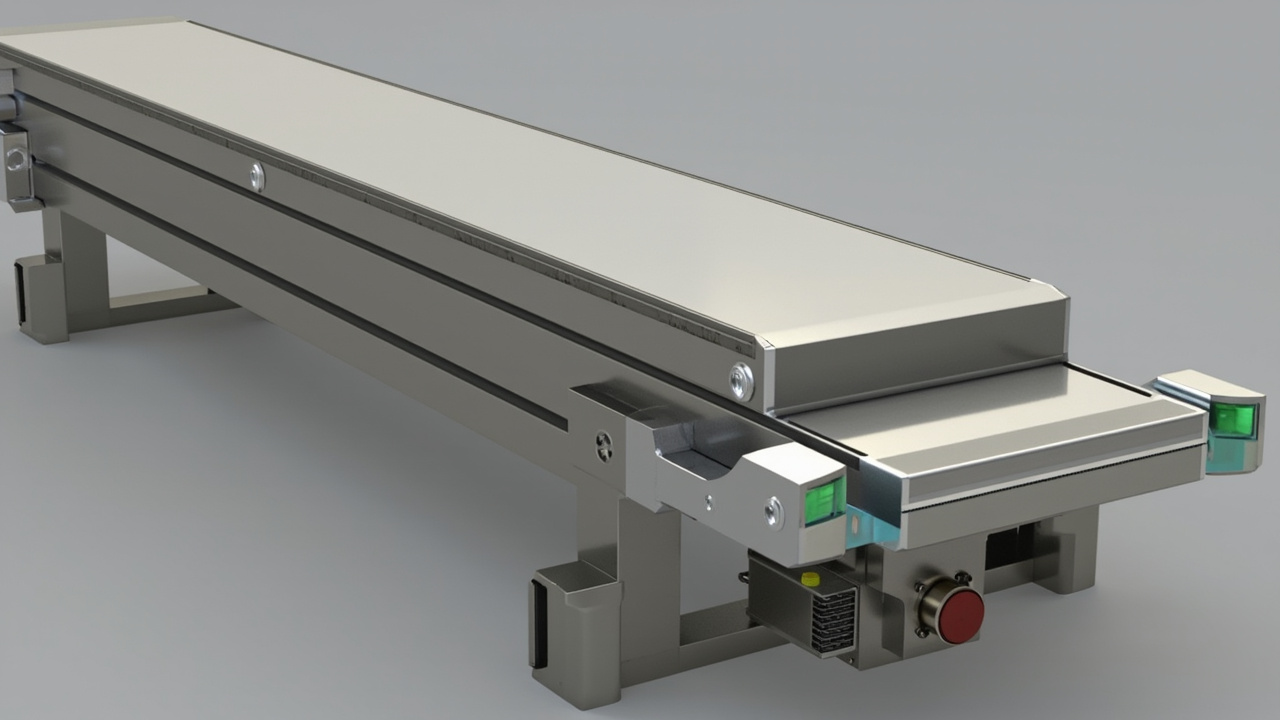
A linear vibratory feeder, also known as a linear track feeder or inline vibratory feeder, is an automated conveying device that transports pre-oriented parts along a straight path using controlled electromagnetic vibration. Unlike vibratory bowl feeders that orient parts from a random bulk state, linear feeders maintain and convey the orientation already established by an upstream feeding device such as a bowl feeder, centrifugal feeder, or step feeder.
Linear vibratory feeders serve as the critical bridge between orientation equipment and downstream production processes. They deliver parts to assembly stations, robotic pick zones, packaging machines, inspection systems, and other automated equipment with precise spacing, consistent orientation, and controlled speed. Their straight-track design makes them ideal for applications where parts must travel over distance while maintaining exact position and attitude.
Understanding the design principles and selection criteria for linear vibratory feeders enables manufacturing engineers to create feeding systems that integrate seamlessly with production equipment. This guide covers everything from fundamental operating principles through advanced integration techniques. Compare linear feeders with bowl feeders to understand when each technology is appropriate.
How Linear Vibratory Feeders Work
The operating principle of a linear vibratory feeder is elegantly simple yet precisely engineered. An electromagnetic drive unit generates controlled vibration that causes parts to move in micro-steps along a straight track.
Drive Unit Mechanics
The electromagnetic drive consists of a coil assembly and an armature connected to the track base. When alternating current energizes the coil, it creates a magnetic field that attracts the armature. This attraction pulls the track base forward in a rapid, controlled motion. When the current cycles off, the magnetic field collapses and the track base returns to its rest position via spring force.
The vibration frequency matches the AC power frequency—50 Hz or 60 Hz depending on regional power standards—or a harmonic multiple for controller-driven units. The amplitude of vibration, controlled by voltage or current adjustment, determines how far parts move with each vibration cycle and therefore controls the feed rate.
Spring packs angle the vibration direction to achieve the desired part motion. By adjusting spring angle and stiffness, designers optimize the ratio of horizontal to vertical vibration component. Too much vertical motion causes parts to bounce uncontrollably; too little prevents forward progress. The optimal vibration angle typically ranges from 15 to 25 degrees from horizontal.
Track Design and Construction
The track is the defining feature of a linear vibratory feeder. Unlike the spiral track of a bowl feeder, the linear track is straight and flat (or slightly channel-shaped) with precisely controlled width and depth.
Track width must accommodate the part with minimal clearance—typically 0.5 to 1.5 mm per side. Excessive clearance allows parts to rotate or jam; insufficient clearance causes binding. Track depth depends on part height and whether side rails are needed to prevent tipping.
Track surface finish affects part movement. Smooth polished surfaces reduce friction for delicate parts; slightly textured surfaces improve traction for heavy components. Some applications use coated tracks—polyurethane for noise reduction, PTFE for sticky parts, or conductive coatings for ESD-sensitive components.
Part Motion Dynamics
As the track vibrates, parts experience a complex motion pattern. During the forward stroke, friction between the part and track surface propels the part forward. During the return stroke, the track moves backward faster than the part can follow due to inertia, so the part remains relatively stationary or slides backward less than the track moved forward. The net result is progressive forward motion.
Part weight, shape, and surface characteristics all influence motion dynamics. Heavy parts require stronger vibration; light parts may need reduced amplitude to prevent bouncing. Flat parts with large contact areas slide differently than round parts with point contact. Understanding these dynamics is essential for proper feeder tuning.
Huben Expert Tip
The natural frequency of a linear feeder must be matched to the drive frequency for efficient operation. A mismatch causes excessive power consumption, overheating, and poor feeding performance. Always verify resonance during commissioning using a vibration sensor or by observing the characteristic smooth, powerful motion at the correct frequency.
Key Design Parameters
Successful linear vibratory feeder design requires careful attention to several interrelated parameters. Getting these right ensures reliable, efficient operation.
Track Length and Width
Track length determines how far parts must travel from the input point to the discharge point. Common lengths range from 150 mm for compact applications to 2,000 mm or more for complex production lines. Longer tracks require more powerful drives and may need multiple drive units to maintain consistent amplitude along the entire length.
Track width must precisely match the part dimensions with minimal clearance. For parts that must maintain a specific orientation, the track may include guide rails, grooves, or shaped profiles that engage with part features. Multi-lane tracks can transport several parts in parallel, increasing throughput for applications where downstream equipment can accept multiple parts simultaneously.
Drive Unit Selection
Drive unit selection depends on track length, part weight, required feed rate, and environmental conditions. Key specifications include:
- Force output — Measured in Newtons, must overcome part weight and track friction.
- Frequency range — Fixed frequency (50/60 Hz) or variable frequency (20-100 Hz) for fine-tuning.
- Amplitude range — Typically 0.1 to 2.0 mm peak-to-peak, adjustable via controller.
- Duty cycle — Continuous operation rating for industrial applications.
For long tracks or heavy parts, multiple synchronized drive units may be required. In such configurations, all drives must operate at identical frequency and phase-locked to prevent destructive interference where vibration waves meet.
Vibration Isolation and Mounting
Linear vibratory feeders must be mounted on vibration-isolating supports to prevent transmission of vibration to surrounding equipment and structures. Rubber isolation mounts, spring isolators, or pneumatic isolators reduce transmitted vibration by 80-95%.
Mounting rigidity affects feeder performance. The feeder base must be stiff enough to resist the reaction forces generated by the vibrating track. Insufficient base stiffness causes energy loss and erratic feeding. At the same time, the mounting must allow the isolators to function effectively. A heavy, rigid base plate on properly selected isolators provides the best combination of stability and vibration isolation.
Track Support and Guiding
Long tracks require intermediate supports to prevent sagging and maintain consistent track geometry. Support spacing depends on track material and cross-section—typically 300-500 mm for aluminum tracks, 200-400 mm for steel.
Some applications require track sections to be precisely leveled or angled. Adjustable support feet or shims enable fine-tuning of track attitude. For vertical elevation changes, curved transition sections or stepped tracks maintain part orientation while changing height.
| Parameter | Typical Range | Selection Considerations |
|---|---|---|
| Track Length | 150-2,000+ mm | Distance from source to destination; multi-drive for >1,000 mm |
| Track Width | Part width + 0.5-1.5 mm per side | Part geometry, orientation requirements, tolerance |
| Drive Force | 50-2,000 N | Part weight, track length, required acceleration |
| Vibration Frequency | 50-100 Hz (standard), 20-300 Hz (variable) | Part size, desired feed rate, resonance optimization |
| Amplitude | 0.1-2.0 mm peak-to-peak | Part weight, friction, desired speed |
| Feed Rate | 10-400 parts per minute | Downstream demand, part spacing requirements |
Types and Configurations
Linear vibratory feeders are manufactured in several configurations to suit different application requirements.
Single-Lane Linear Feeders
The most common configuration, single-lane linear feeders transport one part at a time along a single track. They are simple, reliable, and cost-effective. Single-lane feeders are used when downstream equipment processes one part per cycle or when precise individual part presentation is required.
Multi-Lane Linear Feeders
Multi-lane feeders feature two or more parallel tracks driven by a common base. They multiply throughput without increasing footprint proportionally. Multi-lane configurations are ideal for feeding high-speed packaging machines, multi-station assembly systems, or parallel inspection stations. Track spacing and synchronization must be carefully controlled to ensure all lanes deliver parts simultaneously.
Horizontal and Inclined Tracks
Most linear feeders operate horizontally, but inclined tracks are sometimes used to elevate parts between stations. Inclination angles up to 10 degrees are practical with proper drive sizing; steeper angles require mechanical assistance such as cleated tracks or magnetic hold-downs for ferrous parts.
Curved and Dogleg Tracks
While fundamentally straight, linear feeder tracks can incorporate gentle curves or doglegs to navigate around obstacles or change part travel direction. Curved sections require wider tracks to accommodate part rotation during the turn and may need localized drive units to maintain motion through the curve.
Tracks with Integrated Features
Advanced linear tracks incorporate functional features beyond simple transport:
- Escapements — Mechanisms that release one part at a time on demand from downstream equipment.
- Accumulation zones — Buffered sections that store parts to handle transient demand fluctuations.
- Positioning features — Stops, locators, or nests that position parts precisely for robotic picking.
- Inspection stations — Integrated sensors or vision systems that verify part presence, orientation, or quality.
- Reject mechanisms — Air jets, pushers, or drop gates that remove defective or misoriented parts.
Integration with Bowl Feeders
The most common application of linear vibratory feeders is as the downstream element of a bowl feeder system. The bowl orients parts from bulk; the linear track conveys oriented parts to the production station.
Interface Design
The transition from bowl discharge to linear track input is critical. Parts must transfer smoothly without tumbling, jamming, or losing orientation. The bowl discharge chute should align precisely with the linear track input, with minimal gap and smooth surfaces. For parts that tend to tumble, a short transition section with side containment may be needed.
Height alignment is equally important. The bowl discharge should be level with or slightly above the linear track input. If the bowl discharges below the track, parts may not transfer reliably; if too far above, parts may tumble on landing.
Speed Matching
The linear feeder speed must match the bowl feeder output. If the linear feeder runs too slowly, parts back up at the bowl discharge and cause jamming. If too fast, parts may separate excessively or the track may run empty between bowl cycles. Proper tuning achieves a smooth, continuous flow with consistent part spacing.
Modern systems use sensors to detect track occupancy and adjust bowl feeder output accordingly. When the linear track is full, the bowl feeder pauses; when parts are consumed, the bowl resumes. This demand-driven control prevents both starvation and overflow.
Buffer and Accumulation
A short buffer section between the bowl discharge and the linear track pickup point helps smooth flow variations. This buffer accommodates momentary mismatches between bowl output and linear feeder consumption. For applications with significant cycle time variations, a dedicated accumulation zone on the linear track may be warranted.
Complete System Layout
When designing a complete bowl feeder plus linear track system, consider the overall layout:
- Bowl position — Accessible for loading and maintenance, with adequate clearance around the bowl.
- Track routing — Straightest practical path from bowl to destination; avoid unnecessary curves.
- Discharge point — Positioned for ergonomic or robotic access, with proper height and orientation.
- Return of rejected parts — If the linear track includes inspection or rejection, plan how rejected parts return to the bowl or separate container.
Learn more about designing complete bowl feeder systems.
Applications and Industries
Linear vibratory feeders serve diverse applications across virtually every manufacturing sector.
Automotive Assembly
Linear feeders transport oriented fasteners, clips, and connectors from bowl feeders to robotic assembly stations. Multi-lane tracks feed multiple stations from a single bowl. Precision positioning features present parts to pick-and-place robots with sub-millimeter accuracy. The automotive industry's high volume and strict quality requirements make linear feeders indispensable.
Electronics Manufacturing
In electronics assembly, linear feeders convey connectors, switches, and hardware to placement equipment. ESD-safe track materials and ionization prevent static damage. Short, compact tracks fit within the tight spaces of electronics assembly cells. Gentle vibration amplitudes protect delicate leads and pins.
Medical Device Production
Medical device manufacturing uses stainless steel linear tracks with hygienic surface finishes. Tracks feed syringe components, vial closures, and implant parts to assembly and packaging equipment. Validation documentation ensures compliance with FDA and EU regulatory requirements.
Packaging Lines
Linear feeders present caps, lids, pumps, and dispensers to capping and sealing machines. High-speed multi-lane tracks keep pace with rapid packaging cycles. Integrated escapements release one part per machine cycle with precise timing synchronization.
Inspection and Sorting
Linear tracks transport parts past inspection sensors or cameras at controlled speed and spacing. The consistent motion enables reliable detection of defects, dimensional variations, or missing features. Reject mechanisms remove non-conforming parts without stopping production.
Selection Guide
Selecting the right linear vibratory feeder requires systematic evaluation of your application requirements.
Define Transport Requirements
Start with the basics: What distance must parts travel? What is the required feed rate? What orientation must be maintained? What is the destination—robotic pick station, assembly machine, packaging equipment? The answers determine track length, drive power, and special features.
Specify Part Characteristics
Document part dimensions, weight, material, surface finish, and any special handling requirements. Provide multiple sample parts for testing. Parts with unusual characteristics—very light, very heavy, sticky, fragile, or magnetic—may require special track designs or drive configurations.
Evaluate Environmental Conditions
Consider the operating environment. Cleanrooms need stainless steel construction and minimal particle generation. Wet environments require corrosion-resistant materials and sealed electrical components. Temperature extremes affect spring rates and may require special materials. Noise-sensitive areas may need isolation mounts or enclosures.
Plan for Integration
Define how the linear feeder integrates with upstream and downstream equipment. What is the source of parts—bowl feeder, manual loading, or another process? What communication signals control feeder operation? What happens to parts at the discharge point? Addressing these questions during selection prevents costly integration problems.
Frequently Asked Questions
What is the difference between a linear vibratory feeder and a vibratory bowl feeder?
A vibratory bowl feeder orients parts from a random bulk state using a spiral track with custom tooling inside a bowl-shaped container. A linear vibratory feeder only transports parts that are already oriented—it cannot reorient parts from a random state. Linear feeders use a straight track rather than a spiral. In practice, bowl feeders and linear feeders are often used together: the bowl orients parts, and the linear feeder conveys them to the production station. Read our detailed comparison.
How long can a linear vibratory feeder track be?
Practical track lengths range from 150 mm for compact applications to over 2,000 mm for complex layouts. The limiting factor is maintaining consistent vibration amplitude along the entire track length. For tracks longer than approximately 1,000 mm, multiple drive units are typically required. Very long tracks may also exhibit part segregation effects where heavier parts move differently than lighter ones. For extremely long transports, consider whether a belt conveyor or series of shorter vibratory sections might be more effective.
Can a linear vibratory feeder handle multiple part types?
Unlike bowl feeders that require custom tooling for each part, linear feeders are more adaptable to different parts. A single linear feeder can often handle several part types with similar cross-sections by adjusting track width or using quick-change guide rails. However, parts with significantly different sizes or shapes may need dedicated tracks. For true multi-part capability without mechanical changeover, flexible feeding systems with vision-guided robots are the better solution. Compare flexible and standard feeding approaches.
How do I adjust the feed rate of a linear vibratory feeder?
Feed rate is adjusted by changing the vibration amplitude, which is controlled by the drive voltage or current. Higher amplitude increases feed rate; lower amplitude decreases it. Some controllers also allow frequency adjustment, which can optimize feeding for specific parts. Modern digital controllers provide precise, repeatable settings and may include automatic tuning functions. Always adjust amplitude gradually while observing part motion to find the optimal setting—too little amplitude causes stalling, too much causes bouncing or damage.
What causes parts to jam in a linear vibratory feeder?
Common causes of jamming include track width too tight or too loose for the part, excessive vibration amplitude causing parts to tumble or stack, contamination or debris on the track surface, damaged or worn track edges catching on part features, misalignment between track sections or at the input transition, and parts with burrs or deformities that catch on track features. Preventive measures include regular cleaning, track inspection, proper tuning, and ensuring parts meet dimensional specifications.
How noisy are linear vibratory feeders compared to bowl feeders?
Linear vibratory feeders are generally quieter than bowl feeders, typically producing 65-75 dB(A) compared to 75-90 dB(A) for bowl feeders. The straight track does not amplify sound like the bowl shape, and the smaller drive units generate less vibration energy. Noise can be further reduced with polyurethane track coatings, acoustic enclosures, and vibration isolation mounts. For noise-sensitive environments, linear feeders are often preferred over bowl feeders when the application permits.
Conclusion
Linear vibratory feeders are essential components of modern automated production systems, providing reliable transport of oriented parts from source to destination. Their straight-track design, precise speed control, and versatile configuration options make them indispensable across automotive, electronics, medical, packaging, and countless other industries.
Successful linear feeder implementation begins with understanding the fundamental operating principles—electromagnetic vibration driving parts in micro-steps along a precisely engineered track. Key design parameters including track length, width, drive force, vibration frequency, and amplitude must be carefully matched to the specific application requirements.
Integration with upstream bowl feeders demands attention to interface design, speed matching, and buffer management. The transition from bowl discharge to linear track input is a critical detail that determines overall system reliability. Multi-lane configurations, integrated escapements, and accumulation zones extend linear feeder capability for demanding high-speed applications.
Whether you need a simple short track to bridge a gap or a complex multi-lane system feeding a high-speed production line, Huben Automation designs and manufactures linear vibratory feeders optimized for your specific parts and production requirements. Our engineering team provides free application analysis, feed testing with your actual parts, and comprehensive integration support.
Ready to specify a linear vibratory feeder for your application? Contact the Huben Engineering Team for a free consultation, design review, and detailed quotation.
Bereit, Ihre Produktion zu automatisieren?
Erhalten Sie eine kostenlose Beratung und ein detailliertes Angebot innerhalb von 12 Stunden von unserem Ingenieurteam.