Importing Vibratory Feeders from China: Customs, Shipping & Compliance

Introduction: Navigating the Import Process
Importing vibratory feeders from China involves more than placing a purchase order and waiting for delivery. Customs regulations, shipping logistics, documentation requirements, and compliance standards create a complex landscape that can delay shipments, inflate costs, or result in confiscated goods when handled incorrectly.
This comprehensive guide walks through every stage of the import process for vibratory bowl feeders and automation equipment. From selecting the correct customs classification to understanding Incoterms, preparing documentation, choosing shipping methods, and ensuring compliance with destination country regulations, you will find actionable information to streamline your imports and avoid common pitfalls that cost time and money.
Customs Classification and HS Codes
Correct Harmonized System code classification is the foundation of smooth customs clearance. Misclassification can result in incorrect duty rates, customs holds, and potential penalties.
Primary HS Code for Vibratory Feeders
Vibratory bowl feeders and linear vibratory feeders are generally classified under HS Code 8479.89, which covers machines and mechanical appliances having individual functions not specified elsewhere. The specific subheading varies by country but typically falls under 8479.89.98 or similar variants depending on national tariff schedules.
Alternative Classifications
Some customs authorities may classify vibratory feeders under 8428.39 for continuous-action elevators and conveyors, particularly for linear track feeders. Centrifugal feeders may fall under 8479.89 or 8428.39 depending on local interpretation. When in doubt, request a binding ruling from your country's customs authority before shipment to eliminate classification uncertainty.
Component-Level Classification
Spare parts shipped separately may have different classifications. Electromagnetic drive coils often fall under 8505.90 for permanent magnets and articles intended to become permanent magnets. Controllers and PLCs may be classified under 8537.10 for electrical control panels. Springs and mechanical components typically fall under the feeder parts classification of 8479.90.
| Product | Typical HS Code | US Duty Rate | EU Duty Rate | Notes |
|---|---|---|---|---|
| Vibratory Bowl Feeder | 8479.89 | 0-2.5% | 0-2.7% | Most common classification |
| Linear Vibratory Feeder | 8479.89 or 8428.39 | 0-2.5% | 0-2.7% | Varies by customs authority |
| Centrifugal Feeder | 8479.89 | 0-2.5% | 0-2.7% | Disc-based feeding systems |
| Flexible Feeder Platform | 8479.89 | 0-2.5% | 0-2.7% | Vision-guided systems |
| Feeder Controller | 8537.10 | 2.5-3.5% | 2.5-3.5% | Electronic control units |
| Electromagnetic Drive | 8505.90 | 0-2.5% | 0-2.5% | Coil and magnet assembly |
| Spare Parts (mechanical) | 8479.90 | 0-2.5% | 0-2.7% | Springs, tooling, hardware |
Required Import Documentation
Complete and accurate documentation prevents customs delays and demonstrates compliance. Every vibratory feeder shipment from China requires specific documents prepared by both the exporter and importer.
Exporter-Provided Documents
The Chinese manufacturer or exporter must provide a commercial invoice detailing the product description, HS code, unit price, total value, and Incoterms. The packing list must itemize contents by crate, including net and gross weights and dimensions. A bill of lading or airway bill serves as the transport contract and title document. The certificate of origin, typically Form A or CO, establishes the country of manufacture for preferential duty treatment.
Importer-Prepared Documents
The importer must prepare an import declaration or entry summary with accurate classification and valuation. Power of attorney documentation authorizes customs brokers to act on your behalf. Your importer of record number, typically your tax ID or EIN, must be provided. Some countries require import licenses for machinery, though most Western markets do not restrict vibratory feeder imports.
Special Documentation Requirements
For CE-marked equipment destined for the European Union, the manufacturer must provide a Declaration of Conformity and technical file summary. For UL-recognized equipment in North America, documentation of compliance testing should accompany the shipment. Food-grade or pharmaceutical applications may require material certificates and surface finish certifications.
Shipping Methods and Transit Times
Selecting the appropriate shipping method balances cost, speed, and risk based on order size, urgency, and budget constraints.
International Express Courier
Express services including DHL, FedEx, and UPS offer door-to-door delivery in 3-7 business days. This method suits urgent spare parts orders, sample shipments, and small feeders under 30 kg. Costs range from $8-15 per kilogram with full tracking and customs clearance included. The main disadvantage is cost, with express rates often 3-5 times higher than air freight for shipments over 50 kg.
Air Freight
Air freight delivers in 5-10 business days and suits feeders weighing 50-500 kg. Rates vary from $4-8 per kilogram depending on destination and fuel surcharges. Air freight requires separate customs clearance arrangements either through a freight forwarder or customs broker. While faster than sea freight, air freight costs make it uneconomical for large or heavy equipment.
Sea Freight
Sea freight is the standard method for vibratory feeder shipments exceeding 100 kg or 1 cubic meter. Full container load shipments in 20-foot or 40-foot containers offer the lowest per-unit shipping cost at $50-200 per cubic meter depending on route. Transit times range from 15 days to Asian destinations, 25-35 days to Europe, and 30-45 days to North American west coast ports. Less than container load shipments cost more per unit but suit smaller orders.
Rail Freight
China-Europe rail corridors offer an intermediate option with 18-25 day transit times at costs 30-40% below air freight. This method suits shipments to European destinations that are too urgent for sea freight but too costly for air freight. Rail freight has grown increasingly reliable and is worth considering for regular European imports.
Understanding Incoterms for Feeder Imports
Incoterms define the division of costs and responsibilities between buyer and seller. Choosing the right term prevents disputes and ensures clarity about who handles shipping, insurance, and customs clearance.
EXW (Ex Works)
Under EXW terms, the buyer assumes all costs and risks from the factory door. The seller makes goods available at their premises and handles no export formalities. EXW gives buyers maximum control but requires managing all logistics including Chinese export clearance. This term typically offers the lowest product price but highest logistical complexity.
FOB (Free On Board)
FOB terms require the seller to deliver goods to the port of shipment and handle export clearance. Risk transfers when goods pass the ship's rail. FOB is the most common Incoterm for China imports because it balances responsibility while giving buyers control over international shipping and insurance. Buyers arrange and pay for ocean freight and destination charges.
CIF (Cost, Insurance, Freight)
CIF terms include ocean freight and minimum insurance to the destination port. The seller handles export clearance and main carriage. While convenient, CIF transfers risk to the buyer at the origin port despite the seller arranging shipping. Buyers should verify insurance coverage adequacy, as seller-provided insurance often covers only minimum requirements.
DAP (Delivered at Place)
DAP terms require the seller to deliver goods to the buyer's specified destination, handling all transport and risk except import clearance and duties. DAP simplifies buying by consolidating logistics under the seller but typically results in higher overall costs. This term suits buyers who prefer turnkey delivery without managing multiple logistics providers.
Step-by-Step Customs Clearance Process
Understanding the customs clearance sequence helps you anticipate timelines, prepare documentation, and address issues proactively.
Pre-Arrival Preparation
Before shipment arrives, engage a licensed customs broker to handle clearance. Provide your broker with copies of the commercial invoice, packing list, bill of lading, and product specifications. Confirm the HS classification and estimated duty amount. If your country requires import permits or licenses, obtain them before the shipment arrives to avoid port storage fees.
Entry Filing
Upon arrival, your customs broker files the entry summary with customs authorities. This declaration includes product classification, country of origin, value for duty purposes, and applicable duty and tax calculations. Modern customs systems process routine entries within 24-48 hours for low-risk shipments.
Customs Examination
Customs authorities may select shipments for physical examination based on risk algorithms, random selection, or specific intelligence. Examination rates vary by country and product type, typically affecting 2-5% of machinery shipments. If selected, customs inspects the cargo to verify that contents match declarations and that goods comply with regulations. Examination adds 2-5 days to clearance time.
Duty Payment and Release
Once customs approves the entry, duties and taxes must be paid before cargo release. Your broker typically advances these charges and bills you with their service fee. After payment confirmation, customs issues a release notice authorizing the carrier or port to deliver the cargo. Coordinate final delivery from port to your facility or arrange pickup if you manage inland transport.
Compliance Requirements by Destination
Different destination markets impose specific compliance requirements that must be addressed before importation or during customs clearance.
European Union Requirements
Vibratory feeders sold in the EU must comply with the Machinery Directive 2006/42/EC, which requires CE marking and a Declaration of Conformity. The Low Voltage Directive 2014/35/EU applies to electrical components. Electromagnetic compatibility directive 2014/30/EU ensures feeders do not emit excessive electromagnetic interference. RoHS compliance restricts hazardous substances in electrical components. Manufacturers should provide technical documentation supporting compliance declarations.
United States Requirements
The United States does not require CE marking but may require compliance with OSHA safety standards for industrial machinery. Electrical components should meet NEMA or UL standards where applicable. FCC compliance applies if the feeder includes radio-frequency emitting devices such as wireless sensors. FDA registration is required only for feeders used in direct food contact applications under specific circumstances.
Other Regional Requirements
Canada requires CSA compliance or equivalent safety standards. Australia and New Zealand require electrical safety certification under their respective regulatory frameworks. Middle Eastern countries often require SASO or equivalent conformity certificates. Southeast Asian markets have varying requirements, with Singapore and Thailand having more developed regulatory frameworks than emerging markets.
Total Import Cost Breakdown
Beyond the purchase price, importing vibratory feeders involves several cost layers that buyers must budget accurately.
Product Cost
The Ex-Works or FOB price paid to the manufacturer. This is the largest cost component, typically representing 70-85% of total landed cost for sea freight shipments.
International Freight
Ocean freight for a full container load ranges from $1,000-4,000 depending on route and market conditions. Air freight costs $4-8 per kilogram. Fuel surcharges and currency adjustment factors apply to most freight quotes.
Insurance
Marine cargo insurance typically costs 0.3-0.5% of cargo value plus freight. All-risks coverage is recommended for valuable automation equipment. Some buyers self-insure for smaller shipments, though this carries risk.
Customs Duties and Taxes
Import duties based on HS classification and country of origin. VAT or GST applies in most jurisdictions on the total of product cost, freight, insurance, and duty. US buyers pay duty plus merchandise processing fees of 0.3464% with minimum and maximum caps. EU buyers pay duty plus import VAT at 19-27%.
Destination Charges
Port handling fees, terminal charges, documentation fees, and customs broker charges typically total $300-800 per shipment. Container unloading and inland transport add $200-1,000 depending on distance from port.
Common Import Mistakes to Avoid
Learning from common errors saves time, money, and frustration when importing from China.
Undervaluation
Some buyers request manufacturers to declare lower values on commercial invoices to reduce duty liability. This practice constitutes customs fraud in virtually all jurisdictions and can result in seizure, penalties, and criminal prosecution. Always declare accurate transaction values supported by payment documentation.
Incomplete Documentation
Missing or incorrect documents cause customs holds and storage fees. Verify that all required documents are complete, consistent, and accurate before shipment departs China. Inconsistencies between invoice, packing list, and bill of lading trigger customs scrutiny.
Incorrect Classification
Guessing at HS codes or accepting manufacturer-suggested codes without verification can result in incorrect duty payments. Consult a customs broker or obtain a binding ruling for certainty. Reclassification after entry requires amendment procedures and potential duty adjustments.
Poor Packaging Specifications
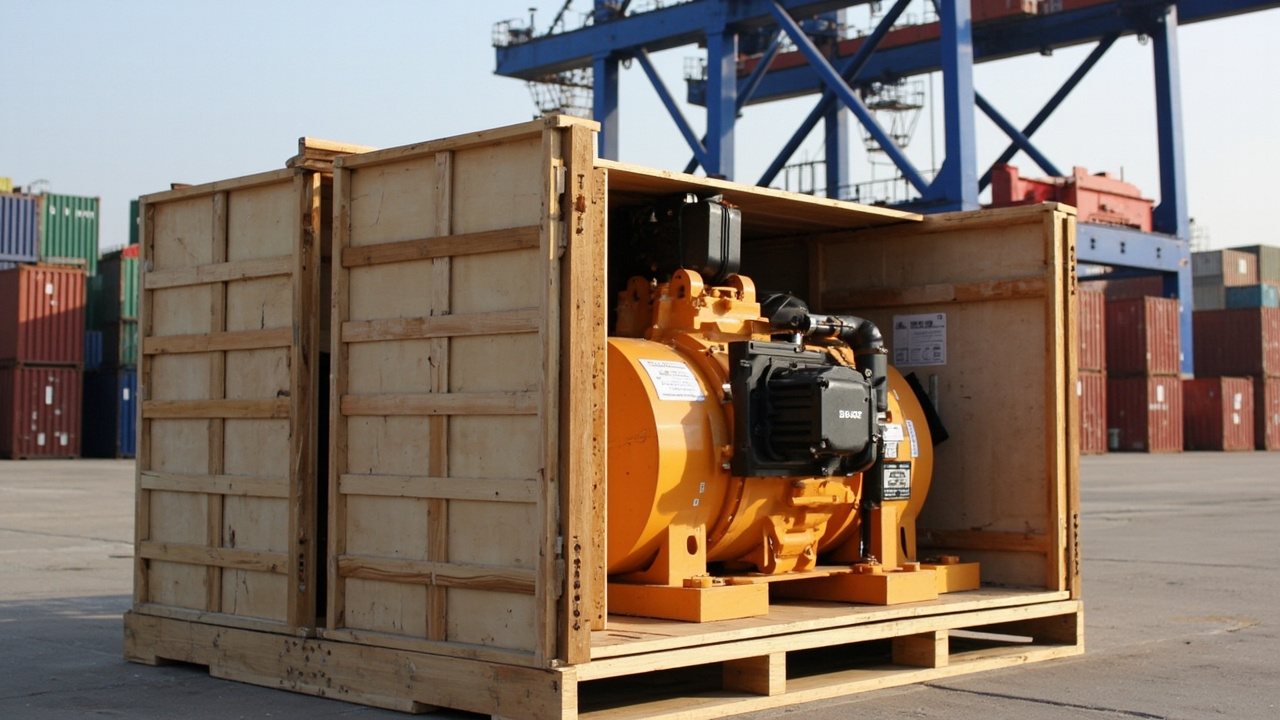
Inadequate packaging leads to damage during the long sea voyage. Specify export-grade plywood crating with moisture barriers for ocean freight. Insurance claims for damage caused by insufficient packaging may be denied.
Frequently Asked Questions
What HS code should I use for vibratory bowl feeders?
Vibratory bowl feeders are typically classified under HS Code 8479.89, covering machines with individual functions not specified elsewhere. Some customs authorities classify linear feeders under 8428.39. Always verify classification with your customs broker or request a binding ruling from customs authorities to ensure accuracy and avoid delays.
Do I need an import license to bring vibratory feeders into my country?
Most Western countries including the United States, Canada, and European Union members do not require import licenses for vibratory feeders. Some developing countries require import permits for machinery. Check with your country's trade authority or customs department before ordering. Your customs broker can confirm specific requirements.
How long does customs clearance typically take?
Routine customs clearance takes 1-3 business days for straightforward shipments with complete documentation. Selected examinations extend this to 3-7 days. Complex cases requiring document review or valuation analysis may take 1-2 weeks. Working with an experienced customs broker minimizes delays.
Should I use a customs broker or handle clearance myself?
For first-time importers, licensed customs brokers are strongly recommended. Broker fees of $100-300 per entry are modest compared to the cost of errors, delays, or compliance violations. Experienced importers with regular shipments may develop in-house capability, but most continue using brokers for efficiency.
What Incoterm is best for importing vibratory feeders?
FOB is the most popular Incoterm for China imports because it gives buyers control over international shipping while requiring sellers to handle export clearance. EXW offers lowest product price but requires managing Chinese export formalities. CIF simplifies logistics but transfers risk early. DAP provides turnkey delivery at higher cost. Choose based on your logistics capability and risk preference.
How do I handle warranty claims for imported feeders?
Establish warranty terms clearly in your purchase order before importation. Most reputable manufacturers offer 12-month warranties. For warranty claims, document the defect thoroughly with photos and videos. Minor issues are typically resolved through remote support and spare parts shipment. Major defects may require return shipment, though this is rare with quality manufacturers. Huben Automation provides comprehensive warranty support including remote diagnostics and spare parts at cost during the warranty period.
Conclusion: Mastering the Import Process
Importing vibratory feeders from China successfully requires understanding customs classification, preparing complete documentation, selecting appropriate shipping methods, choosing suitable Incoterms, and ensuring compliance with destination market regulations. While the process involves multiple steps and stakeholders, systematic preparation eliminates most common problems.
The key to smooth imports is engaging professional support where needed. Experienced freight forwarders, licensed customs brokers, and knowledgeable manufacturers guide you through complexities and prevent costly mistakes. Building relationships with reliable partners streamlines future shipments and reduces per-transaction overhead.
Huben Automation has exported vibratory feeders to over 30 countries and maintains expertise in export documentation, compliance certification, and international logistics coordination. We prepare all required export documents, advise on optimal shipping methods, and support our customers through customs clearance challenges.
Planning your first import or looking to optimize your existing import process? Contact Huben Engineering Team for personalized guidance on shipping, documentation, and compliance for your specific destination country.
Bereit, Ihre Produktion zu automatisieren?
Erhalten Sie eine kostenlose Beratung und ein detailliertes Angebot innerhalb von 12 Stunden von unserem Ingenieurteam.