Bowl Feeder vs Centrifugal Feeder: Selection Guide for Speed, Part Type, and Cost

Why Feeder Type Selection Matters
Selecting the wrong feeder type is one of the most expensive mistakes in automation line design. A vibratory bowl feeder that cannot reach target throughput becomes a permanent bottleneck. A centrifugal feeder that cannot orient complex parts becomes an expensive paperweight. The replacement cost, lead time for retooling, and production downtime typically exceed the original feeder price by a factor of three to five.
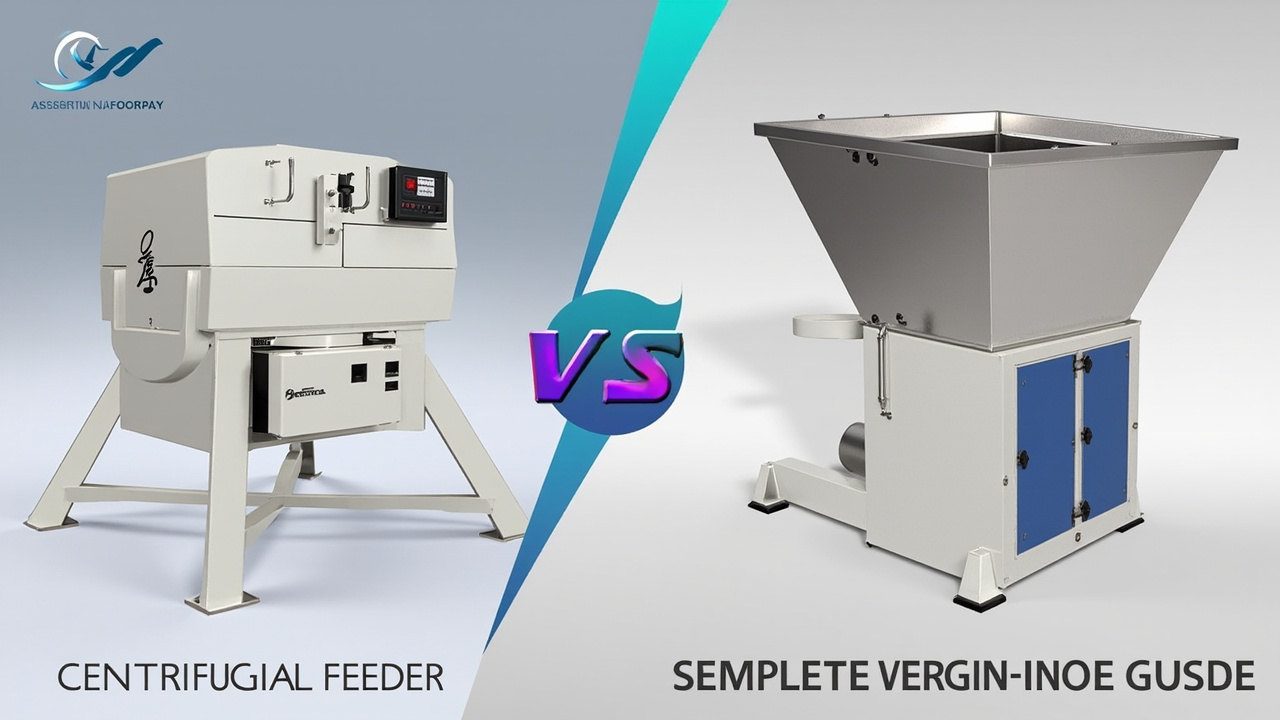
This article provides a direct, decision-oriented comparison of vibratory bowl feeders and centrifugal feeders to help you select the right technology before you commit capital. We focus on the criteria that actually drive the decision: part geometry, speed, orientation complexity, cost, and operational factors. For a broader technical overview of centrifugal technology, see our centrifugal feeder guide.
Operating Principle Differences
The fundamental distinction between these two feeder types is the physical mechanism that moves and orients parts.
Vibratory bowl feeders use an electromagnetic drive to oscillate the bowl at 50-120 Hz. Each vibration cycle lifts parts slightly and propels them forward along a spiral track that rises from the bowl floor to the discharge point. Orientation tooling built into the track—selectors, wipers, air jets, and chutes—filters out misoriented parts and returns them to the bowl floor for another pass.
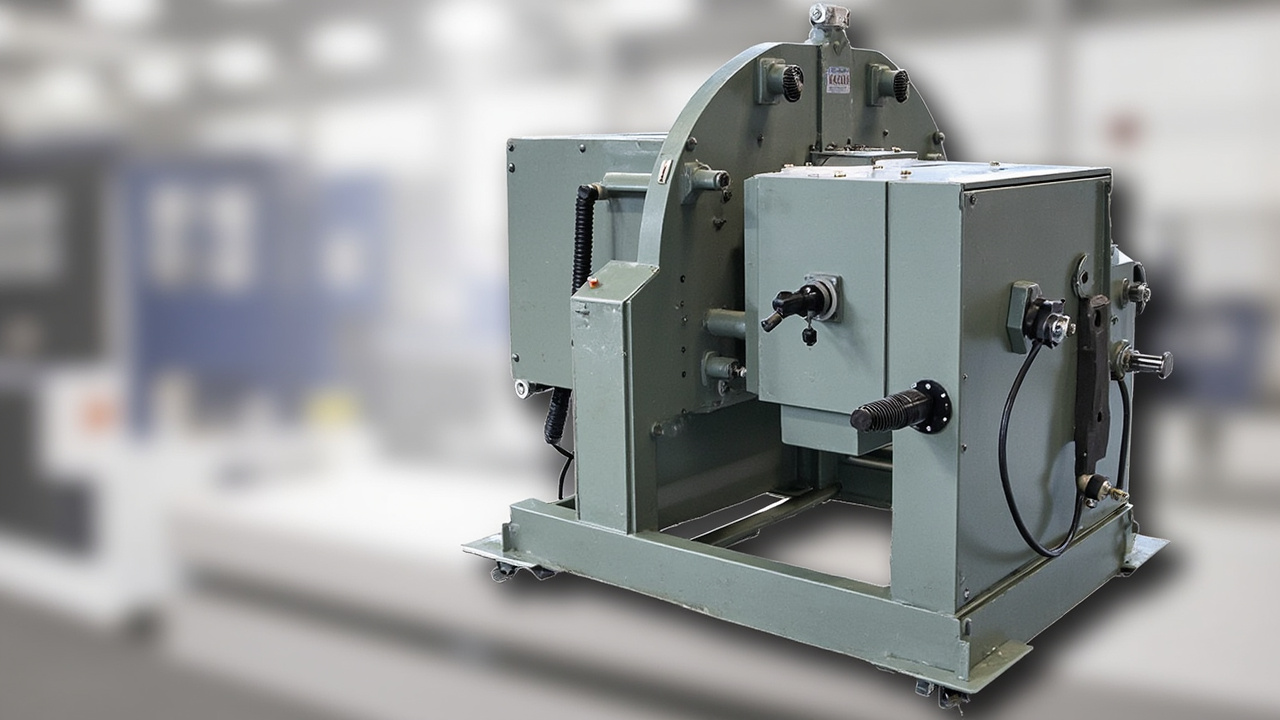
Centrifugal feeders use a motor-driven rotating disc. Parts placed on the disc are pushed outward by centrifugal force toward a peripheral track. Orientation tooling along the track selects correctly positioned parts for discharge; rejected parts recirculate to the disc center. The motion is continuous and unidirectional, without the micro-oscillation of vibratory systems.
These different mechanisms create distinct performance profiles. Vibratory feeding provides precise, multi-step orientation at moderate speed. Centrifugal feeding delivers high throughput for simpler orientation tasks.
- Vibratory motion = oscillating micro-steps, multi-axis orientation, moderate speed
- Centrifugal motion = continuous rotation, gravity-based orientation, high speed
Speed Comparison: Centrifugal Feeders Are 2-5x Faster for Simple Parts
For parts that both technologies can handle, centrifugal feeders consistently outperform vibratory bowls by a factor of two to five. The speed gap widens as part geometry becomes simpler.
| Part Type | Vibratory Bowl (ppm) | Centrifugal (ppm) | Speed Ratio |
|---|---|---|---|
| M5 screws, 20 mm | 300-500 | 1,200-2,000 | 3-4x |
| 6 mm steel balls | 400-600 | 2,000-3,500 | 4-5x |
| 10 mm flat washers | 350-500 | 1,500-2,500 | 3-5x |
| 8 mm rivets | 250-400 | 800-1,500 | 2-3x |
| Plastic caps, 30 mm | 200-350 | 1,000-2,000 | 3-5x |
| Complex brackets | 100-200 | Not feasible | N/A |
The speed advantage comes from the continuous rotational motion. Vibratory feeders advance parts in discrete micro-steps with each oscillation cycle, and there is a physical limit to how fast parts can be lifted and settled without losing orientation. Centrifugal feeders move parts continuously along the track, and the only speed limit is the point where centrifugal force causes parts to tumble or collide.
However, this speed advantage applies only when the centrifugal feeder can orient the part reliably. For complex parts that require multiple orientation steps, vibratory bowls may actually deliver higher effective throughput because centrifugal feeders reject too many parts and the net oriented output drops.
- Key takeaway: Centrifugal feeders dominate speed for simple, symmetrical parts. The advantage disappears or reverses for parts requiring complex orientation.
Part Geometry Suitability
Part geometry is the single most important selection criterion. If your parts cannot be oriented centrifugally, the speed and cost advantages are irrelevant.
Parts Best Suited to Centrifugal Feeders
Centrifugal feeders work well with parts that have a clear, single natural resting orientation established by gravity. These include:
- Cylindrical parts: pins, rivets, bushings, sleeves
- Disc-shaped parts: washers, coins, seals, caps
- Spherical parts: balls, beads, pellets
- Simple headed fasteners: screws, bolts with uniform head geometry
The common characteristic is that these parts roll or slide into a predictable orientation under centrifugal force without requiring mechanical engagement with specific features.
Parts Best Suited to Vibratory Bowl Feeders
Vibratory bowls handle a much wider range of geometries because the spiral track provides multiple opportunities for orientation correction through mechanical engagement:
- Asymmetric parts: brackets, connectors, housings with tabs
- Multi-orientation parts: parts with 3+ stable resting positions
- Parts with features requiring mechanical selection: holes, slots, notches, keyways
- Flexible or delicate parts: O-rings, gaskets, thin-wall components
- Tangled or nested parts: springs, clips, open coils
The Boundary Zone
Some parts fall in a gray zone where both technologies could work. For these, the decision comes down to speed requirements and cost. A simple hex nut, for example, can be fed by either technology. If you need 2,000 nuts per minute, centrifugal is the clear choice. If 300 per minute is sufficient, the vibratory bowl costs less and handles a wider range of part types for future changeover.
- Key takeaway: If a part can be oriented by rolling it across a flat surface, centrifugal feeding is viable. If it requires engaging specific features to determine orientation, use a vibratory bowl.
Orientation Complexity
The number of orientation axes a part requires directly determines feeder suitability.
Single-axis orientation (e.g., head-up vs head-down for a screw) is straightforward for both technologies. Centrifugal feeders handle this with simple flipper rails or gravity selectors on the peripheral track.
Two-axis orientation (e.g., a part that must be head-up AND facing a specific direction) is manageable for centrifugal feeders with more sophisticated tooling, but the rejection rate increases. Vibratory bowls handle two-axis orientation routinely.
Three or more axes (e.g., a connector that must be oriented in a specific rotational position about its longitudinal axis) is generally beyond centrifugal capability. The spiral track of a vibratory bowl provides the sequential orientation steps needed for multi-axis positioning.
| Orientation Requirement | Centrifugal Feeder | Vibratory Bowl Feeder |
|---|---|---|
| 1 axis (e.g., head up/down) | Excellent | Excellent |
| 2 axes (e.g., head up + rotational) | Adequate (higher rejection) | Excellent |
| 3+ axes (multi-feature alignment) | Not feasible | Good to excellent |
| Feature-specific selection (hole, slot) | Limited | Excellent |
| Random orientation to specific exit | Poor | Good |
Changeover Time and Flexibility
Neither vibratory bowls nor centrifugal feeders are designed for rapid changeover between different part types. Both require custom tooling that is machined or fabricated for a specific part. However, there are practical differences.
Vibratory bowl changeover typically takes 30 minutes to 4 hours depending on the extent of tooling modification. If the new part is similar to the old one, adjustments to selectors and air jets may be sufficient. For significantly different parts, a new bowl tooling insert or a complete bowl change is required.
Centrifugal feeder changeover takes 30 minutes to 2 hours. The disc and peripheral track are usually replaced as a unit, which is mechanically simpler than retooling a vibratory bowl. However, centrifugal tooling is less adaptable—if the new part is even slightly different, a new track assembly is typically needed rather than field adjustment.
For operations that run the same part for months or years, changeover time is irrelevant. For job-shop environments with frequent part changes, neither technology is ideal. Our earlier comparison article covers flexible feeding alternatives for high-mix environments.
- Key takeaway: Centrifugal changeover is faster but less adjustable. Vibratory changeover is slower but allows field modifications for similar parts.
Cost Comparison
Feeder cost has three components: initial purchase price, tooling cost, and lifetime operating cost.
Initial Purchase Price
| Feeder Size/Type | Vibratory Bowl Feeder | Centrifugal Feeder |
|---|---|---|
| Small (200-300 mm) | $800-$2,000 | $2,500-$5,000 |
| Medium (300-500 mm) | $1,500-$4,000 | $3,500-$8,000 |
| Large (500-800 mm) | $3,000-$6,000 | $6,000-$12,000 |
| Custom tooling (per part) | $500-$2,000 | $800-$3,000 |
Centrifugal feeders cost roughly 1.5-2.5x the price of equivalent vibratory bowls. The precision-machined disc and peripheral track, the variable-speed drive system, and the lower production volumes all contribute to the higher price.
Lifetime Operating Cost
Operating cost favors centrifugal feeders over time. Lower maintenance requirements, fewer replacement parts, and higher energy efficiency per part fed reduce the total cost of ownership. For a feeder running 2,000 hours per year over a 10-year life:
- Vibratory bowl: spring replacement every 3-5 years ($200-$600), coil inspection/replacement every 5-8 years ($300-$800), periodic tuning adjustments, and higher energy consumption at moderate throughput.
- Centrifugal feeder: bearing lubrication and eventual replacement every 5-10 years ($150-$400), occasional track resurfacing, and lower energy consumption at high throughput.
At high utilization rates, the lower operating cost of centrifugal feeders can offset the higher purchase price within 3-5 years. At low utilization, the vibratory bowl is almost always more economical.
- Key takeaway: Vibratory bowls win on initial cost. Centrifugal feeders win on lifetime cost at high utilization. Break-even typically occurs at 3-5 years for continuously running lines.
Noise Levels
Noise is an operational factor that affects worker comfort, regulatory compliance, and the need for acoustic enclosures.
Vibratory bowl feeders generate 75-90 dB(A) at typical operating amplitude. The noise comes from the electromagnetic drive, parts vibrating against the track and each other, and the bowl structure resonating at the drive frequency. Enclosing the feeder reduces noise by 10-15 dB but adds cost and restricts access.
Centrifugal feeders generate 65-75 dB(A). The smooth rotational motion and absence of high-frequency vibration produce significantly less noise. In many installations, centrifugal feeders operate without acoustic enclosures in environments where vibratory feeders would require them.
The practical impact: if your facility has noise limits below 80 dB(A), vibratory feeders will likely need enclosures ($500-$2,000 each), while centrifugal feeders may not. This narrows the effective cost gap.
Maintenance Requirements
Maintenance burden is one of the clearest differentiators between the two technologies.
| Maintenance Item | Vibratory Bowl | Centrifugal Feeder |
|---|---|---|
| Spring replacement | Every 3-5 years | Not applicable |
| Coil inspection | Annually | Not applicable |
| Drive bearing service | Not applicable | Every 5-10 years |
| Track surface wear | Moderate (vibration abrasion) | Low (sliding contact) |
| Tuning adjustments | Periodic (after spring/coil changes) | Not required |
| Tooling inspection | Every 6-12 months | Every 6-12 months |
| Estimated annual maintenance cost | $200-$600 | $100-$300 |
Vibratory feeders have more wear components that require periodic attention. The electromagnetic coils, springs, and armature gap all degrade over time and affect feeding performance if not maintained. Centrifugal feeders have fewer moving parts and no components subject to fatigue cycling, which translates to lower maintenance costs and higher uptime.
Decision Matrix
Use this matrix to guide your selection based on your specific application requirements. Score each criterion based on your priorities and sum the results.
| Criterion | Choose Vibratory Bowl When... | Choose Centrifugal When... |
|---|---|---|
| Part geometry | Complex, asymmetric, multi-orientation | Simple, symmetrical, single natural orientation |
| Required feed rate | Below 500 ppm | Above 800 ppm |
| Orientation axes | 2 or more | 1 axis, occasionally 2 |
| Part surface sensitivity | Moderate (can use coatings) | High (gentler handling) |
| Budget | Limited initial capital | Can invest more upfront |
| Noise sensitivity | Not critical (or enclosure acceptable) | Critical (cleanroom, near offices) |
| Production volume | Low to moderate utilization | High utilization, continuous operation |
| Maintenance capacity | Skilled maintenance staff available | Minimal maintenance preferred |
| Future part changes | Similar parts expected (field adjustable) | Long runs of same part |
| Part size range | Very small (<5 mm) or very large (>80 mm) | Medium (10-60 mm typical) |
If your application falls clearly on one side of most criteria, the decision is straightforward. If criteria are split, consider a hybrid approach: a centrifugal feeder for high-speed bulk feeding of simple parts, and a vibratory bowl for complex parts on the same line.
Frequently Asked Questions
Can a centrifugal feeder replace a vibratory bowl feeder on an existing line?
It depends entirely on the part geometry and orientation requirements. If the part is simple and symmetrical with a single natural orientation, a centrifugal feeder can replace the vibratory bowl and likely increase throughput. If the part requires multi-axis orientation or mechanical feature selection, a centrifugal feeder cannot achieve the required orientation reliability. The mechanical interface (mounting, discharge height, and downstream connection) also differs between the two types, so some mechanical adaptation is usually needed regardless.
What is the typical price difference between a centrifugal feeder and a vibratory bowl feeder?
Centrifugal feeders typically cost 1.5 to 2.5 times more than vibratory bowl feeders of equivalent size. A medium centrifugal feeder (300-500 mm) ranges from $3,500 to $8,000, while a comparable vibratory bowl costs $1,500 to $4,000. However, centrifugal feeders have lower lifetime operating costs due to reduced maintenance, which can offset the higher purchase price within 3-5 years at high utilization rates.
Which feeder type is better for delicate parts with sensitive surfaces?
Centrifugal feeders are generally gentler on part surfaces because the smooth rotational motion avoids the repeated micro-impacts that occur in vibratory feeding. Parts with polished, plated, or decorated finishes typically show less surface degradation in centrifugal systems. However, very fragile parts or flexible components (O-rings, thin gaskets) may be damaged by the higher velocities in centrifugal feeders. For these, a vibratory bowl with reduced amplitude and polyurethane-coated tracks is often the safer choice.
How do I know if my part can be fed centrifugally?
The most reliable method is a feed test with actual production parts. As a preliminary check, ask: can the part be oriented by simply rolling or sliding it on a flat surface? If yes, centrifugal feeding is likely viable. Parts that require engaging specific features (a hole, a slot, a tab) to determine orientation generally need a vibratory bowl. Parts under 5 mm or over 80 mm, parts with flexible elements, and parts that nest or tangle are also poor candidates for centrifugal feeding.
Are centrifugal feeders quieter than vibratory bowl feeders?
Yes. Centrifugal feeders typically produce 65-75 dB(A), while vibratory bowl feeders produce 75-90 dB(A). The 10-15 dB difference means centrifugal feeders sound roughly half as loud to the human ear. In noise-sensitive environments, this can eliminate the need for acoustic enclosures, which saves $500-$2,000 per feeder and improves operator access for monitoring and maintenance.
Can both feeder types handle the same part?
For simple, symmetrical parts like screws, washers, and pins, both technologies can often orient and feed the part. The choice then comes down to speed and cost: centrifugal for high throughput, vibratory for lower initial investment. For complex parts, only vibratory bowls can provide the multi-step orientation needed. The overlap zone is real but narrow—most applications clearly favor one technology over the other based on part geometry alone.
Ready to Automate Your Production?
Get a free consultation and detailed quote within 12 hours from our engineering team.